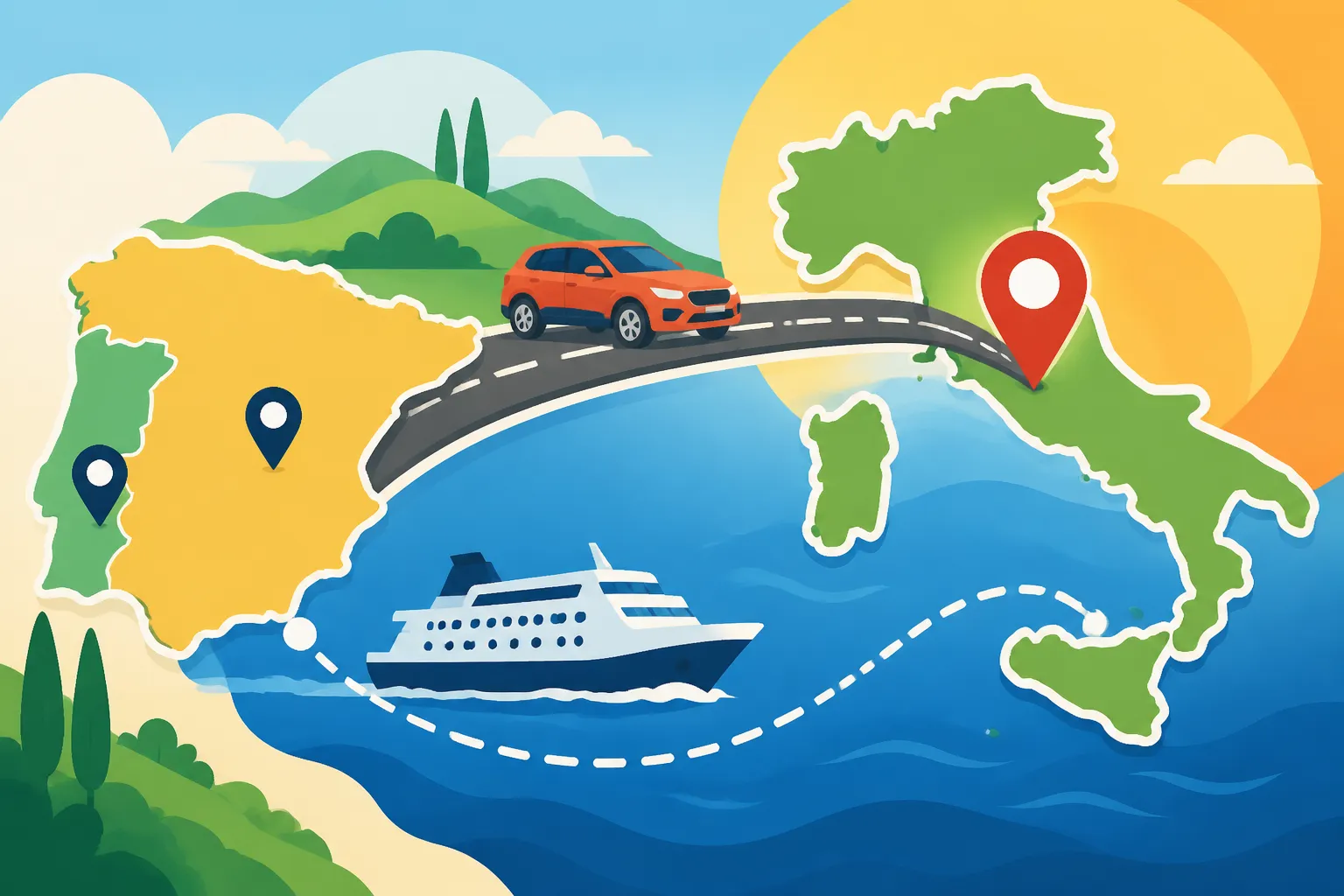
Moving to Italy from Spain and Portugal: Iberian Road and Sea Options
Oh, the romantic idea of moving from the sun-drenched coasts of Spain or the historic lanes of Portugal to the vibrant heart of Italy! It sounds like a dream, doesn't it? But as any expat who's been through it will tell you, the logistics of physically moving your entire life across southern Europe can quickly turn that dream into a bureaucratic and logistical headache. This guide is here to walk you through the nitty-gritty of transporting your belongings from the Iberian Peninsula to Italy, exploring both road and sea options, and showing you how a service like Sirelo can be your indispensable co-pilot.
Disclosure: This post may contain affiliate links. We may earn a commission at no extra cost to you if you make a purchase through these links. Read full disclosure.
The Iberian-Italian Leap: Initial Considerations for Your Move
Making the jump from Spain or Portugal to Italy might seem straightforward since it's all within the European Union, but don't let that fool you. There are still layers of planning, paperwork, and practicalities that can make even the most seasoned traveler's head spin. As someone who’s navigated a few cross-border moves, I can tell you that assuming things will be easy just because it's Europe is a rookie mistake!
Understanding the Unique Challenges of Cross-European Relocation
First off, let's acknowledge that while you're staying within the EU, the distance itself isn't trivial. Whether you're coming from Lisbon or Barcelona, you're looking at a significant journey that involves crossing at least one other country (France, usually) or a substantial sea voyage. This means more than just packing a suitcase; it's about moving a household, potentially a car, and certainly all your cherished possessions.
The challenges are multifaceted. You’ve got the sheer geographical distance, which translates directly into time and cost. Then there are the cultural nuances – yes, even between Mediterranean countries! And, of course, the ever-present language barrier, which, while less pronounced than moving to, say, China, can still trip you up when dealing with local authorities or moving companies. You’re not just moving things; you’re transplanting your entire world. It requires meticulous planning and an almost Zen-like patience for the unexpected.
Essential Pre-Move Preparations and Documentation
Before you even think about packing a single box, you need to get your ducks in a row concerning documentation. This is Italy, after all, and bureaucracy is practically a national sport. The most immediate thing you'll need, even before you officially move, is your Italian tax code, the famous How to Get a Codice Fiscale in Italy (and Why You Need One). You’ll need this for almost everything, from signing a rental contract to setting up utilities.
Beyond that, ensure your residency status in Italy is sorted. Are you moving for work, study, or retirement? Your visa type (if you’re a non-EU citizen) will dictate a lot of your initial setup. It’s crucial to understand the Ultimate Guide to Visas and Immigration in Italy that applies to your specific situation. This affects everything from when you can officially declare residency to how your household goods are treated at customs.
On the practical side, this is the perfect time to declutter. Seriously. Every item you move adds to the cost, whether it's by weight, volume, or the sheer effort of packing. Be ruthless! Ask yourself if that old lamp from your university days is truly worth the euros it will cost to transport and the space it will take up in your new Italian home. Selling or donating items you no longer need can significantly reduce your moving expenses and make the process far less daunting.
Navigating the Roads: Overland Moving Options from Iberia to Italy
When it comes to moving your belongings from Spain or Portugal to Italy, overland transport is often the first thing people consider. It offers a sense of control and can sometimes feel more direct. But like all things in life, there are trade-offs to weigh.
Driving Yourself: The Adventure (and Logistics) of a DIY Move
For many, the idea of packing up a rented van and driving across Europe sounds like a grand adventure. And it certainly can be! If you don't have a massive amount of stuff, driving yourself offers unparalleled control over your possessions and your schedule. You decide the route, the stops, and when you deliver your items. Plus, it can potentially save you a bit on professional moving costs, especially if your volume of goods is modest.
However, let’s be realistic. This isn't a Sunday drive. You’ll be navigating a large, unfamiliar vehicle, potentially laden with heavy boxes. Think about the fatigue of driving hundreds, if not thousands, of kilometers. Then there are the practical costs: fuel (which, let's face it, is not cheap across Europe, especially in France), tolls (get ready for some hefty fees on French motorways), and the wear and tear on your vehicle. And don't forget, if you’re using your own car, you need to ensure your insurance covers international travel and that you have all the necessary documents, including your international driving permit if your license isn't an EU one. Before you commit to the DIY road trip, familiarize yourself with Driving in Italy: Obtaining an Italian Driver’s License and the specific requirements for foreign vehicles. Once you arrive, you’ll also need to consider Importing Your Car to Italy: Regulations and Costs if you plan to keep your vehicle long-term.
Professional Road Movers: Shared Loads vs. Dedicated Trucks
For those with more than a few suitcases but not a mansion’s worth of belongings, professional road movers offer a more sensible solution. These services fall broadly into two categories: shared loads (groupage) and dedicated trucks.
Shared Loads (Groupage)
This is often the most cost-effective option for mid-sized moves. With groupage, your belongings share space on a truck with other people's items heading in the same general direction.
- Pros: Significantly cheaper than a dedicated truck because you're only paying for the space your goods occupy. It's an excellent option for those on a budget or with flexible timelines.
- Cons: Less flexible on pickup and delivery dates, as the mover needs to coordinate multiple clients. Transit times can be longer, sometimes several weeks, as the truck might make multiple stops. There's also a higher risk of minor damage due to more handling and shifting of items. This isn't ideal for highly fragile or time-sensitive items.
Imagine your boxes playing Tetris with someone else's sofa and bicycle – it works, but it takes time and careful planning. This is where a service like Sirelo really shines because it allows you to easily compare quotes for groupage services from various reputable movers, making it simpler to find a balance between cost and convenience that works for you.
Dedicated Trucks
If you're moving a large household or have very specific timing requirements, a dedicated truck might be your best bet. The entire truck is reserved for your belongings, from your old apartment in Portugal straight to your new home in Italy.
- Pros: Much faster transit times, often direct delivery. Reduced handling means less risk of damage. You have full control over pickup and delivery dates.
- Cons: Considerably more expensive than groupage. You're paying for the entire truck, regardless of whether you fill it.
For families with extensive furniture or those who simply cannot wait, a dedicated truck offers peace of mind and speed, but it comes with a hefty price tag. Again, this is where comparing multiple, vetted quotes is crucial, and platforms like Sirelo streamline this process, ensuring you get competitive rates without the endless phone calls.
The Azure Route: Sea Freight Options for Your Move
For larger moves, or if you're not in a particular rush, sea freight can be a surprisingly viable and often more economical option, especially from coastal regions of Spain and Portugal to Italy's bustling ports.
Full Container Load (FCL) vs. Less Than Container Load (LCL)
Sea freight primarily comes in two flavors: FCL and LCL.
Full Container Load (FCL)
As the name suggests, this means you get an entire shipping container (typically 20ft or 40ft) all to yourself.
- Pros: Ideal for very large household moves – we're talking about a multi-bedroom house here. Your items are sealed in your own container, which significantly reduces the risk of damage or loss compared to LCL. Transit times can be more predictable once the container is loaded and departs.
- Cons: The most expensive option for shipping, as you're paying for the entire container, port fees, and shipping lane costs. If you don't fill it, you're still paying for the empty space. It also requires significant coordination for pickup and delivery, as the container needs to be transported by truck to and from the ports.
FCL is truly for the big moves. Think of it as your personal ocean-going vault.
Less Than Container Load (LCL)
LCL, or "groupage by sea," is when your belongings share container space with shipments from other people.
- Pros: Much more cost-effective for smaller to medium-sized moves (say, a one or two-bedroom apartment) than an FCL or even some dedicated road services. You only pay for the volume your items occupy.
- Cons: Longer transit times and less predictable delivery dates due to the consolidation process. Your goods will be handled more frequently as they're loaded and unloaded alongside other shipments, potentially increasing the risk of damage. Customs clearance can also take longer as the entire container needs to be processed.
Sea freight ports in Spain like Valencia and Barcelona, or in Portugal like Lisbon and Leixões, offer regular connections to major Italian ports such as Genoa, Livorno, Naples, and Civitavecchia. When considering Choosing Movers for a Relocation to Italy, those specializing in international sea freight will manage the entire process, including inland transport to and from the ports.
Preparing for Sea Transit: Packing and Customs Declarations
Proper packing is absolutely paramount for sea freight. Your items will be subjected to motion, humidity, and potentially extreme temperatures during their voyage. Professional packing by experienced movers is highly recommended to protect your valuables. They use specialized materials and techniques to ensure everything is secure. Trying to skimp on packing for sea freight is a false economy that often leads to heartbreak when your possessions arrive damaged.
Beyond robust packing, you'll need to prepare a detailed inventory list of everything you're shipping. This isn't just for your benefit; it's a critical customs document. You'll need to declare your goods as "unaccompanied baggage" or "household effects" (effetti personali) being moved as part of a residency transfer. Be transparent and accurate. If you try to sneak in new, dutiable items or misrepresent the value, you could face hefty fines and delays. Also, be mindful of what you can and cannot bring into Italy, especially certain Bringing Prescription Medications into Italy or restricted items. Your chosen moving company, especially if found through a platform like Sirelo, should be able to guide you through these specific requirements, often providing templates for inventory lists.
Unpacking the Details: Customs, Costs, and Choosing Your Moving Partner
You've planned your move, decided on your transport method, and even started packing. Now come the crucial final steps: understanding Italian customs, budgeting accurately, and making the best choice for your moving partner.
Italian Customs and Import Regulations for Household Goods
Italy, like any country, has specific rules for importing household goods. The good news is that if you are genuinely transferring your residency to Italy, you can usually import your personal belongings duty-free. This is often referred to as "trasferimento di residenza." However, there are strict conditions:
- You must have owned and used the goods in your previous country of residence for at least six months.
- You must be establishing normal residence in Italy.
- The goods must be for your personal use and not for commercial purposes.
- You cannot sell, dispose of, or give away the goods within 12 months of import.
To qualify, you'll generally need to provide proof of your new Italian residency (like your Permesso di Soggiorno or Certificato di Residenza), a detailed inventory list (with values), and proof that you were residing in Spain or Portugal. Failure to meet these conditions can result in duties and taxes. This is where having an experienced moving company, one that truly understands Italian customs regulations, can save you immense stress and potential financial penalties.
The True Cost of Moving: Beyond the Quote
It’s easy to get tunnel vision on the initial transport quote, but the true cost of moving from Spain or Portugal to Italy extends far beyond that. Here’s a breakdown of potential expenses you need to factor in:
- Transport Costs: The obvious one, whether it's self-drive expenses, groupage, or dedicated truck/container.
- Packing Services & Materials: If you opt for professional packing (highly recommended for international moves), this is an added cost. Don't forget the cost of boxes, tape, and protective wrap if you're DIYing it.
- Insurance: Absolutely essential. Marine insurance for sea freight, or transit insurance for road. Accidents happen, and your precious belongings need protection.
- Customs Clearance Fees: Even if your goods are duty-free, there will be administrative fees for the customs broker to process your paperwork.
- Port or Terminal Handling Charges: For sea freight, these are unavoidable fees at both origin and destination ports.
- Storage: If your new home isn't ready immediately, you might need temporary storage at either end of the journey.
- Unpacking Services: Some movers offer to unpack and even reassemble furniture.
- Special Item Handling: Pianos, art, antiques – these require specialized crating and handling, adding to the cost.
- Access Challenges: Is your new Italian apartment on the fourth floor with no lift, or is the street too narrow for a large moving truck? These "last mile" challenges can incur extra charges for manual labor or smaller shuttle vehicles.
Always get a comprehensive, itemized quote, and don't hesitate to ask about hidden fees. Understanding these details upfront can prevent nasty surprises and help you budget effectively for your new Cost of Living vs Salary: Budget Tips for Italy Expats.
Why a Moving Platform Like Sirelo is Your Best Friend
Navigating the complexities of an international move from Spain or Portugal to Italy can feel overwhelming. This is precisely why a dedicated moving platform like Sirelo can be an absolute lifesaver. Instead of spending countless hours searching for individual moving companies, calling them one by one, and trying to decipher their various quotes, Sirelo does the heavy lifting for you.
Here's how Sirelo simplifies your move:
- Vetted Movers at Your Fingertips: Sirelo connects you with a network of pre-screened, reputable moving companies specializing in international relocations, including those covering the Iberian Peninsula to Italy route. You don't have to worry about finding trustworthy providers; Sirelo has already done the quality control.
- Compare Multiple Quotes Effortlessly: You provide your moving details once, and Sirelo gathers competitive quotes from several movers. This allows you to compare prices, services, and timelines side-by-side, ensuring you get the best value without the hassle. This comparison feature is invaluable, especially when trying to decide between shared road transport, dedicated trucks, or sea freight options.
- Comprehensive Information and Resources: Beyond just quotes, Sirelo offers a wealth of information, guides, and tips specifically tailored to international moves. This includes advice on packing, customs, insurance, and even settling into your new country. It's like having a seasoned expat expert right there with you.
- Reduces Stress and Saves Time: Let's be honest, moving is stressful enough. Sirelo takes a significant chunk of that burden off your shoulders by streamlining the research and quotation process. You save precious time that can be better spent on other aspects of your move, like finding the perfect The Ultimate Guide to Renting and Buying a Home in Italy or navigating Setting Up Utilities (Electricity, Gas, Water) in Italy.
- Customer Reviews and Ratings: You can read reviews from other expats who have used the moving companies on Sirelo, giving you extra peace of mind in your decision.
In essence, Sirelo acts as your personal moving assistant, ensuring you have all the information and options you need to make an informed choice for your move to Italy. It streamlines a process that would otherwise be fragmented and frustrating, allowing you to focus on the excitement of your new Italian adventure. Whether you're considering Italian Rental Contracts 101: 4+4, 3+2, and Transitorio or just getting ready to Settling In Italy: Daily Life Tips for Expats, getting your belongings there safely and efficiently is step one.
Road vs. Sea: A Quick Comparison for Your Italy Move
To help you visualize the choices, here's a quick comparison of the primary transport methods from Spain or Portugal to Italy:
| Feature | Self-Drive (Van/Car) | Professional Road Mover (Groupage) | Professional Road Mover (Dedicated) | Sea Freight (LCL) | Sea Freight (FCL) |
|---|---|---|---|---|---|
| Cost | Low to Medium (fuel, tolls, rental) | Medium | High | Low to Medium | Very High |
| Speed | Fast (you control pace) | Slow (weeks) | Fast (days) | Very Slow (weeks to months) | Slow (weeks to months) |
| Suitability | Small moves, few boxes, adventurous | Small to Medium moves, flexible dates | Large moves, urgent, fragile items | Small to Medium moves, very flexible dates | Very Large moves, entire household, not urgent |
| Control | High | Low (shared space) | High (your truck) | Low (shared container) | High (your container) |
| Risk of Damage | Medium (your packing/driving) | Medium to High (more handling) | Low (less handling) | Medium to High (more handling/humidity) | Low (sealed container) |
| Paperwork | Basic (vehicle docs, green card) | Managed by mover | Managed by mover | Managed by mover (includes customs forms) | Managed by mover (includes customs forms) |
| Best for | Minimalist, budget-conscious, urgent | Economical, patient, decent amount of stuff | Fast, secure, peace of mind, lots of stuff | Budget-focused, very patient, moderate stuff | Maximum volume, maximum security, not urgent |
Making your move from Spain or Portugal to Italy is a significant undertaking, but it’s entirely manageable with the right approach and the right partners. By carefully considering your options for transporting your belongings and leveraging resources like Sirelo, you can ensure your transition is as smooth and stress-free as possible. So, take a deep breath, start planning, and get ready to embrace the dolce vita! And once you're there, remember to also think about things like Understanding Italy's Tax System: A Guide for Foreigners.
Disclaimer
Please remember that immigration laws, customs regulations, and service offerings can change. While every effort has been made to provide accurate and up-to-date information, this guide is for informational purposes only and does not constitute legal or professional advice. It is highly recommended to consult with official government sources, legal experts, and professional moving companies like those found on Sirelo for the most current and personalized guidance regarding your specific situation.