Filing a Claim From Italy: Documents Italian Clinics Will and Won’t Give You
Navigating the Italian healthcare system when you need to file a claim can feel like trying to solve a Rubik's Cube blindfolded, especially when clinics hand you documents that look nothing like what your insurance company back home expects. You're not alone in this struggle. This guide will walk you through the specific medical documents Italian clinics will typically provide, those they might hesitate on, and how you can best prepare to make your health insurance claim from Italy as smooth as possible with an expat-friendly provider like SafetyWing.
Disclosure: This post may contain affiliate links. We may earn a commission at no extra cost to you if you make a purchase through these links. Read full disclosure.
The Italian Medical System and Your Expectations
First things first, let's set some realistic expectations. Italy's healthcare system, while excellent in many ways, operates differently from what many foreigners are used to. This isn't just about language; it's about administrative processes, billing practices, and the very nature of documentation. Understanding this cultural and procedural difference is key to minimizing your frustration.
Public vs. Private Clinics and Documentation Differences
When you seek medical care in Italy, you'll generally encounter two main types of facilities: public (through the Servizio Sanitario Nazionale, or SSN) and private. The documentation you receive, and how easily you receive it, can vary significantly between the two.
Public hospitals and clinics, while providing care often at a lower cost or with a ticket (co-payment), are notoriously bureaucratic. They are designed for residents utilizing the SSN, not necessarily for international insurance claims. Getting a detailed, itemized bill that satisfies a foreign insurance company can be a Herculean task. Imagine trying to get a specific diagnosis code from a busy pronto soccorso (emergency room) where the priority is patient care, not your insurance paperwork. They might provide a simple receipt for the ticket paid and a basic medical report, but anything more can require multiple visits, official requests, and often, a lot of patience. This is a common source of expat frustration when trying to figure out how to Register for Italian Healthcare (SSN) as a Foreigner.
Private clinics, on the other hand, often have more experience with international patients and private insurance. They are typically more adept at providing the necessary documentation, including detailed invoices (fatture) and comprehensive medical reports in English or with English translation assistance. However, the trade-off is that you'll almost certainly be paying upfront and out-of-pocket, as direct billing with foreign private insurance is still not universally common. This is precisely where a robust private insurance solution like SafetyWing can make a huge difference, offering peace of mind even when you're paying at the point of service.
The Ricetta and Italian Prescription Culture
Ah, the ricetta – the Italian word for prescription. In Italy, prescriptions are often quite succinct. They might simply list the medication's name and dosage, along with the doctor's stamp and signature. Unlike some other countries, you rarely get a detailed printout explaining the drug's purpose, potential side effects, or even a specific diagnosis linked to that prescription, unless it's part of a broader medical report.
There are a few types of ricette: the ricetta rossa (red prescription) for SSN-covered medications, the ricetta bianca (white prescription) for non-covered or private prescriptions, and increasingly, the ricetta dematerializzata (electronic prescription). When you take your ricetta to a pharmacy, they will dispense the medication and provide you with a scontrino parlante (speaking receipt) if you have your Codice Fiscale. This receipt is important because it shows the item purchased, the price, and your tax code. For insurance claims, you’ll typically need this scontrino parlante along with a copy of the prescription itself. Remember, pharmacies are fantastic for minor ailments and over-the-counter advice, but they aren't generally equipped to provide detailed medical reports for complex conditions. Learning about Italian Pharmacies: Prescription, Over-the-Counter, and Supplies can help you prepare.
Essential Documents for Your Claim: What You Can Get
Despite the quirks, Italian clinics do provide crucial documents that are essential for filing your claim. Knowing what to ask for, and how to ask for it, is half the battle.
The Medical Report Referto Medico or Cartella Clinica
This is your most important piece of documentation. A referto medico is a concise medical report, often provided after a specialist visit, an imaging scan, or a basic emergency room visit. For more extensive care, especially hospitalizations, you'd request a cartella clinica, which is your full medical file.
What it should contain:
- Your Personal Details: Full name, date of birth, Codice Fiscale (if you have one).
- Date and Time of Visit/Treatment: Crucial for correlating with your insurance coverage period.
- Diagnosis (Diagnosi): A clear statement of your condition or the reason for your visit. While specific ICD-10 codes might not always be present, a descriptive diagnosis is usually sufficient for most international insurers, including SafetyWing.
- Treatment Provided (Trattamento Effettuato): Details of any procedures, medications administered, or tests performed.
- Doctor's Information: Name, specialty, stamp (timbro), and signature. This validates the document.
How to request it: Always ask for this before you leave the clinic or hospital. For a specialist visit, the doctor usually provides a referto right away. For emergency room visits, you might receive a discharge summary. If you need a more comprehensive cartella clinica after a hospitalization, you'll need to make a formal request at the administrative office (ufficio accettazione or ufficio cartelle cliniche) of the hospital. Be prepared for potential fees and a waiting period, which can range from a few days to several weeks. This can be especially challenging if you're only visiting for a short period or have issues with your residence permit, for which Italy’s Permesso di Soggiorno (Italian Residence Permit) Explained can offer guidance.
Proof of Payment Ricevuta Fiscale or Fattura
This is where many expats get tripped up. There's a critical distinction in Italy between a ricevuta fiscale (fiscal receipt) and a fattura (invoice). For insurance purposes, you almost always need a fattura.
Let's break it down:
- Ricevuta Fiscale: This is a simpler receipt, often issued for smaller payments or by businesses that aren't required to issue a full fattura for every transaction (though many now do). It proves you paid a certain amount but might lack the detailed information insurance companies require.
- Fattura: This is a full, proper invoice. It's legally mandated to include specific details:
- Your full name and address.
- Your Codice Fiscale.
- The service provider's details (name, address, Partita IVA – VAT number).
- A detailed description of the service provided (e.g., "Visita Specialistica Ortopedica" – Orthopedic Specialist Visit, "Esame del Sangue" – Blood Test).
- The date of the service and payment.
- The amount paid, clearly itemized if multiple services were rendered.
Why the fattura is king: Insurance companies, including SafetyWing, need the fattura because it's an official tax document that clearly links the service to the payment and to you as the recipient, via your Codice Fiscale. A ricevuta might not be sufficient proof for reimbursement.
Crucial Tip: Always ask for a fattura when paying for any medical service, even for small amounts. Be sure to provide your Codice Fiscale when you do. If you don't have one yet, you need to obtain one ASAP. This vital number is your tax identification code and is required for almost all administrative and financial transactions in Italy, including medical ones. Without it, getting a proper fattura can be difficult, if not impossible. Check out our guide on how to get a Codice Fiscale (Italian Tax Code) Step-by-Step for more information.
Here’s a quick comparison:
| Feature | Ricevuta Fiscale (Fiscal Receipt) | Fattura (Invoice) |
|---|---|---|
| Purpose | Proof of payment, mainly for consumer transactions. | Official tax document for services/goods rendered. |
| Detail Level | Basic; may just show amount, date, and vendor. | Detailed; includes client's Codice Fiscale, service description, provider's Partita IVA. |
| Insurance Use | Often insufficient; may be rejected by some insurers. | Preferred/Required by most international health insurers. |
| Requirement | Issued automatically for many purchases. | Must specifically be requested for medical services. |
| Codice Fiscale | Not strictly required for issuance, but needed for scontrino parlante for pharmacy items. | Always required for accurate billing to you. |
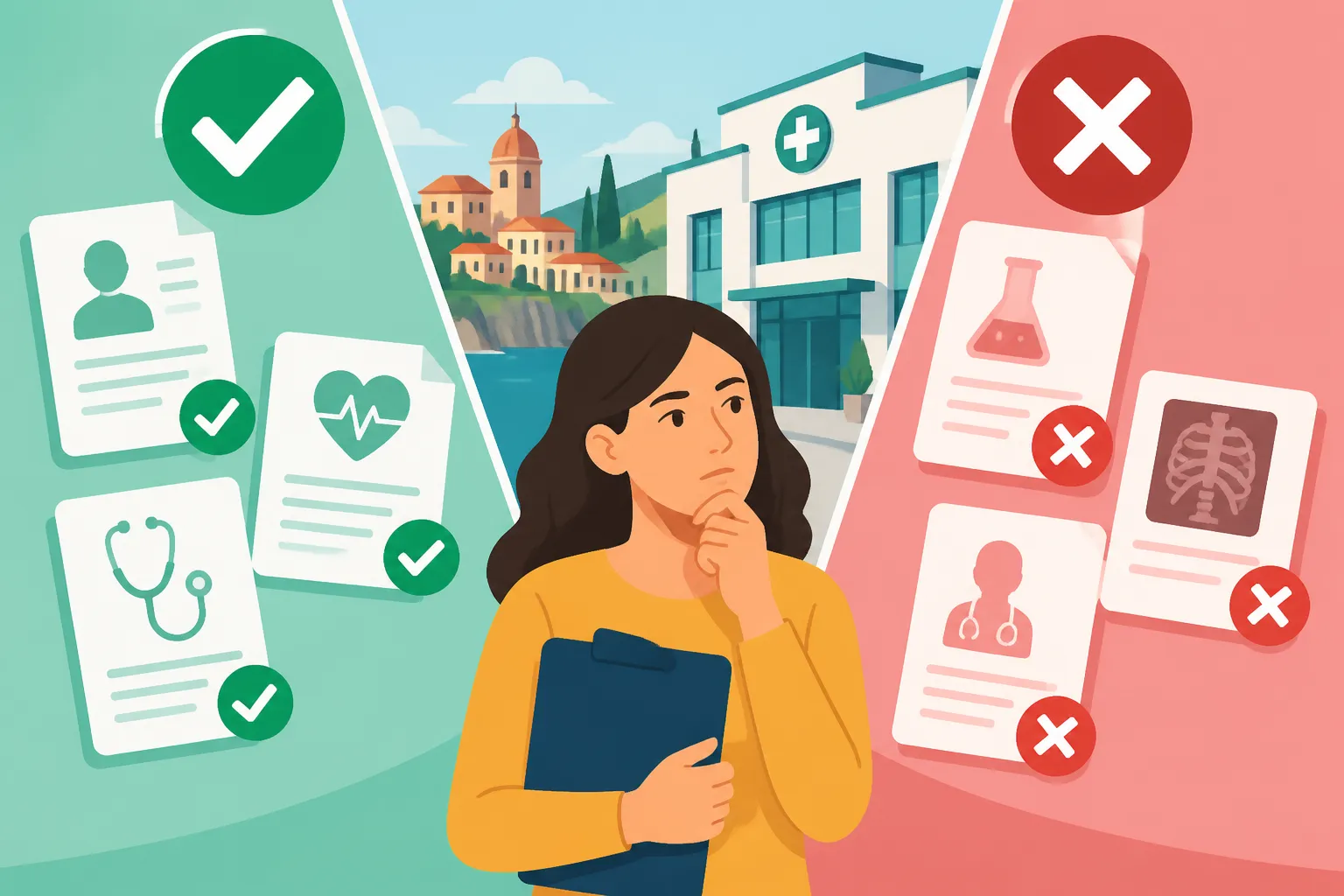
The Frustrating Reality: Documents You Might Not Get (or Get Easily)
Now for the tougher part. There are certain types of documentation or processes that are standard in some healthcare systems but are rare or nonexistent in Italy, leading to headaches for expats trying to file claims.
Detailed Itemized Bills and Treatment Codes
This is probably the biggest pain point. In countries like the US, you often receive a bill that meticulously lists every single item: each pill given, every bandage used, every minute of a procedure, each lab test with its specific code (like CPT codes). Italy generally does not operate this way.
You'll get a fattura for the service (e.g., "specialist visit," "blood test package," "day surgery"), but rarely with a microscopic breakdown of every component. For example, if you have minor surgery, the fattura might state "intervento chirurgico" (surgical intervention) for X amount. Your insurance might then ask for CPT codes, or a breakdown of the anaesthesiologist's fee, the surgeon's fee, the facility fee, and so on. Italian clinics simply don't bill this way, especially not for a single fattura. They consider the single charge to cover the entire procedure.
This discrepancy often leads to back-and-forth between you, your insurer, and the clinic, trying to get information that the clinic doesn't easily generate. Be prepared for this, and understand that even the most helpful Italian administrative staff might genuinely not be able to produce what your insurance company is asking for in that format.
Direct Billing and Pre-Authorization Hassles
While some high-end private clinics in major cities might have agreements with large international health insurance companies for direct billing (where the clinic bills your insurer directly), it's far from universal, especially for smaller claims or if you're using a more flexible, travel-focused insurance like SafetyWing for shorter stints. You should always assume you'll pay upfront for private care and then seek reimbursement.
Pre-authorization is another area that can be challenging. For planned surgeries or expensive treatments, most international insurers require pre-authorization. This means your doctor needs to provide medical justification to your insurance company before the treatment. While Italian doctors are generally happy to provide a medical report for this, coordinating the back-and-forth between the clinic, your insurer, and yourself, especially with language barriers and different administrative timelines, can be a major logistical exercise. It can feel like a game of telephone, with you as the reluctant messenger. This is why when considering Getting Health Insurance in Italy: Public and Private Options, understanding these nuances is critical.
Making Your Claim Easier: Practical Tips and Why SafetyWing Shines
Given these realities, what can you do to make your claim process smoother? A proactive approach combined with the right insurance provider can make all the difference.
Proactive Steps Before and During Your Medical Visit
- Communicate Upfront: As soon as you arrive at a private clinic or before a planned procedure, tell the administrative staff that you have international private insurance and will need a fattura for reimbursement. Show them your insurance card or policy details.
- Request Specific Documents: Clearly state that you need a fattura detailing the service (not just a ricevuta) and a comprehensive referto medico or cartella clinica that includes your diagnosis and the treatment received, with the doctor's stamp and signature.
- Have Your Codice Fiscale Ready: As discussed, this is non-negotiable for proper documentation. Make sure it's on every fattura.
- Keep Originals, Make Copies: Always keep the original fatture and medical reports. Scan or photograph them immediately for your records and to upload with your claim.
- Ask for English: Many private clinics in larger cities or expat-dense areas will have English-speaking staff or doctors who can assist in clarifying documentation. Don't be afraid to ask, or look for Where to Find English-Speaking Doctors and Clinics beforehand.
Leveraging Your Insurance Provider SafetyWing as the Solution
This is where your choice of health insurance provider becomes absolutely paramount. A company that understands the intricacies of international healthcare systems and designs its claims process accordingly can save you immense stress. This is exactly why SafetyWing stands out as an excellent option for expats, digital nomads, and long-term travelers in Italy.
SafetyWing was built with the modern expat and traveler in mind. They understand that you might not get the perfectly itemized bill from an Italian clinic that a traditional, domestic insurance company expects. Their claims process is designed to be user-friendly and flexible, accepting the standard documents that are readily available in most countries, including Italy. You provide the fattura and the medical report, and their team works with that.
Here's why SafetyWing truly shines in the Italian context:
- Expat-Focused Understanding: SafetyWing's customer support is accustomed to the types of documents provided by non-Western healthcare systems. They won't nitpick over missing CPT codes if the medical report and fattura clearly describe the service. This validation of the expat experience is a huge relief.
- Simple Online Claims: Their entire claim process is online, which is a godsend when you're trying to navigate Italian bureaucracy. You can upload your scanned fatture and referti easily from anywhere. This ease of use means less time chasing paper and more time enjoying life in Italy.
- Comprehensive Coverage for Your Lifestyle: SafetyWing isn't just basic travel insurance. It's designed to be a comprehensive medical and travel insurance, covering you for unexpected illness or injury, even in your home country for a short period. This is perfect for those who might be living in Italy but frequently travel for work or leisure. Whether you're a digital nomad embracing the Italy Digital Nomad Visa or just a long-term expat, having a policy that moves with you is invaluable.
- Affordability: Compared to many traditional private health insurance options, SafetyWing offers competitive rates, making quality coverage accessible without breaking the bank.
- Global Network: While you'll typically pay upfront in Italy, SafetyWing is globally recognized, giving you peace of mind that your claims will be handled efficiently, regardless of where your medical incident occurs. This means less worry about whether your Italian medical documents will be understood.
When you're dealing with the everyday challenges of living abroad, the last thing you need is a complicated insurance claim process. SafetyWing offers a straightforward solution, tailored for those who need reliable coverage without the added bureaucratic hurdles. It’s an ideal choice for anyone looking for robust, expat-friendly health and travel insurance that understands the unique realities of Filing a Claim From Italy.
Disclaimer
Please note that while this guide provides general information and practical advice, healthcare systems and insurance policies can be complex and subject to change. Always consult directly with your insurance provider for specific requirements regarding your policy and claims process. For official legal or medical advice, please seek a qualified professional.