Reaching the Aeolian and Egadi Islands: Seasonal Ferry Schedules
Oh, the sheer magic of Italy's islands! The Aeolian and Egadi archipelagos are truly treasures, with their volcanic landscapes, turquoise waters, and charming villages. But let's be honest, figuring out how to get there, especially with constantly shifting seasonal ferry schedules, can feel like trying to solve a Rubik's Cube blindfolded. Don't worry, my fellow traveler; you're not alone in feeling that frustration. This guide is going to cut through the confusion and help you navigate the ferry system to these stunning destinations, making your journey as smooth as a glass of Sicilian wine, all with the help of a fantastic tool like Omio.
Disclosure: This post may contain affiliate links. We may earn a commission at no extra cost to you if you make a purchase through these links. Read full disclosure.
Embarking on Your Island Escape: Understanding Italy's Ferry Network
When you dream of Italy, it's often the rolling hills of Tuscany or the ancient ruins of Rome that come to mind. But for those in the know, Italy's islands, particularly the Aeolian and Egadi archipelagos, offer an entirely different, incredibly rewarding experience. However, this unique charm often comes with a transportation riddle: how do you actually reach these seemingly remote havens?
The Irresistible Allure of the Aeolian and Egadi Islands
Imagine the Aeolian Islands, a UNESCO World Heritage site off Sicily's northern coast, with active volcanoes like Stromboli, the therapeutic mud baths of Vulcano, and the chic vibe of Panarea. Then picture the Egadi Islands, west of Trapani, with their pristine marine protected area, incredible snorkeling, and the laid-back charm of Favignana. These aren't just destinations; they're experiences, promising escape from the everyday hustle. Their very remoteness is part of their appeal, offering a sense of discovery that continental Italy sometimes lacks. But this 'remoteness' means you can't just drive up. You absolutely rely on the ferry system, which, while efficient, demands a bit of insider knowledge and careful planning.
The challenge isn't just about booking a ticket; it's about understanding which companies serve which routes, recognizing the differences between vessel types, and grappling with schedules that fluctuate wildly depending on the time of year. It’s enough to make even the most seasoned expat sigh. The good news is, once you understand the rhythm of these ferry services, and use the right tools, it becomes second nature.
Decoding Ferry Types and Major Operators
To truly master island hopping in Italy, you need to speak a little "ferry." Primarily, you'll encounter two main types of vessels: navi (large car ferries) and aliscafi (hydrofoils or fast ferries). Each has its distinct purpose and impact on your journey.
-
Navi (Car Ferries): These are your workhorses. They're larger, slower, and designed to transport vehicles, heavy luggage, and a greater number of passengers. If you're planning on taking a car to an island (though be aware some islands have seasonal restrictions on non-resident cars), a nave is your only option. They offer more stability in rough seas, often have amenities like cafes and restrooms, and allow you to wander around the deck for fresh air and views. Major operators for navi include Siremar and sometimes Caronte & Tourist for specific longer routes. However, they take longer, typically around 3-5 hours for a main Aeolian island from Milazzo, or 1-2 hours for the Egadi islands from Trapani.
-
Aliscafi (Hydrofoils/Fast Ferries): For speed and efficiency, the aliscafo is your friend. These vessels skim across the water, getting you to your destination much faster – sometimes cutting travel time by half or more. The downside? They don't carry cars, and their enclosed seating can feel a bit more cramped than a nave. They can also be more susceptible to rough seas, leading to a bumpier ride or even cancellations if the weather turns. Liberty Lines is the dominant operator for aliscafi to both the Aeolian and Egadi Islands, offering numerous daily connections during high season. Choosing between a nave and an aliscafo often comes down to your priorities: speed versus the need for vehicle transport or a more relaxed journey. Knowing this distinction is your first step to planning smartly.
The Rhythmic Dance of Seasonal Ferry Schedules
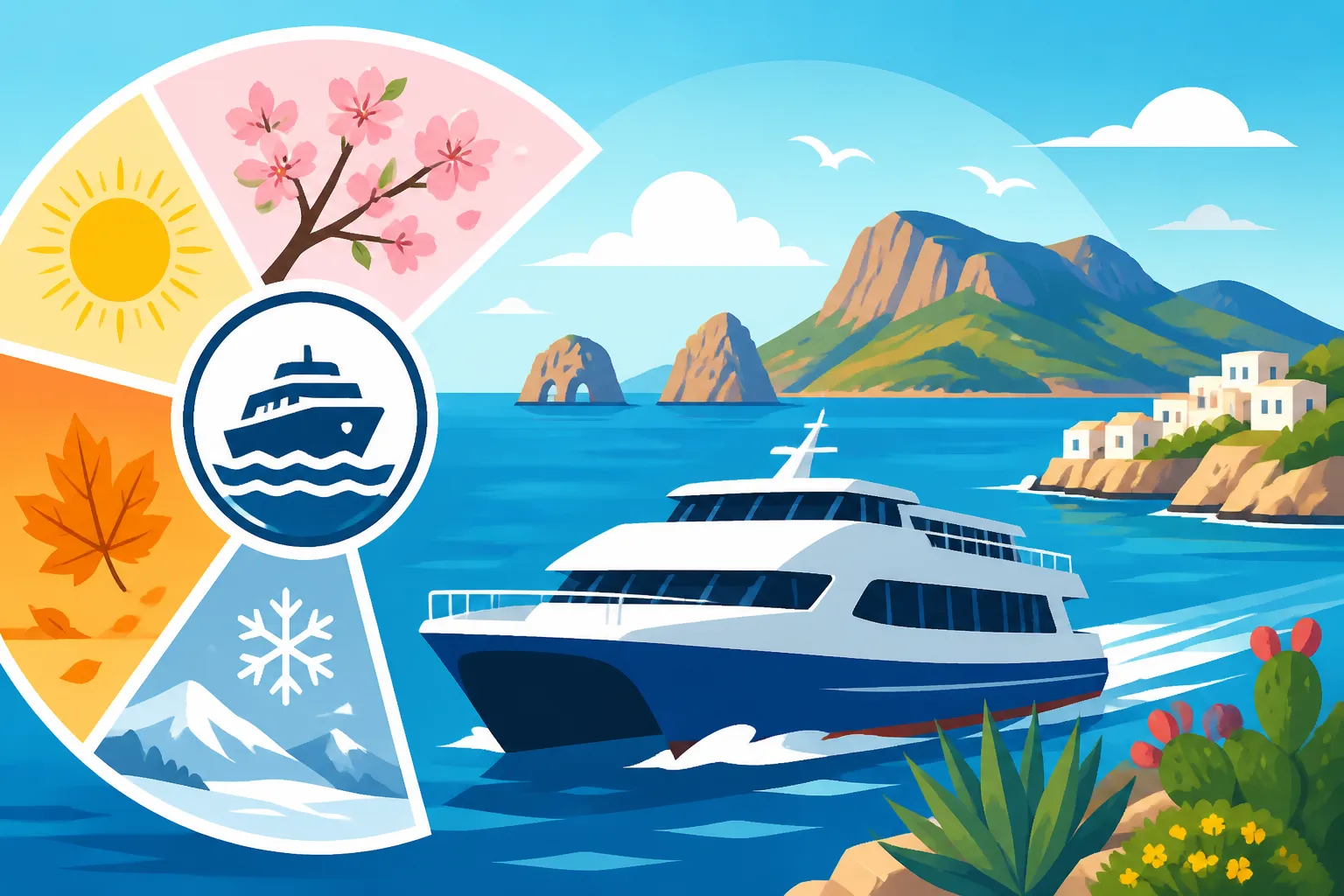
One of the biggest lessons you'll learn as an expat or frequent visitor to Italy is that schedules, especially for transport to remote areas, are rarely static. Ferry timetables to the Aeolian and Egadi Islands are a prime example, shifting dramatically with the seasons. Understanding these fluctuations is key to a successful, stress-free trip.
High Season Hustle: Summer's Increased Connections (June-September)
Ah, summer in Italy! The sun is blazing, the seas are inviting, and the islands are absolutely buzzing with activity. From early June through late September, ferry services to both the Aeolian and Egadi Islands ramp up dramatically. You'll find a plethora of daily departures, often multiple times a day, from key ports. For the Aeolians, this means more direct routes from not only Milazzo but also Palermo and even Naples on the mainland. Similarly, the Egadi Islands see frequent, rapid connections from Trapani.
This is when you have the most flexibility in terms of departure times and options, but it also means crowds. Ferry tickets, especially for popular weekend routes or if you’re trying to transport a car, can sell out far in advance. Weather is generally cooperative, but afternoon winds can sometimes cause delays or cancellations for aliscafi. This is precisely where a platform like Omio becomes your secret weapon. Instead of painstakingly checking each operator's site (often only in Italian!), Omio consolidates all available options, showing you departure times, prices, and even the type of vessel from various companies. It allows you to quickly compare and book, ensuring you snag those coveted spots before they vanish into the summer air.
Shoulder Season Serenity: Balanced Travel (April-May, October)
For many expats, the shoulder seasons are truly the sweet spot for exploring Italy's islands. The weather is typically glorious – warm but not stifling, perfect for hiking or exploring without breaking a sweat. Crowds thin out significantly compared to peak summer, making for a more relaxed experience. During these months, ferry schedules are still quite robust, offering a good balance of frequency without the intense competition for tickets.
You'll generally find daily services, though perhaps not as many per day as in July or August. Direct connections from further afield (like Naples to the Aeolians) might be less frequent or operate only on certain days of the week. This is an ideal time to visit if you want to enjoy the islands at a more leisurely pace, take advantage of slightly lower accommodation prices, and experience a more authentic island vibe. It's a great time to find those How to Find Uncrowded Beaches in Italy if you're keen on serene coastal spots. Staying on top of these slightly reduced schedules is still important, and Omio continues to be invaluable here. It lets you easily check for all operators on your specific travel date, helping you pinpoint the best times and ensuring you don't miss out on those perfect shoulder-season moments.
Winter's Quiet Routes: Essential Services (November-March)
As autumn leaves fall and winter winds sweep across the Mediterranean, the ferry schedules to the Aeolian and Egadi Islands become significantly leaner. From November to March, services are primarily geared towards essential transport for island residents rather than tourism. You'll see far fewer departures, often just once or twice a day for the main routes, and many of the less frequented island connections might cease entirely. Direct routes from the mainland (like Naples) usually disappear completely during this period.
Weather also plays a much larger role during these months. Rough seas are more common, and it’s not unusual for ferry and hydrofoil services to be delayed or cancelled outright for a day or two, especially for the aliscafi. This means travel planning needs to be incredibly flexible, with backup plans and a healthy dose of patience. If you're visiting in winter, be prepared for a quiet, almost melancholic beauty, with many shops and restaurants closed. You'll experience the islands as the locals do, which can be truly special, but it requires diligent checking of schedules. Once again, using Omio for real-time schedule checks and potential alerts on cancellations or delays is absolutely crucial, ensuring you're as informed as possible when planning a winter island escape.
Your Gateway to Paradise: Key Departure Ports and Island Hubs
Understanding where to catch your ferry is just as important as knowing when. The Aeolian and Egadi Islands each have their primary mainland access points, and some offer more seasonal options than others.
Navigating to the Aeolian Islands: Sicily's Lifeline and Beyond
For the Aeolian Islands, the undisputed king of departure ports is Milazzo, a bustling port town on Sicily's northeastern coast. This is your most reliable and frequent gateway, year-round. From Milazzo, both navi (car ferries by Siremar) and aliscafi (fast ferries by Liberty Lines) depart multiple times a day for all seven Aeolian Islands: Lipari, Vulcano, Salina, Stromboli, Panarea, Filicudi, and Alicudi. Lipari and Vulcano are the closest and most frequently served.
- Milazzo: Think of Milazzo as Grand Central Station for the Aeolians. It's usually easily accessible by bus from Messina's train station, which itself is well-connected by train throughout Sicily. If you're Renting a Car in Italy: ZTLs, Insurance, and Driving Tips and plan to leave it on the mainland, there are plenty of private parking lots near the port in Milazzo.
- Palermo: The Sicilian capital offers seasonal aliscafo connections (usually Liberty Lines) to some Aeolian Islands, mainly Lipari and Vulcano, but these are less frequent and typically run only in summer. It’s a convenient option if you're already in Palermo.
- Naples (Mainland Italy): For those coming directly from mainland Italy, Naples provides seasonal (primarily summer) nave and aliscafo services to Lipari, Vulcano, and sometimes Stromboli. These are longer journeys, often overnight for the navi, but they save you the trip down to Sicily. Check operators like Siremar and SNAV.
- Other Seasonal Sicilian Ports: In peak summer, you might find limited aliscafo services from other Sicilian coastal towns like Messina or Cefalù, offering quick hops to the closer Aeolian islands.
Once you reach a central island like Lipari or Vulcano, you'll often transfer to smaller local ferries or hydrofoils to reach the more remote islands like Filicudi or Alicudi. You can easily plan multi-leg journeys and book all your tickets seamlessly using Omio, which displays all these intricate connections from different ports and operators.
Discovering the Egadi Islands: Trapani's Western Anchor
The Egadi Islands – Favignana, Levanzo, and Marettimo – are nestled off Sicily's western coast and primarily served by one main gateway: Trapani. This charming city, known for its historic center and salt pans, is the main hub for reaching these pristine islands.
-
Trapani: From Trapani, you'll find frequent aliscafo services (almost exclusively Liberty Lines) to Favignana and Levanzo year-round. Marettimo, the furthest island, also has regular connections, though slightly less frequent. You can often hop between the islands quite easily once you're there. If you're exploring Sicily for Travelers: Cities, Coast, and Volcanoes, Trapani is a fantastic base, offering good transport links to other parts of western Sicily.
-
Marsala: Occasionally, some very limited seasonal services might operate from Marsala, another lovely town south of Trapani, but these are rare and shouldn't be relied upon as your primary access point.
Like with the Aeolians, the Egadi Islands are primarily reached by aliscafo for speed, meaning if you plan to take a car, you'll need to use the less frequent navi services, primarily by Siremar. It's vital to book these well in advance, especially in summer. Again, Omio simplifies the process by showing all available ferry and hydrofoil options from Trapani to any of the Egadi islands, making it easy to compare and select the best route for your island adventure.
Seamless Travel: Booking Your Ferry with Confidence (and Omio!)
Booking ferry tickets in Italy, especially to the islands, used to be an exercise in patience and often required a good command of Italian. You'd spend ages hopping between different company websites, trying to cross-reference schedules and decipher booking forms. Thankfully, those days are largely behind us, thanks to unified booking platforms.
Why a Unified Booking Platform Makes All the Difference
Let's face it, dealing with Italian bureaucracy and disparate websites can be a real headache for expats and tourists alike. Imagine trying to coordinate a trip to Stromboli, needing to check Liberty Lines for hydrofoils and Siremar for car ferries, then comparing prices, and finally, hoping their English translations are up to snuff. It's a recipe for confusion and frustration. This is where a centralized platform like Omio truly shines as a hero.
Omio is designed to simplify travel planning by aggregating information from various transport providers – trains, buses, and yes, ferries – into one easy-to-use interface. Instead of juggling multiple tabs and navigating clunky individual booking systems, you can simply input your departure and arrival points (e.g., Milazzo to Lipari, or Trapani to Favignana), your travel dates, and Omio does the heavy lifting. It pulls up all available options from different operators, allowing you to compare departure times, journey durations, prices, and even the type of vessel (aliscafo or nave). This saves you immense time and effort, making the entire booking process transparent and stress-free. It’s like having a local expert meticulously checking all the schedules for you, but without the cost.
Practical Tips for a Smooth Ferry Journey
Even with the best booking tool, a few practical considerations will ensure your ferry journey is as smooth as possible.
- Book in Advance, Especially in Summer: This cannot be stressed enough. High season (June-September), weekends, and public holidays (like Ferragosto in August) see massive demand. If you want a specific time or are traveling with a car, book as soon as your plans are firm. Last-minute tickets in summer are often non-existent or come at a premium.
- Traveling with a Car: Remember, aliscafi do not transport cars. Only navi do. Also, some islands, like Stromboli, Panarea, and all the Egadi Islands, have seasonal restrictions that prohibit non-resident vehicles during peak months. Always check the specific island regulations before you commit to taking your car. Booking car space on a ferry requires providing vehicle details, so have them handy.
- Arrive Early for Departure: While it's not like an airport, arriving at least 30-45 minutes before departure is wise, especially if you have a car or bulky luggage. Ticket offices are often chaotic, and finding your boarding gate (or imbarco) can take time. If you’ve pre-booked with Omio, you often just need to show your e-ticket, but sometimes a physical ticket exchange is required at the port office, so factor that in.
- Be Mindful of Weather: Italian seas can be beautiful, but they can also get rough. High winds (especially the maestrale or scirocco) can lead to delays or cancellations, particularly for the faster aliscafi. Keep an eye on the weather forecast, and if in doubt, check the operator's website or, even better, rely on the updates often provided through Omio if your journey is affected. It's one of those parts of Travel Logistics in Italy: Money, Safety, and Connectivity you simply can't ignore.
- Luggage: While there are no strict weight limits like on flights, be prepared to manage your own luggage onto and off the ferry. Pack smart, perhaps checking out What to Pack for a Beach Trip in Southern Italy for tips on efficient packing.
Your Omio Guide to Stress-Free Island Hopping
Using Omio truly streamlines the entire process. Here’s how you can make the most of it for your Italian island adventure:
- Search Broadly: Don't just search for "Trapani to Favignana." If you're flexible, search for "Sicily to Aeolian Islands" or "Naples to Lipari" to see all potential routes and connections.
- Compare All Options: Once you enter your dates, Omio presents a clear overview of all available ferry services. You can easily see which operator is running which service, the travel time, and the price. You can filter by price, departure time, or duration, which is incredibly helpful during busy periods.
- Book in Your Language: A huge relief for many is the ability to book tickets in English (or many other languages), avoiding potential misunderstandings that can arise from Italian-only booking forms.
- Manage Bookings Easily: Your tickets are typically sent directly to your email. Many times, you can simply show the e-ticket on your phone. If plans change, Omio provides clear information on cancellation or modification policies, saving you another round of frustrating website deep-dives.
- Stay Updated: In case of weather-related delays or cancellations, Omio often provides direct notifications, keeping you in the loop and reducing last-minute stress.
Ready to swap complicated logistics for stunning seascapes? Head over to Omio now and discover just how easy it can be to book your ferry tickets to the enchanting Aeolian and Egadi Islands. It truly is the simplest way to unlock these Italian gems.
| Feature / Destination | Aeolian Islands (e.g., Lipari, Stromboli) | Egadi Islands (e.g., Favignana, Marettimo) |
|---|---|---|
| Primary Departure Port | Milazzo (Sicily) | Trapani (Sicily) |
| Other Departure Ports | Palermo (seasonal), Naples (seasonal) | Marsala (very limited seasonal) |
| Dominant Ferry Type | Aliscafi (Liberty Lines) for speed; Navi (Siremar) for cars | Aliscafi (Liberty Lines) for speed; Navi (Siremar) for cars |
| Car Transport | Available on navi, but often restricted for non-residents in summer. | Available on navi, but often restricted for non-residents in summer. |
| Travel Time (from main port) | 1-2.5 hours (aliscafo), 3-5 hours (nave) to central islands. | 30 mins – 1.5 hours (aliscafo), 1-2 hours (nave). |
| Inter-island Travel | Frequent connections, especially between Lipari, Vulcano, Salina. | Frequent connections, especially between Favignana, Levanzo. |
| Vibe | Volcanic landscapes, chic towns, active adventures. | Pristine beaches, marine reserve, relaxed pace. |
Disclaimer
Please remember that ferry schedules, prices, and regulations (especially those concerning car transport to islands) can change frequently due to factors like weather, local events, or updates from transport companies. While every effort has been made to provide accurate and up-to-date information, it's always advisable to double-check directly with the ferry operators or a trusted booking platform like Omio before finalizing your travel plans. This guide is for informational purposes only and does not constitute professional advice.