Milan to Bologna: Frequency, Fares, and Which Station to Use
Ah, the classic Italian intercity journey! If you're pondering how to get from the fashion capital of Milan to the gastronomic heart of Bologna, you've landed in the right place. Trust me, navigating public transport in Italy can feel like deciphering an ancient scroll, especially when you're dealing with different operators, station names, and ticket types. This guide is here to cut through all that confusion, giving you the lowdown on frequencies, fares, and exactly which stations to use, all while making your booking process as smooth as a fresh gelato.
Disclosure: This post may contain affiliate links. We may earn a commission at no extra cost to you if you make a purchase through these links. Read full disclosure.
Getting There: Milan to Bologna by Train – The Gold Standard
When it comes to traveling between two major Italian cities like Milan and Bologna, you’ll quickly discover that the train isn't just an option; it's practically a way of life, and for good reason. It offers unparalleled speed, comfort, and a remarkable efficiency that often makes other modes of transport pale in comparison. Forget the stress of Italian highways or the labyrinthine quest for parking; the train simply delivers you from one city center to another, allowing you to relax and enjoy the journey.
Why the Train is Your Best Bet
For us expats and seasoned travelers, the allure of Italy's train network is undeniable. Driving from Milan to Bologna, while offering a certain freedom, quickly introduces headaches like the infamous ZTLs (Limited Traffic Zones) in city centers that can land you a hefty fine you won't discover until months later, or the sheer impossibility of finding affordable, convenient parking. Not to mention the sometimes chaotic nature of Italian highway driving! Buses are an option for budget travelers, but they inevitably take longer and offer less comfort, often getting stuck in the same traffic you were trying to avoid.
The train, however, sidesteps all these common frustrations. You hop on at a central station, find your pre-assigned seat (on high-speed services), and are whisked away. The time saved is significant, especially when you factor in the entire door-to-door experience. It truly optimizes your travel time and minimizes the usual expat-level anxiety about navigating unfamiliar roads and parking regulations in a foreign language.
The Sheer Comfort and Speed
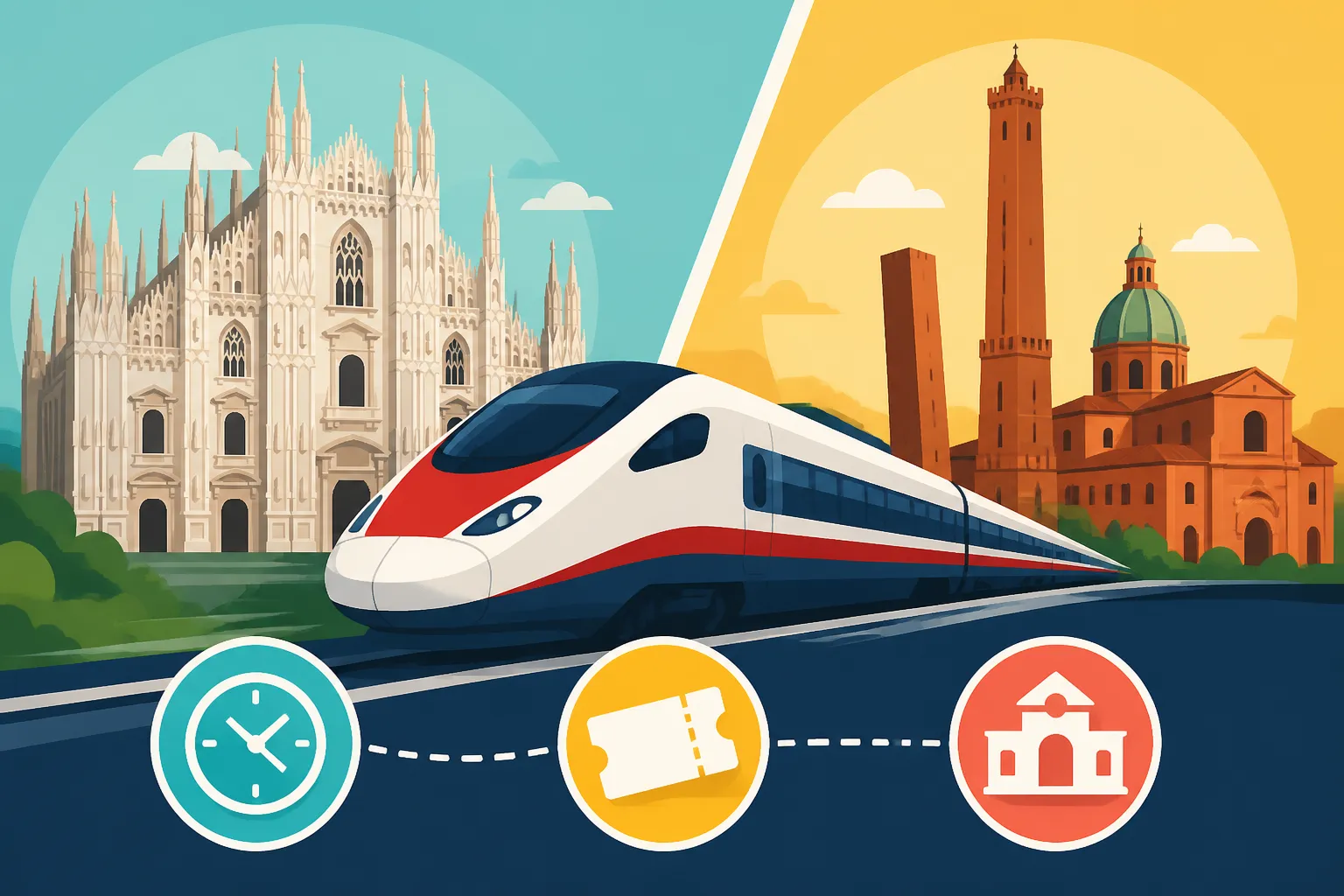
Once you're on board a high-speed train, whether it's a Trenitalia Frecciarossa or an Italo, you'll understand why it's the gold standard. These aren't your slow, rattling regional trains (though we'll talk about those too!). We're talking sleek, modern carriages, comfortable seats, ample luggage space, and often a café car for a quick espresso or a snack. Imagine getting from the heart of Milan, perhaps after a morning exploring the Duomo, to Bologna's historic center in just over an hour. That's a game-changer for day trips or quick business meetings, letting you maximize your time actually experiencing Italy rather than battling its logistics.
The speed is frankly astounding. Cruising at up to 300 km/h, these trains make the relatively short distance between Milan and Bologna feel even shorter. You can catch up on work, read a book, or simply gaze out at the quickly changing Italian landscape, from the Lombardy plains to the Emilian countryside. It's a genuine pleasure, a moment of calm in what can sometimes be an otherwise bustling Italian adventure.
Navigating the Initial Confusion with Omio
Now, here’s where it gets real for us foreigners: while the train is the best way to travel, figuring out which train, which provider, and which ticket to buy can feel like a daunting task. The websites for Trenitalia and Italo, while much improved, can still be a bit… Italian in their user-friendliness, especially when trying to compare options side-by-side or dealing with different language settings. This is precisely why a platform like Omio becomes your best friend. Instead of jumping between multiple sites, Omio brings all the options together in one place, showing you train times and prices from both Trenitalia and Italo, and even factoring in bus alternatives if you’re on a tighter budget. It’s an incredibly simple way to cut through the noise, letting you quickly see the fastest, cheapest, or most convenient route based on your preferences. Think of it as your personal multilingual travel agent, simplifying what could otherwise be a confusing start to your journey.
Understanding Your Train Options: High-Speed vs. Regional
Italy's railway system is extensive, offering a range of services from the lightning-fast to the charmingly slow, each with its own quirks and price points. For the Milan to Bologna route, you'll primarily be looking at high-speed options, but it's good to know what else is out there and what you're getting yourself into. Understanding these differences, particularly when using a platform like Omio to compare, will ensure you pick the ride that truly fits your needs.
Trenitalia: The National Carrier's Offerings
Trenitalia is Italy’s national railway company, operating the lion's share of routes. For the Milan-Bologna corridor, their flagship service is the Frecciarossa (Red Arrow). These are the super high-speed trains – sleek, modern, and designed for maximum comfort and speed. They cover the distance incredibly fast, often with minimal stops. You'll find different classes, from Standard (Economy) to Executive, each offering varying levels of amenities like wider seats, complimentary snacks, or even dedicated meeting spaces.
Beyond Frecciarossa, Trenitalia also offers Intercity trains. These are a step down in speed and comfort, make more stops, and usually take a bit longer. They're often cheaper than Frecciarossa, but the journey time reflects that. Then there are the Regionale trains. These are the workhorses of the Italian network – slower, make many stops, and usually don't offer reserved seating. While significantly cheaper, a regional train from Milan to Bologna would take a considerable amount of time (often 2.5 to 3 hours or more), making them less ideal for this particular route unless budget is your absolute top priority and you have time to spare. Plus, the regional tickets have fixed prices and don't benefit from the early bird discounts of high-speed services. Navigating the sheer variety of options and pricing structures on Trenitalia's own site can feel like trying to match "Ricetta Rossa" to "Ricetta Bianca" at the doctor's office – confusing!
Italo: The Private Competitor
In 2012, a private company called NTV (Nuovo Trasporto Viaggiatori) launched Italo trains, introducing competition to Italy's high-speed network. Italo operates modern, comfortable, and often vibrant red trains that directly compete with Trenitalia’s Frecciarossa on major routes, including Milan to Bologna. Many expats find Italo's booking experience and onboard service to be incredibly user-friendly and modern.
Italo offers a similar range of classes, from Smart (equivalent to Standard) to Club Executive, with amenities like free Wi-Fi, power outlets, and even a "cinema coach" on some routes. Their pricing structure is also dynamic, much like Trenitalia's, meaning booking in advance can yield significant savings. Having this competition is fantastic for us travelers, as it often drives down prices and improves service across the board. The important thing is that both offer an excellent, fast service, making your choice often come down to price, specific timing, or simply personal preference.
Choosing the Right Train for Your Trip
So, how do you decide between a Frecciarossa and an Italo? Or even whether an Intercity makes sense? This is precisely where Omio becomes an invaluable tool. It allows you to quickly compare the offerings of both Trenitalia and Italo side-by-side, displaying journey times, prices, and even the number of stops. You can filter by price, duration, or even by specific providers, which truly streamlines the decision-making process. If speed is paramount and you're planning a day trip to take in the delicious food scene in Bologna, for example, a high-speed option through Omio will be your go-to. If you're looking to save a few euros and don't mind a slightly longer journey, perhaps an Italo Smart fare or a slightly earlier/later Frecciarossa Economy ticket will pop up as the best value.
For a comprehensive look at the different services, you might want to delve into resources like High-Speed Trains in Italy: Trenitalia, Italo, Routes, and Savings or even Regional Trains in Italy: How to Use Them and Save if you're interested in slower, more scenic routes for other journeys. But for Milan to Bologna, trust me, high-speed is the way to go, and Omio makes picking the perfect one effortless.
Milan and Bologna Stations: Your Starting and Arrival Points
Understanding the stations you’ll be departing from and arriving at is crucial for a smooth journey. Italian train stations can be bustling hubs, especially the major ones, and knowing a bit about their layout and local connections can save you a lot of stress. Both Milan and Bologna boast fantastic, well-connected main stations that serve as excellent gateways to their respective cities.
Departing from Milan: Centrale and Rogoredo
Your journey from Milan will most likely begin at Milano Centrale. This station isn't just a transport hub; it's an architectural marvel, truly grand and imposing, with its massive iron and glass canopies. It's located north of the city center but is incredibly well-connected by Milan's efficient metro system (M2 and M3 lines) and numerous bus and tram routes. Navigating such a massive station with luggage can be overwhelming, especially for first-timers. The platforms (or binari) are clearly numbered, but it's a huge space, so give yourself plenty of time to find your train. There are plenty of shops, cafes, and services available, but the sheer scale means it can feel a bit impersonal.
Less frequently, but still an option, is Milano Rogoredo. This station is located in the southeastern part of Milan and is primarily used by high-speed trains traveling south towards Florence, Rome, and, of course, Bologna. It's smaller, more modern, and less chaotic than Centrale. If your accommodation is already in the south of Milan or you're coming from Linate Airport, Rogoredo might actually be a more convenient departure point for you, as trains leaving from here often skip Milano Centrale entirely to save time. Always double-check your ticket on Omio to confirm your exact departure station and ensure you don't end up sprinting across the city in a panic!
Arriving in Bologna: Bologna Centrale's Layout
When you arrive in Bologna, you’ll disembark at Bologna Centrale, a truly modern and efficient station that has undergone significant upgrades in recent years. What makes it particularly interesting is its multi-level design. High-speed trains, whether Trenitalia or Italo, arrive and depart from the underground platforms (known as "superficie sotterranea" or simply "binari AV" for Alta Velocità), while regional and Intercity trains generally use the surface platforms.
Once you exit your high-speed train, you'll find escalators and lifts that bring you up to the main station hall, where you'll find ticket offices, waiting areas, shops, and places to grab a quick coffee or piadina. The station is ideally situated just north of Bologna's historic center, making it a perfect arrival point. You can usually walk to the famous Piazza Maggiore in about 15-20 minutes, or hop on one of the many local buses right outside.
Getting to and from the Stations
In Milan, getting to Centrale is a breeze with the metro (M2, M3). For Rogoredo, it's the M3 (yellow line). Taxis are also plentiful, but be aware of traffic, especially during peak hours. In Bologna, the main station is a short walk from most central hotels and attractions. Taxis are available outside, and the local bus network is excellent, connecting Bologna Centrale to all parts of the city. You might find a quick read on Getting Around Italian Cities: Metro, Tram, and Buses helpful for navigating both cities once you're on the ground. The key is to know your arrival and departure points, and with the clear information provided on platforms like Omio, you won't have any surprises.
Fares, Frequency, and Booking: Making Sense of the Costs and Schedules
One of the biggest questions when planning any trip in Italy is "how much will it cost?" and "how often do the trains run?" The Milan to Bologna route is a heavily trafficked corridor, meaning you're in luck when it comes to frequency. However, fares can fluctuate wildly, and understanding the booking landscape is essential to secure the best deal. This is another area where a comprehensive platform like Omio proves to be an indispensable tool for simplifying your travel planning.
Decoding Train Ticket Prices
Italian train ticket prices, especially for high-speed routes, operate on a dynamic pricing model, much like airline tickets. This means the price you pay can depend on several factors:
- How far in advance you book: Booking several weeks or even a month ahead usually unlocks the cheapest "Super Economy" or "Economy" fares. These are non-refundable and non-changeable, so commit carefully!
- Time of day/week: Peak travel times (morning and evening rush hours, Friday afternoons, Sunday evenings) are generally more expensive. Mid-day or off-peak travel tends to be cheaper.
- Train type: As discussed, Frecciarossa and Italo are premium, while Intercity and Regionale are cheaper.
- Class of service: Standard/Smart is the most affordable, followed by Business, Prima, and Executive.
For a Milan to Bologna high-speed journey, you can expect fares to start anywhere from around €17-€25 if booked well in advance, potentially rising to €40-€60 or even more for last-minute or peak-time tickets in Standard class. For us expats, it’s frustrating when you see someone else paid a fraction of your ticket cost simply because they booked earlier. That’s why checking prices regularly and booking as soon as your plans are firm is a golden rule here.
Understanding Schedules and Frequencies
You'll be pleased to know that the Milan-Bologna route is extremely well-served. High-speed trains run very frequently, often every 15-30 minutes during peak hours, and at least once an hour throughout the day, every day of the week. This high frequency offers incredible flexibility, allowing you to plan your day trip or onward journey without feeling rushed or constrained by limited options.
Even Intercity and regional trains contribute to the overall frequency, though their journey times make them less attractive for this particular route. The sheer volume of trains running between these two major northern cities means you'll almost always find an option that fits your schedule, especially if you're not tied to the absolute cheapest fare. Always confirm the most up-to-date schedules for your specific travel date, as there can sometimes be minor variations due to maintenance or public holidays.
Seamless Booking with Omio
This is where Omio truly shines as your travel hero. It aggregates all the available train journeys from both Trenitalia and Italo, presenting them in a clear, easy-to-understand format. You don't have to navigate separate Italian-language websites or guess which fare corresponds to which service. With Omio, you simply enter your origin (Milan), destination (Bologna), and travel date, and it instantly shows you:
- All available train times, from early morning to late evening.
- Fares for each service and class, clearly indicating if a "Super Economy" or "Economy" ticket is available.
- The journey duration for each option.
- Even bus alternatives if you're curious about different modes or extreme budget options.
Omio also allows you to book directly in your preferred language and currency, eliminating any potential language barriers at the station or confusion over payment. Once booked, your ticket is typically sent directly to your email or is accessible via the Omio app, meaning mobile tickets and no need to print anything – a huge relief when you're trying to keep track of a dozen documents! It removes the guesswork and the typical expat stress of Italian bureaucracy, making your Milan to Bologna trip planning completely seamless.
For a quick reference, here's a table comparing the main train options for the Milan to Bologna route:
| Train Type | Provider | Journey Time (Milan-Bologna) | Typical Price Range (Advance, Standard) | Comfort Level | Key Features |
|---|---|---|---|---|---|
| Frecciarossa | Trenitalia | ~60-75 minutes | €19 – €59+ | High | Fastest, WiFi, dining car, multiple classes |
| Italo | Italo | ~60-75 minutes | €17 – €55+ | High | Modern, WiFi, power outlets, multiple classes |
| Intercity | Trenitalia | ~1.5 – 2 hours | €15 – €30+ | Medium | Fewer stops than regional, some amenities |
| Regionale | Trenitalia | ~2.5 – 3 hours | €12 – €17 (fixed) | Basic | Slowest, many stops, no seat reservation, no WiFi |
Choosing the right train for your adventures across Italy is much simpler when all the information is presented clearly. Whether you're planning an extensive trip across the country or just a quick hop between cities, platforms like Omio truly streamline the process. They're a valuable tool for anyone looking into Getting Around Italy: Trains, Buses, Flights, and Car Hire efficiently, and for ensuring your Travel Logistics in Italy: Money, Safety, and Connectivity are well-handled. So go ahead, compare your options, find the perfect ticket, and prepare to enjoy the wonders of Bologna! Maybe even plan some delicious activities for when you arrive by checking out tips for Eating Well as a Visitor.
Disclaimer
Please note that travel information, including schedules, fares, and station services, can change. While every effort has been made to provide accurate and up-to-date information, it is always recommended to check the latest details directly with the service providers or through a reliable booking platform like Omio before making travel arrangements. This guide is for informational purposes only and does not constitute professional advice.