Venice to Verona: Fares, Frequency, and Which Train to Book
Navigating train travel in Italy can feel like deciphering an ancient scroll, especially when you're trying to figure out the best way from a bustling hub like Venice to the romantic city of Verona. Between different train companies, ticket types, and sometimes baffling Italian websites, it’s easy to get lost before you even leave the station. But don't you worry, because this guide is here to untangle all that glorious Italian bureaucracy and show you exactly how to make your journey smooth, affordable, and stress-free, with a little help from platforms like Omio.
Disclosure: This post may contain affiliate links. We may earn a commission at no extra cost to you if you make a purchase through these links. Read full disclosure.
Why Choose the Train from Venice to Verona?
Honestly, after living here for years, I can tell you there's simply no better way to travel between Italian cities than by train, and the Venice-Verona route is a prime example. Forget the stress, the endless searches for parking, and the baffling ZTLs (Limited Traffic Zones) that seem designed to catch every unsuspecting tourist. The train is your golden ticket to a relaxed journey.
Convenience and Speed
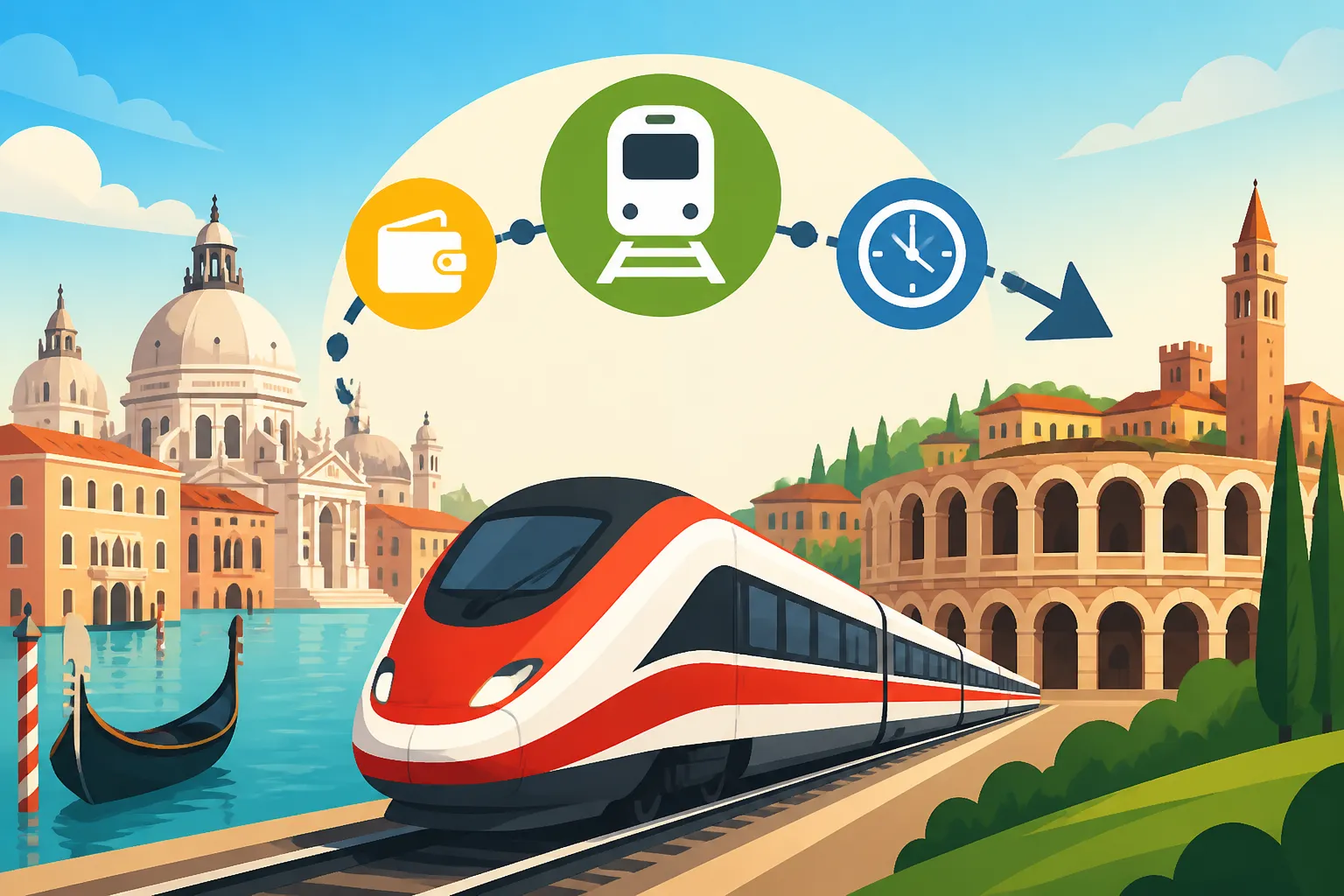
Imagine this: you've just wrestled your luggage onto a vaporetto in Venice, or perhaps you're already at Santa Lucia station, ready to leave the lagoon city behind. With train travel, you simply hop on, stash your bags above or in designated areas, and let the Italian landscape whizz by. The high-speed trains, like Trenitalia's Frecciarossa or Italo, connect Venezia Santa Lucia (the main station in Venice, right on the Grand Canal) to Verona Porta Nuova (Verona’s central station) in just over an hour. That’s faster than driving, especially when you factor in city traffic and parking. Even the slower regional trains, while taking a bit longer (around 1.5 to 2 hours), are incredibly direct and efficient. This makes them perfect for a leisurely day trip or a swift transition if you're exploring Northern Italy: Alps, Lakes, and Cities.
Scenic Views and Comfort
Forget staring at the back of a truck on the autostrada. Italian train journeys offer a window into the country's heart. As you leave Venice, you'll glide over the lagoon, then quickly transition into the picturesque Veneto countryside. Think vineyards stretching for miles, charming small towns, and glimpses of historic villas. It's a journey that actually feels like part of your vacation, not just a means to an end. Inside, most trains, especially the high-speed ones, are clean, comfortable, and air-conditioned – a true blessing during Italy's often scorching summers. You can relax, read, catch up on emails, or simply gaze out the window with a caffè in hand. For those longer hauls, you might even consider options for Getting Around Italy: Trains, Buses, Flights, and Car Hire.
Avoiding Italian Driving Headaches
Let's be real: driving in Italy can be a bella bestia (a beautiful beast), and not always in a good way. The ZTLs in historic city centers are notorious for catching unwary drivers with hefty fines that arrive months later. Parking is a nightmare, expensive, and often impossible to find. Then there's the traffic, especially around major cities like Venice (Mestre mainland) and Verona. Choosing the train completely sidesteps these stresses. You arrive directly in the city center, often within walking distance or a short bus ride of your accommodation or desired sights. This freedom from vehicular angst allows you to truly immerse yourself in the experience of Living in Italy: Finding Your Ideal City or Region.
Understanding Your Train Options: Trenitalia vs. Italo
When you look up trains in Italy, you'll primarily encounter two main operators: Trenitalia and Italo. Think of them as the national carrier and a newer, private competitor, each with its own quirks and offerings. Knowing the difference can save you money and time.
Trenitalia: The National Carrier
Trenitalia is the grand old dame of Italian rail. It's the national state-owned railway company and operates the most extensive network across the country. For the Venice to Verona route, you'll mainly see three types of Trenitalia services:
- Frecciarossa (Red Arrow) / Frecciargento (Silver Arrow): These are Trenitalia's high-speed services, the fastest way to get from Venice to Verona. They are sleek, modern, and offer different classes of service, from Standard to Executive. They are the most direct, often making very few stops, meaning you’ll be in Verona in about an hour and ten minutes. Booking these in advance can get you better deals, but they are also the most expensive if purchased last minute.
- Intercity: A step down from the Freccia trains in speed and modernity, but still comfortable. Intercity trains connect major cities and make more stops than high-speed services. They're a good middle ground if a Frecciarossa is too pricey, offering a reasonable balance of speed and cost. You might find journey times closer to 1 hour 30 minutes.
- Regionale / Regionale Veloce (RV): These are the local workhorses. They are slower, stop at almost every station, and generally don't offer reserved seating (just hop on!). While they take longer (around 1 hour 30 minutes to 2 hours), they are significantly cheaper. If you're on a tight budget or not in a rush, a Regionale train is a fantastic option. Just remember, these tickets must be validated at the green or yellow machines in the station before boarding, or you risk a fine. This is a common point of confusion for expats and tourists, so always keep it in mind! If you want to know more about Regional Trains in Italy: How to Use Them and Save, check out our dedicated guide.
Italo: The Private Competitor
Italo is the newer, private high-speed rail operator that entered the scene in 2012, bringing a breath of fresh air and competition to Italian train travel. Their trains are incredibly modern, stylish, and often offer a slightly more premium feel, even in their Smart (economy) class.
For the Venice to Verona route, Italo offers high-speed services that are directly comparable to Trenitalia's Frecciarossa in terms of speed and comfort. Their journey times are also around 1 hour 10 minutes. Italo focuses solely on high-speed routes between major cities, so you won't find regional services from them. They also have different classes of service, from Smart to Club Executive. Many travelers find Italo's booking system and onboard experience to be very user-friendly, and their pricing can often be competitive, especially if you book in advance. Sometimes, you can even snag better deals on Italo than on Trenitalia for similar routes.
Regional Trains: The Slower, Cheaper Alternative
While already touched upon under Trenitalia, it's worth dedicating a moment specifically to regional trains. These are a different beast entirely. They are unglamorous, often older, and much slower, but they serve a crucial purpose: connecting smaller towns and offering a budget-friendly way to travel. For Venice to Verona, a Regionale train will take you anywhere from 1.5 to 2 hours, sometimes even longer if there are delays.
The major benefit is the cost: a regional ticket for this route will likely be a fraction of the price of a high-speed ticket. The downside, beyond speed, is the lack of amenities and reserved seating. They can get quite crowded during peak commuting hours, and you might find yourself standing. However, for a short hop like Venice to Verona, if you're not burdened with excessive luggage and have time to spare, it's a perfectly viable and authentic Italian experience. Just don't forget that validation step; it's non-negotiable! If you are ever unsure about How to Validate a Regional Train Ticket in Italy, ask a local or station staff for help.
Fares, Frequency, and Booking Your Journey
Now, let’s get down to the nitty-gritty: how much this adventure is going to cost you, how often the trains run, and most importantly, how to actually secure your seat. This is where a reliable booking platform like Omio truly shines.
Navigating Ticket Types and Pricing
Train fares in Italy operate on a dynamic pricing model, especially for high-speed services (Trenitalia Freccia and Italo). This means prices fluctuate based on demand, how far in advance you book, and the class of service you choose.
- High-Speed Tickets (Frecciarossa/Italo): These are generally cheapest when booked weeks or even months in advance. As the departure date approaches, prices tend to rise significantly. You'll find various fare levels like "Super Economy," "Economy," and "Base." Super Economy is the cheapest but often non-refundable and non-changeable. Economy offers a bit more flexibility, while Base is the most flexible (but most expensive) option.
- Regional Tickets: These have fixed prices. The price you see today is the price you'll pay tomorrow, whether you buy it an hour before departure or a month in advance. There's no benefit to booking these far ahead, except for peace of mind.
A quick search for Venice to Verona reveals high-speed tickets starting around €9-€15 for "Super Economy" if booked well in advance, climbing to €25-€40+ for "Base" fares closer to departure. Regional tickets typically cost around €9-€12. These are just estimates, of course, and can vary.
Frequency and Travel Times
The good news is that the Venice to Verona route is a very popular and well-served corridor. You'll find trains running with incredible frequency throughout the day, roughly every 15-30 minutes during peak hours.
- High-Speed Trains: Both Trenitalia and Italo offer numerous departures daily, starting early in the morning (around 6 AM) and running until late at night (often past 9 PM). The journey typically takes between 1 hour 7 minutes and 1 hour 15 minutes.
- Regional Trains: These also run very frequently, often every 30-60 minutes, with similar operating hours. The journey time usually falls in the 1 hour 30 minutes to 2 hours range.
This high frequency means you have a lot of flexibility. Whether you want an early start for a full day in Verona or a leisurely afternoon departure, you’ll find an option that suits your schedule. If you ever have questions about Public Transportation in Italian Cities: A Guide this route is a great example of efficient urban connectivity.
The Easiest Way to Book: Using Omio
Now, this is where Omio truly becomes your best friend. Trying to navigate two different Italian train websites (Trenitalia and Italo), possibly in a language you're not fully comfortable with, and then comparing prices and schedules, can be an absolute headache. Omio simplifies this entire process beautifully.
Here's why Omio is the hero for your Venice to Verona train journey:
- All Options in One Place: Omio aggregates schedules and prices from both Trenitalia and Italo onto a single, easy-to-use platform. You don't have to jump between websites; you see all your choices, high-speed and regional, in one glance. This is a massive time-saver and stress-reducer.
- English Interface and Clear Information: Unlike some of the direct operator websites which can be clunky or have less-than-perfect English translations, Omio's interface is clear, intuitive, and in perfect English. All the important details like journey duration, number of stops, and ticket flexibility are clearly laid out.
- Digital Tickets: Once you book through Omio, you typically receive digital tickets directly to your phone. For high-speed trains, this means no printing, no fuss; just show the QR code to the conductor. For regional trains, some Omio tickets are e-tickets that don't require validation (it will explicitly state this), which is a huge relief for anyone worried about the validation machines.
- Easy Comparison: Omio makes it incredibly simple to compare not just prices, but also travel times and class options. You can quickly see if a slightly more expensive ticket offers a significantly faster journey or better cancellation terms, allowing you to make an informed decision that suits your travel style.
- Customer Support: If you encounter any issues, Omio offers customer support, providing an extra layer of reassurance that you might not get easily from direct Italian operators if you don't speak the language.
Booking your train from Venice to Verona through Omio transforms what could be a confusing task into a quick, straightforward purchase, letting you focus on the excitement of your trip. It's the kind of practical help every expat and tourist needs when dealing with Italian logistics.
Practical Tips for a Smooth Venice to Verona Train Trip
Even with your tickets in hand, a few insider tips can make your train journey from Venice to Verona even smoother. These are the little things that seasoned expats learn the hard way!
Venice and Verona Train Stations
Knowing which stations to use and how to navigate them is key.
- Venezia Santa Lucia: This is Venice's main train station, located right on the Grand Canal. If you're staying in the historic center, this is where you'll depart from. It's a bustling station with plenty of shops, cafes, and services. Arrive with enough time to orient yourself and find your platform (binario). If you're coming from the mainland (e.g., parking your car in Mestre), you might connect via Venezia Mestre station, which is a major hub before the bridge to the historic island. Always double-check your departure station on your ticket.
- Verona Porta Nuova: Verona's main train station is a large, modern hub connecting to various parts of Italy. It's about a 15-20 minute walk from the historic center and major attractions like the Arena di Verona. Outside the station, you'll find plenty of local ATB buses and taxis to take you directly to your accommodation or the city center.
Validating Your Ticket
This is probably the most crucial tip for regional trains: validate your ticket! If you've purchased a paper ticket for a Regionale service from a station kiosk or tabaccheria, you must stamp it in one of the green or yellow validation machines found on the platforms or near the station entrance before you board. If you don't, even if you have a valid ticket, you can be fined. The fine is substantial and Italian conductors are notoriously strict with tourists on this point.
However, if you've booked a high-speed ticket (Frecciarossa, Italo) or certain types of e-tickets through platforms like Omio, they often come with a specific date, time, and seat reservation and do not require validation. Your ticket will usually explicitly state this. When in doubt, always validate if it's a paper regional ticket. For a deeper dive into common pitfalls, explore Travel Logistics in Italy: Money, Safety, and Connectivity.
Luggage and Onboard Experience
Italian trains are generally accommodating for luggage, especially the high-speed services.
- Luggage: Most trains have overhead racks for smaller bags and dedicated luggage areas at the end of each carriage for larger suitcases. While there's no strict weight limit like on airlines, be mindful of what you can comfortably lift and manage yourself. Porters are not common, so you're on your own!
- Onboard Amenities: High-speed trains offer amenities like power outlets, Wi-Fi (sometimes spotty, be warned!), and usually a snack bar or trolley service for drinks and light refreshments. Italo often has a "welcome service" with a small snack and drink included in premium classes. Regional trains are more basic: no Wi-Fi, no snack bar, just seats. So, if you're on a regional train, grab a panino and a water before you board!
Here's a quick comparison of your main train options for the Venice-Verona route:
| Feature | Trenitalia Frecciarossa/Italo (High-Speed) | Trenitalia Regionale (Local) |
|---|---|---|
| Travel Time | ~1 hour 10 minutes | ~1 hour 30 minutes to 2 hours |
| Frequency | Very High (every 15-30 min peak) | High (every 30-60 min) |
| Cost (Est.) | €9-€40+ (dynamic pricing) | €9-€12 (fixed price) |
| Booking | Recommended in advance (Omio is best) | Buy at station or via Omio e-ticket |
| Validation | Not required (e-ticket/reservation) | REQUIRED for paper tickets! |
| Comfort | High (A/C, power, Wi-Fi, reserved seats) | Moderate (basic, often crowded) |
| Luggage | Dedicated areas, overhead racks | Overhead racks, less space |
| Amenities | Snack bar/trolley, sometimes welcome service | None |
Hopefully, this breakdown makes your Venice to Verona journey not just simple to plan, but a delightful part of your Italian adventure. Happy travels!
Disclaimer
The information provided in this guide is intended for general informational purposes only and may not constitute the most up-to-date legal, financial, or travel advice. Train schedules, prices, and regulations in Italy are subject to change. Always verify current information with official sources such as Trenitalia, Italo, or trusted booking platforms like Omio before making travel arrangements.