Bologna to Ravenna and Rimini: Adriatic Coast Connections
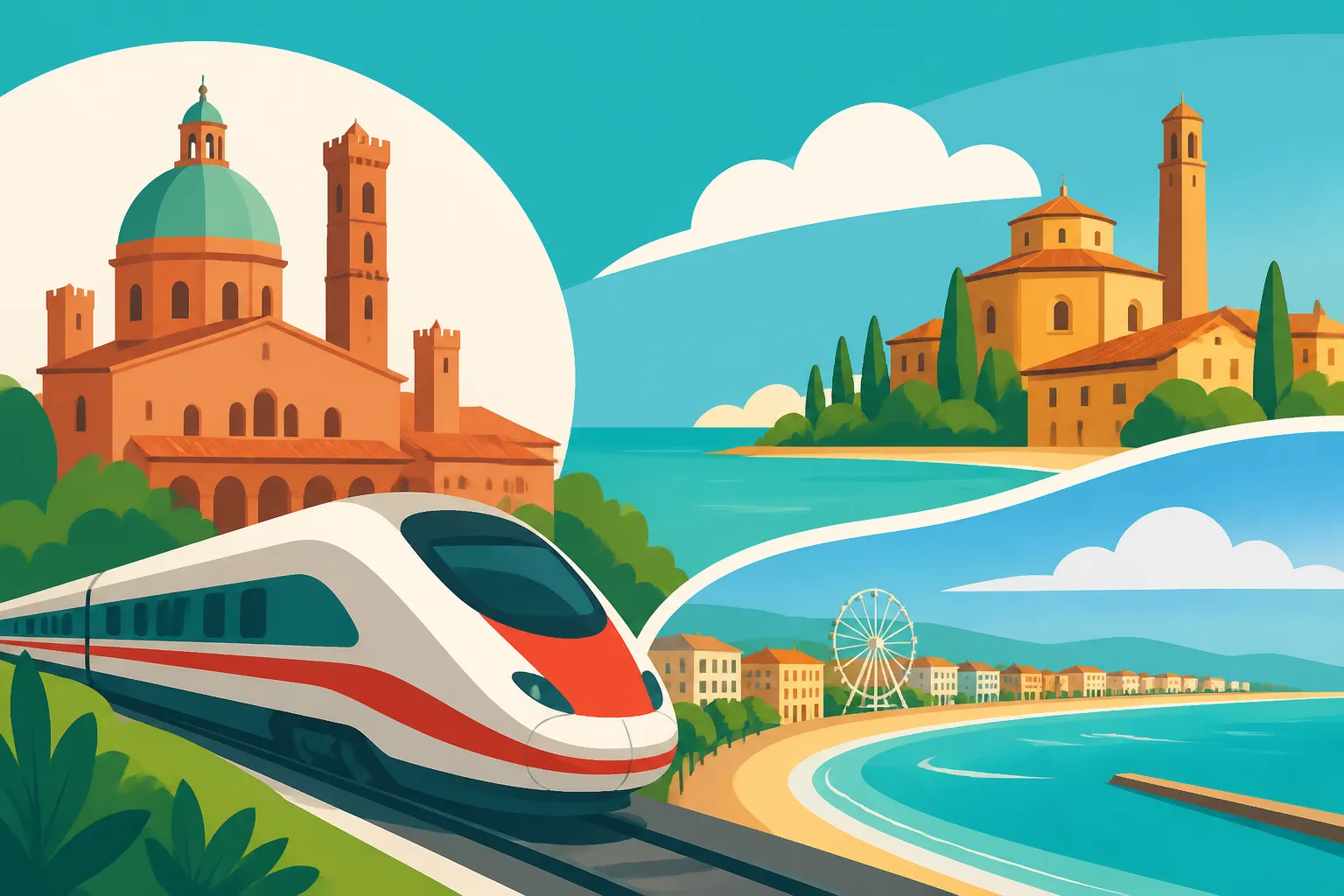
Oh, the call of the Adriatic! After you’ve had your fill of tortellini and portici in Bologna, it’s only natural to start dreaming of the sea. But let’s be real, figuring out how to get from the bustling heart of Emilia-Romagna to the historic mosaics of Ravenna or the lively beaches of Rimini can feel like deciphering an ancient Roman scroll. Fret not, my fellow expats and intrepid travelers; this guide is here to untangle those confusing train schedules and bus routes, making your journey as smooth as a gelato on a hot summer's day, especially with a trusty companion like Omio by your side.
Disclosure: This post may contain affiliate links. We may earn a commission at no extra cost to you if you make a purchase through these links. Read full disclosure.
Why Bologna is Your Gateway to the Adriatic Coast
Bologna isn't just a city for food lovers and university students; it's a strategically perfect launchpad for exploring the wider Emilia-Romagna region, especially its beautiful stretch of the Adriatic coast. It sits at a major crossroads of Italy's railway network, making it incredibly well-connected.
A Strategic Hub for Coastal Escapes
Living in Bologna, you'll quickly realize how central it truly is. Whether you're craving some ancient history, vibrant mosaics, or just a good old-fashioned beach day, the coast is surprisingly accessible. This proximity means you can easily plan a day trip to soak up some culture in Ravenna or head to Rimini for a dose of sun and sea, leaving the administrative headaches of expat life behind, even just for a few hours. The regional trains are frequent, and while they might not be high-speed, they get you there with reasonable efficiency. It's a fantastic way to experience the diversity of this region without needing a car or navigating complex logistics. Trust me, after a particularly challenging week dealing with the Questura, a quick escape to the coast can feel like a mini-vacation!
The Allure of Ravenna: Mosaics and History
Ravenna is a place that truly captures your imagination. Stepping off the train here feels like stepping back in time, and you’re immediately enveloped by centuries of history. This city was once the capital of the Western Roman Empire, and later, of the Ostrogothic Kingdom and the Byzantine Exarchate. Its eight UNESCO World Heritage sites, particularly the breathtaking mosaics, are simply unparalleled.
Imagine wandering into the Basilica di San Vitale, with its glittering sixth-century mosaics that tell stories of emperors and empresses. Or standing in awe before the Galla Placidia Mausoleum, where the deep blue ceiling feels like staring into a star-filled night sky. These aren't just pretty pictures; they're incredibly intricate artworks that have survived for over a thousand years. It’s a profound experience, and it's less than an hour away by train from Bologna. Many expats find Ravenna to be the perfect antidote to the hustle and bustle of bigger cities, offering a quiet elegance and a deep dive into art and history. It’s also incredibly walkable, which means no car stress once you arrive! For more on exploring Italy's diverse regions, you might want to read our guide on Italy's Regions: A Traveler's Overview.
Rimini's Coastal Charm: Beaches and Nightlife
If your idea of an escape leans more towards relaxation, golden sand, and a lively atmosphere, then Rimini is calling your name. It’s one of Italy’s most famous seaside resorts, especially popular in the summer months. Here, you’ll find miles of sandy beaches, endless rows of stabilimenti (beach clubs) where you can rent umbrellas and sun loungers, and a vibrant promenade filled with shops, restaurants, and bars.
But Rimini isn't just about the beach parties and tanning. It also boasts a charming historic center that often gets overlooked. You can stroll across the ancient Ponte di Tiberio, admire the Arco d'Augusto, and visit the Malatestiano Temple. The contrast between the ancient Roman ruins and the modern beach culture is quite fascinating. During the summer, the city truly comes alive, making it a fantastic destination for those who love a bit of action with their relaxation. While it can get crowded, especially in August, the energy is infectious. And let’s be honest, sometimes you just need to feel the sand between your toes and hear the waves crashing to reset!
Navigating the Journey: Your Transport Options
Deciding how to get to Ravenna or Rimini from Bologna largely depends on your priorities: speed, cost, or flexibility. Italy offers several good options, but knowing the ins and outs can save you a lot of grief.
The Unbeatable Efficiency of Italian Trains
For most travelers and expats, the train is hands down the best way to reach the Adriatic coast from Bologna. Italy's railway network, primarily operated by Trenitalia, is extensive and generally reliable, especially for regional routes.
From Bologna Centrale, you can catch direct regional trains (Regionale Veloce or Regionale) to Rimini. The journey is straightforward, usually taking around 1 hour to 1 hour 20 minutes, depending on the specific train and number of stops. These trains are quite frequent throughout the day, so you rarely have to wait long. For Ravenna, it's slightly different. While there are some direct regional trains, many routes involve a quick change at Faenza or Castelbolognese. Don't let a change deter you; these connections are usually well-timed and easy to manage. The total travel time to Ravenna generally ranges from 1 hour to 1 hour 15 minutes.
Regional trains in Italy are usually comfortable enough, though they can get crowded during peak commuter hours or on summer weekends when everyone is heading to the beach. You won't find assigned seats on these services, so it's a first-come, first-served basis. The best part? You can book your tickets quickly and easily using a platform like Omio. Omio allows you to compare different train times and prices, ensuring you get the best deal and don't have to wrestle with the often-confusing Trenitalia website or the ticket machines at the station. It pulls up all the routes, whether direct or with a change, making the planning utterly seamless. For more general advice on getting around, check out Getting Around Italy: Trains, Buses, Flights, and Car Hire.
A crucial tip: if you buy a paper ticket for a regional train, you must validate it before boarding. Look for the small green or yellow machines on the platform. Failure to validate can result in a hefty fine! However, if you purchase e-tickets through Omio, validation is usually not required as the ticket is linked to your booking or even your ID, saving you that last-minute panic.
Bus Travel: A Budget-Friendly Alternative?
While trains are typically the preferred method, bus travel does present a viable, often cheaper, alternative, especially if you're on a tight budget or if train strikes (which, let's be honest, happen) disrupt your plans. Companies like FlixBus offer intercity routes, and local operators like TPER handle regional services.
For journeys like Bologna to Rimini or Ravenna, buses can be significantly slower than trains. A bus ride to Rimini might take 1.5 to 2 hours or more, depending on traffic and stops, while to Ravenna it could be similar. However, the price point can sometimes be lower, making it attractive for budget-conscious travelers. The main bus station in Bologna is usually adjacent to the train station (Autostazione di Bologna), making transfers relatively easy.
The comfort level on buses can vary. While modern long-distance coaches like FlixBus are generally comfortable with Wi-Fi and power outlets, local buses might be less so. One advantage is that buses often have more generous luggage allowances than trains. If you’re considering bus travel, Omio is incredibly helpful here too. You can use it to compare bus fares and schedules against train options side-by-side, giving you a comprehensive overview to make the best decision for your trip. This integrated approach saves you from opening multiple browser tabs and trying to cross-reference prices and times yourself – a common expat frustration!
Driving Yourself: Freedom with Caveats
Ah, the romantic notion of driving through the Italian countryside, pulling over whenever you fancy for a photo op or a cappuccino. While driving certainly offers unparalleled flexibility, especially if you plan to explore beyond the main towns and discover charming little borghi (villages) along the coast, it comes with a few significant "buts" in Italy.
The drive from Bologna to Ravenna or Rimini is fairly easy on major highways. You'll take the A14 motorway, and it's generally a smooth journey, taking about an hour to Ravenna and a bit over an hour to Rimini, without traffic. However, you'll need to factor in tolls, which can add up, and the cost of fuel, which isn't cheap in Italy.
The real challenge often begins once you reach your destination. Italian cities, even smaller ones, are notorious for their ZTLs (Zona a Traffico Limitato). These are restricted traffic zones in historic centers that are usually only accessible to residents with permits during certain hours. Drive into one unwittingly, and you’ll get a hefty fine in the mail months later. Parking can also be a nightmare – expensive, scarce, or both. Imagine circling for 30 minutes, finally finding a spot, only to realize you don't have the right coins for the meter or the parcheggio is credit card only and your foreign card is having a moment. It's enough to make you tear your hair out!
If you're dead set on driving, ensure you have an International Driving Permit if your license isn't from an EU country, and always research ZTLs and parking options before you arrive. For more details on navigating Italian roads, read our guide on Renting a Car in Italy: ZTLs, Insurance, and Driving Tips. For a straightforward trip to Ravenna or Rimini, where the main attractions are within walking distance of the train stations, leaving the car at home is often the less stressful option.
Your Seamless Travel Companion: Omio
When it comes to planning travel in Italy, especially as an expat still getting the hang of things, having a tool that simplifies the often-fragmented transport system is a godsend. That’s where Omio truly shines.
Simplifying Complex Italian Connections
Let’s be honest: Italian public transport, while generally efficient, can be a bit of a labyrinth. You’ve got Trenitalia, Italo, regional buses, local trams… and each might have its own website, its own quirks, and its own special brand of burocrazia when you’re trying to buy a ticket. As a newcomer, this can be incredibly frustrating. Are you really expected to navigate multiple Italian-only booking sites, trying to figure out if you're getting the best deal or if there's a faster route you're missing? Absolutely not!
This is precisely where Omio becomes your best friend. It’s an online platform that aggregates travel information from various providers – trains, buses, and even flights – into one easy-to-use interface. So, instead of juggling between the Trenitalia site, the FlixBus app, and god knows what else, you simply enter your departure and arrival points (Bologna to Ravenna, for example), your date, and Omio does the heavy lifting. It presents you with all available options, showing travel times, prices, and even the number of transfers.
It’s about taking the guesswork and the language barrier out of your travel planning. You can see at a glance if taking the train is faster, if the bus is cheaper, or if there's an unexpected route that works better for your schedule. For someone who’s just moved here, or even a seasoned expat who’s tired of dealing with website translations and confusing booking flows, Omio makes booking a trip a smooth, stress-free experience.
Booking Smart: Tips for Using Omio
To truly make the most of Omio for your Bologna to Adriatic coast adventure, here are a few insider tips:
- Search Broadly, Then Filter: Start with a general search from Bologna to Ravenna or Rimini. Omio will immediately show you all train and bus options. Then, use the filters to narrow down your choices by price, duration, number of changes, or even specific departure times that fit your schedule. This flexibility is fantastic, especially when you're trying to squeeze in a quick day trip.
- Compare Prices Across Modes: This is Omio's superpower. For routes like these, you'll primarily see train and bus options. Take a moment to compare the cost-to-time ratio. Is saving €5 worth an extra hour of travel time? Often, for these shorter distances, the train is a clear winner in terms of efficiency, but if you’re planning well in advance, a bus deal might pop up.
- Digital Tickets are Your Friend: When booking through Omio, you'll usually receive an e-ticket directly to your email or within the Omio app. This means no fumbling with paper tickets, no worrying about validation (a common pitfall for regional train travel!), and everything is conveniently stored on your phone. Just show your ticket to the conductor or bus driver, and you’re good to go. This convenience is a game-changer, especially when you’re navigating a busy train station.
- Book in Advance for Peace of Mind: While regional train prices don't fluctuate as wildly as high-speed ones, booking a few days ahead can sometimes secure slightly better rates or ensure availability during peak seasons, like a sunny summer weekend. Omio makes this foresight simple.
Real-World Scenarios with Omio
Let's paint a picture. It’s a gorgeous Saturday morning, and you spontaneously decide you need to see the Ravenna mosaics today. You grab your phone, open Omio, type in "Bologna Centrale" to "Ravenna," and within seconds, you see all the upcoming train departures, their exact times, the number of changes (if any), and the price. No more trying to translate "Partenze" and "Arrivi" at the station! You pick the 9:45 AM train with one easy connection, buy the e-ticket in your preferred currency, and boom – you’re sorted.
Or perhaps you’re planning a group trip to Rimini with friends for a summer festival. You want to see if it’s cheaper to take the bus as a group. Again, Omio allows you to input multiple passengers, instantly showing you the total cost for both train and bus options. "Oh, look," you might say, "the bus is only a few euros cheaper, but it takes an extra hour. Let's just go with the faster train ticket through Omio and get to the beach sooner!" This tool really takes the stress out of making these comparisons, which, for an expat often juggling new cultural norms and a new language, is incredibly valuable. It’s about more than just tickets; it’s about regaining some peace of mind in the beautiful chaos of Italian life.
Practical Tips for Your Adriatic Adventure
So, you've got your tickets sorted (ideally through Omio!), and you're ready to hit the coast. Here are a few more nuggets of wisdom to make your journey and stay even better.
Timing Your Trip and Regional Differences
Choosing the right time to visit Ravenna and Rimini can significantly impact your experience.
- Spring (April-May) and Early Autumn (September-October) are often considered the sweet spot. The weather is pleasant, ideal for strolling through Ravenna's historical sites or enjoying a relaxed walk on Rimini's beaches. Crowds are generally thinner than in summer, and prices for accommodation might be lower.
- Summer (June-August): This is peak season, especially for Rimini. The beaches are bustling, the nightlife is vibrant, and the atmosphere is electric. If you love warm weather, swimming, and lively crowds, this is your time. However, be prepared for higher temperatures, more tourists, and potentially higher prices. Ravenna, being more focused on culture, tends to attract a steady stream of visitors year-round, but summer can still see larger groups.
- Winter (November-March): The coast becomes much quieter. While Rimini's beaches are largely deserted, Ravenna's indoor mosaics remain just as captivating. You'll find fewer crowds and potentially very good deals on accommodation, but some seasonal businesses might be closed.
Remember that there's a distinct vibe between the two cities. Ravenna offers a more serene, cultural immersion, perfect for art lovers and history buffs. Rimini, on the other hand, is the quintessential Italian beach resort – energetic, fun-loving, and fantastic for a traditional seaside holiday. Tailor your visit to what you're craving! If you’re thinking about the best season for your Italian trip, our article on Spring and Autumn in Italy: The Best Travel Seasons might offer some useful insights.
Essential Packing and Local Customs
Packing for a trip to the Adriatic coast depends on the season, but some essentials remain constant.
- Comfortable Shoes: Whether you're exploring Ravenna's ancient streets or Rimini's promenade, you'll be doing a lot of walking. Leave the stilettos at home for the daytime.
- Layers: Italian weather, even on the coast, can be unpredictable. A light jacket or a cardigan is always a good idea, especially in the evenings or during spring/autumn.
- Swimwear and Sun Protection: If you're heading to Rimini in warmer months, these are non-negotiable. Don't forget sunscreen, a hat, and sunglasses.
- Small Bag/Backpack: For carrying water, snacks, a camera, and any souvenirs.
- Italian Phrases: While many people in tourist areas speak English, a few basic Italian phrases (hello, goodbye, please, thank you, excuse me) go a long way in showing respect and often result in warmer interactions. Check out Italian Language and Everyday Communication for Visitors for some quick tips.
When it comes to local customs, remember that meal times are important. Italians generally eat lunch between 1 PM and 2:30 PM and dinner around 7:30 PM to 9:30 PM (or even later in summer). Trying to find a full meal outside these hours can be a challenge. Embrace the aperitivo tradition – a pre-dinner drink with snacks – which is particularly popular on the coast.
Ticket Validation and Station Navigation
This is a critical point that can save you from an unexpected fine. If you purchase a physical paper ticket for a regional train (not an e-ticket from Omio!), you must validate it before boarding the train. These small machines, typically green or yellow, are usually located at the entrance to the platforms or sometimes near the ticket machines. Insert your ticket, wait for the stamp or beep, and then you're good to go. If you forget or can't find a machine, immediately inform the train conductor when they come through the carriage. They might be lenient, but they are absolutely within their rights to issue a fine.
Navigating Italian train stations like Bologna Centrale is usually pretty straightforward. Look for the large electronic departure boards (Partenze) to find your train number and corresponding platform (Binario). Don't panic if your binario isn't announced until 10-15 minutes before departure – this is common. Give yourself ample time, especially if you're traveling during peak hours or with luggage. The beauty of booking with Omio is that it generally provides clear information, often including platform details, right on your digital ticket, simplifying the entire process.
Here's a quick comparison of travel options:
| Travel Method | Destination | Average Travel Time (from Bologna Centrale) | Estimated One-Way Cost (approx.) | Pros | Cons |
|---|---|---|---|---|---|
| Train (Regionale) | Ravenna | 1 hr – 1 hr 15 min (often with 1 change) | €7 – €10 | Fast, frequent, comfortable, city-center arrival | Requires validation for physical tickets, can be crowded |
| Train (Regionale) | Rimini | 1 hr – 1 hr 20 min (direct) | €9 – €12 | Fast, frequent, comfortable, city-center arrival | Requires validation for physical tickets, can be crowded |
| Bus (e.g., FlixBus) | Ravenna | 1 hr 30 min – 2 hrs+ | €5 – €15 | Potentially cheaper, more luggage allowance | Slower, less frequent, bus station might be further from center |
| Bus (e.g., FlixBus) | Rimini | 1 hr 45 min – 2 hrs 30 min+ | €7 – €18 | Potentially cheaper, more luggage allowance | Slower, less frequent, bus station might be further from center |
| Car (driving) | Ravenna | ~1 hr (without traffic) | Fuel + Tolls + Parking | Maximum flexibility, explore hidden gems | ZTLs, difficult parking, tolls, fuel costs, Italian driving |
| Car (driving) | Rimini | ~1 hr 15 min (without traffic) | Fuel + Tolls + Parking | Maximum flexibility, explore hidden gems | ZTLs, difficult parking, tolls, fuel costs, Italian driving |
Prices are estimates and can vary based on booking time, operator, and demand.
So there you have it! From the ancient wonders of Ravenna to the sun-soaked shores of Rimini, your Adriatic adventure from Bologna is well within reach. With a little planning, and the help of tools like Omio, you can trade your Bolognese portici for seaside vistas with minimal fuss. Enjoy your coastal escape, cari amici!
Disclaimer
The information provided in this guide is for general informational purposes only and is subject to change. While we strive to keep the content up-to-date and accurate, transport schedules, prices, and regulations in Italy can vary. Always check the latest information from official sources and service providers like Omio before making any travel plans. Travel involves inherent risks, and individual experiences may differ.