FlixBus vs Itabus and MarinoBus: Long-Distance Coach Operators Compared
Navigating long-distance travel in Italy can feel like a bit of a labyrinth, especially if you're trying to figure out the best way to get from point A to point B without relying solely on the train network. When buses enter the equation, the choices can quickly become overwhelming. This guide will cut through the noise, comparing the major players like FlixBus, Itabus, and MarinoBus, and showing you how a single platform like Omio can make planning your journey ridiculously simple.
Disclosure: This post may contain affiliate links. We may earn a commission at no extra cost to you if you make a purchase through these links. Read full disclosure.
The Landscape of Long-Distance Coaches in Italy
When you first arrive in Italy, or even after you've been here a while, trains often seem like the default for intercity travel. Trenitalia and Italo are fantastic, no doubt about it, especially for speed and comfort between major hubs. But let me tell you, as someone who’s been around the block a few times, sometimes a bus isn't just a cheaper alternative; it's the better option. Whether it's reaching smaller towns not well-served by rail, finding connections at odd hours, or simply when train tickets have skyrocketed, coaches come to the rescue.
The Niche for Buses in Italy
You might wonder why you'd ever choose a bus over a train in Italy, the land of high-speed rail. Well, for starters, price. Bus tickets, especially if booked in advance, are often significantly more affordable, which can make a huge difference if you're exploring on a budget or making multiple trips. Beyond cost, buses have a remarkable reach. They can get you into those charming, out-of-the-way borghi or coastal towns that a train might just whiz past or require multiple changes to reach. Think about those quaint towns nestled in the hills of Tuscany or deep in the Apulia region – a bus often drops you right where you need to be.
Another key advantage is flexibility. While trains stick to rigid schedules and often have fewer routes at night, bus operators frequently offer overnight services, allowing you to travel while you sleep and save on a night's accommodation. This is particularly appealing for students or those on a tight schedule. Furthermore, during peak seasons or major holidays like Ferragosto, when train tickets sell out or become prohibitively expensive, buses can be a lifesaver, providing essential travel capacity. For those considering their options beyond the rail network, understanding the intricacies of getting around Italy: trains, buses, flights, and car hire is crucial.
General Expectations for Coach Travel
Now, let's manage expectations. Bus travel in Italy, much like anywhere else, has its quirks. While modern coaches are generally comfortable with amenities like air conditioning, Wi-Fi (sometimes spotty, let's be honest), and power outlets, it’s still a bus. You won't have the luxury of stretching your legs as freely as on a train, and the journey times will almost certainly be longer due to road conditions and traffic. Speaking of which, Italian traffic can be… an experience. Delays happen, especially on popular routes or during rush hour near major cities.
Rest stops are a common feature on longer routes, providing a chance to grab a coffee, use the restroom, or stretch your legs. These stops are usually well-managed but always pay attention to the re-boarding time. Baggage allowance is another point to consider; while most operators include a generous luggage policy, always double-check the specifics to avoid surprises. Comfort levels vary slightly between operators, but generally, you can expect reclining seats. It's not a luxury cruise, but it's a perfectly viable and often enjoyable way to see the country, especially when you use a platform like Omio to effortlessly compare and book the best option for you.
Deep Dive: FlixBus
FlixBus, with its distinctive green coaches, has become a household name across Europe, and Italy is no exception. They’ve really shaken up the market since arriving, making long-distance bus travel a competitive and accessible option for many.
FlixBus: The Green Giant's Offerings
FlixBus prides itself on an extensive network, connecting hundreds of destinations, from major cities like Rome, Milan, and Florence, to smaller regional towns. Their philosophy is all about affordability and accessibility, often running multiple services daily on popular routes. When you step onto a FlixBus, you'll generally find modern, comfortable seating, often with decent legroom, though this can vary slightly by vehicle. Most coaches offer Wi-Fi, although its reliability can be hit or miss – consider it a bonus, not a guarantee. You'll typically find power outlets at most seats, which is a lifesaver for keeping your devices charged on longer journeys.
Booking a FlixBus ticket is straightforward, whether through their own app or website, or even easier, through a comprehensive platform like Omio, which allows you to compare FlixBus options alongside other operators. They also offer a flexible cancellation and rebooking policy, which can be reassuring if your travel plans are still a bit fluid. They've definitely streamlined the experience, making bus travel in Italy less intimidating for foreigners. Their widespread presence means you'll often find a FlixBus stop conveniently located near train stations or main transport hubs, making connections relatively easy.
Pros and Cons of FlixBus in Italy
One of the biggest pros of FlixBus is, without a doubt, the price. They are often the most budget-friendly option, especially if you snag tickets well in advance. Their extensive network means you can reach pretty much any corner of Italy, often directly, saving you from complex train changes or expensive local transfers. The frequency of their services, particularly on popular intercity routes, also provides a lot of flexibility for your travel schedule. Plus, the modern fleet generally offers a comfortable ride. It’s a good choice if you're looking for an affordable journey, and using Omio simplifies finding the best FlixBus deals.
However, there are a few cons that expats and tourists should be aware of. Because FlixBus operates on such a large scale, the experience can sometimes feel a bit impersonal. Customer service can be challenging to reach in a pinch, and resolving issues might require a bit of patience. Delays, while not exclusive to FlixBus, are a common complaint, particularly during peak travel times or on congested routes. Seating can sometimes be a bit cramped on older buses, and the Wi-Fi, as I mentioned, isn't always reliable. But for sheer breadth of coverage and value, FlixBus is hard to beat, especially when its options are clearly laid out for you on a platform like Omio.
Deep Dive: Itabus
Itabus is a relatively newer player on the Italian long-distance coach scene, having launched with a splash a few years ago. Backed by private investors, they aimed to offer a more premium experience, directly challenging the established names with a focus on comfort and technology.
Itabus: The Newcomer's Approach
When Itabus entered the market, they did so with a fleet of brand-new, double-decker coaches, instantly setting a higher standard for on-board comfort. Their buses feature two classes of service: Standard and Top. The Top class, usually located on the upper deck, offers more spacious seating, individual screens with entertainment options, and often a slightly more private ambiance. Even the standard seating is generally more comfortable than what you might find on some competitors. This focus on a superior travel experience is a clear differentiator for Itabus.
Their network, while not as vast as FlixBus, is strategically focused on connecting major Italian cities and popular tourist destinations efficiently. They prioritize direct routes and aim for punctuality, offering a solid alternative for travelers who value comfort over the absolute lowest price. You can easily find and compare Itabus routes and prices with other carriers on Omio, making it simple to decide if their enhanced comfort aligns with your travel needs. They've invested heavily in technology, from their booking system to real-time tracking, making the overall experience quite smooth.
What Sets Itabus Apart
What truly sets Itabus apart is its commitment to passenger comfort and amenities. The on-board experience feels more akin to business class on a short-haul flight than a traditional coach journey. The individual entertainment screens, complete with movies, TV shows, and games, are a welcome distraction on longer trips, especially for families or solo travelers. The seats are well-padded, often with adjustable headrests, providing a more relaxing environment. They also tend to have more reliable Wi-Fi and ample power outlets.
Another unique feature is their dedicated staff on board, similar to flight attendants, who assist passengers and ensure a pleasant journey. This adds a layer of service that other operators might lack. While their ticket prices can be slightly higher than FlixBus, the added comfort and features often justify the cost, particularly for longer journeys where a good night's sleep or a productive work session is desired. For instance, if you're traveling between cities like Milan and Rome, the upgrade in comfort can make a substantial difference. You can weigh these factors, including prices, easily when booking through Omio.
Deep Dive: MarinoBus
MarinoBus is one of Italy's more established coach operators, with a long history of connecting regions across the country, particularly strong in the South. They’ve built a reputation for reliability and extensive coverage, often serving routes that others might overlook.
MarinoBus: A Veteran on Italian Roads
MarinoBus has been a fixture on Italian roads for decades, specializing in connecting the North and South of Italy, as well as offering routes to some European destinations. Their network is incredibly comprehensive, serving numerous smaller towns and cities, especially in regions like Calabria, Puglia, and Sicily, making them an essential transport link for many Italians. Their coaches, while perhaps not always as new-looking as Itabus's fleet, are well-maintained and comfortable, often featuring amenities like air conditioning, reclining seats, and on-board restrooms.
What makes MarinoBus stand out is their deep understanding of Italian geography and travel patterns. They often have very specific routes and schedules tailored to local demand, which can be a huge advantage if you're trying to reach a less common destination. Their presence is so ingrained in certain regions that they are often the go-to choice. Finding their tickets and comparing their schedules is also simple with Omio, which aggregates all these options in one place.
The MarinoBus Experience and Its Advantages
The primary advantage of MarinoBus is its unparalleled route coverage, particularly in Southern Italy. If you're looking to explore the hidden gems of Basilicata or need a direct link to a specific town in Sicily, chances are MarinoBus has a route for you. Their long-standing presence also means they have established processes and local knowledge, which can be reassuring. Many of their routes cater to commuters and students, making them a very practical choice for regular travelers.
In terms of comfort, MarinoBus coaches are solid. You can expect clean vehicles, generally comfortable seating, and often individual overhead lights and air vents. While they might not offer the same level of entertainment features as Itabus, they are a reliable choice for getting where you need to go. Their drivers are highly experienced in navigating Italy's diverse road conditions. While booking directly is always an option, using Omio to find your MarinoBus ticket can often save you time and help you compare it with other options for the best value. This is particularly useful for longer journeys, where comparing costs and travel times can save you money for other things, like exploring local Italian food culture.
Comparing the Big Three: What Really Matters
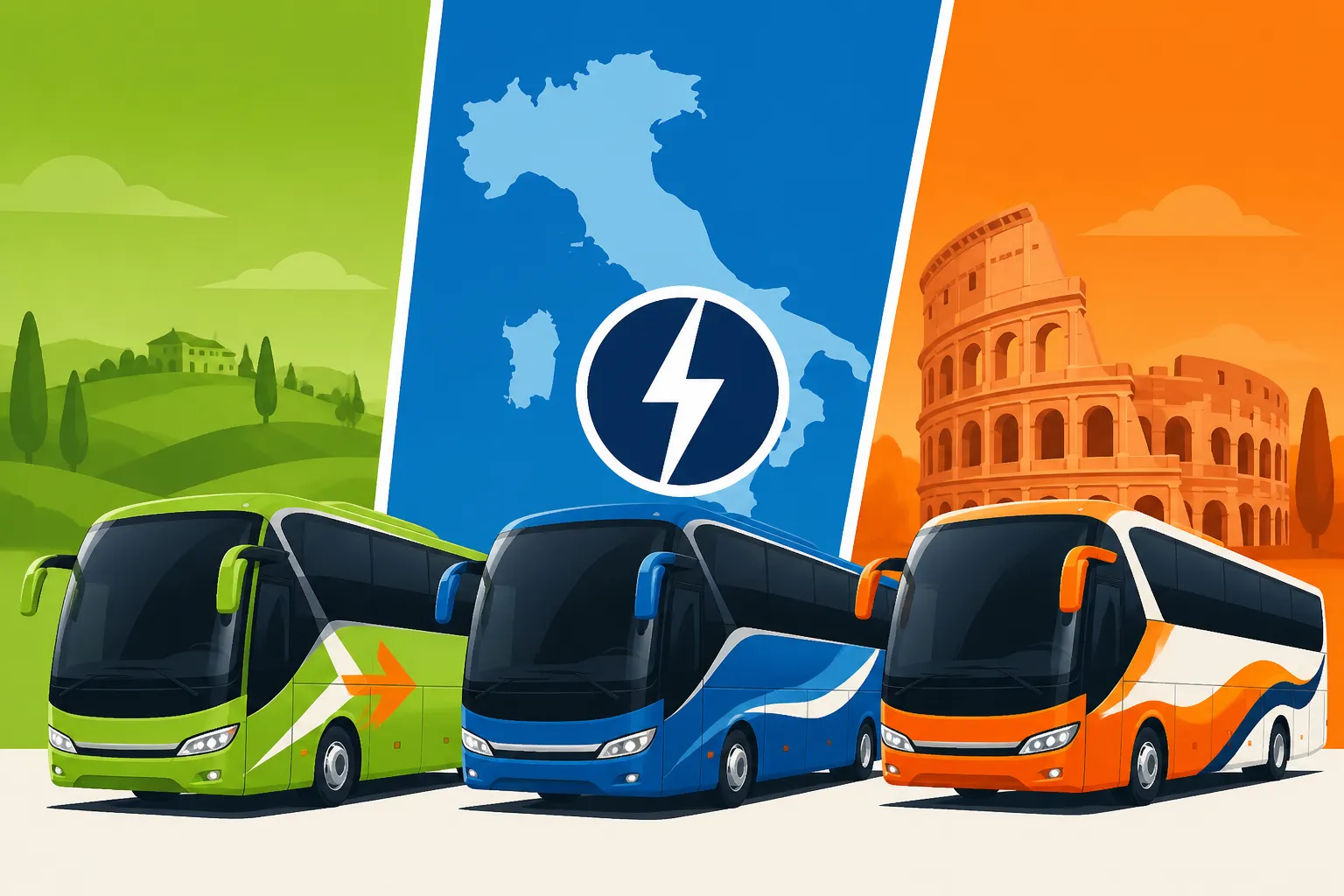
Alright, so you've got FlixBus, the green giant of value and volume; Itabus, the sleek newcomer focusing on comfort; and MarinoBus, the seasoned veteran with deep regional roots. How do you choose? It really boils down to what you prioritize for your trip.
Head-to-Head: Price, Comfort, and Features
Let's lay it all out.
| Feature / Operator | FlixBus | Itabus | MarinoBus |
|---|---|---|---|
| Typical Price Point | €€ (Most budget-friendly) | €€€ (Mid-range to slightly premium) | €€ (Competitive, good value) |
| Comfort | Good, but can vary by coach | Excellent (newer fleet, spacious seating, Top class available) | Good, reliable |
| On-board Wi-Fi | Usually available, reliability varies | Generally reliable | Usually available, reliability varies |
| Power Outlets | Common at most seats | Common at most seats | Common at most seats |
| Entertainment Screens | Rare | Yes (especially in Top class) | No |
| Dedicated On-board Staff | No (driver handles most) | Yes | No (driver handles most) |
| Baggage Allowance | 1 hand, 1 hold (check specifics) | 1 hand, 1 hold (check specifics) | 1 hand, 1 hold (check specifics) |
| Network Size | Very extensive across Italy & Europe | Focused on major Italian cities | Extensive, especially strong North-South & Southern Italy |
| Flexibility (Rebooking) | Good | Good | Good |
When it comes to price, FlixBus typically has the edge, especially if you book well in advance. However, both Itabus and MarinoBus offer competitive fares, particularly when there are promotions or if you’re booking routes where they are the dominant operator. The real value of using a platform like Omio shines here, as you can instantly see all the available prices for your desired route and choose what fits your budget.
For comfort, Itabus definitely takes the crown with its modern fleet, spacious seating, and individual entertainment systems. If a few extra euros mean a significantly more relaxing journey, especially for a long haul, Itabus is likely your best bet. MarinoBus and FlixBus are still comfortable, mind you, but more in a functional, get-you-there kind of way.
Regarding features, again, Itabus leads with the in-seat entertainment. Wi-Fi and power outlets are pretty standard across all three, but don't set your expectations too high for constant, high-speed connectivity. It's often enough for light browsing or checking messages, but not for streaming a movie.
Route Coverage and Network Strength
This is where the operators start to show their true colors based on your destination.
-
FlixBus: If you're traveling between major Italian cities (think Rome, Milan, Naples, Florence) or looking to connect to various European destinations, FlixBus has an incredibly robust network. Their sheer number of routes and frequent departures make them incredibly convenient. If your destination is even moderately well-known, FlixBus probably goes there. It's a great choice for tourists wanting to connect popular spots. Many of their routes might also serve as excellent starting points for Day Trips From Rome by Train or similar excursions.
-
Itabus: Itabus focuses on quality over quantity in its network. You'll find excellent connections between Italy's most prominent cities, often with direct routes and fewer stops. If you're traveling along the main arteries of Italy and value speed and comfort on these popular routes, Itabus is a strong contender. Their network is growing, but it's not designed to reach every tiny village.
-
MarinoBus: This is where MarinoBus really shines, particularly for North-South connections and access to more remote or less-traveled areas of Southern Italy. If your journey takes you deep into Calabria, Puglia, or to the islands, MarinoBus often provides the most direct and reliable options. They understand these regional nuances better than anyone. They're a lifeline for many locals and a fantastic choice for expats looking to explore the less touristy parts of the country.
Ultimately, the "best" operator depends entirely on your specific trip. For the best overview and to easily compare all these options side-by-side, Omio is an indispensable tool. It takes the guesswork out of route planning by showing you what's available from each carrier for your exact dates and destinations.
Seamless Booking and Travel Planning with Omio
Let's be honest, dealing with multiple company websites, different booking interfaces, and trying to compare prices and schedules can be a real headache. As an expat who’s wrangled Italian bureaucracy more times than I care to admit, I can tell you that any tool that simplifies things is a godsend. That's where Omio comes in, like a friendly guide through the complexities of Italian travel.
Why Omio Makes All the Difference
Omio is essentially your one-stop shop for comparing and booking bus (and train, and even flight) tickets across Italy and Europe. Instead of jumping between the FlixBus, Itabus, and MarinoBus websites, Omio pulls all their available routes, prices, and schedules into a single, easy-to-understand interface. This means you can instantly see which operator offers the cheapest ticket, the fastest journey, or the most comfortable option for your specific travel dates.
Imagine this scenario: You need to get from Florence to Bari. You punch in your destination on Omio, and within seconds, you see all the options. Maybe FlixBus has a super cheap overnight option, Itabus offers a more premium daytime ride, and MarinoBus has a direct connection that bypasses a tricky transfer point. Omio lays it all out, side-by-side, making comparison incredibly simple. You can filter by price, duration, departure time, and even specific amenities. It saves you time, frustration, and often, money. Plus, the booking process itself is streamlined and user-friendly, allowing you to secure your tickets in just a few clicks. Whether you're planning a grand tour or just a quick weekend getaway, Omio makes the entire process of travel planning in Italy smooth and efficient. It even integrates options for high-speed trains in Italy: Trenitalia, Italo, Routes, and Savings, giving you a full picture.
Tips for Booking Your Italian Bus Journey
Once you’ve got Omio as your secret weapon, here are a few pro tips for booking your Italian bus journey:
- Book in Advance: This is the golden rule, especially for popular routes or during peak travel seasons. The earlier you book, the better chance you have of snagging those super saver fares, regardless of whether you choose FlixBus, Itabus, or MarinoBus.
- Be Flexible with Dates and Times: If your schedule allows, playing around with departure dates and times on Omio can reveal significantly cheaper tickets. Mid-week travel or off-peak hours often yield better deals.
- Consider the Amenities: For longer journeys, consider if the slightly higher cost of an Itabus ticket with entertainment and better comfort is worth it. For shorter hops, the most economical FlixBus or MarinoBus option might be perfectly fine. Omio helps you see these differences clearly.
- Check Departure and Arrival Points: Bus stations in Italy can vary. Some are centrally located, while others might be a bit out of the way. Double-check the exact departure and arrival points for your chosen operator on Omio’s map view to plan your local transport accordingly. You don't want to be scrambling for a taxi at 3 AM! Understanding public transportation in Italian cities: a guide can be immensely helpful.
- Understand Baggage Rules: While Omio provides general information, it's always wise to briefly check the specific operator's baggage policy through the links often provided on the platform, especially if you have oversized luggage or multiple bags.
- Have Your Ticket Ready: Whether it’s a printout or on your phone via the Omio app, have your ticket and a form of ID easily accessible when boarding. While Italian language and everyday communication for visitors is helpful, having everything ready avoids any language barriers at the bus stop.
- Don't Forget Travel Insurance: While bus travel is generally safe, unexpected delays, lost luggage, or other mishaps can happen. Ensuring you have travel insurance for trips to and within Italy can provide peace of mind.
By leveraging the power of Omio, you're not just booking a ticket; you're making an informed decision that saves you time and stress, allowing you to focus on the exciting parts of your Italian adventure.
Disclaimer
The information provided in this guide is for general informational purposes only and is based on typical experiences and available data regarding long-distance coach operators in Italy. While efforts have been made to ensure accuracy and provide up-to-date insights, details such as prices, schedules, on-board amenities, and policies can change without prior notice. It is always recommended to verify the most current information directly with the respective operators or through a reliable booking platform like Omio at the time of your travel planning. Travel conditions, including potential delays due to traffic or unforeseen circumstances, are inherent to bus travel and should be considered when making plans.