Business Trip Bookings in Italy: Invoices, IVA, and Reimbursement
Ah, the Italian business trip! It sounds glamorous, doesn't it? Zipping between meetings in Milan, a quick espresso in Rome, maybe a client dinner with a view in Florence. But beneath that veneer of la dolce vita lies a bureaucratic beast that can turn even the savviest expat into a trembling mess: the nightmare of invoices, IVA, and getting your expenses reimbursed correctly. Forget the romantic notions; for companies and their traveling employees, navigating Italian business trip bookings is all about meticulous documentation. This guide will walk you through the nitty-gritty, from securing the right fattura to understanding IVA, and how using a reliable platform like Booking.com can be your secret weapon to staying sane and solvent.
Disclosure: This post may contain affiliate links. We may earn a commission at no extra cost to you if you make a purchase through these links. Read full disclosure.
The Italian Business Trip Invoice: More Than Just a Piece of Paper
When you're traveling for business in Italy, a simple receipt tossed in your pocket just won't cut it. Oh, if only it were that easy! Italian tax laws are precise, and if your company wants to correctly deduct expenses or reclaim IVA, you need to understand the beast that is the fattura elettronica, or electronic invoice.
The Importance of a "Fattura Elettronica"
Imagine you’ve just had a lovely business lunch, delicious pasta, a glass of regional wine – the perfect Italian experience. You ask for the bill, pay up, and are handed a scontrino fiscale, a standard cash register receipt. For a tourist, that’s fine. For your company, it's often worthless for tax purposes.
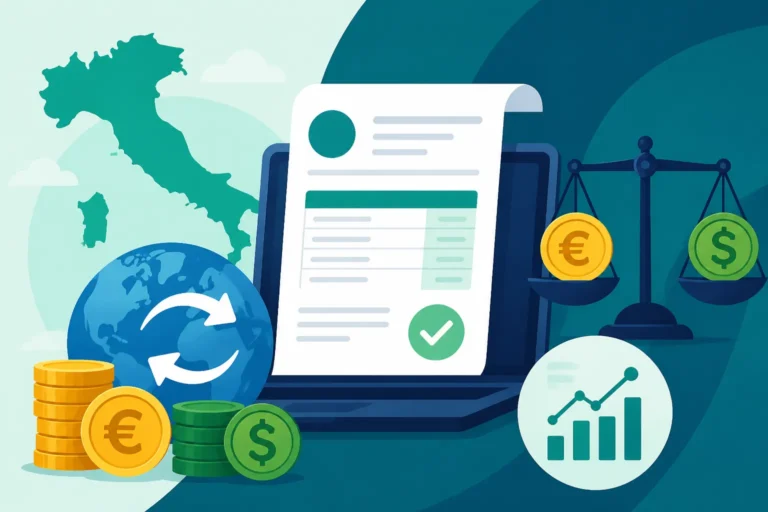
In Italy, for business-to-business (B2B) transactions, especially when it comes to deducting costs and reclaiming IVA (Value Added Tax), a fattura elettronica is the gold standard, often the only acceptable document. This isn't just a PDF invoice sent via email; it's a specific XML file format transmitted through the Italian Interchange System (Sistema di Interscambio, SdI). This digital journey ensures transparency for the tax authorities (Agenzia delle Entrate) and is absolutely critical for your company to justify the expense. Without a proper fattura elettronica, your company might not be able to deduct the cost from its taxable income or reclaim the IVA paid, meaning a direct financial hit. It’s a classic Italian bureaucratic hurdle that makes you want to pull your hair out, but mastering it is non-negotiable. This is where forward-thinking platforms like Booking.com can really help, as many accommodations understand the need for proper electronic invoicing for corporate clients and can issue them directly through the platform or upon request.
Essential Elements for a Valid Business Invoice
So, what exactly needs to be on this magical fattura elettronica for it to be considered valid for your company? This isn't just about printing the word "invoice" at the top. The details matter, down to the last digit.
First and foremost, the invoice must clearly state your company's full legal name, its registered address, and crucially, its Partita IVA (VAT number). If your company is a foreign entity without an Italian Partita IVA, there are often specific procedures, sometimes requiring your company's Codice Fiscale, or even specific reverse charge mechanisms, which is why it's always best to consult with a local Choosing a Commercialista Accountant in Italy if you're uncertain. You'll also need the service provider's (e.g., the hotel's, restaurant's, or transport company's) Partita IVA and legal details.
The invoice must then detail the nature of the service or goods provided (e.g., "accommodation for 3 nights," "business dinner," "taxi fare"), the dates the services were rendered, the total amount charged, and a clear breakdown of the IVA applied. Different services might have different IVA rates, so this breakdown is vital. For example, hotel accommodation usually has a specific IVA rate, while a restaurant meal might have another. Missing or incorrect details can lead to the invoice being rejected by your company’s accounting department or, worse, by the tax authorities. Make sure you explicitly request a fattura elettronica for your company before or at the time of payment, providing all necessary company details. Don't wait until you've checked out to ask, as some establishments might find it difficult to issue it retroactively. Platforms like Booking.com often have fields for corporate billing details during the booking process, which can simplify this significantly for your accommodation needs.
Here’s a quick comparison of what you might typically receive versus what you actually need:
| Feature | Standard Receipt (Scontrino Fiscale) | Electronic Invoice (Fattura Elettronica) for Business |
|---|---|---|
| Purpose | Proof of purchase for consumer | Official tax document for businesses |
| Issuer Details | Often just name/Partita IVA of seller | Full legal name, Partita IVA, address of seller |
| Buyer Details | N/A | Full legal name, Partita IVA/Codice Fiscale, address of buyer |
| IVA Breakdown | Usually included in total, not detailed | Explicitly itemized by rate and amount |
| Format | Paper, simple printout | XML file sent via SdI (Sistema di Interscambio) |
| Tax Deductibility | Generally No for businesses | Yes |
| IVA Reclaim | Generally No | Yes |
Navigating IVA (VAT) on Business Expenses in Italy
IVA, or Imposta sul Valore Aggiunto, is Italy's Value Added Tax. It's built into the price of most goods and services you consume. While it might feel like just another cost, for businesses, IVA can often be reclaimed, turning it from an expense into a refundable item. But, as with everything in Italy, there are rules, exceptions, and plenty of paperwork.
Understanding IVA on Travel Services
When you pay for a hotel room, a taxi, a train ticket, or a meal in Italy, a portion of that cost is IVA. The rates vary depending on the type of service. For example, accommodation might be subject to a reduced IVA rate, while certain restaurant services could have a higher one. Public transport might even be exempt or have a very specific, low rate. It's a patchwork, and trying to decipher each one on the fly can be a headache.
For your company, understanding these rates is important because only the IVA explicitly stated on a valid fattura elettronica can potentially be reclaimed. If your invoice lumps everything together without a breakdown, or if it's just a scontrino, your finance department will likely just treat the entire amount as a non-recoverable expense. This is why when you book through platforms like Booking.com, you need to ensure the property can issue the correct invoice. They're usually well-versed in invoicing requirements for different types of services, but it’s always good to double-check their capabilities for business clients. For a deeper dive into how this all works, check out our guide on Understanding Italian VAT (IVA): A Guide for Shoppers.
Reclaiming IVA: Who Can and Under What Conditions
So, who gets to reclaim this IVA, and how does it happen? Generally, an Italian-registered company with a Partita IVA can reclaim IVA paid on business expenses, provided those expenses are "inherent" to the business activity and properly documented with a fattura elettronica. This means the expense must be necessary for the business to operate and generate revenue. A hotel stay for a client meeting? Absolutely. A luxury shopping spree for personal pleasure? Not so much.
For foreign companies, reclaiming Italian IVA can be a more complex process. If your company doesn't have a permanent establishment or Partita IVA in Italy, you might need to use a specific EU directive (for EU companies) or other international agreements to request a refund from the Italian tax authorities. This often involves filing specific forms and adhering to strict deadlines, sometimes even requiring a fiscal representative in Italy. It's not a straightforward process and almost always requires the expertise of a Choosing a Commercialista Accountant in Italy specializing in international tax. For comprehensive information on how Italy's financial systems impact you, our Money Matters in Italy: Banking and Finance for Expats article might be a useful read.
Common Pitfalls in IVA Reimbursement
You wouldn't believe the simple things that can derail an IVA refund or expense deduction. I've seen it happen time and time again. The most common pitfalls include:
- Missing or Incorrect Company Details: The Partita IVA or Codice Fiscale of your company is wrong, or simply missing on the invoice. This is a big one. Always double-check!
- Lack of Fattura Elettronica: As discussed, a simple scontrino for a significant business expense won't be enough. Always insist on the electronic invoice.
- Incorrect Service Description: If the invoice isn't clear about what was purchased (e.g., "various items" instead of "business meal for two"), it raises red flags.
- Mixed Personal and Business Expenses: Trying to include personal expenses on a business invoice. Tax authorities have a keen eye for this.
- Late Filing: Strict deadlines apply for reclaiming IVA. If your company misses them, that money is gone.
Understanding Italy's Tax System: A Guide for Foreigners in general can help you avoid these common missteps. While platforms like Booking.com can help you secure bookings and documentation, the onus is always on you and your company to ensure the invoices are correctly issued and processed.
Streamlining Reimbursement for Italian Business Trips
Once you've navigated the tricky waters of Italian invoices and IVA, the final step is getting your hard-earned cash back from your company. This process, while often internal, still relies heavily on the quality of documentation you provide.
Company Reimbursement Policies: Know Before You Go
Before you even book your first train ticket or hotel, make sure you thoroughly understand your company's expense reimbursement policy. Every company has its own rules, limits, and preferred methods for submitting expenses. Do they require all original receipts, or are digital copies acceptable? Is there a daily allowance (per diem) for meals, or do you need itemized receipts for everything? What are the limits for accommodation or travel class?
Knowing these policies inside and out will save you immense frustration later. It’s no good coming back with a stack of perfectly valid fatture elettroniche if your company policy only allows for X amount per night and you consistently exceeded it. Often, corporate booking tools or preferred platforms are integrated with these policies. Using a platform like Booking.com, which is widely recognized and used globally, can often align well with existing corporate travel policies, making the initial booking and subsequent expense reporting much smoother. For example, Booking.com for Business offers features specifically designed for corporate travel, integrating company policies and facilitating expense management.
Documenting Expenses Meticulously
"Keep everything!" is the mantra for business travelers in Italy. Seriously, I mean everything. Beyond the crucial fattura elettronica for your accommodation and significant meals, you'll need documentation for almost every expense you incur.
- Public Transport: Metro tickets, bus tickets, tram tickets – save them all. These are usually simple scontrini or digital tickets, but they provide proof of travel.
- Taxis/Ride-Shares: Always ask for a receipt. If using an app, ensure it generates a proper digital invoice with all the necessary details.
- Tolls and Parking: Keep those little paper slips from the toll booths or parking meters.
- Boarding Passes: For flights, keep both your e-ticket confirmation and your physical or digital boarding passes.
- Other Incidentals: Coffee breaks, small snacks, urgent office supplies – if it’s a legitimate business expense, document it.
The key is to organize these documents. Take photos immediately, use a dedicated folder, or better yet, use an expense management app that allows you to capture receipts on the go. This proactive approach saves you from sifting through a crumpled mess of papers weeks later. Remember, a robust paper trail supports your reimbursement claim and makes your finance team's life easier, which they'll appreciate when it's time to cut your check.
Using Technology to Simplify the Process
In this digital age, there's no excuse for a shoebox full of receipts. Technology can be your best friend in streamlining the entire reimbursement process.
Many companies use specialized expense management software (like SAP Concur, Expensify, Rydoo, etc.) that allows you to upload photos of receipts, categorize expenses, and generate reports automatically. Some even have OCR (Optical Character Recognition) capabilities to read key information from your receipts, although you should always double-check for accuracy, especially with Italian specifics like Partita IVA.
Platforms like Booking.com have become incredibly sophisticated in catering to business travelers. When you book accommodation or other services through Booking.com, all your booking details are stored in one place. You can often access booking confirmations, payment summaries, and even request invoices directly through the platform. This centralized information makes it significantly easier to compile your expense reports. You can download statements or integrate with other expense management tools, cutting down on manual data entry and reducing the chances of errors. It's a game-changer for those who travel frequently for work.
Best Practices for Stress-Free Business Travel Bookings in Italy
Let's face it, dealing with Italian bureaucracy can be a test of patience, but with a few smart strategies, you can make your business trips to Italy much smoother and ensure your expenses are properly handled.
Planning Ahead and Choosing the Right Tools
The golden rule for any trip to Italy, business or pleasure, is to plan, plan, plan! This goes double for securing proper documentation.
- Communicate Needs Upfront: When booking accommodation, confirm before you arrive that they can issue a fattura elettronica with your company’s Partita IVA. Don't assume.
- Opt for Reputable Providers: Stick with well-known hotels, airlines, and car rental companies that are accustomed to business clients and understand invoicing requirements. Boutique establishments might be charming but can sometimes lack the administrative infrastructure for proper business invoicing.
- Leverage Integrated Booking Platforms: This is where a platform like Booking.com shines. It offers a vast selection of accommodations, from large chains to smaller hotels, many of which are well-versed in business travel requirements. Their dedicated business solutions, such as Booking.com for Business, allow you to consolidate bookings, manage company profiles (including tax details), and often streamline the invoice request process directly with the property. Using such a comprehensive platform significantly reduces the risk of administrative headaches, enabling you to focus on your actual work. You can explore Booking.com to find accommodation options that suit your business needs, often with clear indications of their invoicing capabilities.
Communication is Key: With Vendors and Internal Finance Teams
Don't be shy about asking questions, both to the service providers in Italy and your own finance department.
- With Italian Vendors: Be clear and specific when requesting a fattura elettronica. Practice the phrase: "Vorrei una fattura elettronica per la mia azienda, con la nostra Partita IVA." (I would like an electronic invoice for my company, with our VAT number.) Have your company’s full details, including Partita IVA and Codice Fiscale, written down or on a business card to present to them.
- With Your Company's Finance Team: Don't hesitate to reach out to them before your trip if you have any doubts about what's required or if you anticipate any unusual expenses. A quick email can prevent major issues later. They can also advise on the best way to handle your Filing Taxes in Italy: Modello 730 vs Redditi PF if you're a self-employed individual needing to account for these expenses.
Remember, business travel in Italy can be incredibly rewarding, both professionally and personally. By understanding the nuances of invoices, IVA, and reimbursement, and by leveraging powerful tools like Booking.com, you can navigate the administrative complexities with confidence, ensuring your company’s expenses are handled correctly and your reimbursement is smooth sailing.
Disclaimer
This article is for general informational purposes only and does not constitute professional advice. Laws, prices and regulations vary by location and change over time. Consult a qualified professional for guidance on your specific situation.