Reading Italian Hotel Listings: Room Types, Bed Sizes, and Terms Decoded
Oh, the joy, the absolute delight, of trying to book a hotel in Italy when you're fresh off the plane, tired, and just want a comfy bed! You scroll through listings, see terms like "Camera Doppia," "Letto alla Francese," or "Mezza Pensione," and your head starts spinning faster than a Vespa in Rome traffic. It feels like you need a linguistics degree just to figure out if you're getting a single bed or a suite with a view of the Colosseum. Trust me, we've all been there, squinting at screens and muttering, "What in the world is a DUS?" This guide is here to decode all those perplexing Italian hotel terms so you can book your next stay with confidence, armed with insider knowledge, and perhaps a little help from reliable platforms like Booking.com.
Disclosure: This post may contain affiliate links. We may earn a commission at no extra cost to you if you make a purchase through these links. Read full disclosure.
Navigating the Labyrinth of Italian Room Types
When you're sifting through Italian hotel listings, the room categories can seem utterly baffling. What one hotel calls a "standard" another might call "comfort," and don't even get me started on the subtle nuances that often hide crucial details. Understanding these terms is your first step to a stress-free booking.
Standard Rooms: Not So Standard After All
Let's break down the most common room types you'll encounter, which, despite sounding straightforward, often carry Italian specific interpretations.
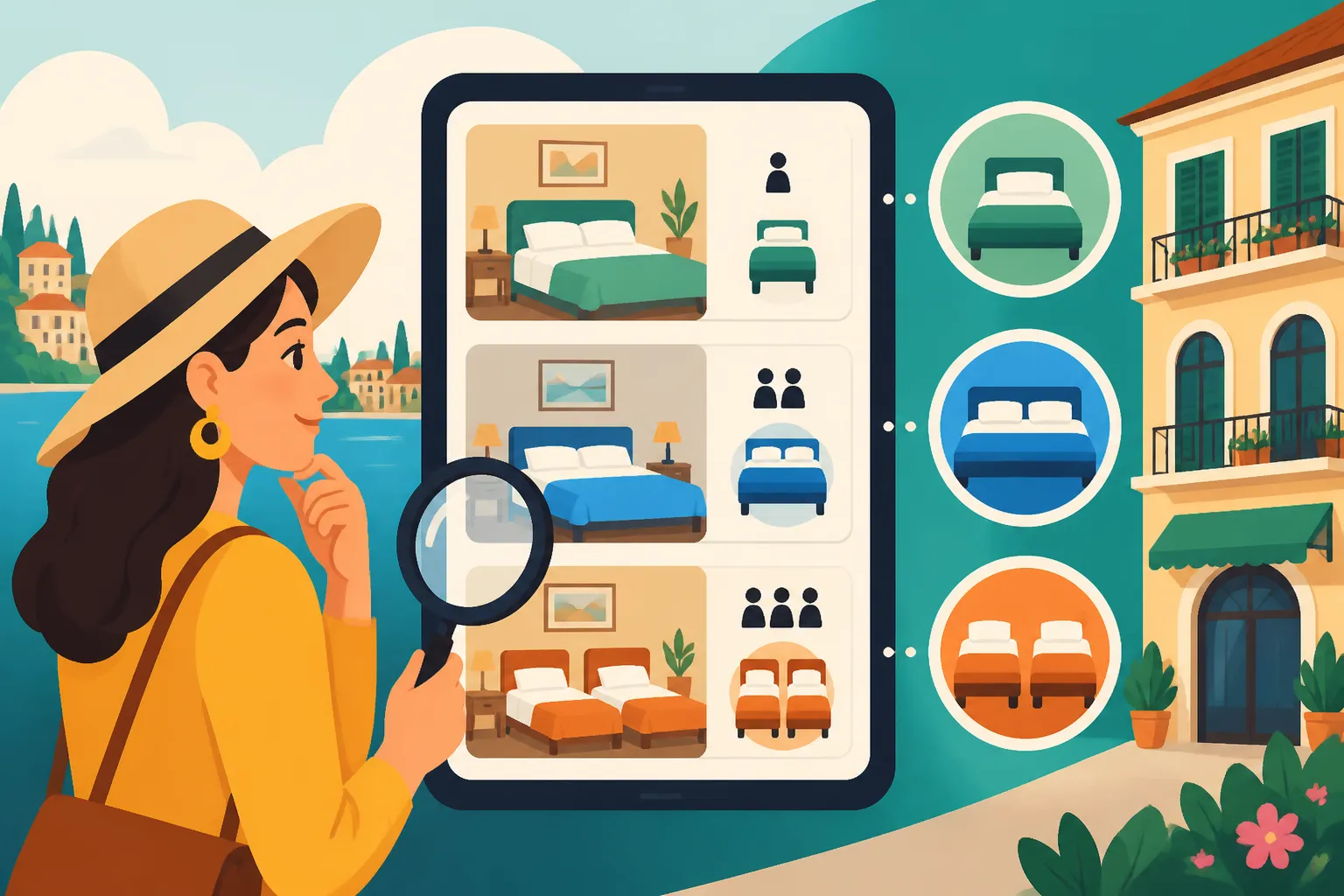
First up, the "Camera Singola" – this one is usually pretty clear: a single room, meant for one person, typically with a single bed. Simple enough, right? Then things get a little trickier with "Camera Doppia uso Singola" or "DUS." This term, a true gem of Italian hospitality jargon, means a double room for single use. So, you get a larger room, often with a double bed, all to yourself, but you're paying a bit more than a true single room. It's fantastic if you want extra space to sprawl out your luggage without feeling cramped, which is often the case in older, charming Italian hotels where space can be at a premium. When you're browsing on a site like Booking.com, you'll often see this option explicitly listed, giving you a good idea of the price difference.
Next, you'll see "Camera Matrimoniale." This translates directly to "matrimonial room," and it means a double room with one double bed. This is key for couples or anyone who prefers a larger sleeping surface. Don't confuse it with "Camera Doppia," which can be a bit ambiguous. Traditionally, "Camera Doppia" means a double room with two separate single beds. Imagine arriving, ready to snuggle up, only to find two twin beds pushed together or, worse, on opposite sides of the room! While many modern hotels, especially those catering to international guests, use "Camera Doppia" more generally to mean a room for two with either one double or two twin beds, it's always, always best to check the description or photos. If in doubt, look for clear images on platforms like Booking.com or, better yet, use their messaging feature to confirm directly with the property.
Family and Group Stays: More Than Just Connecting Doors
Traveling with family or a small group presents its own set of room-type puzzles. Italian hotels offer various solutions, but again, the terminology needs a careful eye.
A "Camera Tripla" is a triple room, typically with one double bed and one single bed, or three separate single beds. Again, the configuration is crucial. A "Camera Quadrupla" follows suit, accommodating four people, often with two double beds or a combination of doubles and singles. These rooms can be a godsend for families, as finding suitable multi-person accommodations that aren't overly expensive can be a challenge. Sometimes, you'll find "Suite Familiare" or "Appartamento con Servizi Alberghieri," which are essentially family suites or apartments with hotel services. These are excellent choices for longer stays or if you need a bit more space, perhaps a small kitchenette, or separate sleeping areas, mimicking the comfort of home while still having hotel amenities. Platforms like Booking.com are incredibly useful here because they allow you to filter by the number of guests and room size, showing you exactly what bed configurations are available, including options for "letto aggiunto" (extra bed) or "culla" (crib) for the little ones. Always check the capacity limits and if extra beds incur an additional cost.
Luxury and Specialty Accommodations
If you're looking to splurge or simply want something a bit more special, Italian hotels have a range of upscale options.
A "Suite" in Italy generally means a larger room with a separate living area. It offers more privacy and space, perfect for an extended stay or a special occasion. A "Junior Suite" is a step down, often a larger room with a designated sitting area that isn't fully separate. These are great compromises if a full suite is out of budget but you still crave a bit more luxury than a standard room. Then there's the delightful "Camera con Vista," a room with a view, which could mean anything from a charming street view to a breathtaking panorama of the Tuscan hills or a Venetian canal. Always check what the view entails! "Camera Superior" or "Camera Deluxe" are typically enhanced versions of standard rooms, offering more space, upgraded furnishings, or better amenities. They might come with a slightly different decor, a bigger bathroom, or perhaps a complimentary minibar. While these terms often promise a nicer experience, it's always wise to glance at the photos and descriptions on Booking.com to gauge if the upgrade truly aligns with your expectations and budget. You'll often find these higher-category rooms come with specific perks, so read the fine print!
Deciphering Bed Sizes and Configurations
One of the biggest sources of confusion for international travelers, especially from North America or the UK, is the Italian interpretation of bed sizes. What you call a "queen" or "king" might have a different feel here.
The Italian Bed Size Spectrum
Let's clear up the common bed sizes you'll encounter.
A "letto singolo" is straightforward: a single bed. Its dimensions are generally similar to a North American twin bed. Next, and this is where it gets interesting, is the "letto alla francese" – literally, a "French bed." This refers to a smaller double bed, often wider than a single but narrower than a standard double. Think of it as a generous twin or a compact double. It's a common sight in smaller, boutique hotels and can be cozy for two but might feel a bit tight if you're used to sprawling. A "letto matrimoniale" is what most people picture as a double bed. It's designed for two people and is generally equivalent to a US queen-size bed. Don't expect a US king-size bed when you see "matrimoniale" unless it's explicitly stated as a "letto king size," which is becoming more common in larger, international hotel chains.
It's crucial to understand these distinctions because what sounds like a "double" could mean a smaller bed than you're accustomed to. This is where the detailed room descriptions and high-quality images on a platform like Booking.com are your best friend. They often specify exact dimensions or show clear photos, helping you visualize the space. I've heard countless stories of travelers being surprised by bed sizes, so definitely take a moment to really look at the photos or consider a "DUS" if you're a single traveler who values space.
Understanding Bedding Arrangements
Beyond the size, how the beds are arranged is equally important, especially if you're not a couple.
If you book a "Camera Doppia con letti separati," you'll get a room with two distinct single beds. This is ideal for friends traveling together or colleagues on a business trip. If you simply see "Camera Doppia," and the description isn't crystal clear, it's safer to assume two singles or confirm directly. Many hotels are flexible and can push two singles together to create a larger "matrimoniale" if requested in advance, but don't count on it without confirmation.
For families, understanding "letto aggiunto" (extra bed) or "divano letto" (sofa bed) is vital. Many hotels offer the option to add an extra single bed to a double room for a third person, usually for an additional fee. Sofa beds are also quite common in suites or family rooms, providing a flexible sleeping solution. If you're traveling with an infant, always specify if you need a "culla" (crib or cot). Again, these usually come with a small additional charge and availability isn't guaranteed, so indicate it during booking on Booking.com or contact the hotel directly to ensure they can accommodate your needs. Transparency is key, and reliable booking sites usually make these options quite clear before you confirm.
| Italian Term | English Equivalent (Approx.) | Bed Configuration (Typical) | Notes |
|---|---|---|---|
| Camera Singola | Single Room | 1 Single Bed | For one person. |
| Camera Doppia (DUS) | Double Room for Single Use | 1 Double Bed | For one person, but a larger room. |
| Camera Matrimoniale | Double Room | 1 Double Bed (US Queen equivalent) | Standard for couples. |
| Camera Doppia | Twin Room / Double Room (varies) | 2 Single Beds (or 1 Double, confirm!) | Always verify if you need two singles or one double. |
| Letto Singolo | Single Bed | ~80-90 cm wide | For one person. |
| Letto alla Francese | French Bed (Small Double) | ~120-140 cm wide | Cozy for two, or spacious for one. |
| Letto Matrimoniale | Double Bed | ~160 cm wide (US Queen equivalent) | Most common double bed. |
| Letto King Size | King Size Bed | ~180-200 cm wide (US King equivalent) | Less common, usually in higher-end or chain hotels. |
| Letto Aggiunto | Extra Bed | 1 Single Bed (rollaway) | Often for a third person in a double room, usually with a fee. |
| Divano Letto | Sofa Bed | Converts from sofa to bed | Common in suites or family rooms. |
| Culla | Crib / Cot | Small bed for infants | Usually available upon request, may incur a small fee. |
Key Italian Hotel Terms and Amenities to Look For
Beyond room and bed types, there are a host of other Italian terms that appear in hotel listings, describing everything from private bathrooms to meal plans. Knowing these will prevent unpleasant surprises.
Essential Vocabulary for Your Stay
Booking your stay is not just about the bed, it's about the full experience, and certain terms are absolute must-knows.
First, "servizi privati" means a private bathroom. While this is standard in most modern hotels, in some older, smaller, or budget-friendly establishments (especially charming agriturismi or pensione), you might occasionally find "servizi in comune," meaning shared facilities. Always, always confirm this if you're not comfortable sharing a bathroom! "Aria condizionata" is air conditioning. If you're traveling during the hotter months (basically May to October in much of Italy), this is non-negotiable for many, including me! Italy gets hot. Always verify if it's available and, if it's a make-or-break for you, check reviews on Booking.com to see if guests report it working well.
When it comes to food, "colazione inclusa" means breakfast is included. This can range from a simple Italian breakfast (coffee and a pastry) to a more substantial buffet. If you see "mezza pensione," that's half board, meaning breakfast and one other meal (usually dinner) are included. "Pensione completa" is full board, covering breakfast, lunch, and dinner. These can be great value if you plan to eat most meals at the hotel, especially in more remote locations where dining options might be limited. However, if you're a foodie eager to explore local trattorias, "colazione inclusa" or room-only might be better. And of course, "wi-fi gratuito" means free Wi-Fi – another modern necessity! Don't assume it's available everywhere, and definitely check speeds if you plan to work remotely. Telecommuting from Italy: Digital Nomad Work Tools might require a robust internet connection!
Beyond the Basics: Facilities and Services
Italian hotels also use specific terms to describe their facilities and additional services.
"Parcheggio" means parking. If you're driving in Italy, especially in city centers, finding parking can be a nightmare (and expensive), so knowing if the hotel offers private parking or a garage ("garage") is essential. "Piscina" is a swimming pool, a lovely bonus, especially for summer trips. "Navetta aeroportuale" indicates an airport shuttle service, which can save you a lot of hassle upon arrival and departure. Always check if this service is free or comes with a fee and if it operates 24 hours. "Reception 24 ore" means 24-hour reception, providing peace of mind if you're arriving late or need assistance at odd hours.
For those with mobility concerns, look for "accesso per disabili" (disabled access) or "strutture per disabili" (disabled facilities). These terms suggest the hotel is equipped to accommodate guests with special needs. If you're traveling with pets, always search for "animali ammessi" (pets allowed) and confirm any associated fees or restrictions. Booking.com offers robust filtering options for many of these amenities, making it a powerful tool for narrowing down your choices based on your non-negotiables. You can specify everything from "pet-friendly" to "pool" to "free parking," saving you hours of sifting through individual hotel websites. Pet-Friendly Housing Options in Italy are also something to consider for longer stays!
Practical Tips for Stress-Free Booking in Italy
Booking a hotel in Italy doesn't have to be a bewildering experience. With a little strategic planning and the right tools, you can secure your ideal stay without any language-induced headaches.
Research and Compare Thoroughly
The golden rule of travel planning applies even more so when navigating Italian hotel listings: do your homework! Don't just pick the first place that looks good.
Start by reading reviews. Platforms like Booking.com are invaluable for this, as they feature thousands of verified reviews from actual guests, often in multiple languages. Pay attention to comments about cleanliness, staff helpfulness, location accuracy, and the accuracy of room descriptions. Do people complain about noisy rooms? Are the photos truly representative? Sometimes, a hotel listing might look fantastic, but reviews will reveal it's next to a bustling train station or that the "charming street view" means staring directly into someone else's window.
Take your time looking at the photos – scrutinize them. Do they show the bathroom? The actual bed setup? The size of the room? Sometimes, professional photos can be cleverly angled to make spaces look larger than they are. This is where user-submitted photos on Booking.com can be incredibly helpful, as they provide a more "real-world" perspective. Use the filters on Booking.com extensively: filter by price range, star rating, specific amenities (like air conditioning, parking, or a pool), and even guest review scores. This allows you to quickly sift through hundreds of options and focus on places that genuinely meet your criteria. This platform truly shines when you need detailed information, helping you compare different properties side-by-side without having to jump between countless individual hotel websites, many of which might only be in Italian.
Don't Be Afraid to Ask (or Translate!)
Even with all the tools at your disposal, there might be times when you need clarification. Don't hesitate to reach out.
If a description is unclear, or you have a specific request (like a ground-floor room, specific bed configuration, or dietary needs for breakfast), contact the hotel directly. Most hotels in Italy, especially those catering to international tourists, will have staff who speak at least some English. You can often use the messaging system available on platforms like Booking.com to send your queries directly to the property in writing. This is often better than a phone call, as it provides a written record and allows both parties to use translation tools if needed. A simple online translator can also be your best friend here. Copy and paste the Italian description into a tool like Google Translate to get a clearer picture. While not always perfect, it will give you the gist and help you identify any potential red flags. Remember, it's far better to clarify before you arrive than to be disappointed after a long journey.
Always Double-Check Your Confirmation
Once you've made your booking, don't just hit "confirm" and forget about it. This last step is perhaps the most critical for ensuring a smooth arrival.
Carefully review your booking confirmation email or the details on your Booking.com account. Check that the room type, bed configuration, number of guests, dates, and any specific requests (like a crib or extra bed) are accurately listed. Mistakes can happen, both on your end and the hotel's, so a quick check can prevent major headaches later. If you spot any discrepancies, contact the booking platform (like Booking.com's customer service) or the hotel immediately to rectify them. Having a printout or digital copy of your confirmed booking details, especially any specific notes or requests, will be invaluable upon check-in. This way, you have concrete proof of what you booked, just in case there's any confusion at the front desk. Being prepared means you can focus on enjoying your Italian adventure, rather than getting caught up in administrative snafus!
Disclaimer
This article is for general informational purposes only and does not constitute professional advice. Laws, prices and regulations vary by location and change over time. Consult a qualified professional for guidance on your specific situation.