Parking at Italian Hotels: ZTL Zones and Why ‘Parking Available’ Costs Extra
Oh, the joy of driving in Italy! Or rather, the exquisite headache of parking in Italy, especially when you're navigating the maze of beautiful, ancient cities. Many of us have fallen prey to the innocent-looking "parking available" note on a hotel description, only to arrive and discover it means a distant garage, a pricey valet, or worse, inadvertently driving into a ZTL zone and facing a hefty fine weeks later. This guide is for all of you who want to explore Italy by car without the parking panic, helping you understand the real deal with hotel parking and how to manage those notorious ZTLs using smart planning tools like Booking.com.
Disclosure: This post may contain affiliate links. We may earn a commission at no extra cost to you if you make a purchase through these links. Read full disclosure.
The Italian Parking Puzzle: More Than Just a Space
Let's be real: Italy wasn't built for cars. Its charming cobblestone streets and historic city centers predate the automobile by centuries. This beautiful legacy means that driving and parking often feel like trying to fit a square peg in a very round, very old hole. What might seem straightforward in other countries becomes a multi-layered challenge here, requiring patience, local knowledge, and sometimes, a small prayer to the parking gods.
Understanding ZTL Zones (Zone a Traffico Limitato)
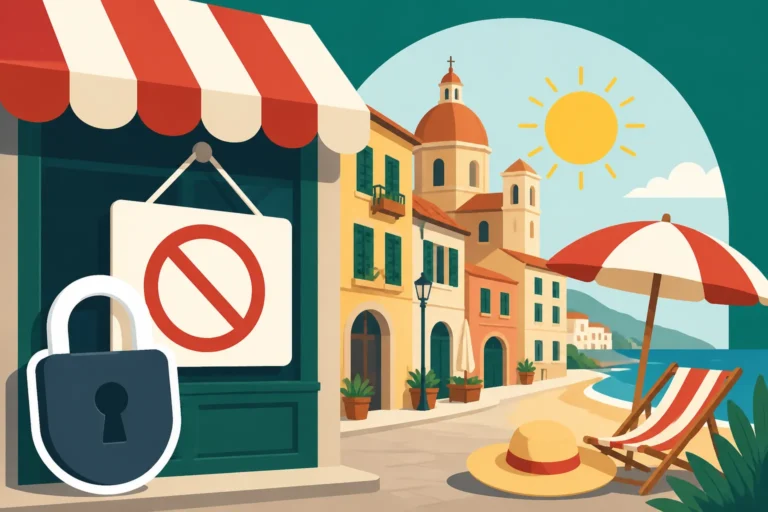
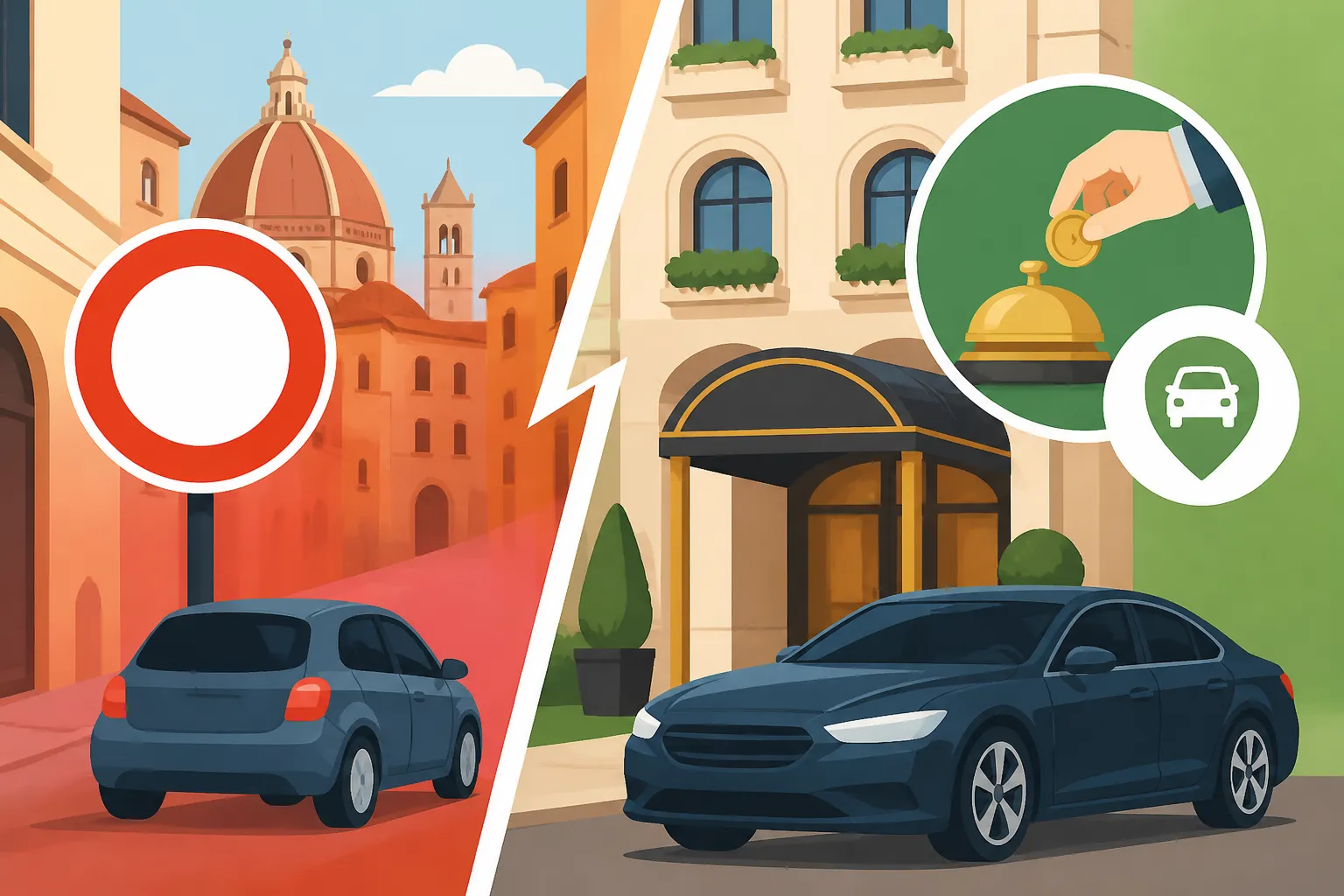
If you're driving in Italy, you must know about ZTLs. These "Limited Traffic Zones" are the bane of many a driver's existence, designed to preserve historic city centers by restricting vehicle access during certain hours or altogether. You'll find them in almost every major city – Rome, Florence, Milan, Bologna, Siena, you name it. They're typically marked with a circular white sign with a red border, often accompanied by specific hours or days of operation, and sometimes a camera symbol, which means your license plate is being recorded.
The problem? They're often nestled right where all the beautiful hotels are. Many foreign drivers unwittingly cruise into a ZTL, confident they're just following GPS to their hotel, only to receive a fine in the mail months later for each entry. And believe me, those fines add up quickly. Your rental car company will pass the charge on to you, often with an added administrative fee. The key here is that even if your hotel is inside a ZTL, you cannot just drive in. Your hotel needs to register your license plate with the local police (the Comune) to grant you temporary access. This is why communication is absolutely paramount. Don't assume anything. For a deeper dive, check out our guide on What Is a ZTL in Italy and How to Avoid Fines.
Why "Parking Available" Can Be a Trap
Ah, the siren call of "parking available." It sounds so reassuring, doesn't it? But in Italy, these two words are often just the tip of a very complex, and sometimes expensive, iceberg. It rarely means a free, dedicated spot right outside your hotel door. More often than not, it means:
- Valet Parking: Common in upscale city hotels. You pull up, hand over your keys, and a uniformed attendant whisks your car away. Convenient? Absolutely. Free? Almost never. Expect a daily fee, often substantial, plus the unspoken expectation of a tip for the valet.
- Off-site Garage: The hotel might have a contract with a nearby public or private garage, sometimes a few blocks away. You'll drive there yourself, or the hotel might offer a shuttle. Again, expect a daily charge, and make sure you understand the logistics, especially if you need your car frequently.
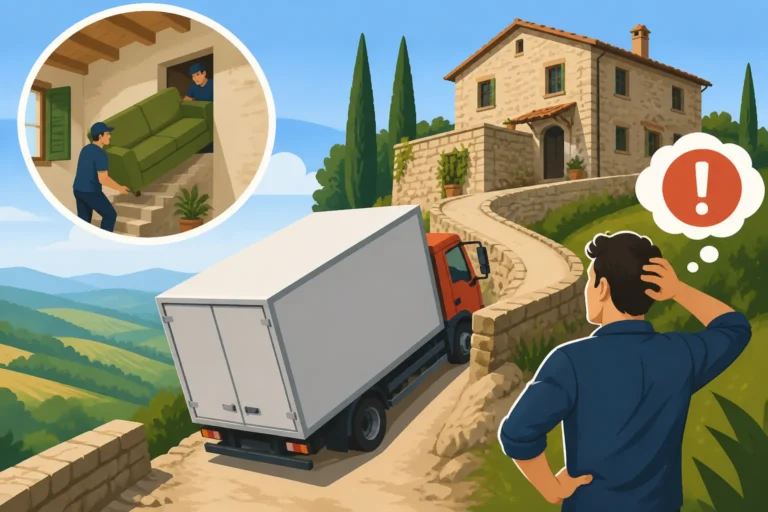
- Limited Spots: The hotel might have a handful of spots in a tiny courtyard or a tight underground garage. These are often first-come, first-served, even if "parking available" is advertised. If you arrive late, you could be out of luck and scrambling for alternatives.
- ZTL Permissions Required: As mentioned, even with a spot, if it's within a ZTL, you still need the hotel to register your plate. This registration process is not always automatic, and you need to provide your details promptly upon arrival.
- Costly Add-ons: Beyond the ZTL hassle, these parking solutions almost always come with an additional daily fee that can significantly inflate your travel budget. What looked like a great deal on a hotel could suddenly feel less so when you factor in 30-50 euros or more per night for parking.
It's a classic expat move to assume a simple service is, well, simple. Italy will quickly disabuse you of that notion!
Navigating Hotel Parking Logistics
The key to a stress-free driving experience in Italy, especially when it comes to parking, is proactive planning and clear communication. You can't just wing it like you might in some other countries.
The Importance of Pre-Booking and Communication
This is where your inner planner needs to shine. When you see "parking available" on a hotel listing, consider it a conversation starter, not a done deal. My golden rule is this: contact the hotel directly, before you finalize your booking, to confirm the exact parking situation.
Here's what you need to ask:
- Is parking free or paid? If paid, what is the daily cost? Are there any hidden fees?
- Is it on-site, or an off-site garage? If off-site, how far is it, and is there a shuttle or valet service?
- Is the hotel located within a ZTL? This is crucial. If it is, what is the exact procedure for registering my car's license plate? Do I need to provide it in advance, or upon arrival? What are the hours the ZTL is active?
- Is parking guaranteed, or first-come, first-served? If guaranteed, do I need to reserve a spot specifically?
Even if you're using a platform like Booking.com, which is fantastic for finding options and comparing prices, direct communication with the hotel is still your best friend for parking. Booking.com offers a "special requests" box, which is good for notes, but a quick email or phone call directly to the hotel reception leaves no room for misunderstanding. Sometimes, the hotel staff will even tell you the best approach route to avoid ZTL cameras, or alternative, cheaper public parking options nearby.
The Role of Valet Services and Partner Garages
For many hotels in prime, historic locations, valet service or a partnership with a nearby multi-story garage is the only viable parking solution. These are often underground, secure, and offer the convenience of not having to navigate tiny streets or search for elusive street parking. However, that convenience comes at a price.
Valet services mean you drop your car at the hotel entrance, and they handle the rest. This is a godsend when you're tired after a long drive. Just remember to grab any essentials from your car before it's taken away, as retrieving it for a quick item can be a minor ordeal. Usually, you'll need to give the reception a good 20-30 minutes' notice when you want your car back. Partner garages work similarly: the hotel usually gives you a voucher or explains how to validate your parking at the garage itself. Always confirm payment methods at these garages; some might be cash-only, while others accept cards. Knowing your budget for these services is essential when figuring out the Cost of Living in Italy 2026: Budgeting for Expats.
Finding and Securing Parking with Confidence (with Booking.com as the Hero)
While direct communication is vital, Booking.com is an incredibly powerful tool that can help you narrow down your search and identify hotels that at least claim to offer parking. It streamlines the initial hunt, letting you focus your direct inquiries on promising candidates.
Using Booking.com Filters for Parking
Booking.com offers robust filtering options that are your first line of defense against parking woes. When you're searching for accommodation in Italy, make sure to utilize these:
- Start your search for your desired Italian city or region.
- Look for the "Facilities" or "Amenities" section on the left-hand sidebar.
- Find the "Parking" filter. Click on it, and you'll often see sub-options like:
- Parking: This general filter will show all properties that offer some form of parking.
- Private parking: This usually implies a dedicated space for guests, which could be on-site or a specific reserved spot in a nearby garage.
- Public parking: This means there's public parking available nearby, but it's not managed by the hotel directly. It could be street parking or a public garage, usually paid.
- Valet parking: This explicitly indicates the hotel offers a valet service, which, as we discussed, is almost always paid.
By applying these filters, you immediately sift out hotels that offer no parking whatsoever, saving you a lot of time. Once you've got a filtered list, always click into the individual hotel listing and scroll down to the "Facilities" or "Good to know" section. This is where the finer print about parking fees, reservation requirements, and sometimes even ZTL notes will appear. Don't skip this step! It might say "Private parking available, €X per day, reservation required." This is your cue to send that specific email to confirm details. Booking.com helps you quickly find relevant options like this, allowing you to focus your precious planning time on clarifying the specifics.
Beyond the Hotel: Public Garages and Street Parking
Sometimes, even with all your research, your dream hotel might not have parking that fits your budget or preferences. Or, you might be staying somewhere without dedicated parking, like an Airbnb or a smaller guesthouse. In these cases, you'll need to look for public parking alternatives.
- Public Garages (Autorimesse/Parcheggi a Pagamento): Most Italian cities have multi-story public garages, especially around the edges of historic centers. These are generally secure, but can be expensive, particularly in major hubs like Rome, Milan, or Florence. Look for signs that say "Parcheggio" or "Autorimessa." Many can be pre-booked online, which is highly recommended, especially during peak season or in popular cities. Be aware that even if a public garage is outside a ZTL, the roads leading to it might still cross ZTL boundaries, so plan your route carefully. Our guide on Getting Around Italian Cities: Metro, Tram, and Buses might offer some good alternatives if you decide to ditch the car in the city center.
- Street Parking: This is often the trickiest and riskiest option.
- Blue Lines (Strisce Blu): These indicate paid parking. You'll need to find a parcometro (parking meter) nearby, pay for your desired time, and display the ticket on your dashboard. Payment usually accepts coins, sometimes cards, and increasingly, mobile apps. Check the hours of operation; sometimes blue lines are free at night or on Sundays.
- White Lines (Strisce Bianche): These are free parking spots. They are incredibly rare in city centers and usually come with time limits (e.g., 30 minutes, 2 hours), which you'd indicate with a disco orario (parking disc) available at tobacco shops (tabaccherie) or police stations. If you spot one, consider yourself very lucky, but double-check any accompanying signs for restrictions.
- Yellow Lines (Strisce Gialle): These are reserved for residents or special vehicles (e.g., taxis, disabled parking) and you should absolutely never park there unless you have the appropriate permit.
- No Lines/Random Parking: Just because there are no lines doesn't mean it's free or legal. Look for "Divieto di Sosta" (No Parking) or "Sosta Vietata" (Parking Forbidden) signs. When parking on the street, remember that Italy has rules about leaving enough space, not blocking driveways, and parking on the correct side of the road for traffic flow. When evaluating a potential place to stay, consider checking Living in Milan: Neighborhoods and Practical Tips or Living in Rome: Neighborhoods and Practical Tips for insights into local parking realities.
Practical Tips and Avoiding Fines
Getting parking right in Italy is mostly about being informed and meticulous. A little bit of effort upfront can save you a lot of headaches (and money) later.
What to Do Upon Arrival at a ZTL Hotel
So, you've confirmed your hotel is in a ZTL, and they do offer to register your plate. Here's your arrival strategy:
- Approach with Caution: Drive slowly and be highly aware of ZTL signs. Many GPS systems don't have up-to-the-minute ZTL data, so don't rely solely on them. Some hotels will provide very specific driving directions to minimize your time within the ZTL.
- Immediate Contact: As soon as you arrive at the hotel, or even better, before you enter the ZTL itself (if you can pull over nearby), call the hotel reception. Inform them you've arrived and need your license plate (e.g., "AB123CD") registered for ZTL access immediately.
- Confirm Registration: At check-in, explicitly confirm that your license plate has been registered with the Comune and for which dates/times. Get a name or confirmation number if possible. This minimizes your risk of fines.
- No Unnecessary ZTL Driving: Once registered, don't assume you can joyride through the ZTL. Your registration is usually only valid for entering and exiting the zone to reach your hotel. If you leave the hotel with your car for sightseeing and re-enter multiple times, you might need to be registered for each entry, or your initial registration might only cover a single entry/exit. Clarify this with the hotel.
Understanding Parking Payment Systems in Italy
Paying for parking can sometimes feel like a treasure hunt, but once you know the system, it's manageable.
- Parcometri (Parking Meters): These machines typically accept coins. Many newer ones accept credit/debit cards, but sometimes only specific ones (e.g., Italian cards, or cards with a chip). Always have some euro coins on hand. The instructions on the meter are usually in Italian, but often have a small button for English. You'll typically enter your desired parking duration, pay, and get a ticket to display on your dashboard.
- Mobile Apps: Many cities now use apps like EasyPark or MyCicero for street parking. These are incredibly convenient as you can start, stop, or extend your parking session remotely. This saves you from hunting for a meter or rushing back to your car. You'll need to download the app, register your car and payment method, and select your zone.
- Tobacco Shops (Tabaccherie) and Newsstands (Edicole): In some areas, you can buy parking tickets or pre-paid parking cards directly from these establishments. Look for the "P" symbol or ask "Dov'è il parcheggio?"
- Guardia Urbana/Vigili Urbani: These are the municipal police who enforce parking rules. They are the ones who will issue tickets. Be especially careful in smaller towns, where parking rules might seem less obvious, but enforcement is just as strict. For general legal parking advice, you can also consult resources on Parking Regulations: How to Park Legally in Italy.
Here's a quick comparison of common parking situations:
| Parking Type | Typical Cost (per day) | Convenience | ZTL Implications | Best For |
|---|---|---|---|---|
| Hotel Valet/Garage | €30-€70+ | High (car handled for you) | Hotel registers plate, usually hassle-free | City center, luxury, minimal car use, peace of mind |
| Public Parking Garage | €20-€40+ | Medium (may walk a bit, self-park) | Check location relative to ZTL, plan route carefully | City center, short stays, if hotel parking is unavailable |
| Blue Line Street | €1-€3 per hour | Low (hard to find, time limits, meters) | Often within or bordering ZTLs | Quick errands, outside ZTLs, short stops |
| White Line Street | Free (time limits) | Very Low (extremely rare, time limits) | As above | Very short stops, if you get lucky |
It might seem like a lot to take in, but trust me, a little preparation goes a long way. Italy is an incredible country to explore by car, especially when venturing into the countryside or smaller towns. Just remember that the cities require a bit more strategic thinking. When planning your trip, think about where you'll be driving; for example, our guide to Renting in Italy's Small Towns vs Big Cities: Trade-Offs could influence your car rental decisions. If you're planning on driving between cities, How to Travel Between Italian Cities Without a Car or Renting a Car in Italy: ZTLs, Insurance, and Driving Tips are also excellent reads.
Driving and parking in Italy's historic centers can certainly test your patience, but it's part of the authentic experience. With the right tools like Booking.com to find potential options and diligent communication with your chosen hotel, you can navigate the system like a seasoned expat. Enjoy the drive, and may your parking spots be plentiful and ZTL-free!
Disclaimer
This article is for general informational purposes only and does not constitute professional advice. Laws, prices and regulations vary by location and change over time. Consult a qualified professional for guidance on your specific situation.