Healthcare in Italy: An Expats’ Guide
Navigating healthcare in Italy is crucial for expats. This comprehensive guide covers everything from registering for the public Servizio Sanitario Nazionale (SSN) and finding English-speaking doctors to understanding the costs, co-pays, and the benefits of supplemental private health insurance.
Disclosure: This post may contain affiliate links. We may earn a commission at no extra cost to you if you make a purchase through these links. Read full disclosure.
Introduction to Healthcare in Italy
Italy operates a universal healthcare system designed to provide comprehensive, low-cost, or free medical care to all legal residents. Whether you need a routine check-up, emergency surgery, or ongoing maternity care, the Italian state ensures that nobody is denied treatment due to financial constraints.
However, as an expatriate, your access to this system depends heavily on your residency status, your employment situation, and your visa type. You will quickly discover that healthcare in Italy is a blend of a robust public system and a parallel private sector, giving residents the flexibility to choose the route that best fits their needs and budget.
This guide breaks down exactly how healthcare works in Italy for foreigners. We will cover the differences between public and private care, walk you step-by-step through the registration process, explain the costs involved, and provide tips on how to handle medical emergencies and pharmacy visits.
The Servizio Sanitario Nazionale (SSN) Explained
The backbone of Italian healthcare is the Servizio Sanitario Nazionale (SSN), established in 1978. Funded primarily through national and regional taxation, the SSN is built on the principle of universal coverage.
While the Ministry of Health coordinates the system at a national level, the actual delivery of healthcare is decentralized. It is managed by regional health authorities known as the ASL (Azienda Sanitaria Locale) or AUSL (Azienda Unità Sanitaria Locale). This regional management means that the quality of facilities and waiting times can vary depending on where you live. Generally, public hospitals in northern and central Italy (like Milan or Bologna) are equipped with more modern facilities and experience shorter wait times than those in the south.
Under the SSN, registered residents have access to:
- Free or highly subsidized visits to a general practitioner (GP) and pediatrician.
- Free emergency room treatment and urgent hospital admissions.
- Subsidized specialist referrals, diagnostic tests, and prescription medications.
- Complete maternity care, from prenatal visits to childbirth.
Public vs. Private Healthcare in Italy
While the public system is comprehensive, many expats and Italians alike utilize private healthcare. Understanding the difference is key to managing your expectations and your health.
The Public System (SSN)
The public system is highly affordable and covers almost every medical necessity. However, its biggest drawback is the waiting time. For non-urgent specialist appointments or elective diagnostic imaging (like an MRI for chronic knee pain), you might wait anywhere from a few weeks to several months. Additionally, public hospitals usually offer less privacy, and finding English-speaking staff is not guaranteed.
The Private Sector
Private healthcare operates on a pay-per-use basis or through private health insurance. The primary advantages of private care are speed and comfort. You can often book a specialist appointment within a few days, choose your preferred doctor, and enjoy private hospital rooms. Private clinics are also much more likely to have English-speaking medical professionals.
Because the SSN is so strong, private health insurance in Italy is viewed more as a supplemental luxury than an absolute necessity. For a deeper dive into choosing the right coverage for your family, read our guide on Getting Health Insurance in Italy: Public and Private Options.
Who is Eligible for Public Healthcare?
Your eligibility for the SSN—and whether you have to pay for it—depends on your reason for living in Italy.
Mandatory (Free) Registration
If you fall into one of the following categories, you are entitled to “mandatory” (obbligatoria) SSN registration, meaning you do not pay an annual fee to join (your contributions are made through your standard payroll taxes):
- Foreigners with a work contract in Italy (employed or self-employed).
- Dependent family members of an eligible worker (via family reunification).
- EU citizens working in Italy or holding an S2 form.
- Asylum seekers and recognized refugees.
If you are employed, your health insurance contribution is automatically deducted from your salary (typically 7.5% of gross income, split between you and your employer).
Voluntary Registration (Iscrizione Volontaria)
If you are living in Italy but do not pay income tax through employment—such as retirees on an elective residence visa or international students—you must register voluntarily.
Voluntary registration requires paying an annual lump-sum contribution. The Italian government recently updated these fees:
- Students: Pay a flat rate of €700 per year (without dependents).
- Au Pairs: Pay a flat rate of €1,200 per year (without dependents).
- Elective Residence / Retirees: The minimum contribution is €2,000 per year for an income up to €31,925. For incomes above this, the fee is €2,000 plus 4% of the income between €31,925 and €51,646 (capped at a maximum of €2,788.87).
How to Register for the Italian Healthcare System
Registering for the SSN involves a bit of Italian bureaucracy, but taking it step-by-step makes it manageable. You must handle this locally once you arrive.
Step 1: Obtain your Codice Fiscale
The Codice Fiscale is your Italian tax identification number. You cannot do anything in Italy without it. You can apply for this at the Agenzia delle Entrate (Revenue Agency) or through your local Italian consulate before you arrive.
Step 2: Apply for Residency
For non-EU citizens, you must apply for your Permesso di Soggiorno (Residence Permit). You do not need the physical card to register for healthcare; the postal receipt proving you applied is sufficient. EU citizens simply need to register their residence at the local town hall (Anagrafe).
Step 3: Visit the ASL Office
Go to your local ASL office (Azienda Sanitaria Locale) to the Scelta e Revoca (Choose and Revoke) desk. Bring the following documents:
- Your Passport or EU ID card.
- Your Codice Fiscale.
- Your Residence Permit (or postal receipt).
- Certificate of Residence from the Comune.
- Proof of income or employment (if mandatory) or the payment receipt for your annual fee (if voluntary).
Step 4: Choose a Doctor
During your ASL visit, you will be asked to choose a medico di base (General Practitioner) from a list of available doctors in your postal code.
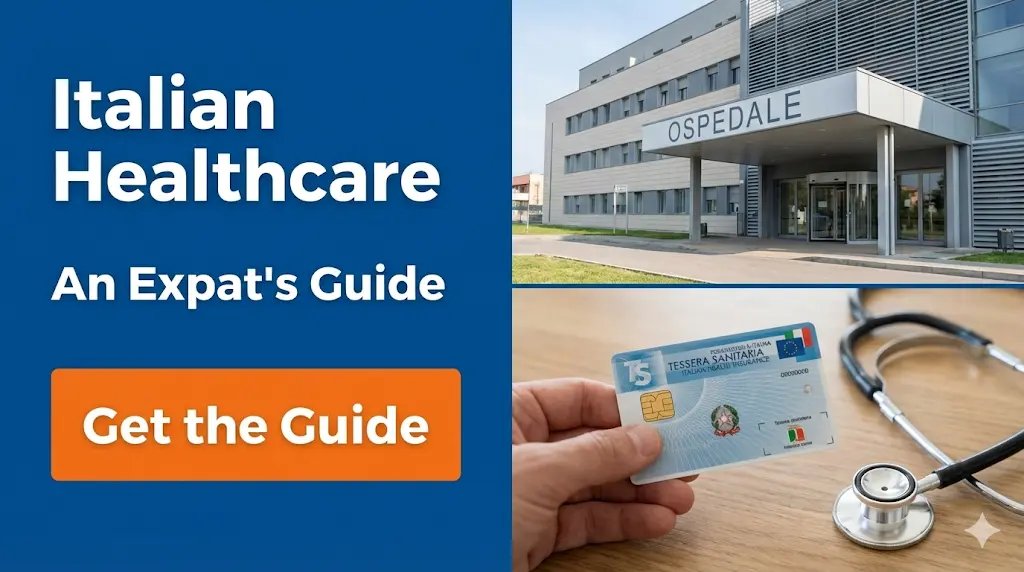
Step 5: Receive Your Tessera Sanitaria
You will be given a temporary paper certificate immediately. Within a few weeks, your plastic Tessera Sanitaria (Health Card) will arrive in the mail. You must present this card whenever you visit the doctor, hospital, or pharmacy.
For a more granular breakdown of the paperwork, check out How to Register for Italian Healthcare (SSN) as a Foreigner.
Finding a Doctor and Booking Appointments
Your medico di base (GP) is the gatekeeper to the Italian healthcare system. Routine visits to your GP are completely free.
If you need to see a specialist (like a cardiologist or a dermatologist) or get blood work done through the public system, your GP must write you a referral called an impegnativa (often referred to as a “red prescription” due to the traditional color of the paper). You then take this referral to a CUP (Centro Unico di Prenotazione) desk at a pharmacy, hospital, or call their hotline to book your appointment.
If you prefer to bypass the wait times, you can contact a private clinic directly and pay out-of-pocket for a specialist consultation without a GP referral. For tips on locating specialists in your city, see our guide on Finding Doctors and Hospitals in Italy.
Emergency Medical Services in Italy
In a medical emergency, the system is highly efficient and accessible to everyone, regardless of their residency status or nationality.
- Dial 112: This is the universal European emergency number. The operator can connect you to medical, police, or fire services and can often provide an English-speaking operator.
- Dial 118: This is the direct number for medical emergencies and ambulances in Italy.
If you need urgent care, go to the nearest hospital’s Pronto Soccorso (Emergency Room). Treatment in the ER for genuine, life-threatening emergencies is free of charge for everyone. However, triage is strictly enforced. If you visit the ER for a non-urgent issue (like a mild sprain), you will be classified as a “white code,” which means you will wait a very long time and may be charged a small fee for tying up emergency resources.
Pharmacies and Prescriptions
You will never have trouble finding a pharmacy (farmacia) in Italy; simply look for the large, illuminated green cross.
Italian pharmacists are highly trained healthcare professionals and are usually the first point of contact for minor ailments like colds, allergies, or mild stomach bugs. They can dispense valuable medical advice and recommend over-the-counter remedies.
When your GP prescribes medication, you take the prescription to the pharmacy.
- Class A Drugs: These are essential, life-saving medications (like antibiotics or heart medication) and are fully covered by the SSN, meaning they are free or require a tiny co-pay.
- Class C Drugs: These are non-essential medications (like pain relievers or cough syrup) and must be paid for entirely out-of-pocket.
The Cost of Healthcare in Italy
While public healthcare is dubbed “free,” there are small co-payments required for diagnostic tests, specialist visits, and some prescriptions. This co-pay is called a Ticket Sanitario.
The cost of a ticket is legally capped to keep healthcare affordable. Vulnerable populations, including pregnant women, children, the elderly, and those with chronic illnesses or low incomes, are entirely exempt from paying the ticket.
Table: Average Costs in the Italian Healthcare System
| Medical Service | Public System (SSN) Cost | Private Sector Cost (Out-of-Pocket) |
| General Practitioner Visit | €0 (Free) | €50 – €120 |
| First Specialist Visit | ~€25 (Ticket co-pay) | €100 – €250 |
| Follow-up Specialist Visit | ~€17.90 (Ticket co-pay) | €80 – €150 |
| Diagnostic Imaging (MRI/CT) | €10 – €36.15 (Capped ticket) | €150 – €500+ |
| Emergency Room (Urgent) | €0 (Free) | N/A (Emergencies handled by public ER) |
| Hospital Stay & Surgery | €0 (Free) | €3,000 – €10,000+ (Depends on procedure) |
Navigating the Language Barrier
The biggest hurdle expats face in the Italian healthcare system is language. While many Italian doctors read English medical literature, the daily operation of public ASL offices and hospitals is strictly in Italian.
If your Italian is not yet conversational, consider the following tips:
- Bring a Translator: For your initial ASL registration and early GP visits, bring a bilingual friend or hire a local translator to ensure nothing is lost in translation.
- Use Private Care for English: If clear communication is a priority, private insurance is incredibly useful. Private clinics in major cities cater specifically to international clients and guarantee English-speaking staff.
- Write Down Your Symptoms: Prepare a translated list of your symptoms, medical history, and current medications before you arrive at the doctor’s office.
Conclusion
The Italian healthcare system is a massive asset to anyone relocating to the country. While the bureaucracy of securing your Tessera Sanitaria can test your patience, the reward is access to a world-class, universal medical network that prioritizes patient well-being over profit.
By understanding the division between public and private care, knowing how to navigate the ASL, and budgeting for the minor ticket co-pays, you can ensure that you and your family are fully protected. Keep your paperwork organized, find a local GP you trust, and rest easy knowing that in Italy, your health is in excellent hands.
References
Primary sources (official)
- Ministero della Salute (Ministry of Health): The central government authority overseeing the SSN, defining essential health benefits, and regulating public healthcare standards. https://www.salute.gov.it/
- Agenzia delle Entrate: The official Italian Revenue Agency where expats must apply for the mandatory Codice Fiscale (Tax Code) required for healthcare registration. https://www.agenziaentrate.gov.it/
Other helpful sources
- Feather Insurance: Detailed guides on how health insurance and the public healthcare system (SSN) work in Italy, including costs and private options. https://feather-insurance.com/en-it/
- Experts for Expats: Comprehensive overviews of healthcare in Italy for expats, detailing the registration process and SSN benefits. https://www.expertsforexpats.com/
Disclaimer
The information provided in this article is for educational and informational purposes only and does not constitute official legal, medical, or financial advice. Healthcare laws, registration fees (including voluntary SSN contributions), and immigration requirements in Italy are subject to frequent changes by the Italian government. Always consult with the official Italian Ministry of Health, your local ASL office, or a certified immigration consultant to verify your specific eligibility and requirements before making healthcare or relocation decisions.