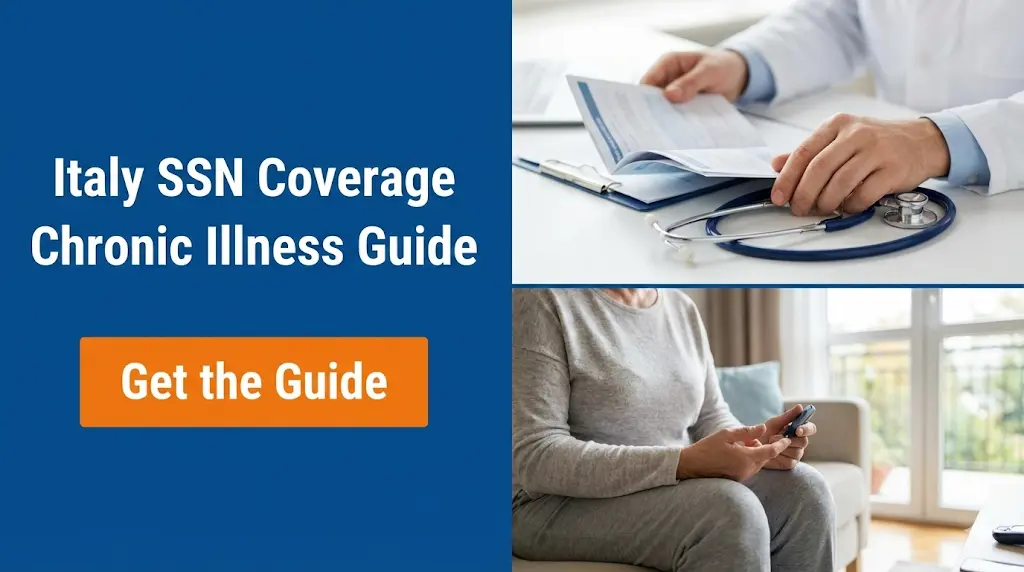
Coverage for Chronic Illnesses in Italy’s SSN
Discover how Italy’s Servizio Sanitario Nazionale provides comprehensive coverage for chronic illnesses. This guide explains the ticket exemption system, how expats can obtain an esenzione, and the steps to access free medications and specialist care for pre-existing conditions.
Disclosure: This post may contain affiliate links. We may earn a commission at no extra cost to you if you make a purchase through these links. Read full disclosure.
Introduction to Coverage for Chronic Illnesses in Italy’s SSN
Relocating to a new country involves navigating a labyrinth of bureaucracy, and managing healthcare is arguably the most critical step. For individuals living with chronic illnesses such as diabetes, hypertension, asthma, or autoimmune disorders, the stakes are exceptionally high. The fear of experiencing a lapse in medication, facing exorbitant out-of-pocket costs, or struggling to find a specialist can cast a shadow over the excitement of moving abroad.
Italy addresses these concerns through its national healthcare system, known as the Servizio Sanitario Nazionale. The system is designed to ensure that health outcomes are not dictated by financial status. For those with chronic illnesses, the Italian healthcare framework offers a highly structured, fiercely protective system of exemptions that guarantees access to life-saving medications, routine specialist consultations, and essential diagnostic tests at little to no cost.
However, accessing these benefits is not automatic upon crossing the border. It requires registering with the system, obtaining official recognition of your medical condition from an Italian specialist, and navigating the local health authority offices. The process can seem daunting to an outsider, especially when faced with a new language and unfamiliar bureaucratic procedures. To get a broader understanding of the overall medical landscape before diving into chronic care specifics, it is highly recommended to review Healthcare in Italy: An Expats’ Guide which outlines the foundational steps of integration.
This comprehensive guide is designed to demystify the process of managing a chronic illness under the Servizio Sanitario Nazionale. We will thoroughly explore how the co-payment system works, define the critical medical exemption codes, outline the step-by-step process for registering your pre-existing condition, and provide practical advice on refilling prescriptions. By understanding the rights and resources available to you, you can confidently take control of your health and fully embrace your new life in Italy.
The Foundation of Italian Public Healthcare
To understand how chronic illnesses are covered in Italy, you must first understand the underlying philosophy of the Servizio Sanitario Nazionale. Established in 1978, the system was built on three core principles: universal coverage, equality, and comprehensiveness. It is funded through national and regional taxation, meaning that residents contribute based on their income rather than their individual health risks.
The central government, through the Ministry of Health, defines the Essential Levels of Care. These are the mandatory health services that must be provided to all citizens and legal residents uniformly across every region of Italy. The care of chronic and rare diseases falls firmly within these essential levels.
However, the actual administration of healthcare is highly decentralized. It is managed by regional governments and implemented by Local Health Authorities, known as the Azienda Sanitaria Locale. This decentralization means that while your right to care for a chronic illness is guaranteed nationally, the specific administrative steps to access that care, the location of specialized clinics, and the efficiency of the bureaucracy can vary significantly depending on whether you live in Lombardy, Tuscany, or Sicily.
Understanding the Ticket Sanitario and Co Payments
A common misconception among arriving expatriates is that public healthcare in Italy is entirely free at the point of use for every single service. While hospitalizations, emergency room visits for urgent issues, and consultations with your primary care physician are completely free, many outpatient services require a subsidized co-payment.
This co-payment is known as the Ticket Sanitario. If a healthy individual needs a routine blood test, an elective ultrasound, or a consultation with a dermatologist, they will pay the ticket. The cost is capped by the government to remain affordable—usually ranging from fifteen to forty euros depending on the complexity of the diagnostic test or the specialist visit.
For someone with a chronic illness requiring frequent blood panels, multiple specialist visits a year, and daily medications, paying a co-payment for every single interaction could quickly become a financial burden. Recognizing this, the Italian government created a robust system to shield patients with long-term health conditions from these recurring costs.
The Exemption System for Chronic Illnesses
The cornerstone of chronic illness coverage in Italy is the exemption system, known in Italian as the Esenzione per Patologia. This is a special legal status granted by the local health authority to patients who have been officially diagnosed with recognized chronic or rare diseases.
When you are granted an illness exemption, you are issued a specific alphanumeric code that is linked directly to your digital health profile and printed on a physical certificate. This code effectively waives the Ticket Sanitario for any medical services, diagnostic tests, and specialist consultations that are directly related to the management and monitoring of your specific condition.
It is important to note that the exemption is condition-specific, not a blanket waiver for all healthcare costs. For example, if you have an exemption code for diabetes, your endocrinologist visits, routine blood sugar panels, and insulin will be covered for free. However, if you break your arm while skiing and need an outpatient physical therapy session, you will still be required to pay the standard ticket for the physical therapy, as it is unrelated to your diabetes.
Who is Eligible for the Exemption
To be eligible for an illness exemption, you must meet two primary criteria. First, you must be a legal resident of Italy and be fully enrolled in the Servizio Sanitario Nazionale. If you are a new arrival and have not yet completed this crucial administrative step, you must prioritize it immediately. You can find detailed instructions on how to navigate this process in our guide on How to Register for Italian Healthcare (SSN) as a Foreigner.
Second, your chronic condition must be included on the official list of recognized diseases published by the Italian Ministry of Health, and the diagnosis must be formally validated by a specialist working within or affiliated with the Italian public healthcare system.
Categories of Chronic Conditions Recognized in Italy
The Italian Ministry of Health maintains a comprehensive, legally binding list of chronic and disabling diseases that qualify for an exemption. This list is periodically updated to reflect advancements in medical science and shifts in public health priorities. The recognized conditions cover a vast spectrum of physical and mental health challenges.
There are generally two broad categories of long-term illnesses under the Italian system: Chronic Diseases and Rare Diseases. While both grant significant exemptions, Rare Diseases often receive even broader financial coverage, sometimes waiving the costs of medications that would otherwise require a co-payment.
Below is a non-exhaustive table illustrating some of the most common chronic illness categories recognized in Italy, examples of specific conditions within those categories, and the types of services generally covered by the exemption.
| Illness Category | Example Conditions | Associated Exemption Benefits |
| Cardiovascular Diseases | Hypertension, Heart Failure, History of Stroke | Free cardiology visits, ECGs, echocardiograms, and blood pressure medications. |
| Metabolic and Endocrine | Type 1 and Type 2 Diabetes, Hashimoto’s Thyroiditis | Free endocrinology consultations, HbA1c blood tests, insulin, and glucose monitoring supplies. |
| Respiratory Conditions | Severe Asthma, Chronic Obstructive Pulmonary Disease | Free pulmonology visits, spirometry tests, inhalers, and corticosteroid treatments. |
| Autoimmune Disorders | Rheumatoid Arthritis, Lupus, Multiple Sclerosis | Free rheumatology visits, immunosuppressive therapies, and regular organ-function blood panels. |
| Gastrointestinal | Celiac Disease, Crohn’s Disease, Ulcerative Colitis | Free gastroenterology visits, endoscopies, and monthly vouchers for certified gluten-free foods (for Celiac). |
| Neurological and Psychiatric | Epilepsy, Parkinson’s Disease, Severe Depression, Schizophrenia | Free neurology/psychiatry visits, EEGs, and associated pharmacological treatments. |
| Infectious Diseases | HIV/AIDS, Chronic Hepatitis B and C | Comprehensive free care including viral load testing, infectious disease specialist visits, and antiviral therapies. |
Note: The specific alphanumeric exemption code (e.g., 013 for Diabetes, 031 for Hypertension) will be assigned during the registration process at the local health authority.
Step by Step Guide to Obtaining Your Exemption Code
Securing your illness exemption requires navigating a specific sequence of bureaucratic steps. It cannot be done entirely online, and it cannot be completed before you physically relocate to Italy.
Step One Establish Public Healthcare Enrollment
You must possess a valid Tessera Sanitaria (Italian Health Card) and be assigned a primary care physician. You cannot apply for a chronic illness exemption if you are only utilizing private international health insurance or if you are in Italy on a short-term tourist visa.
Step Two Obtain a Medical Certificate
Your foreign medical records, letters from your hometown doctor, and previous prescriptions are vital for your continuity of care, but they are not legally sufficient to grant you an exemption in Italy. You must obtain a formal medical certificate confirming your diagnosis from an Italian specialist who is employed by the public healthcare system.
To do this, you will visit your new Italian primary care physician and present your translated foreign medical records. Your primary doctor will write a referral for you to see a public specialist (for example, a public cardiologist for heart disease). You will then book the specialist appointment, pay the standard ticket for this initial diagnostic visit, and have the specialist formally diagnose you under the Italian protocols. The specialist will then issue a stamped certificate detailing your chronic disease and its corresponding legal classification code.
Step Three Visit the Local Health Authority
Once you have the official certificate from the public specialist, you must take it to your district’s Local Health Authority office. You will need to bring your passport, your residence permit, your Tessera Sanitaria, and the specialist’s certificate. At the administrative desk, a clerk will input your diagnosis into the regional health database and issue a printed document confirming your Esenzione per Patologia.
Step Four Notify Your Primary Care Physician
The final step is to bring your new exemption certificate back to your primary care physician. They will update your electronic health record in their system. From that point forward, whenever they write a prescription for a medication or a referral for a blood test related to your condition, their software will automatically apply the exemption code, signaling to the pharmacist or the hospital that the service is free of charge.
The Role of the Primary Care Physician
In the Italian healthcare system, your primary care physician, known as the Medico di Medicina Generale or Medico di Base, is the absolute anchor of your medical journey. They act as the gatekeeper and the central coordinator for all your health needs.
For individuals with chronic illnesses, building a strong, communicative relationship with the primary care physician is crucial. Unlike the specialist who you might see only once or twice a year for major evaluations, your primary doctor is the professional you will interact with constantly to request routine blood test referrals, manage minor flare-ups, and authorize your ongoing medication refills.
Italian primary care doctors are highly trained and are capable of managing many aspects of chronic care directly. For instance, if your blood pressure is well-controlled on a stable medication regimen, your primary doctor will monitor your progress and prescribe your monthly refills without requiring you to see a cardiologist every single time. Because continuity of care is so deeply tied to this single professional relationship, expats should take the time to find a physician they feel comfortable with, preferably one who speaks English if the language barrier is a concern.
Navigating Pharmacies and Medication Tiers
Understanding how medications are classified and dispensed in Italy is vital for expats managing long-term treatments. The Italian pharmaceutical landscape is highly regulated, and medications are divided into specific tiers, known as Fasce, which determine how much the patient pays.
The Fascia System
The Ministry of Health categorizes prescription drugs based on their medical necessity:
- Fascia A: These are essential, life-saving drugs and treatments for chronic diseases. Examples include insulin, heart medications, asthma inhalers, and targeted immunosuppressants. If you have an illness exemption code on your prescription, Fascia A drugs are provided completely free of charge. Even without an exemption, the cost is heavily subsidized by the state, requiring only a tiny co-pay of a few euros.
- Fascia C: These are considered non-essential medications or drugs intended to treat minor, temporary symptoms. This category includes pain relievers, mild sleep aids, and certain dermatological creams. Fascia C drugs are not covered by the national health system. Regardless of whether you have an exemption code, you must pay the full retail price for these medications out-of-pocket.
The Electronic Prescription Process
Italy has transitioned almost entirely to a digital prescription system. When your doctor prescribes your chronic medication, they generate a Ricetta Elettronica (electronic prescription) in the regional health database. They will print a paper memo containing an electronic barcode, or simply email the barcode directly to your smartphone.
You take this barcode to any local pharmacy. The pharmacist scans the code, reads your exemption status directly from the digital system, and hands you your medication. If you are trying to understand the nuances of securing ongoing supplies and the frequency at which doctors can legally prescribe them, exploring Refilling Chronic Prescription Drugs in Italy will provide you with the specific logistical timelines you need.
Managing Specialist Appointments and Wait Times
While the financial protection offered by the Italian public system is unparalleled, it is not without its flaws. The most significant challenge expatriates face when relying entirely on the Servizio Sanitario Nazionale for chronic care is the waiting list for specialist appointments and diagnostic imaging.
Because the system is free or heavily subsidized, the demand for specialist care is massive. Public appointments are triaged based on clinical urgency rather than a first-come, first-served basis. If your primary care physician indicates on your referral that your need is urgent, you must be seen within a few days. However, if you are simply booking a routine, six-month follow-up ultrasound for a stable chronic condition, you may face a waiting list that stretches for several months.
Expats must learn to be incredibly proactive. You cannot wait until your prescription runs out or until the week before you are supposed to see a specialist to attempt to book an appointment through the regional booking center. You must schedule your routine monitoring visits months in advance to secure a slot within the public system.
Supplementing with Private Health Insurance
Due to the long waiting times for public specialists and the language barrier often encountered in public hospitals, many expatriates choose to supplement their public coverage with private health insurance.
The private healthcare sector in Italy runs parallel to the public system. Private clinics and independent specialists offer immediate availability, luxurious facilities, and a much higher likelihood of finding English-speaking medical professionals. However, this convenience comes at a significant cost, as private specialist consultations can range from one hundred to three hundred euros per visit.
For an expat with a chronic illness, a hybrid approach is often the most effective strategy. You can rely on the public system to cover the massive costs of your daily Fascia A medications, your routine laboratory blood work, and any potential emergency hospitalizations. Simultaneously, you can utilize a private insurance policy to bypass the public waiting lists when you need a rapid consultation with a specialist or an immediate diagnostic scan.
Preparing for the Transition Practical Tips for Expats
The period between arriving in Italy and officially securing your illness exemption code can take several weeks to a few months, depending on the efficiency of your local municipality and health authority. During this transition, you are vulnerable to gaps in your medical care. To ensure a safe relocation, consider the following practical steps:
Bring an Adequate Supply of Medication
It is imperative that you travel to Italy with a sufficient supply of your chronic medications to bridge the transition period. Generally, Italian customs allows individuals to bring up to a ninety-day supply of personal prescription medication, provided it is accompanied by an official, signed letter from your home country physician detailing your diagnosis and the necessity of the drug. Always keep your medications in their original, clearly labeled pharmacy packaging.
Know Your Active Ingredients
The commercial brand names of drugs vary wildly across the globe. A medication you know by a specific brand name in the United States or the United Kingdom likely does not exist under that name in Italy. When speaking with your new Italian primary care physician, you must provide the generic, chemical name of the active ingredient. The Italian doctor will use this chemical name to find the exact national equivalent to prescribe for you.
Translate Critical Medical Records
Do not assume that Italian public specialists will be able to read and interpret complex medical histories written in English. To expedite the process of obtaining your official Italian diagnosis and exemption certificate, it is highly advisable to have your most recent specialist reports, surgical histories, and diagnostic imaging summaries professionally translated into Italian before you arrive.
Conclusion
Managing a chronic illness requires diligence, organization, and a reliable medical safety net. For expatriates making their home in Italy, the Servizio Sanitario Nazionale provides a profoundly humane and robust framework of support. The system is fundamentally designed to protect patients from the financial devastation that can often accompany long-term health conditions, ensuring that life-saving medications and expert specialist care remain accessible to everyone.
While navigating the initial bureaucracy—registering with the system, obtaining your official medical certificate, and securing your illness exemption code—demands patience and persistence, the long-term benefits are immeasurable. By proactively understanding the classification of your medications, building a strong relationship with your primary care physician, and learning how to effectively manage the public booking systems, you can seamlessly integrate your healthcare needs into your new life abroad.
Relocating to Italy with a pre-existing condition does not mean compromising on your quality of care. With the right preparation, a clear understanding of your medical rights, and a willingness to adapt to the local administrative rhythms, you can protect your health and fully embrace the vibrant, enriching lifestyle that the Italian peninsula has to offer.
References
Primary sources (official)
- Ministero della Salute (Ministry of Health): The official Italian government portal outlining the Essential Levels of Care, the national list of recognized chronic and rare diseases, and the regulations governing the Esenzione per Patologia. https://www.salute.gov.it/
- Agenzia Italiana del Farmaco (AIFA): The national authority responsible for the classification of pharmaceutical drugs (Fascia A and Fascia C) and the regulation of medication pricing in Italy. https://www.aifa.gov.it/
Other helpful sources
- Expatica Italy: Comprehensive guides detailing the transition into the Italian public healthcare system, explaining the role of the primary care physician, and navigating the Ticket Sanitario. https://www.expatica.com/it/
- The Local Italy: An English-language news and resource network providing practical advice, expat community experiences, and ongoing updates regarding Italian healthcare bureaucracy. https://www.thelocal.it/
Disclaimer
The information provided in this article is intended for general educational and informational purposes only and does not constitute official medical, legal, or financial advice. Healthcare regulations, the list of recognized chronic illnesses eligible for exemptions, and medication classifications in Italy are subject to frequent changes by national and regional health authorities. The process for obtaining medical exemptions may vary slightly by local municipality (ASL). Always consult directly with a licensed Italian medical professional, your assigned primary care physician, or your local health authority to verify your specific eligibility and coverage options before making healthcare decisions.