Accessing Mental Health Care: Therapists and Psychiatrists
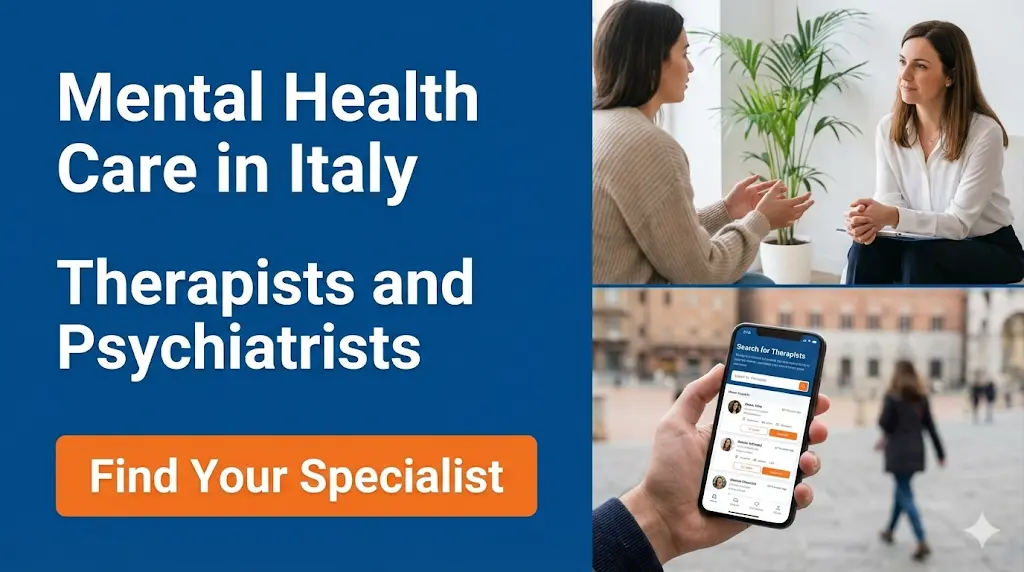
Relocating to Italy offers incredible adventures but can also trigger distinct emotional challenges. This comprehensive guide explains how to navigate the Italian mental health landscape, access public and private care, find English-speaking professionals, and secure necessary psychiatric prescriptions.
Disclosure: This post may contain affiliate links. We may earn a commission at no extra cost to you if you make a purchase through these links. Read full disclosure.
Introduction to Accessing Mental Health Care
Securing mental health support in Italy requires a fundamental understanding of a medical and cultural landscape that operates very differently from those found in North America, the United Kingdom, or Northern Europe. Historically, mental health in Italy was deeply private, managed largely within the tight-knit structures of the traditional Italian family or through the pastoral care of the Catholic Church. However, the modern Italian healthcare system has evolved significantly and possesses a rich, progressive psychiatric history.
Italy is globally famous in the psychiatric community for the landmark 1978 Basaglia Law, which mandated the complete closure of all psychiatric asylums in the country. This revolutionary legislation shifted the focus from institutionalized segregation to community-based rehabilitation. Because of this law, mental health patients in Italy are treated in open, community-integrated centers, and the country boasts one of the most human-rights-focused psychiatric legal frameworks in the world.
Today, a monumental cultural shift regarding therapy has taken root, accelerating rapidly in the wake of the global pandemic. The stigma surrounding mental health has diminished drastically, particularly among younger generations and residents of major metropolitan hubs. Going to therapy is increasingly viewed as a standard practice of self-care rather than a badge of severe instability. For expatriates, the challenge is no longer overcoming societal stigma, but rather navigating the logistical pathways of a foreign healthcare system to find the right professional.
The Psychological Realities of Relocating to Italy
Before exploring the logistical avenues of mental health care, it is crucial to validate the specific emotional hurdles that accompany a move to Italy. Expatriate depression and relocation anxiety are well-documented psychological phenomena. When you move to Italy, you are systematically dismantling your established support networks, your professional identity, and your daily routines.
One of the most frequently cited triggers for anxiety among expats in Italy is the country’s formidable administrative system. Securing a residence permit, opening a bank account, and setting up basic household utilities require navigating a maze of paperwork, contradictory instructions, and lengthy delays. This continuous administrative friction can lead to a state of chronic stress, often referred to as bureaucracy fatigue, leaving expats feeling helpless and perpetually unsettled.
Furthermore, while the Italian people are globally renowned for their warmth and hospitality, forming deep, meaningful relationships requires a high degree of linguistic fluency. Expats who are still in the early stages of learning Italian often find themselves unable to express their true personalities or participate in complex social dynamics. This inability to communicate effectively can trigger a profound sense of isolation. To better understand the community networks available to combat this isolation, you might want to explore resources related to Mental Health Support in Italy: Resources for Expats. Recognizing these unique triggers is the first vital step in realizing that seeking professional psychological help is a normal and necessary part of the expatriate journey.
Understanding Italian Mental Health Professionals
A common point of confusion for expatriates is the strict legal distinction between different types of mental health professionals in Italy. The terminology translates directly, but the educational requirements and legal capabilities of each role are highly regulated by the Italian state. Knowing exactly who to contact for your specific needs will save you immense time and frustration.
The Psychologist
In Italy, a psychologist is known as a Psicologo. This professional has completed a five-year university degree in psychology, followed by a mandatory one-year clinical internship. They must then successfully pass a rigorous state examination to be inscribed in the national professional register. A psychologist is fully qualified to offer psychological counseling, conduct diagnostic assessments, perform cognitive testing, and provide emotional support for life transitions or mild distress. However, a standard psychologist is not legally permitted to practice deep psychotherapy or psychoanalysis, nor can they prescribe medication of any kind.
The Psychotherapist
A psychotherapist, or Psicoterapeuta, is a psychologist or a medical doctor who has completed an additional, highly specialized four-year postgraduate training program in a specific therapeutic modality. These modalities include Cognitive Behavioral Therapy, Psychoanalysis, Gestalt Therapy, or Systemic Family Therapy. If you are seeking long-term therapy to process trauma, manage clinical anxiety, overcome deep-seated behavioral patterns, or treat clinical depression, the psychotherapist is the professional you must seek out. Unless they also hold a medical degree, they cannot prescribe medication.
It is also worth noting that Italy has a very strong historical tradition of psychoanalysis. While Cognitive Behavioral Therapy is widely available, you will find a much higher percentage of therapists practicing psychoanalytic or psychodynamic therapy in Italy compared to the United States or the United Kingdom.
The Psychiatrist
A psychiatrist, or Psichiatra, is a fully licensed medical doctor who has completed medical school and subsequently undertaken a multi-year residency specialization in psychiatry. Because they are medical doctors, psychiatrists are the only mental health professionals in Italy who hold the legal authority to prescribe pharmacological treatments, such as antidepressants, antipsychotics, and anxiolytics. Psychiatrists often work in tandem with psychotherapists, managing the biological and chemical aspects of a patient’s mental health while the therapist handles the behavioral and emotional work.
Navigating the Public Healthcare System for Therapy
The public system is heavily subsidized by the state, making it the most financially accessible route for psychiatric care.
The Role of the General Practitioner
Your entry into the public mental health system begins with your assigned family doctor, known as the Medico di Medicina Generale. Italian general practitioners act as the primary gatekeepers for specialized care. If you are experiencing symptoms of depression, anxiety, or insomnia, you must book an appointment with your general practitioner first.
The general practitioner can provide initial support and holds the authority to prescribe basic, first-line psychiatric medications, such as mild antidepressants or standard anti-anxiety medications. If your doctor determines that your condition is complex or requires specialized therapy, they will issue a formal medical referral, known as a ricetta elettronica or an impegnativa, directing you to a public specialist.
Community Mental Health Centers
For ongoing psychiatric conditions, the backbone of the public system is the Community Mental Health Center, known as the Centro di Salute Mentale. Every regional health district in Italy operates one of these centers. They are staffed by multidisciplinary teams comprising psychiatrists, clinical psychologists, specialized psychiatric nurses, and social workers.
When you present your doctor’s referral to the center, you will be scheduled for an initial intake evaluation. The team will assess your needs and design a personalized treatment plan, which may include regular psychiatric consultations, medication management, and social rehabilitation programs.
Family Counseling Centers
For issues specifically related to family dynamics, marital conflict, youth psychology, and maternal mental health, the public system offers the Consultorio Familiare. These are highly accessible neighborhood clinics that provide free psychological counseling to individuals, couples, and adolescents. A major advantage of these counseling centers is that you generally do not need a referral from your general practitioner to access their services; you can simply walk in or call to schedule an intake appointment.
Drawbacks of the Public System for Expats
While the public system is financially advantageous and medically sound, it presents massive hurdles for expatriates. The public mental health sector is chronically underfunded and understaffed across many Italian regions, resulting in extremely long waiting lists. You may have to wait several months to receive a non-emergency psychological consultation.
More critically, the public system operates almost exclusively in Italian. Finding an English-speaking psychologist or psychiatrist within a public community center is incredibly rare. Because effective psychotherapy relies entirely on nuance, cultural understanding, and seamless communication, attempting deep psychological work in a second language that you have not yet mastered is often counterproductive and deeply frustrating.
The Private Healthcare Sector and Language Barriers
Due to the linguistic limitations and long waiting times inherent in the public system, the vast majority of expatriates in Italy turn to the private healthcare sector for their mental health needs. The private sector offers immediate availability, superior comfort, and, crucially, the ability to select a practitioner who speaks your native language. If you are weighing the broader pros and cons of these two systems, you can review our guide on the Differences between Public and Private Healthcare in Italy.
When you are in a state of emotional distress, the cognitive load required to translate your thoughts, process complex vocabulary, and interpret a therapist’s feedback can completely derail the therapeutic process. You need an environment where you feel entirely understood without effort.
Fortunately, Italy’s major urban centers, such as Rome, Milan, Florence, and Bologna, host a wide array of international clinics and independent private practices that cater specifically to the expat community. These professionals often possess international credentials and intimately understand the unique phenomenon of culture shock and expatriate isolation.
Teletherapy and Digital Platforms
The rise of telehealth has revolutionized mental health support for expats residing in rural Italian towns or smaller cities where physical English-speaking professionals are unavailable. Many Italian-based bilingual psychologists now offer their services entirely via secure video conferencing.
Furthermore, the Italian market has seen the launch of several highly successful domestic digital therapy platforms. While some are exclusively in Italian, others are beginning to onboard bilingual therapists. Expats also frequently utilize international therapy platforms to connect with licensed therapists back in their home countries, though it is important to ensure that those therapists are legally permitted to treat clients residing overseas according to their specific licensing boards.
Rules for Psychiatric Medication and Prescriptions
If your mental health treatment plan involves pharmacological intervention, you must understand the strict regulations governing controlled substances in Italy. The country exercises rigorous oversight regarding the dispensing of psychiatric medications, particularly anxiolytics, sedatives, and stimulants.
Invalidity of Foreign Prescriptions
You absolutely cannot purchase psychiatric medication over the counter in Italy. Furthermore, foreign prescriptions are generally invalid for restricted psychiatric medications. If you arrive in Italy with a valid prescription for an antidepressant or an anti-anxiety medication from an American, Canadian, or British doctor, an Italian pharmacist cannot legally fulfill it.
To continue your medication regimen, you must book an appointment with an Italian general practitioner or a private Italian psychiatrist. You should bring your original foreign prescription, the original medication bottles, and a summarized medical history from your previous doctor. The Italian physician will evaluate your case and issue a localized Italian prescription.
The Drug Classification System
The Italian Ministry of Health categorizes medications to determine how they are funded by the state.
- Class A Drugs: These are deemed essential medications. Many standard antidepressants and critical antipsychotic medications fall into this category. If prescribed by a public doctor on an official public electronic prescription, these medications are provided entirely free of charge or for a nominal regional co-pay of a few euros.
- Class C Drugs: These are considered non-essential or symptomatic relief medications. The vast majority of benzodiazepines, which are anti-anxiety medications like Xanax or Valium, and sleep aids are classified as Class C drugs. The public health system does not subsidize Class C drugs. Therefore, the patient must pay the full retail market price out-of-pocket at the pharmacy, regardless of whether a public or private doctor prescribed them.
Highly Restricted and Illegal Medications
Expats must be acutely aware that some medications legally prescribed in their home countries are heavily restricted or completely illegal in Italy. The most prominent example is medication used to treat Attention Deficit Hyperactivity Disorder. In the United States, Adderall is a common prescription. In Italy, Adderall is strictly illegal and is classified as a banned narcotic. Bringing it into the country can lead to severe legal consequences. The primary legal alternative for ADHD treatment in Italy is Methylphenidate, but it is heavily restricted, rarely prescribed to adults without extensive local diagnostic testing, and requires a complex bureaucratic process to obtain.
Estimated Costs for Mental Health Services
Private mental health care in Italy is an out-of-pocket expense, though the rates are generally more affordable than those found in the United States or the United Kingdom. Prices fluctuate significantly based on the geographical region, with northern metropolitan hubs like Milan commanding higher fees than clinics in southern Italy.
If you hold a premium international expatriate health insurance policy, comprehensive mental health modules are often included. These policies can reimburse a significant percentage of private therapy costs. To understand how these expenses factor into your overall relocation budget, you can explore our detailed breakdown on the Cost of Healthcare in Italy: What Expats Need to Know.
Breakdown of Expected Fees
To help you budget for your mental health care, the following table outlines the estimated costs for various psychological and psychiatric services across the public and private sectors in Italy.
| Type of Mental Health Service | Sector | Estimated Cost per Session | Expected Wait Time |
| Psychiatric Evaluation | Public (SSN) | €20 – €35 (Ticket Co-pay) | 1 to 4 Months |
| Psychotherapy Session | Public (SSN) | Free or Minimal Ticket | 2 to 6 Months |
| Private Psychologist Visit | Private Clinic | €50 – €100 | 1 to 7 Days |
| Private Psychiatrist Visit | Private Clinic | €100 – €180 | 1 to 7 Days |
| Teletherapy (Video Call) | Private Platform | €40 – €80 | Instant to 2 Days |
| Family Counseling | Public Consultorio | Free | 1 to 4 Weeks |
State Financial Assistance The Psychologist Bonus
Recognizing the escalating mental health crisis following the global pandemic, the Italian government introduced a groundbreaking financial aid initiative known as the Psychologist Bonus, or Bonus Psicologo. This program provides state funds directly to citizens and legal residents to help cover the costs of private psychotherapy sessions, bridging the gap between the overwhelmed public system and the expensive private sector.
Eligibility and ISEE Requirements
The Psychologist Bonus is available to anyone legally residing in Italy, making registered expatriates fully eligible to apply. There are no age restrictions. The defining qualifying factor is the applicant’s financial status, which is measured by the Italian economic indicator known as the ISEE.
To qualify for the bonus, your household ISEE must be below 50,000 euros. The government distributes the funds on a sliding scale designed to provide the most assistance to those with the lowest incomes. For the lowest income brackets, the state can provide up to 1,500 euros per year to be used exclusively for therapy. The state covers a maximum of 50 euros per individual therapy session. If your private therapist charges 80 euros per session, the bonus covers 50 euros, and you pay the remaining 30 euros out-of-pocket.
The Application Process
Applications for the Psychologist Bonus are not ongoing; they must be submitted during specific chronological windows defined by the government each year, typically in the late summer or early autumn. You must submit your application exclusively online through the dedicated digital portal of the national social security institute. Accessing the portal requires a verified Italian digital identity. Because the allocated national funds are limited, the bonuses are awarded on a priority basis, heavily favoring the lowest economic brackets.
Emergency Mental Health Interventions
Psychiatric emergencies require immediate, decisive intervention. The Italian healthcare system treats acute mental health crises, such as active suicidal ideation, severe panic attacks, psychotic breaks, or instances of profound self-harm, with the exact same urgency as a physical trauma.
If you or a loved one is experiencing a life-threatening psychiatric emergency, you must immediately dial the universal European emergency number, 112, or proceed directly to the nearest hospital.
Italian public hospitals operate specialized, acute psychiatric emergency wards known as the Psychiatric Diagnosis and Treatment Service. When a patient arrives at the emergency room in the midst of a mental health crisis, they are evaluated by the triage nurses and immediately transferred to this specialized ward. The psychiatric team will provide rapid crisis stabilization, administer emergency medications, and determine if short-term inpatient hospitalization is necessary to ensure the patient’s physical safety.
If you are experiencing severe distress, loneliness, or suicidal thoughts, but do not require an immediate ambulance dispatch, Italy offers several dedicated, confidential crisis hotlines staffed by trained professionals and compassionate volunteers. Organizations such as Telefono Amico Italia provide specialized crisis intervention and dedicated suicide prevention listening services.
Conclusion
The decision to move to Italy is a courageous leap into the unknown, promising magnificent rewards alongside undeniable psychological challenges. Acknowledging that expatriate life is stressful, and that feeling overwhelmed is a normal response to profound cultural disruption, is the most powerful step you can take toward preserving your mental health. You do not have to navigate the complexities of culture shock, language barriers, and emotional isolation alone.
Italy provides a comprehensive, multifaceted safety net designed to support its residents. Whether you choose to leverage the highly subsidized psychiatric clinics of the public health system, utilize state financial bonuses to access the comfort of a private, English-speaking psychotherapist, or connect with specialized digital therapy platforms, the resources are available and highly effective. By proactively understanding the legal distinctions of local medical professionals, anticipating the rules surrounding psychiatric prescriptions, and prioritizing your emotional well-being with the same diligence you apply to your administrative paperwork, you can transform the inevitable stresses of relocation into a journey of profound personal growth. Protect your mental health, and you will unlock the true, vibrant beauty of the Italian experience.
References
Primary sources official
- Ministero della Salute: The central government portal detailing national mental health policies, the structure of the mental health departments, and the guidelines for psychiatric care in Italy. https://www.salute.gov.it/
- INPS: The official social security portal containing the operational guidelines, economic indicator requirements, and the digital application portal for the state-sponsored Psychologist Bonus. https://www.inps.it/
Other helpful sources
- Consiglio Nazionale dell’Ordine degli Psicologi: The National Council of the Order of Psychologists provides a verified, searchable registry of all legally licensed psychologists and psychotherapists practicing in Italy. https://www.psy.it/
- Telefono Amico Italia: The official website of Italy’s premier listening and emotional support charity, providing crisis hotline numbers and volunteer resources. https://www.telefonoamico.it/
Disclaimer
The information provided in this article is intended for general educational and informational purposes only and does not constitute official medical, psychiatric, legal, or financial advice. Mental health laws, public health protocols, prescription medication classifications, and government financial assistance programs in Italy are subject to frequent legislative updates. If you are experiencing a medical or psychiatric emergency, active suicidal ideation, or profound psychological distress, please dial 112 immediately or proceed to the nearest hospital emergency room. Always consult directly with a licensed mental health professional or a registered medical doctor regarding your specific psychological needs and treatment plans.