Discounted Healthcare Services for Students
Navigating healthcare in Italy as an international student doesn’t have to break the bank. This guide explores discounted SSN voluntary registration, private insurance alternatives, and free on-campus university medical clinics to keep you healthy and focused on your studies.
Disclosure: This post may contain affiliate links. We may earn a commission at no extra cost to you if you make a purchase through these links. Read full disclosure.
Introduction to Discounted Healthcare Services for Students
Fortunately, Italy is home to one of the most highly regarded public healthcare systems in the world, the Servizio Sanitario Nazionale (SSN). The SSN operates on the principles of equality and universality, ensuring that high-quality medical care is accessible to everyone residing within the country’s borders, regardless of their financial status. The system is predominantly funded through national and regional taxation, which means that most essential services, including primary care and emergency hospital treatments, are provided free of charge or for a very low co-payment at the point of use.
For expatriates and international residents, accessing this system usually requires paying a significant annual fee based on their global income. However, the Italian government heavily incentivizes international education and cultural exchange. As a result, foreign students are granted access to a specialized, highly discounted tier of public healthcare registration. Furthermore, many major Italian universities have recognized the unique challenges faced by their international student populations and have established dedicated on-campus medical centers and free psychological counseling services.
This comprehensive guide is designed to completely demystify the healthcare landscape for students in Italy. We will explore the exact costs and benefits of the discounted SSN student registration, compare it to affordable private health insurance alternatives, and highlight the incredible free resources available directly on your university campus. By understanding these systems, you can ensure that you remain healthy, supported, and fully capable of embracing every moment of your Italian academic journey.

The Italian National Health Service for Students
The Servizio Sanitario Nazionale is the backbone of Italian public health. It is a decentralized system managed at the regional level by local health authorities known as the Azienda Sanitaria Locale (ASL), or in some regions, the Azienda Unità Sanitaria Locale (AUSL) or Agenzia di Tutela della Salute (ATS).
For non-EU citizens moving to Italy, healthcare registration falls into two categories: mandatory and voluntary. Mandatory enrollment is completely free and is typically granted to individuals who hold a work contract and pay Italian taxes, or those on family reunification visas. Because international students are generally not paying Italian income taxes, they do not qualify for free mandatory enrollment. Instead, they must apply for voluntary enrollment, known as iscrizione volontaria.
The Discounted Flat Fee for Students
Under normal circumstances, a non-EU expat applying for voluntary registration (such as a retiree on an Elective Residence Visa or a researcher) must pay an annual contribution calculated as a percentage of their previous year’s global income. This standard calculation is 7.5% for income up to €20,658.28, plus 4% for income above that amount, with a strict minimum payment of €2,000 per year introduced in 2024.
However, international students are entirely exempt from this income-based calculation. To support education, the Italian government offers students a deeply discounted, flat-rate fee. As of the legislative changes implemented in 2024, the voluntary registration fee for international students without dependent family members is set at a minimum flat rate of €700 per year. Paying this €700 fee grants you the exact same comprehensive medical rights as any Italian citizen. If a student wishes to extend this public healthcare coverage to their dependent family members living with them in Italy, they must pay an additional fee (often an extra €1,300, bringing the total to the standard €2,000 minimum).
The Calendar Year Rule A Crucial Warning
There is a significant bureaucratic quirk regarding voluntary SSN registration that catches many international students off guard: the coverage is strictly based on the calendar year.
Registration is valid only from January 1st to December 31st of the current year, regardless of the date you actually make the payment or submit your application. It cannot be divided, pro-rated, or carried over, and it does not have retroactive effect.
This rule is extremely important for the vast majority of international students who arrive in Italy in September to begin the fall semester. If you arrive in September and pay the €700 fee, your public healthcare coverage will completely expire just a few months later on December 31st. You would then be required to pay another €700 in January to cover the upcoming year. Because of this, many universities advise students arriving in the fall to purchase a cheap private health insurance policy to cover their first few months, and then officially register for the public SSN in January. Alternatively, some regions allow you to pay for two consecutive years at once (e.g., 2024 and 2025 by making two separate €700 payments) to satisfy the one-year health coverage requirement needed for the initial visa and residence permit application.
What Does the SSN Cover for Students
Once you have paid the fee and officially registered with your local ASL, the €700 investment pays massive dividends in terms of health security. You will be issued a health card, and you will have full access to the Italian medical infrastructure.
The General Practitioner
The most valuable benefit of SSN registration is the right to choose a Medico di Base (General Practitioner or Family Doctor). Your general practitioner is your primary point of contact for all non-emergency medical issues. Consultations with your general practitioner are completely free of charge. They will diagnose common illnesses, manage chronic conditions, write official medical certificates if you miss classes due to illness, and act as your gatekeeper to the broader medical system.
Specialist Referrals and the Ticket System
If your general practitioner determines that you need to see a medical specialist (such as a dermatologist, cardiologist, or orthopedist) or require diagnostic testing (like blood work, an X-ray, or an MRI), they will issue an electronic referral known as an impegnativa.
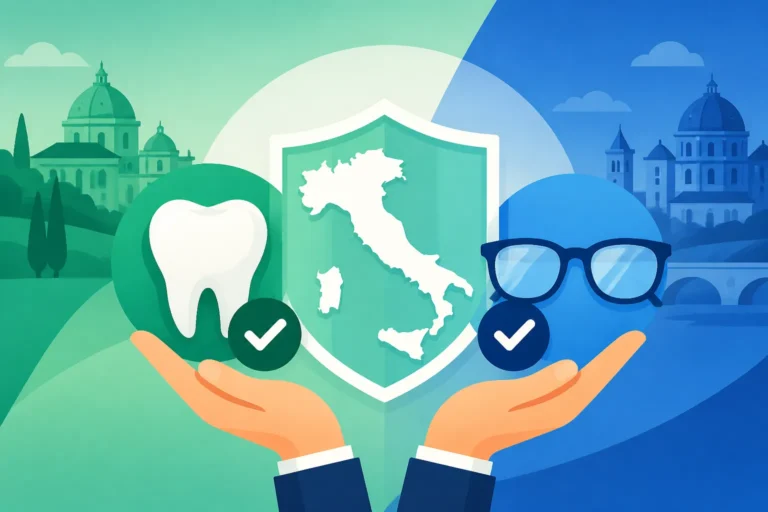
With this referral, you can book an appointment at a public hospital or accredited clinic. While the primary care visit is free, specialist visits and diagnostic tests in the public system require a small co-payment known as a “ticket”. This ticket fee is heavily subsidized and usually ranges from €15 to €36 depending on the complexity of the test or the specific specialist involved. Dental care, including dental emergency rooms, is also provided within the public health system under this ticket co-payment structure.
Emergency Care and Hospitalization
If you suffer a severe injury, require emergency surgery, or need to be admitted to the hospital for a prolonged illness, the SSN provides this care completely free of charge. You will not receive a devastating hospital bill after an emergency room visit or an operation.
European Students and the EHIC
The rules discussed above primarily apply to non-EU students. If you are a citizen of a European Union member state, an EEA country, or Switzerland, your access to Italian healthcare is significantly streamlined thanks to reciprocal European agreements.
EU students do not strictly need to pay the €700 voluntary registration fee if they are in Italy for a temporary study period. Instead, you can use your European Health Insurance Card (EHIC), known in Italy as the Tessera Europea di Assicurazione Malattia (TEAM).
The EHIC grants you free access to medically necessary, state-provided healthcare during your stay. If you fall ill, you can visit a public doctor affiliated with the National Health Service, presenting your TEAM card and your ID. The costs of your visit and any necessary treatments are billed directly to the competent health care provider in your home country.
However, relying solely on the EHIC means you generally cannot permanently register with a specific Medico di Base. You will be treated as a temporary patient. For specialist appointments or complex diagnostic tests, you will still need a prescription from a general practitioner and will be required to pay the standard ticket co-payment. If an EU student plans to reside in Italy long-term or wants the stability of a dedicated family doctor, they can request an S1 form from their home country’s health authority to officially transfer their health coverage, or they can choose to voluntarily enroll in the SSN by paying the annual fee.
Affordable Private Health Insurance Alternatives
Given the calendar year rule and the €700 cost of the public SSN, many international students opt for private health insurance. For the purpose of obtaining a student visa and applying for the required Italian Residence Permit (Permesso di Soggiorno) Explained, Italian immigration authorities accept private health insurance policies, provided they meet strict criteria. The insurance must be registered in your name, be valid for the entire duration of your study program in Italy, and explicitly cover the risks of illness, injury, and pregnancy. It is also highly recommended that the policy covers medical repatriation in the event of a severe, life-threatening emergency.
Popular Student Policies
There are several private insurance providers that cater specifically to the international student market in Italy, offering policies that are significantly cheaper than the public SSN fee.
Two of the most widely used options are the Welcome Association Italy (W.A.I.) and AON Student Insurance. The W.A.I. policy, for example, is recognized by Italian embassies and police headquarters across the country. These private policies often cost between €120 and €150 for a full twelve months of coverage, making them highly attractive to students on a tight budget.
The Drawbacks of Private Insurance
While private student insurance is exceptionally cheap, it comes with significant limitations.
First and foremost, a basic private student policy does not grant you access to the Italian public healthcare system, nor does it allow you to choose a public Medico di Base. These policies are primarily designed for emergencies and urgent hospital care. Furthermore, they operate on a reimbursement model. If you need medical attention, you must visit a private doctor or a hospital, pay the full cost of the treatment out of your own pocket upfront, and then submit the medical reports and receipts to the insurance company to request a reimbursement. For students with limited cash flow, paying hundreds of euros upfront for a private doctor can be highly stressful.
University Medical Centers and On-Campus Care
To bridge the gap between expensive private doctors and the bureaucratic public system, many prominent Italian universities have taken proactive steps to protect their international students. They have established dedicated, on-campus medical centers that provide completely free or highly subsidized basic healthcare.
- Bocconi University (Milan): Bocconi operates an on-campus medical clinic designed specifically to meet the needs of non-resident students who have difficulty accessing a general practitioner. This center provides first-level internal medicine services, medical examinations, and basic prescriptions. Additionally, Bocconi ensures student safety by stationing an ambulance equipped with health workers directly on campus every weekday to provide immediate first aid and health monitoring.
- Sapienza University (Rome): Sapienza has partnered with specific local health facilities, such as the Presidio Nuovo Regina Margherita in Trastevere, which are dedicated to assisting international citizens. These facilities are staffed with cultural mediators who help students overcome language barriers during their medical consultations.
- University of Salento (Lecce): UniSalento operates a comprehensive University Medical Centre (Presidio Medico Universitario) staffed by a multi-professional team from the local ASL. The team includes a primary care doctor, a psychologist, a social worker, and a nurse. They provide basic medicine, primary prevention services, and organize regular health education and screening events right on campus.
Free Mental Health and Psychological Counseling
The stress of academic pressure, combined with the profound culture shock, homesickness, and language barriers of moving to a new country, can take a severe toll on a student’s mental well-being. The Italian higher education system recognizes this vulnerability, and almost all major universities now provide free, highly confidential psychological counseling services to their enrolled students.
For example, the Università Cattolica del Sacro Cuore (with campuses in Milan, Rome, Brescia, and Piacenza) offers a psychological counseling service staffed by professional psychotherapists. These experts help students clarify personal, family, and university-related issues, identify coping strategies, and navigate moments of deep discomfort. Similarly, Bocconi University offers free individual counseling tailored to the student’s specific needs, with services available in Italian, English, and French, ensuring that language is never a barrier to receiving emotional support. If you require long-term psychiatric support beyond what the university offers, you can explore the broader networks detailed in our guide on Mental Health Support and Services in Italy.
Step-by-Step Guide to Registering for the SSN
If you decide that the comprehensive coverage of the public SSN is the right choice for you, you must navigate the bureaucratic registration process. Follow these exact steps to ensure a smooth enrollment:
Step 1 Obtain Your Codice Fiscale
The Codice Fiscale is your Italian tax identification number, and it is the absolute foundation of your legal identity in Italy. You cannot interact with the healthcare system without it. You can usually obtain this document from the Italian consulate in your home country before you depart, or from the local Revenue Agency (Agenzia delle Entrate) upon your arrival.
Step 2 Apply for Your Residence Permit
Non-EU students must apply for a Permesso di Soggiorno (Residence Permit) within eight days of arriving in Italy. You will submit your application kit at a designated post office. You do not need to wait months for the physical plastic card to be issued; the official postal receipt (ricevuta) proving that you have submitted the application is legally sufficient to begin your healthcare registration.
Step 3 Pay the €700 Fee via the F24 Form
Since 2024, the €700 voluntary SSN fee must be paid using a specific tax document called the Modello F24. You can pay this form at any post office, bank, or via online home banking if you have an Italian bank account. When filling out the form, you must complete the following critical sections accurately:
- Contribuente: Enter your personal data and your Italian domicile address.
- Sezione Regioni (Region Code): Enter the specific code for your region (e.g., 10 for Lombardy, 06 for Emilia-Romagna, 11 for Marche).
- Codice Tributo (Fee Code): Always enter 8846, which is the code for the National Health Service.
- Anno di Riferimento (Reference Year): Enter the calendar year you are paying for (e.g., 2024 or 2025).
- Importi a debito versati (Amount Paid): Enter €700.00.
Step 4 Visit the Local Health Authority (ASL)
Locate the ASL, ATS, or AUSL office that holds jurisdiction over the neighborhood where you live. Bring a meticulously organized folder containing: your passport with your student visa, your residence permit receipt, your Codice Fiscale certificate, a certificate of enrollment from your university, proof of your address, and the stamped receipt proving you paid the F24 form. Some regions, such as Lombardy, allow you to upload all these documents and complete the registration entirely online.
Step 5 Choose Your General Practitioner
At the ASL office, the clerk will present you with a list of available doctors in your district. It is highly advisable to ask fellow international students or check local expat Facebook groups beforehand for recommendations on doctors who speak English, as the ASL list does not indicate language proficiency. Once you select your doctor, the clerk will issue a temporary paper registration receipt, and your physical health card (Tessera Sanitaria) will be mailed to your home.
Managing Illness Out of Hours and Emergencies
Medical issues rarely conform to standard business hours. If you fall ill during the night, on a weekend, or during a public holiday when your general practitioner is closed, you can rely on the Guardia Medica (Continuity of Care Doctor). This is a public, out-of-hours medical service where doctors can provide urgent consultations, prescribe medications, and issue medical certificates. You can contact them via specific regional toll-free numbers.
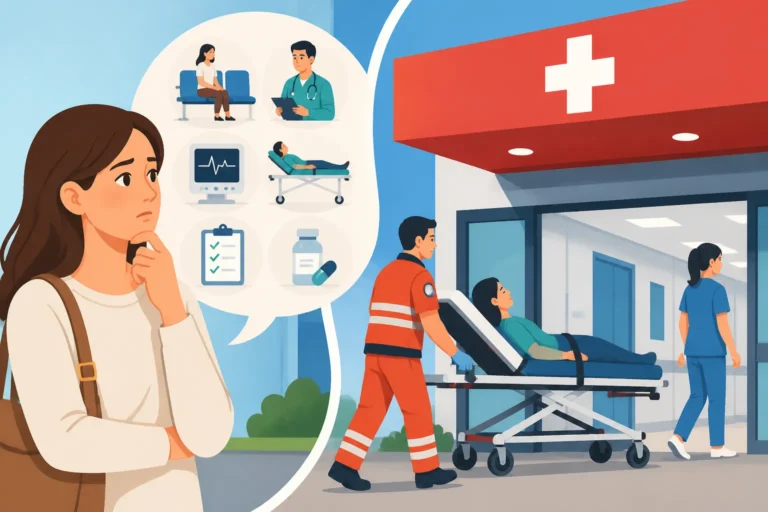
For severe, life-threatening emergencies, you must immediately dial 112, the Single European Emergency Number. If you go to the hospital’s Emergency Room (Pronto Soccorso), you will be evaluated by a triage nurse who will assign a color code based on the severity of your condition, ensuring that critical cases receive immediate, free, and life-saving attention. If you need to pick up a prescription after an unexpected emergency room visit, you can read our guide on Finding and Using Pharmacies in Italy to locate a 24-hour duty pharmacy.
Summary Comparison Table
To help you decide which healthcare pathway best suits your academic timeline and budget, review the comparison below.
| Healthcare Option | Annual Cost | Best Suited For | What is Covered |
| SSN Voluntary Registration | €700 per calendar year (Jan 1 – Dec 31). | Long-term degree students staying for multiple years. | Comprehensive public care, a dedicated general practitioner, subsidized medications, free hospital stays. |
| Private Student Insurance (e.g., W.A.I.) | €120 – €150 for 12 months. | Exchange students, short programs, or bridging the gap from Sept to Dec. | Urgent hospital care and emergencies (reimbursement model). No dedicated general practitioner. |
| EHIC / TEAM Card | Free. | EU/EEA citizens studying in Italy temporarily. | Free access to public healthcare for necessary treatments. Specialists require a ticket co-pay. |
Conclusion
Embarking on a university education in Italy is a profound and transformative experience. While the bureaucratic procedures required to secure your healthcare may initially seem complex and intimidating, the Italian state and its academic institutions have constructed a robust safety net specifically designed to protect international students.
By taking advantage of the deeply discounted €700 flat fee for the Servizio Sanitario Nazionale, or by utilizing affordable private student insurance for short-term stays, you can guarantee that your physical health is never compromised by financial anxiety. Furthermore, by proactively engaging with the incredible free resources provided directly on your campus—from dedicated medical centers to confidential psychological counseling—you build a resilient foundation for your time abroad. Take the necessary steps to formalize your healthcare registration as soon as you arrive, so you can spend your energy exactly where it belongs: excelling in your studies and falling in love with the magnificent Italian way of life.
References
Primary sources (official)
- Agenzia delle Entrate: The official Italian Revenue Agency guidelines outlining the issuance of the Codice Fiscale, the requirements for the Tessera Sanitaria, and detailed instructions on completing the F24 payment form. https://www.agenziaentrate.gov.it/
Other helpful sources
- YesMilano: The official student and expat hub for the city of Milan, offering highly detailed, step-by-step guides on accessing the National Healthcare Service (NHS) as an international student, including F24 templates. https://www.yesmilano.it/
- EDISU Piemonte: The regional agency for the right to university study in Piedmont, offering comprehensive healthcare information, guidance on choosing doctors, and support channels for international and EU students. https://www.edisu.piemonte.it/
Disclaimer
The information provided in this article is intended for general educational and informational purposes only and does not constitute official medical, legal, or financial advice. Healthcare regulations, the cost of voluntary SSN registration (currently €700), regional F24 tax codes, and university-specific medical services in Italy are subject to frequent legislative updates. Always consult directly with the official Italian health authorities (Azienda Sanitaria Locale), your university’s international student office, or a licensed medical professional to confirm registration requirements and medical advice. In the event of a severe, life-threatening medical emergency, please dial the universal European emergency number 112 immediately or proceed to the nearest public hospital emergency room (Pronto Soccorso).