Consulting a Pharmacist in Italy: Fees and Regulations
Navigating Italian pharmacies can be confusing for expats. This comprehensive guide explains the fees, regulations, and services involved in consulting an Italian pharmacist, from free medical advice and diagnostic testing to emergency prescriptions and late-night duty fees.
Disclosure: This post may contain affiliate links. We may earn a commission at no extra cost to you if you make a purchase through these links. Read full disclosure.
Introduction
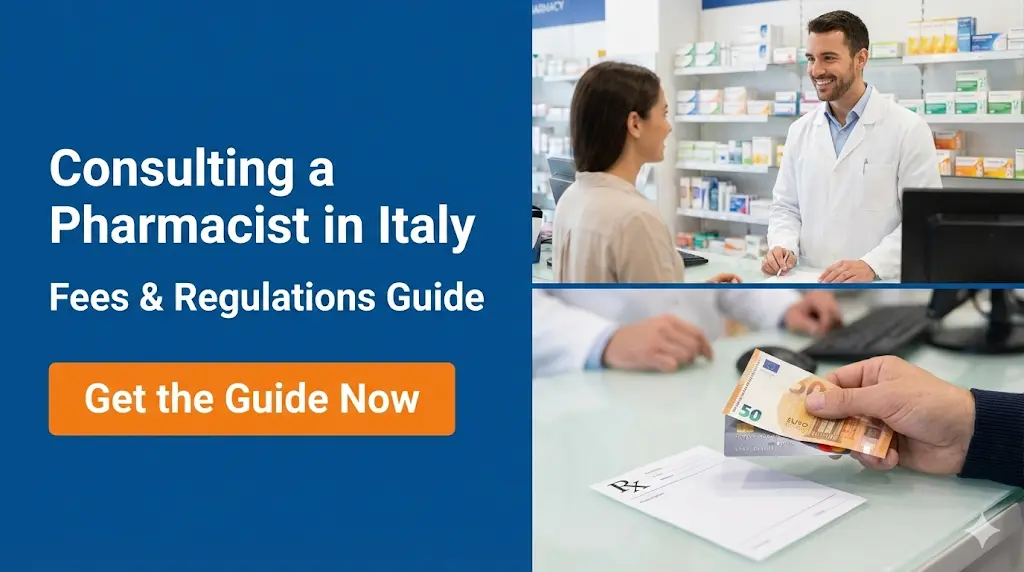
In Italy, the pharmacy is not merely a retail outlet; it is a frontline healthcare facility, and the pharmacist is considered a highly accessible, highly trained medical professional. Identifiable by the ubiquitous illuminated green cross outside their doors, Italian pharmacies operate under strict national and regional regulations designed to protect public health. The moment you walk through the doors, you will notice that almost all medications—even basic painkillers, allergy pills, and cold remedies—are kept securely behind the counter.
This layout is not an accident or an inconvenience; it is a legal requirement designed to force a consultation. To purchase medicine in Italy, you must speak to the pharmacist, describe your symptoms, and receive their professional recommendation. For expatriates accustomed to self-diagnosing and self-medicating, this required interaction can feel intimidating, especially when navigating a language barrier. However, once you understand how the system works, you will find that the Italian pharmacist is one of your greatest advocates for health and wellness abroad.
This exhaustive guide will demystify the process of consulting a pharmacist in Italy. We will explore the rigorous educational background of these professionals, outline the exact fees associated with their services, clarify the regulations regarding what they can and cannot dispense without a doctor’s note, and explain how modern Italian pharmacies have evolved into mini-clinics offering diagnostic testing and telemedicine.
The Professional Standing of the Italian Pharmacist
To fully appreciate the service you receive at an Italian pharmacy counter, it is essential to understand the qualifications of the person standing behind it. An Italian pharmacist is a doctor of pharmacy. They have completed a rigorous, single-cycle master’s degree program spanning five years at a university, which includes extensive studies in chemistry, biology, pharmacology, toxicology, and medical legislation.
Following their university education, they must pass a challenging state examination to obtain their professional license and register with the Federation of the Orders of Pharmacists. Because of this extensive medical background, Italian society places immense trust in their local pharmacist. For minor ailments, the pharmacist is always the first point of contact, effectively reducing the burden on general practitioners and hospital emergency rooms.
When you consult a pharmacist in Italy, you are not speaking to a retail clerk; you are speaking to a highly qualified medical professional capable of assessing mild to moderate symptoms, identifying contraindications with your current medications, and recommending the safest course of treatment.
Understanding Pharmacy Regulations and Classifications
The Italian Medicines Agency strictly classifies all pharmacological products to determine how they can be sold and whether a consultation or a prescription is legally required. Understanding these three main categories will help you navigate your visit.
Over the Counter Medications
Often referred to as OTC or Farmaci da Banco, these are medications that do not require a doctor’s prescription. They include mild painkillers like paracetamol, antacids, basic cough syrups, and mild antihistamines. While you do not need a prescription, the law mandates that these must still be kept behind the counter or in locked glass displays. The pharmacist will retrieve them for you, ensuring you are purchasing the correct product for your specific symptoms.
Medications Without Prescription Obligation
Known as SOP, these medications are a step up from basic OTC drugs. They do not require a doctor’s prescription, but they cannot be advertised directly to the public. They are strictly recommended and dispensed at the professional discretion of the pharmacist. If you describe a severe cold or a minor skin infection, the pharmacist might recommend an SOP medication based on their clinical judgment.
Prescription Only Medications
These are known as Farmaci con Ricetta Medica. This category includes antibiotics, strong corticosteroids, cardiovascular medications, psychiatric drugs, and controlled substances. An Italian pharmacist is strictly prohibited by law from dispensing these medications without a valid prescription from a registered doctor. Attempting to bypass this rule is illegal and can result in the pharmacist losing their license. If you are an expat needing to manage ongoing treatments, you should review our guide on Refilling Chronic Prescription Drugs in Italy for the exact steps to secure your regular medications.
The Evolution of the Pharmacy of Services
Historically, pharmacies in Italy were solely dispensaries of medication and compounded formulas. However, starting with a major legislative decree in 2009, the Italian government initiated a transformation known as the Farmacia dei Servizi (Pharmacy of Services). The goal was to transform pharmacies into territorial healthcare hubs, bringing essential medical services closer to citizens and reducing waiting times at public hospitals.
Today, consulting an Italian pharmacist goes far beyond asking for a box of aspirin. Many pharmacies are equipped with private consultation rooms where pharmacists can perform a wide array of diagnostic and telemedicine services.
Diagnostic Testing Available
Depending on the size and equipment of the specific pharmacy, you can consult the pharmacist for first-level analytical services. By taking a small capillary blood sample from your fingertip, the pharmacist can instantly test your blood sugar, total cholesterol, HDL and LDL cholesterol, triglycerides, and uric acid levels.
During the COVID-19 pandemic, this infrastructure was vastly expanded. Pharmacies became the primary location for rapid antigen testing and streptococcus throat swabs. If you are feeling unwell with a sore throat, you can simply walk into a pharmacy, request a swab, and have the pharmacist determine if you require a doctor’s visit for antibiotics within fifteen minutes.
Telemedicine and Cardiology
One of the most impressive advancements in the Italian pharmacy sector is the integration of telemedicine. Many pharmacies now offer electrocardiograms (EKGs), cardiac Holter monitors, and 24-hour blood pressure monitors.
If you experience mild palpitations or need a cardiac clearance certificate for joining a local gym, the pharmacist can attach the EKG leads to you in their private room. The data is transmitted instantly via a secure digital network to a remote cardiologist, who analyzes the reading and sends a certified medical report back to the pharmacy printer within minutes.
Fees for Consulting a Pharmacist
One of the most frequent questions expats ask is how much it costs to utilize these services. The answer depends on the nature of the consultation and the specific diagnostic tests performed.
Free Medical Advice
The core service of an Italian pharmacy—the consultation regarding minor ailments and the recommendation of OTC or SOP medications—is entirely free of charge. You can walk into any pharmacy, spend ten minutes explaining your digestive issues, your child’s fever, or your seasonal allergies, and the pharmacist will provide their expert medical advice at no cost. You only pay for the physical medications you decide to purchase.
Because prices for OTC medications are generally not subsidized by the public health system, you will pay the retail market price out of pocket. For context, a box of ibuprofen or paracetamol typically costs between 5 and 10 euros, depending on the brand.
Fees for Diagnostic Services
While the advice is free, diagnostic tests and telemedicine services are fee-based. These are considered private healthcare services, meaning you pay entirely out of pocket. However, because they are highly regulated, the fees are incredibly reasonable compared to private clinics in other Western countries.
If you use these services, you will pay the pharmacist directly at the cash register. It is important to note that these fees can vary slightly depending on the region and the specific pharmacy, but they generally fall within a standardized range.
Common Pharmacy Services and Estimated Fees
To help you budget for your healthcare needs, the following table outlines the most common services available during a pharmacy consultation, whether a prescription is required, and the average estimated fee.
| Pharmacy Service | Prescription Required? | Estimated Fee (Euros) |
| General Consultation & Advice | No | Free |
| Blood Pressure Measurement | No | Free – €2.00 |
| Capillary Blood Test (Cholesterol/Glucose) | No | €5.00 – €15.00 |
| Strep Throat Swab / COVID-19 Antigen Test | No | €15.00 – €25.00 |
| Electrocardiogram (EKG) with report | No | €25.00 – €40.00 |
| 24-Hour Cardiac Holter Monitor | No | €50.00 – €80.00 |
| 24-Hour Blood Pressure Holter Monitor | No | €40.00 – €60.00 |
| Ear Piercing | No | €10.00 – €20.00 |
| CUP Booking (Booking a public hospital visit) | Yes (Doctor’s Referral) | Free – €2.00 |
Navigating the Out of Hours System and Night Fees
Medical needs do not always arise during standard business hours. When you consult a pharmacist late at night or on a public holiday, specific regulations and fees apply.
Farmacia di Turno
By law, a certain number of pharmacies in every municipality must remain open outside of normal operating hours to ensure citizens always have access to essential medications. This is known as the Farmacia di Turno (Duty Pharmacy). To understand how to locate these specific locations during weekends or holidays, you should consult our guide on 24-Hour Pharmacies and How They Work in Italy.
The Call Fee
When you visit a duty pharmacy during the night (typically defined as the hours between when the pharmacy normally closes in the evening and when it reopens the next morning), the pharmacist is legally entitled to charge a specific fee called the diritto di addizionale or diritto di chiamata (call fee).
As of the latest national agreements, this fee is set at €7.50. This fee compensates the pharmacist for working the night shift and keeping the facility operational.
However, there is a crucial regulation regarding this fee. The fee is completely waived if you present a prescription from an emergency room doctor or an out-of-hours on-call doctor (Guardia Medica) that is explicitly marked as “Urgente” (Urgent), and if the prescription was written on the same night you are purchasing the medication. If you are simply going to the duty pharmacy at 2:00 AM to buy a non-urgent box of throat lozenges or a pregnancy test, you must pay the retail cost of the item plus the €7.50 night fee.
Regulations on Emergency Dispensing Without a Prescription
One of the most stressful situations an expat can face is running out of a vital, chronic medication without having a valid Italian prescription. Can an Italian pharmacist help you in this situation?
The answer is governed by a specific ministerial decree passed in 2008, which dictates the conditions under which a pharmacist can legally deliver prescription-only medicine without an actual prescription in cases of necessity and urgency.
A pharmacist may dispense a limited emergency supply of a prescription drug if:
- It is for a chronic disease: If you have an empty box of your medication with your name on the label, or a document from a foreign hospital proving you suffer from a chronic condition (like hypertension or diabetes) that requires uninterrupted treatment.
- It is an emergency hospital discharge: If you were just discharged from a hospital and need immediate medication but the hospital doctor forgot to provide the formal prescription sheet.
- You are traveling: If you are a tourist or traveling away from your home city and you lost your medication or ran out unexpectedly.
If you meet these criteria, the pharmacist can use their professional discretion to give you the smallest available package of the medication to tide you over until you can see a doctor. You will be required to sign a declaration taking responsibility for the request, and you will have to pay the full private retail price for the drug. It is vital to note that this emergency regulation absolutely does not apply to controlled substances, narcotics, or strong psychotropic drugs, which can never be dispensed without strict medical authorization.
The Difference Between Farmacia and Parafarmacia
While consulting a pharmacist, expats often notice two different types of establishments selling health goods: the traditional Farmacia and the Parafarmacia. Understanding the difference will save you time and frustration.
The Farmacia is designated by an illuminated green cross. This is the only establishment legally authorized to sell prescription medications (Farmaci con Ricetta). If you have a doctor’s note for antibiotics, you must go here.
The Parafarmacia is designated by an illuminated blue cross. These establishments are also staffed by graduated, licensed pharmacists, and they can offer excellent medical advice. However, by law, they are only permitted to sell OTC and SOP medications, homeopathic remedies, veterinary products, cosmetics, and vitamins. They cannot sell prescription drugs. If you only need cough syrup, allergy medicine, or a dermatological cream, consulting the pharmacist at a Parafarmacia is just as effective and sometimes faster than waiting in line at a traditional pharmacy. For a broader look at integrating into the local healthcare landscape, you can review Finding and Using Pharmacies in Italy.
Health Insurance and Tax Deductions at the Pharmacy
When you purchase medications or diagnostic services at an Italian pharmacy, understanding the financial regulations can help you save money during tax season.
Medications that are prescribed by a public doctor under the National Health Service are heavily subsidized, meaning you either receive them for free or pay a very small regional co-pay (the ticket). However, for all private services, OTC medications, and private prescriptions, you pay out of pocket.
If you are a registered resident who works and pays taxes in Italy, you are entitled to a 19% tax deduction on your medical and pharmaceutical expenses. To claim this deduction, you must follow a strict regulatory procedure at the pharmacy cash register. Before the pharmacist rings up your items, you must present your Italian Health Card.
The pharmacist will scan the barcode on your card. This ensures your unique Tax Code (Codice Fiscale) is printed directly onto the receipt. This specialized receipt is legally known as a scontrino parlante (a “talking receipt”). It details exactly what medical products were purchased and links them to your identity. The pharmacy’s digital system automatically sends this information to the Italian Revenue Agency, seamlessly applying the 19% deduction to your annual tax return. If you fail to show your card before paying, the standard receipt cannot be used for tax deductions later.
Booking Hospital Services The CUP System
One of the most valuable, yet least known, services provided by Italian pharmacists is their integration with the Centro Unico di Prenotazione (CUP) – the central booking system for public healthcare.
If your general practitioner gives you a referral for a specialist visit, an X-ray, or an MRI at a public hospital, you do not necessarily need to spend hours calling the hospital switchboard or navigating complex regional websites. You can simply take the paper referral to your local pharmacy.
The pharmacist can access the regional hospital database, find the earliest available appointment at a facility near you, book the visit, and print your confirmation slip right at the counter. They can also process the payment for the public hospital ticket fee. This administrative service is an incredible time-saver for expats who struggle with the language barrier over the phone, and pharmacies generally provide this service for free or for a nominal fee of one or two euros.
Tips for Communicating with an Italian Pharmacist
Consulting a pharmacist requires clear communication. While many pharmacists in major cities like Rome, Florence, and Milan speak excellent English, those in smaller towns or rural areas may not.
When seeking advice, it is highly recommended to know the generic name or the active ingredient of the medication you need, rather than the brand name from your home country. For example, asking for “Tylenol” might cause confusion, but asking for “Paracetamolo” will immediately get you the correct medication.
If you are experiencing specific symptoms, using a translation app to write down a clear description of your issue before stepping up to the counter will ensure the pharmacist understands your needs perfectly. They will likely ask you follow-up questions about your allergies, whether you are pregnant, or if you are taking other medications, so being prepared with this information is crucial for receiving safe, effective advice.
Conclusion
The role of the pharmacist in Italy is a testament to the country’s commitment to accessible, high-quality community healthcare. Far from being a simple retail transaction, consulting a pharmacist is an interaction with a highly educated medical professional who serves as the bedrock of neighborhood wellness.
From providing free, reliable advice for common ailments to offering advanced cardiovascular diagnostics and seamlessly booking hospital appointments, the modern Italian pharmacy is an indispensable resource for any expatriate. By understanding the regulations governing prescription and non-prescription drugs, knowing when and how the night-duty fees apply, and remembering to present your health card for tax deductions, you can navigate the pharmacy counter with absolute confidence. Embrace the expertise of your local pharmacist; building a relationship with them is one of the most effective ways to ensure you and your family remain healthy, supported, and well-cared for during your life in Italy.
References
Primary sources official
- Agenzia Italiana del Farmaco (AIFA): The national authority responsible for the regulatory framework, pricing, and classification of all pharmaceutical products (OTC, SOP, and Prescription) in Italy. https://www.aifa.gov.it/
Other helpful sources
- Federfarma: The National Federation of Italian Pharmacy Owners, offering comprehensive resources on pharmacy services, out-of-hours duty rosters, and national healthcare agreements. https://www.federfarma.it/
Disclaimer
The information provided in this article is intended for general educational and informational purposes only and does not constitute official medical, diagnostic, or legal advice. Pharmacy service fees, nighttime duty surcharges, and tax deduction regulations in Italy are subject to frequent legislative updates and may vary slightly by municipality or regional health authority. Always consult directly with a licensed Italian pharmacist or your primary care physician for personalized medical advice, medication interactions, and treatment plans. In the event of a severe, life-threatening medical emergency, please dial the universal European emergency number 112 immediately.