Booking a B&B in Italy: Breakfast, Check-In Windows, and Payment Terms
Oh, the romantic ideal of an Italian B&B! You picture charming hosts, a homemade breakfast, and a true immersion into local life. And while that dream is absolutely achievable, the reality of booking one, especially for first-timers in Italy, can sometimes feel like navigating a charming but confusing maze. Forget generic hotel chains; B&Bs here operate on their own wonderful, distinctly Italian rhythm, and understanding those nuances – from breakfast expectations to those often-strict check-in windows – is key to a smooth and delightful stay. This guide will walk you through everything you need to know to book and enjoy a fantastic B&B experience in Italy, with a special nod to how platforms like Booking.com can make it all so much easier.
Disclosure: This post may contain affiliate links. We may earn a commission at no extra cost to you if you make a purchase through these links. Read full disclosure.
The Charm and Quirks of Booking a B&B in Italy
Stepping into an Italian B&B is often like stepping into a local's home, and that's precisely where its unique charm lies. It’s less about standardized services and more about personal touches, regional character, and the warmth of Italian hospitality. However, these very qualities also mean a different set of expectations and practical considerations compared to what you might be used to.
What Exactly is a B&B in Italy?
Unlike a large hotel with a 24-hour reception and a sprawling buffet, an Italian Bed & Breakfast (often abbreviated as "B&B" but sometimes you'll see "Affittacamere" which is a room rental with similar services, or "Casa Vacanze" which is a holiday home) is typically a smaller, family-run establishment. Imagine a few guest rooms within a larger apartment, a floor of a historic building, or a charming standalone house in a village. The hosts usually live on-site or nearby, and their personal touch is central to the experience. They're often your go-to for local tips, restaurant recommendations, and an authentic glimpse into daily Italian life.
These aren't always grand affairs; they can be incredibly modest or surprisingly luxurious. What unites them is the emphasis on accommodation in a private home setting and, crucially, breakfast included. You'll find B&Bs everywhere from bustling city centers like Rome and Milan to the tranquil countryside of Tuscany or the dramatic coastlines of Sicily. Each region and even each town will have its own flavor, so don't expect a cookie-cutter experience. This delightful variability is why a comprehensive platform like Booking.com is invaluable, allowing you to filter and explore diverse options with detailed descriptions and photos.
Why Choose a B&B Over a Hotel or Agriturismo?
The choice between a B&B, a hotel, or an agriturismo often comes down to the kind of travel experience you're seeking. Hotels offer convenience, standardized services, and amenities like pools or gyms, but can sometimes feel a bit impersonal. Agriturismi, which are farm stays, provide a rural escape with farm-to-table food, often in picturesque settings, but they might be too remote for city exploration. B&Bs, however, strike a lovely balance, offering a more intimate and authentic immersion without being entirely off the beaten path.
Here’s why a B&B might be your ideal choice:
- Authenticity and Local Connection: You get to interact directly with locals who are often passionate about their region. They can offer insider tips that guidebooks miss, helping you truly experience Italian customs, etiquette, and social life.
- Unique Character: Each B&B has its own personality, decor, and charm. You're not staying in a bland, uniform room but often in a space thoughtfully decorated by the owners.
- Cost-Effectiveness: B&Bs are frequently a more budget-friendly option than hotels, especially in popular tourist areas. They often include breakfast, further reducing daily expenses.
- Personalized Service: Hosts are typically very attentive and eager to help with anything from booking a taxi to recommending local attractions or advising on how to get around Italian cities. This personalized touch can make all the difference, especially when you need to use basic Italian language and everyday communication for visitors.
However, it's worth noting the trade-offs: B&Bs may not have 24-hour reception, a concierge service, or extensive amenities. Check-in times are often more rigid, and payment might be preferred in cash. But if you’re looking for genuine interaction and a unique stay, these minor adjustments are a small price to pay.
Decoding Italian B&B Breakfasts: It's Not Always What You Expect
Ah, breakfast in Italy! Many foreigners arrive expecting a full English fry-up or a bountiful American buffet, only to be met with a delightful but distinctly different spread. Understanding what's typically on offer will save you from any morning surprises and allow you to fully appreciate the Italian way to start the day.
The Classic Italian Breakfast: Sweet, Simple, and Strong Coffee
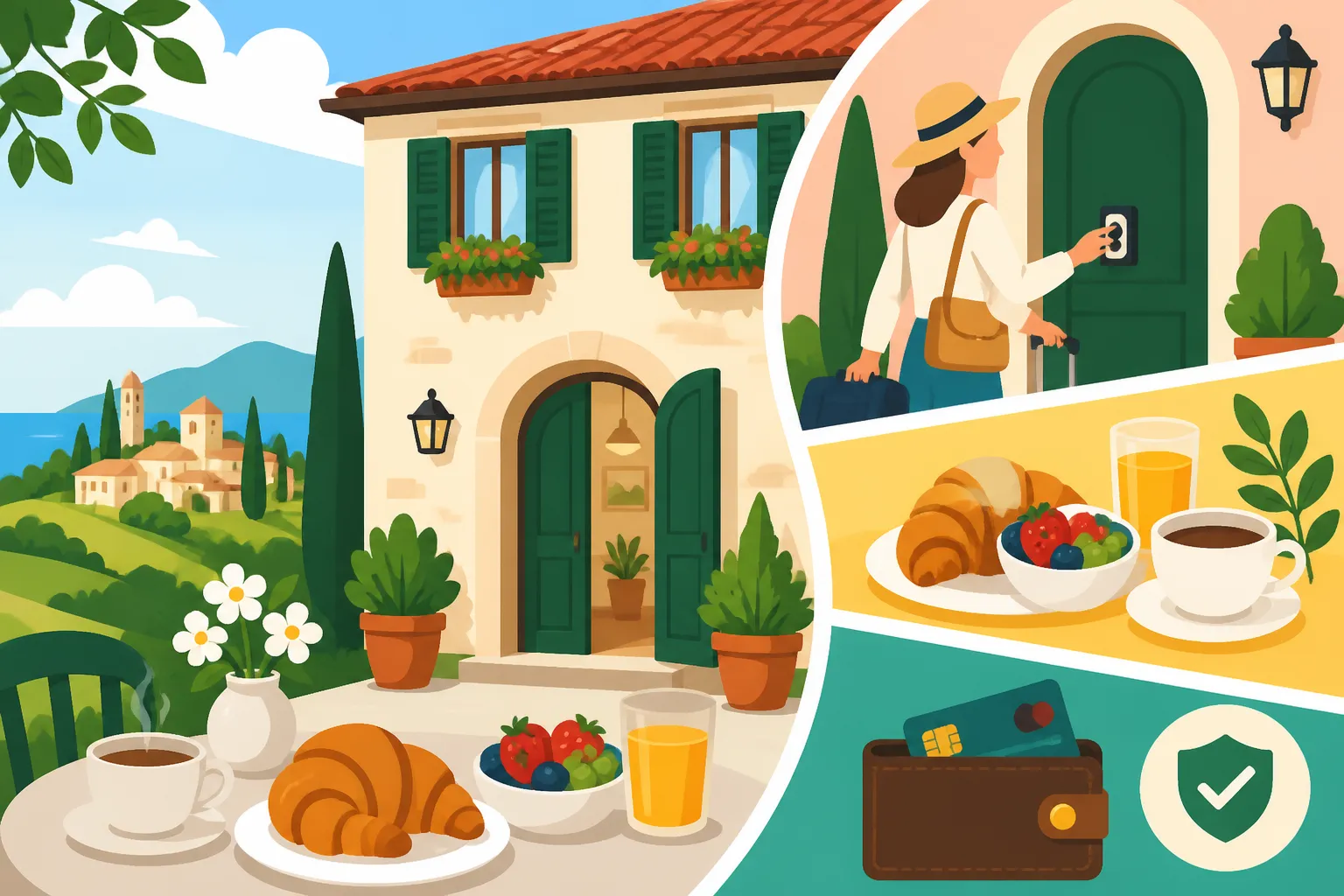
The standard Italian breakfast, or colazione, is primarily sweet and relatively light. Think of it as a pre-cursor to the day, not a heavy meal. You'll typically find:
- Coffee: This is non-negotiable. Expect a proper Italian espresso, cappuccino, or macchiato, often made to order by your host. Don't be shy about asking for your preference; learning how to order coffee in Italy like a local is part of the fun!
- Baked Goods: Croissants (cornetti), often plain or filled with cream, jam, or chocolate, are a staple. You might also find biscuits (biscotti), cakes (torte), or small pastries.
- Bread and Spreads: Simple bread, usually plain white bread or fette biscottate (rusks), served with jam (marmellata), honey (miele), or Nutella.
- Juice and Yogurt: A small selection of fruit juices (often from a carton) and plain yogurt might be available.
- Fruit: Sometimes a bowl of fresh fruit, especially seasonal varieties.
What you'll typically not find, unless specifically advertised as an "international breakfast," are eggs, bacon, sausages, or extensive savory options. This can be a bit of a culture shock for some, but embracing the sweet start is part of the Italian experience. Your host might even bring it right to your room or serve it in a cozy common area, making for a truly personal morning ritual. When searching for B&Bs on Booking.com, always check the "Breakfast" section for details, as some might specify "continental" or "buffet" if they offer more variety.
Navigating Dietary Needs and Special Requests
If you have specific dietary requirements, like allergies (gluten, dairy) or preferences (vegan, vegetarian), communication is absolutely paramount. Italian B&B hosts, being often more flexible than large hotels, are usually eager to accommodate if they know in advance. However, their resources might be limited compared to a hotel kitchen.
Here’s how to handle it:
- Communicate in Advance: When you book, or immediately after, send a message to your host through the messaging system on platforms like Booking.com. Clearly state your needs in Italian if possible, or use a translation app. Even a simple "Sono celiaco/a" (I am celiac) or "Sono vegetariano/a" (I am vegetarian) goes a long way.
- Be Realistic: While they will try their best, don't expect a gourmet gluten-free feast if it's not a common offering. They might provide packaged gluten-free biscuits or rice cakes, or simply more fruit.
- Offer to Supplement: Consider bringing some of your own essential items if your needs are very strict, especially for gluten-free options. Italian supermarkets are increasingly stocked with senza glutine products, but your host might not have a specialized pantry.
- Confirm Upon Arrival: Reiterate your dietary needs politely when you check in. This ensures everyone is on the same page and helps build rapport with your host. This direct communication, aided by the ease of messaging on platforms like Booking.com, ensures your stay is as comfortable as possible.
Breakfast Times and Etiquette
B&B breakfast times are generally fixed, though sometimes a bit more flexible than hotel buffets. Your host will likely ask you for a preferred time or inform you of the available window, which typically runs from 7:30 or 8:00 AM to 9:30 or 10:00 AM. It’s crucial to respect these times, as your host is often personally preparing and serving the meal.
A few points on etiquette:
- Punctuality: Aim to arrive within the agreed-upon window. It allows your host to manage their day and ensures your coffee is fresh!
- Engage (or not): Your host might sit with you, offering conversation and local tips. Embrace this if you're comfortable – it's part of the authentic experience. If you prefer a quieter start to your day, a polite smile and "Buongiorno" are perfectly fine.
- Don't Overstay: While you’re not rushed, remember it's not a restaurant with endless seating. Enjoy your breakfast, but be mindful of other guests or your host's schedule.
Mastering the Check-In and Check-Out Dance at Italian B&Bs
This is arguably the trickiest part of booking an Italian B&B for many foreign travelers. Unlike a hotel, where someone is typically at the front desk 24/7, B&Bs often have specific and sometimes narrow windows for check-in and check-out. Ignoring this detail can lead to frustration, so proper communication is key to a smooth arrival and departure.
Understanding the "Check-In Window" and Why It's Crucial
Most Italian B&Bs will specify a check-in window, perhaps from 3:00 PM to 7:00 PM. This isn't arbitrary; it's because your host might be out running errands, picking up children from school, or simply enjoying their personal time. They often don't have dedicated staff to cover arrivals throughout the day.
Why this matters:
- Personal Welcome: The host usually wants to greet you personally, show you to your room, explain the facilities, and provide the keys. This is part of the B&B experience – a warm welcome, not just a transaction.
- Security: For smaller establishments, ensuring someone is there to let you in and verify your identity is a security measure.
- Logistics: They need to be present to complete paperwork, collect payment (especially if cash is preferred), and answer any initial questions you might have about your stay or the local area.
Always, always confirm your arrival time, especially if it falls outside the stated window or if you anticipate delays. This is where a messaging feature on a platform like Booking.com is a lifesaver. Send a quick message: "Arriverò alle [time]" (I will arrive at [time]) or "Il nostro treno è in ritardo" (Our train is delayed). A little heads-up goes a long, long way in Italy.
Late Arrivals, Early Departures, and Communication is Key
Life happens, and travel plans can go awry. Flights get delayed, trains run late, and sometimes you just get lost trying to navigate charming but confusing Italian streets.
- Late Arrivals: If you know you'll be outside the standard check-in window, inform your host as soon as possible. Many B&Bs will try to accommodate you, often by making arrangements for a key handover or asking a neighbor to let you in. However, some might charge a small late check-in fee, which will usually be stated in their policies on Booking.com. In rare cases, if you don't communicate, they might not be available at all, leading to a very stressful situation.
- Early Departures: Similarly, if you plan to leave very early in the morning, let your host know. They might arrange for you to leave keys in a specific spot, or process any remaining payment the night before. Don't just disappear! A polite farewell is always appreciated, even if it's just a quick "Arrivederci e grazie!" the evening before.
- The Power of Proactive Communication: This cannot be stressed enough. A quick message through the Booking.com app or a phone call (if you have an Italian SIM card) can avert potential issues. If there’s a language barrier, Google Translate is your friend! Even fragmented Italian shows you're making an effort, and Italians appreciate the attempt.
Check-Out Procedures: The Italian Way
Check-out times at B&Bs are also often earlier and more strictly enforced than in hotels, typically between 10:00 AM and 11:00 AM. This allows the hosts time to clean and prepare the room for the next guest, especially in smaller establishments with fewer staff.
The check-out process is usually straightforward:
- Final Payment: If you haven't paid the full amount or the tourist tax yet, this is when it will be collected. Ensure you have the correct payment method ready (often cash is preferred, as we'll discuss below).
- Key Handover: Return your keys to your host or a designated spot.
- Farewell: A simple "Grazie mille per l'ospitalità!" (Thank you very much for the hospitality!) and a warm smile go a long way.
- Luggage Storage: If you need to store your luggage for a few hours after check-out, ask your host in advance. Many B&Bs are happy to offer this service, though it's not always guaranteed. Again, check the B&B's policies on Booking.com or send a direct message beforehand. This thoughtful gesture can greatly enhance your ability to enjoy one last wander through the city before you head off to catch high-speed trains in Italy or explore further afield.
Navigating Payment Terms and Local Taxes
Understanding how payment works at Italian B&Bs, along with the seemingly omnipresent local tourist tax, is another crucial step to avoiding surprises. It’s a bit different from the standard hotel experience, but once you know the ropes, it’s perfectly manageable.
Deposits, Pre-Payments, and Payment Methods
When booking through platforms like Booking.com, you’ll encounter various payment structures:
- No Pre-Payment Required: Some B&Bs allow you to reserve without paying anything upfront, and you settle the full amount directly with the host upon arrival or departure. This is great for flexibility, but make sure you have the exact amount in cash if that’s their preference.
- Partial Pre-Payment/Deposit: A common scenario is for the B&B to request a deposit, often equivalent to the first night's stay or a percentage of the total, to secure your booking. This is usually processed via credit card through the booking platform or directly by the host.
- Full Pre-Payment: Less common for B&Bs, but some might require full payment in advance, especially for non-refundable rates.
Payment at the Property: This is where the differences really show.
- Cash is King (Often): Many smaller, family-run B&Bs prefer cash payments, especially for the balance due upon arrival or departure. This is partly due to traditional practices and sometimes to avoid credit card processing fees. Always check the B&B's policy on Booking.com under "House Rules" or "Important Information." If it says "cash only," take it seriously! You don't want to be scrambling for an ATM after a long day of travel.
- Credit Card Acceptance: While more B&Bs are equipping themselves with POS machines for credit card payments, don't assume it's universal. If paying by card is essential for you, confirm with the property directly via Booking.com messages before you finalize your reservation.
- Bank Transfers: For longer stays or specific arrangements, a bank transfer might be an option, but this is usually agreed upon directly with the host.
The Ubiquitous Tourist Tax (Tassa di Soggiorno)
Almost every city and popular tourist destination in Italy levies a tassa di soggiorno, or tourist tax. This is a small daily fee per person, usually for the first few nights of your stay, which goes towards local tourism initiatives and infrastructure.
Key things to know about the tourist tax:
- It's Almost Never Included: The price you see on Booking.com for your room usually does not include the tourist tax. It will almost always be listed as an "additional charge" or "payable at the property."
- Cash Payment: The tourist tax is almost always collected in cash, separately from your room payment. Have small denominations ready, as your host might not have much change.
- Varies by City and Accommodation Type: The amount varies from city to city and can even depend on the star rating of the accommodation. For example, the tourist tax in Florence will likely be different from that in a smaller Tuscan village. It's typically a few Euros per person per night.
- Exemptions: Children under a certain age (e.g., 10 or 14, depending on the municipality) are often exempt. Some cities also have exemptions for very long stays.
- Transparency: Reputable B&Bs will clearly state the tourist tax amount on their Booking.com page or inform you upon check-in. This is a legitimate tax, so don't be surprised or offended by it.
Understanding this system for payments and local taxes is just another layer of the Italian travel experience. Being prepared ensures a smooth check-in and check-out, allowing you to focus on enjoying your trip.
Understanding Cancellation Policies
Before you commit to any booking, it's absolutely vital to thoroughly understand the cancellation policy. Italian B&Bs, especially smaller, independent ones, can be quite strict, as a last-minute cancellation can significantly impact their small business.
Booking.com typically categorizes policies as:
- Free Cancellation: This is the most flexible option, allowing you to cancel up to a certain date (e.g., 24 or 48 hours before arrival) without any charge. If your travel plans are uncertain, this is usually the best choice, though it might come with a slightly higher room rate.
- Non-Refundable: As the name suggests, if you book a non-refundable rate, your credit card will typically be charged immediately for the full amount, and you won't get your money back if you cancel or don't show up. These rates are often cheaper but come with zero flexibility.
- Partial Refund/Flexible: Some policies might offer a partial refund if you cancel within a certain window, or a full refund minus the first night.
What to do:
- Read Carefully: Always click on the cancellation policy details on Booking.com. Don't just skim!
- Consider Travel Insurance: If you opt for non-refundable rates to save money, especially for a significant trip to Italy, consider purchasing comprehensive travel insurance. This can cover unexpected cancellations due to illness or other emergencies.
- Communicate: If you absolutely must cancel or modify a booking, do so as soon as possible through Booking.com or by contacting the property directly. Sometimes, a kind and timely message can lead to a more amicable resolution, even if the policy is strict. This proactive communication can save you stress and potential financial loss, ensuring you understand your options for Money Matters in Italy: Banking and Finance for Expats.
Making the Most of Your B&B Experience with Smart Booking
Booking a B&B in Italy can be one of the most rewarding ways to experience the country, offering warmth, local insights, and unique charm. But like any good adventure, it benefits from a bit of savvy planning. By leveraging the right tools and knowing what questions to ask, you can ensure your B&B stay is nothing short of perfect.
Leveraging Online Platforms to Find Your Perfect Stay
In today's digital age, online booking platforms are indispensable, and Booking.com stands out as a particularly excellent resource for finding B&Bs in Italy. Its extensive filters and vast inventory make it incredibly easy to narrow down your choices.
Here’s how to use it effectively:
- Filter by "Bed & Breakfast": This seems obvious, but make sure you’ve selected the correct accommodation type. You can often find this under "Property Type" in the filters.
- Location, Location, Location: Use the map view on Booking.com to pinpoint B&Bs in specific neighborhoods or close to attractions you want to visit. Remember to consider how you’ll be getting around Italy, whether by public transport or if you're renting a car in Italy.
- Read Descriptions Thoroughly: Don't just look at the pretty pictures! The property description will often detail the type of breakfast, check-in instructions, specific payment preferences (e.g., cash only for tourist tax), and any unique amenities. This is where you'll find critical information that sets a B&B apart.
- Check Amenities: If a private bathroom is a must, check for "private bathroom" or "en-suite." Some traditional B&Bs might have shared facilities, which is fine if you know in advance. Air conditioning, Wi-Fi, and luggage storage are other common filters.
- Use Booking.com's Messaging System: This is a powerful tool. If you have any specific questions about late check-in, dietary needs, or luggage storage, send a message directly to the property before you book. This ensures clarity and demonstrates your proactive approach, which hosts appreciate.
By carefully sifting through the options and using the robust features available on platforms like Booking.com, you can find a B&B that perfectly aligns with your travel style and needs. It’s like having a personal guide to the nuances of Accommodation in Italy: Hotels, B&Bs, and Agriturismi at your fingertips.
The Importance of Reviews and Host Communication
Online reviews are your best friend when selecting a B&B. They offer insights from previous guests that go beyond the official description and photos.
- Scrutinize Reviews: Look for patterns in feedback. Are multiple guests mentioning a difficult check-in, an amazing breakfast, or a particularly helpful host? Pay attention to comments about cleanliness, noise levels, and the accuracy of the listing.
- Host Responsiveness: Some review platforms also indicate how quickly a host responds to messages. This is a good indicator of their attentiveness and professionalism, which is crucial for a smooth B&B experience.
- Direct Communication: Once you've booked, maintain open lines of communication. A polite message introducing yourself and reconfirming your estimated arrival time (even if it's within the window) is a lovely gesture. If you're encountering problems with a booking, Booking.com's customer service can often mediate, which is another reason it’s such a valuable tool. Remember, a good host can truly elevate your trip, offering advice on Italian food culture, local attractions, and even helping you decipher confusing bus schedules.
Pro Tips for a Smooth B&B Stay in Italy
Here are a few extra nuggets of wisdom from a seasoned expat to ensure your B&B experience in Italy is memorable for all the right reasons:
- Learn a Few Italian Phrases: Even a few basic greetings, thank yous, and phrases like "Mi scusi" (Excuse me) or "Per favore" (Please) will go a long way. Italians genuinely appreciate the effort, and it fosters a warmer interaction with your host. This falls under Italian language and everyday communication for visitors.
- Pack an International Adapter: Italy uses Type F and L sockets, so ensure your electronics are compatible.
- Have Cash on Hand: As mentioned, cash is often preferred for tourist tax and sometimes for the room balance. It's also handy for small purchases at local markets or for tipping in Italy, which isn't always expected but appreciated for exceptional service.
- Be Flexible and Patient: Things in Italy sometimes operate at a slightly different pace. Embrace the dolce vita and remember that small hiccups are part of the adventure. Your host might be passionate, chatty, or a little disorganized – it’s all part of the charm!
- Consider Travel Insurance: Especially for longer trips or if you're booking non-refundable rates, travel insurance can provide peace of mind for unexpected cancellations or medical emergencies. While Staying Safe in Italy is generally easy, having a backup plan is always smart.
- Verify Directions: Before you arrive, have clear directions to your B&B. Google Maps is good, but a screenshot of the address and a printed map can be lifesavers if your phone battery dies or you lose signal. Don't forget to check the specific information provided on Booking.com for arrival instructions.
| Feature | Italian B&B (Bed & Breakfast) | Traditional Hotel | Agriturismo (Farm Stay) |
|---|---|---|---|
| Accommodation | Few rooms, often in a private home/apartment | Many rooms, standardized, often part of a chain | Rooms/apartments on a working farm or estate |
| Host Interaction | High, personal, direct contact with owner(s) | Low, professional staff, sometimes impersonal | Medium to High, often with farm owners, but can be less frequent |
| Breakfast | Typically sweet, simple, strong coffee. Often made by host. | Buffet style, often international and extensive. | Often homemade, regional, farm-to-table, can be sweet or savory. |
| Check-In/Out | Fixed, narrow windows. Requires prior communication for flexibility. | Flexible, 24-hour reception common. | Variable, usually fixed windows, requires communication. |
| Payment | Often prefers cash for balance & tourist tax. Credit cards vary. | Usually accepts credit cards for all payments. | Can vary, often prefers cash or direct bank transfer for extras. |
| Amenities | Basic room amenities, sometimes shared bathrooms, personal touches. | Wider range: restaurant, bar, pool, gym, concierge, room service. | Focus on nature, farm activities, sometimes pool, on-site dining. |
| Location | City centers, charming villages, residential areas. | City centers, tourist districts, commercial areas. | Rural, countryside, vineyards, olive groves. |
| Atmosphere | Authentic, intimate, home-like, local immersion. | Convenient, professional, sometimes generic. | Tranquil, rustic, connected to nature and food production. |
By preparing for these unique aspects of Italian B&Bs, you’re not just booking a room; you’re opening the door to a more authentic, intimate, and often unforgettable Italian adventure. So go forth, explore Booking.com, find your perfect little slice of bella Italia, and enjoy every moment!
Disclaimer
This article is for general informational purposes only and does not constitute professional advice. Laws, prices and regulations vary by location and change over time. Consult a qualified professional for guidance on your specific situation.