Handling Tenant or Landlord Disputes: Resources
Navigating tenant or landlord disputes in Italy can be overwhelming for expats. This comprehensive guide outlines common rental conflicts, from unreturned deposits to maintenance disagreements, and provides actionable steps, legal resources, and mediation options to resolve your housing issues effectively.
Disclosure: This post may contain affiliate links. We may earn a commission at no extra cost to you if you make a purchase through these links. Read full disclosure.
Introduction to Handling Tenant or Landlord Disputes
In Italy, the rental market is heavily regulated by national laws that generally favor the tenant, providing strong protections against sudden evictions and arbitrary rent increases. However, this protective legal framework also means that landlords can be extremely cautious, sometimes leading to rigid lease terms or hyper-vigilance regarding property damage. When disputes occur, the Italian legal system is notoriously slow and expensive to navigate. Taking a rental conflict to civil court can literally take years to resolve, leaving both parties frustrated and financially drained.
Because litigation is such a drawn-out process, the Italian system places a massive emphasis on mediation, negotiation, and alternative dispute resolution. For an expatriate, understanding how to leverage these out-of-court resources is absolutely vital. Whether you are dealing with a landlord who refuses to fix a broken boiler, fighting over deductions from your security deposit, or facing accusations of unpaid condominium fees, you have specific rights and resources at your disposal.
This comprehensive guide is designed to equip you with the knowledge to handle rental conflicts in Italy professionally and legally. We will explore the most common causes of tenant and landlord disputes, break down the exact steps you should take to protect yourself, and provide a detailed list of national organizations and mediation bodies that can advocate on your behalf. By understanding the Italian approach to rental law, you can approach any housing conflict with confidence and find a fair, efficient resolution.

Common Causes of Rental Disputes in Italy
To effectively resolve a dispute, you must first understand the legal landscape surrounding the most frequent points of contention. In the Italian rental market, conflicts almost always fall into one of the following categories.
The Security Deposit
The security deposit, known in Italian as the deposito cauzionale or simply caparra, is the most common source of conflict at the end of a lease. By Italian law, the deposit cannot exceed the equivalent of three months’ rent. Its sole purpose is to protect the landlord against unpaid rent or significant damages to the property.
Disputes typically arise when the tenant moves out and the landlord attempts to withhold part or all of the deposit for what the tenant considers “normal wear and tear” (known legally as normale deperimento d’uso). Italian law states that landlords cannot deduct money for minor scuffs on the wall or the natural aging of furniture. Deductions can only be made for actual, quantifiable damages caused by the tenant’s negligence. To navigate this specific end-of-lease hurdle successfully, you may want to review strategies on Getting a Rental Deposit Refund in Italy: Tips. Furthermore, the landlord is legally required to return the deposit with accrued legal interest, unless the contract explicitly waives this right.
Maintenance and Repair Responsibilities
Another massive point of friction is the division of maintenance costs. When the washing machine breaks or a pipe bursts, the immediate question is always: “Who pays for this?”
Italian law draws a very strict line between ordinary maintenance (manutenzione ordinaria) and extraordinary maintenance (manutenzione straordinaria). Generally, the tenant is responsible for small, everyday repairs and the upkeep of appliances, while the landlord is responsible for major structural repairs and replacing systems that have reached the end of their lifespan. Disputes occur when the line between “ordinary” and “extraordinary” is blurred—for example, if a boiler breaks down because the tenant failed to perform the annual legally required maintenance check, the cost of the new boiler might fall on the tenant rather than the landlord.
Condominium Fees
If you rent an apartment in a building with multiple units, you will be subject to condominium fees (spese condominiali). These fees cover shared expenses like hallway lighting, elevator maintenance, stairwell cleaning, and sometimes centralized heating.
Disputes often arise regarding the reconciliation of these fees. Landlords usually charge a fixed monthly estimate for condo fees alongside the rent. At the end of the year, the building administrator (amministratore di condominio) issues a final balance. If the actual costs were higher than the estimates, the tenant must pay the difference; if they were lower, the landlord must refund the overpayment. Tenants have the legal right to request the official documentation from the building administrator to verify these charges, and landlords failing to provide transparency frequently triggers conflicts.
Early Termination of the Lease
Italian rental contracts are long-term commitments. A standard free-market lease is four years, automatically renewing for another four (a 4+4 contract). Tenants cannot simply pack up and leave with a month’s notice whenever they please.
By law, a tenant must give a six-month formal written notice (preavviso) to terminate the lease early, and they must have “grave reasons” (gravi motivi) for doing so, such as a sudden job transfer to a different city or a severe change in family circumstances. Landlords may dispute the validity of the “grave reasons” or attempt to penalize tenants who leave without fulfilling the exact six-month notice period. For a deeper understanding of the procedures required to break a lease legally, refer to Terminating an Italian Lease Early: Procedures.
The Importance of a Registered Contract
Before discussing dispute resolution, it is critical to address the concept of the black market. In Italy, a rental contract is only legally valid if it has been officially registered with the Italian Revenue Agency (Agenzia delle Entrate) within thirty days of signing.
Some landlords may propose a contratto in nero (an unregistered, under-the-table agreement) to avoid paying income taxes. They might offer you a lower monthly rent in exchange for paying in cash without a paper trail.
You must never accept an unregistered contract. If you live in an apartment in nero, you have absolutely zero legal rights as a tenant. You cannot apply for official residency (residenza), which means you cannot get public healthcare or buy a car. More importantly, if a dispute arises, you cannot seek help from tenant unions or the courts, as the lease legally does not exist. The landlord could change the locks tomorrow, and you would have no legal recourse. Always demand a registered contract and ask for a copy of the registration receipt.
Step-by-Step Guide to Handling a Rental Dispute
If you find yourself in a disagreement with your landlord or tenant, you must approach the situation methodically. Escalating the issue too quickly can close off avenues for an amicable resolution, while waiting too long can compromise your legal standing.
Step 1: Open Communication and Documentation
The first step is always to attempt to resolve the issue through direct, polite communication. A simple phone call or an in-person meeting can often clear up misunderstandings.
However, the moment you realize the issue is not going to be resolved easily, you must begin documenting everything. In Italian law, verbal agreements mean very little. You need a paper trail. Take time-stamped photographs of property damage, save all receipts for repairs you have paid for, and keep copies of your bank transfer receipts proving you paid rent and condo fees on time.
Step 2: Formal Written Notice
If informal communication fails, you must formalize your request or complaint. In Italy, ordinary emails and WhatsApp messages are generally not considered legally binding proof of communication in a court of law.
You must send your communication via a Raccomandata con Ricevuta di Ritorno (Registered Mail with Return Receipt) through Poste Italiane. This service provides you with a physical, time-stamped card signed by the recipient, proving beyond a doubt that they received your letter.
Alternatively, if both you and your landlord possess a PEC (Posta Elettronica Certificata – Certified Email) account, you can send the notice digitally. A PEC has the exact same legal weight as a physical registered letter. In your formal letter, clearly state the issue, reference the specific clauses in your rental contract or the Italian Civil Code, and provide a reasonable deadline (usually 15 days) for the other party to rectify the situation.
Step 3: Seek Help from a Union or Association
If the formal letter is ignored or rejected, it is time to seek professional assistance. You do not need to hire an expensive private lawyer immediately. Italy has a robust network of tenant unions and landlord associations dedicated to providing affordable legal advice and mediation services.
For a small annual membership fee (usually between 50 and 100 euros), you can join one of these organizations. They have in-house lawyers and real estate experts who will review your contract, assess your situation, and even write formal letters on their official letterhead on your behalf. Receiving a letter from a recognized national tenant union is often enough to make a stubborn landlord reconsider their position. To understand your foundational legal standing before approaching these unions, it is highly recommended to read Tenant Rights in Italy: Evictions, Deposits, and More.
Step 4: Compulsory Civil Mediation
If the involvement of a union does not resolve the conflict, you still cannot go straight to court. To reduce the massive backlog in the civil justice system, Italian law mandates that all disputes related to rental contracts (locazione) must first go through compulsory mediation (Mediazione Civile Obbligatoria).
You must file a request with an official mediation body recognized by the Ministry of Justice. A neutral, professional mediator will be assigned to your case. The mediator does not act as a judge; they cannot force a decision. Their role is to facilitate a dialogue between the tenant and the landlord to help them reach a mutually acceptable compromise. Both parties are required to attend the initial mediation meeting, accompanied by legal counsel. If an agreement is reached, it is signed and immediately becomes a legally binding executive title, holding the same weight as a judge’s ruling.
Step 5: Legal Action and Court Proceedings
If mediation fails—either because one party refuses to attend or a compromise cannot be reached—the final step is initiating a formal lawsuit in civil court.
This step should be avoided if at all possible. Civil trials in Italy are notoriously slow, often taking two to five years to reach a conclusion. You will incur significant legal fees, court filing costs, and expert witness fees.
In the case of unpaid rent, the landlord can initiate a specific, slightly faster eviction process called sfratto per morosità. However, even this “fast-track” process can take anywhere from six months to over a year, as Italian law provides numerous grace periods and protections for tenants facing financial hardship, ensuring they are not rendered homeless without due process.
Essential Resources for Tenants and Landlords
Knowing who to contact when a dispute escalates is your strongest defense. The following organizations are the primary resources for rental advocacy in Italy.
Resources for Tenants (Inquilini)
Tenants in Italy are represented by several powerful national syndicates (unions). These organizations have offices in almost every major city and provincial capital.
- SUNIA (Sindacato Unitario Nazionale Inquilini ed Assegnatari): This is the largest and most influential tenant union in Italy. They offer comprehensive legal consulting, assistance with calculating proper rent increases (ISTAT updates), help reviewing contracts before you sign them, and fierce advocacy in disputes over deposits and evictions.
- SICET (Sindacato Inquilini Casa e Territorio): Another major national union closely tied to the Italian labor movement. They provide excellent support for both private market rentals and public housing issues, offering mediation services and legal representation.
- UNIAT (Unione Nazionale Inquilini Ambiente e Territorio): A consumer protection association dedicated to defending the housing rights of citizens. They are particularly helpful with disputes involving excessive condominium fees and disputes regarding the habitability of a property.
Resources for Landlords (Locatori/Proprietari)
Landlords also have dedicated associations to protect their property rights, navigate complex tax laws regarding rental income, and manage delinquent tenants.
- UPPI (Unione Piccoli Proprietari Immobiliari): The Union of Small Property Owners is the primary resource for individual landlords. They provide assistance with drafting legally compliant contracts, advice on accessing favorable flat-tax regimes (cedolare secca), and legal support for initiating eviction proceedings.
- Confedilizia: The Italian Confederation of Real Estate Ownership. This is a massive organization that represents the interests of property owners at a national legislative level, but they also offer local consulting offices to help landlords manage disputes regarding extraordinary maintenance and condominium management.
- ASPPI (Associazione Sindacale Piccoli Proprietari Immobiliari): Another widespread syndicate offering technical, legal, and tax assistance to property owners, particularly focusing on resolving disputes through formal mediation channels.
Understanding Maintenance Responsibilities
Because maintenance is the leading cause of daily friction between landlords and tenants, having a clear understanding of who is legally responsible for what can prevent disputes before they occur. The Italian Civil Code (specifically Articles 1575 and 1576) outlines these responsibilities, which are generally summarized in the table below.
| Maintenance Category | Responsible Party | Examples of Responsibilities |
| Ordinary Maintenance (Manutenzione Ordinaria) | Tenant (Conduttore) | Fixing leaking faucets, replacing lightbulbs, repairing broken hinges, unclogging drains, routine servicing of the boiler (annual checks), replacing broken window glass, minor painting to cover scuffs. |
| Extraordinary Maintenance (Manutenzione Straordinaria) | Landlord (Locatore) | Replacing a completely broken boiler, fixing structural cracks in walls, replacing the entire electrical system, repairing a leaking roof, replacing aging exterior window frames, major plumbing overhauls behind walls. |
| Condominium Upkeep (Oneri Accessori) | Tenant (usually) | Paying for stairwell cleaning, elevator electricity, central heating fuel, and general building upkeep as billed by the condo administrator. |
| Condominium Capital Improvements | Landlord | Paying for the installation of a new elevator, renovating the building’s facade, or repaving the shared courtyard. |
Note: The specific terms of your lease can slightly alter these responsibilities, provided the clauses do not violate national consumer protection laws.
Preventative Strategies for Expats
The absolute best way to handle a dispute is to prevent it from happening in the first place. Expats, in particular, must be proactive to protect themselves in an unfamiliar rental market.
Master the Move-In Inventory
Never accept the keys to an apartment without completing a thorough, written inventory report (verbale di consegna). Walk through the empty apartment with the landlord and document the exact condition of every room, every appliance, and every piece of furniture. Take dozens of clear photographs and email them to the landlord immediately so there is a digital, time-stamped record. Both you and the landlord should sign the written inventory. When it is time to move out, this document is your ultimate defense against false claims of damage to your security deposit.
Understand Your Contract Type
Italy has several different types of legally binding rental contracts, each with entirely different rules regarding duration, notice periods, and rent control. The most common are the 4+4 free market contract, the 3+2 agreed-rent contract, and the contratto transitorio (transitory contract, max 18 months). Do not sign a contract until you know exactly which type it is, as this dictates your rights for early termination. To familiarize yourself with these specific legal frameworks, be sure to read Italian Rental Contracts 101: 4+4, 3+2, and Transitorio.
Overcome the Language Barrier
Never sign a legal document in Italy that you do not fully understand. If your Italian is not at a fluent professional level, you must have the rental contract translated. Relying on the landlord’s verbal summary of the contract is a recipe for disaster. You can hire a professional translator, use reputable digital translation tools for a rough understanding, or take the contract to one of the tenant unions (like SUNIA) for a professional review before putting your pen to paper.
Pay via Traceable Methods
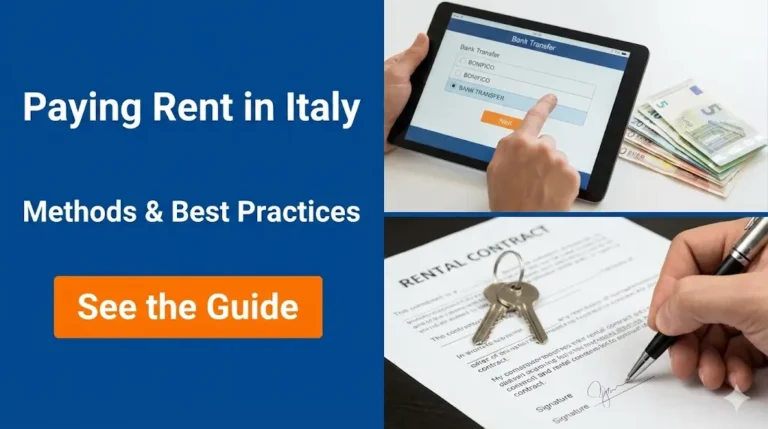
Never pay your rent or your security deposit in cash without receiving an immediate, signed receipt (ricevuta). The safest and most legally sound way to pay rent in Italy is via a bank transfer (bonifico bancario). A bank transfer leaves an undeniable, permanent electronic paper trail. In the transfer description (causale), always specify exactly what the payment is for (e.g., “Affitto Ottobre 2026 – Via Roma 10”). If a landlord ever claims you missed a payment, you can instantly pull up your bank records to prove otherwise.
Conclusion
Handling a tenant or landlord dispute in Italy requires patience, a firm grasp of your legal rights, and a commitment to meticulous documentation. The Italian rental landscape is built upon a delicate balance of power, where landlords fiercely protect their valuable real estate assets and the law provides tenants with robust protections against unfair treatment.
While the prospect of entering formal mediation or navigating a language barrier during a conflict can seem intimidating, you are never alone in the process. By immediately formalizing your communication through registered mail, clearly understanding the boundaries of ordinary versus extraordinary maintenance, and leveraging the immense power of national organizations like SUNIA for tenants or UPPI for landlords, you can level the playing field. Remember that the goal is always de-escalation and compromise. By approaching your rental agreement professionally and utilizing the wealth of mediation resources available, you can swiftly resolve housing disputes and return your focus to enjoying the beautiful, enriching experience of living in Italy.
References
Primary sources (official)
- Ministero della Giustizia (Ministry of Justice) – Official guidelines on Compulsory Civil Mediation for rental disputes and alternative dispute resolution: https://www.giustizia.it/
- Agenzia delle Entrate (Italian Revenue Agency) – Regulations regarding the mandatory registration of rental contracts and the taxation of rental income: https://www.agenziaentrate.gov.it/
Other helpful sources
- SUNIA (Sindacato Unitario Nazionale Inquilini ed Assegnatari) – The primary national tenant union providing legal assistance and contract review: https://www.sunia.it/
- UPPI (Unione Piccoli Proprietari Immobiliari) – National association providing legal, technical, and tax assistance to property owners and landlords: https://www.uppi.it/
Disclaimer
The information provided in this article is intended for educational and informational purposes only and does not constitute official legal, financial, or real estate advice. Italian rental laws, eviction procedures, and mediation requirements are highly complex and subject to change based on national civil code updates and regional regulations. Always consult with a licensed Italian real estate attorney (avvocato) or an official representative from a recognized tenant or landlord union before withholding rent, breaking a lease, or initiating formal legal proceedings.