Holiday Pay and Overtime Rules in Italian Labor Law
Getting to the end of a long month and realizing your paycheck doesn’t reflect those brutal weekend shifts is a special kind of expat heartbreak. I remember staring at my first Italian busta paga, completely lost in a sea of acronyms and trying to figure out where my overtime pay had vanished. This guide solves the mystery of Italian labor law regarding holidays and extra hours so you can claim every euro you’ve earned.
Disclosure: This post may contain affiliate links. We may earn a commission at no extra cost to you if you make a purchase through these links. Read full disclosure.
The Foundation of Working Hours in Italy
Standard Workweek and the 40-Hour Baseline
In Italy, the standard legal workweek is established at 40 hours. This is the baseline for almost every subordinate employment contract in the country. While you might see some variations in specific sectors, this 40-hour mark is where “normal” pay ends and the world of extra compensation begins. Most professionals work a Monday-to-Friday schedule, typically from 9:00 AM to 6:00 PM, including a mandatory hour for lunch.
It is important to understand that while 40 hours is the standard, Italian law allows for flexibility through the National Collective Labor Agreements (CCNL). These agreements are the “secret sauce” of Italian labor law, negotiated between unions and employer associations. They can sometimes set a standard workweek that is slightly shorter, such as 38 or 39 hours, depending on your industry. If you are just starting your job search, reviewing our guide on the Italian Job Market 2027: In-Demand Skills and Sectors will give you a sense of what different industries expect.
Navigating these rules for the first time is daunting because the actual law provides a skeleton, but the CCNL provides the muscle. If you are struggling to read your contract because of the dense legal terminology, using a tool like ItalianPod101 to build your business vocabulary is a lifesaver. Knowing the difference between orario ordinario (standard hours) and lavoro straordinario (overtime) in a meeting with HR can save you from a lot of “lost in translation” frustration.
Maximum Working Limits and Rest Periods
Italy has very strict rules to prevent employee burnout, which is a welcome change for many expats coming from “hustle culture” environments. The absolute maximum working time, including overtime, cannot exceed 48 hours per week on average over a four-month period. This “averaging” is a key detail—it means you might work 50 hours one week, but your employer must ensure you work fewer hours in the following weeks to keep that four-month average below the 48-hour ceiling.
Furthermore, you are legally entitled to a minimum daily rest period of 11 consecutive hours between shifts. This means if you finish a late project at midnight, your boss cannot legally require you to be back at your desk until 11:00 AM the next day. You are also entitled to at least 24 hours of consecutive rest every week, usually on a Sunday.
These protections are non-negotiable. If you find yourself consistently pushed beyond these limits, it is a sign that your workplace may not be following the Testo Unico on workplace safety. Understanding these boundaries is part of a broader cultural adjustment; for more on what to expect, check out our guide on Work Culture in Italy: What Expats Should Expect.
Decoding Overtime Rules (Lavoro Straordinario)
When Does Overtime Kick In?
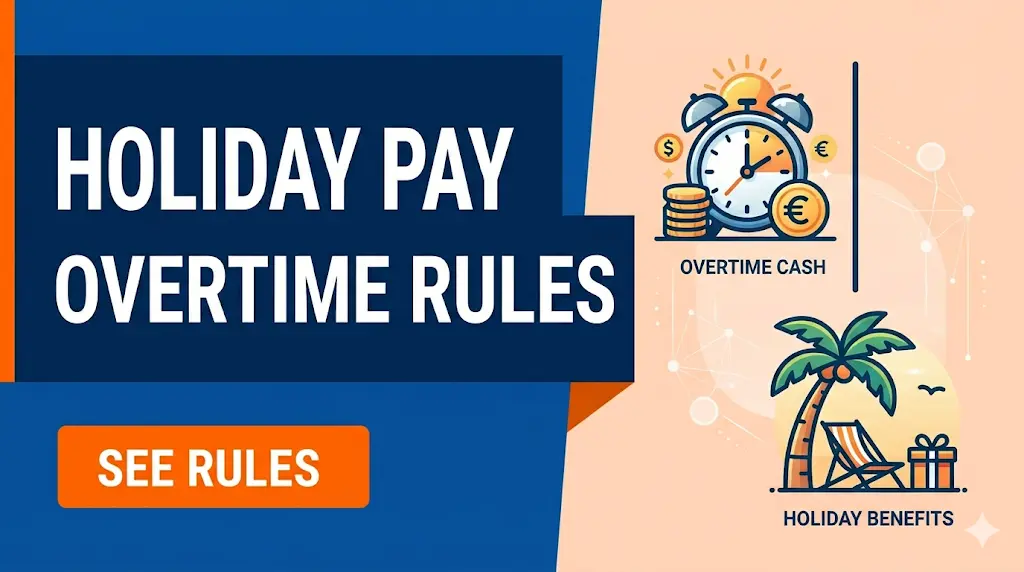
Technically, any work performed beyond the 40th hour in a week is considered lavoro straordinario. However, in Italy, overtime is generally viewed as something that should be “occasional” or due to “exceptional technical-productive requirements.” It isn’t supposed to be a permanent fixture of your schedule.
There is also an annual limit on overtime. According to the law, you cannot exceed 250 hours of overtime per year unless your specific CCNL states otherwise. If your employer wants you to work more than that, they often need special authorization from the Labor Inspectorate. For many expats, especially those in the tech sector, these hours can rack up quickly. If you are in a high-demand field, you might want to compare your experience with our Tech Jobs in Italy: Hotspots and Salary Overview.
Overtime Pay Rates and Multipliers
This is where you need to pay close attention to your busta paga. Overtime in Italy is never paid at your standard rate; it always includes a “premium” or a percentage increase. The exact amount is almost always determined by your sector’s CCNL rather than a single national law.
For standard overtime (hours 41 to 48), the increase is typically at least 15% above your regular hourly rate. However, if you are working at night or on a holiday, those multipliers jump significantly.
- Night Overtime: Usually defined as work between 10:00 PM and 6:00 AM, often attracting a 30% to 50% increase.
- Holiday Overtime: Working on a Sunday or a national holiday can often net you an increase of 50% or more, depending on your contract.
If you are a freelancer or working under a Partita IVA, these protections don’t apply in the same way, as you are your own boss. If you are considering that route, make sure to read Acceptable financial proof for Italy self-employment visa to see the financial hurdles involved.
Compensatory Rest (Riposo Compensativo)
Sometimes, instead of a cash payout, an employer might offer “compensatory rest.” This means that for every hour of overtime you work, you “bank” time that you can take off later. While this can be great for work-life balance, you should ensure that your contract explicitly allows for this and that you aren’t being forced to take time off instead of the extra money you might need for the high Cost of Living in Italy 2026: Budgeting for Expats.
Always clarify with your HR department how overtime is handled before you start puting in extra hours. I used the formal business modules on ItalianPod101 to learn how to ask these questions politely but firmly in Italian, ensuring I wasn’t just working for free.
Public Holidays and Festive Pay
The 12 National Public Holidays
Italy has a generous calendar of public holidays (giorni festivi). On these days, employees are generally entitled to stay home while still receiving their full daily salary. If a holiday falls on a Sunday, you don’t lose out—the law typically requires your employer to pay you an extra “untaken holiday” allowance on your paycheck.
The national holidays include:
- January 1: New Year’s Day (Capodanno)
- January 6: Epiphany (Epifania)
- Easter Monday (Lunedì dell’Angelo)
- April 25: Liberation Day (Festa della Liberazione)
- May 1: Labor Day (Festa del Lavoro)
- June 2: Republic Day (Festa della Repubblica)
- August 15: Ferragosto
- November 1: All Saints’ Day (Ognissanti)
- December 8: Immaculate Conception (Immacolata Concezione)
- December 25: Christmas (Natale)
- December 26: St. Stephen’s Day (Santo Stefano)
- The local Patron Saint’s Day (differs by city—e.g., June 24 in Florence, December 7 in Milan)
Working on a Public Holiday
If your job requires you to work on one of these 12 days (common in hospitality, healthcare, or emergency services), you are entitled to “festive pay.” This usually means your standard daily wage plus a significant percentage increase (the “festive surcharge”).
Navigating the healthcare system on a holiday is its own challenge. If you are an expat worker in the medical field or just need care on a holiday, it is worth checking Emergency Medical Services in Italy: 112 and Hospitals. For those of us in standard office jobs, these holidays are a sacred time for travel and rest, which is why understanding Workplace Culture in Italy: Business Hours and Holidays is so important for your social integration.
| Type of Work | Minimum Legal Increase | Common CCNL Increase | Notes |
| Standard Overtime | 15% | 15% – 25% | Hours 41-48 in a week |
| Night Work | Varies | 15% – 30% | Generally 10 PM to 6 AM |
| Sunday / Weekly Rest | Varies | 30% – 50% | Often includes compensatory rest |
| Public Holiday | Full pay (if off) | 50% – 80% (if working) | Extra pay if holiday falls on Sunday |
Paid Leave and “Ex-Festività”
Statutory Annual Leave (Ferie)
Beyond public holidays, Italian law mandates a minimum of four weeks of paid annual leave (ferie) per year. At least two of these weeks must be taken consecutively if the employee requests it. Most importantly, you cannot “trade” your mandatory four weeks of vacation for extra cash while you are still employed—the law insists you actually take the time off for your health.
Vacation time in Italy is often taken in August (for the Ferragosto break) or in December. If you are planning a move and want to know how this fits into your overall transition, our Checklist: All You Need Before Moving to Italy is a great resource.
The Mystery of Permit (Permessi) and ROL
On your payslip, you will see a section for Permessi or ROL (Riduzione Orario di Lavoro). These are extra hours of paid time off that accrue monthly, separate from your vacation days. They are often used for doctor appointments or administrative errands.
If you are dealing with the Navigating Italian Bureaucracy: Comune and Prefettura, you will definitely need to use some of these hours. I remember being confused by the difference between Ferie and Permessi until I realized Permessi can be used in smaller chunks (like 2 or 4 hours), whereas Ferie is usually for full days.
What Happens to Unused Leave?
If you have unused Permessi at the end of the year, they are usually “liquidated”—meaning they are paid out in cash on your December or January paycheck. However, unused Ferie (vacation days) generally must be used within 18 months of the end of the year they were accrued. If you lose your job or resign, all accrued but untaken vacation and permit hours must be paid out in your final settlement (TFR). For more on ending a job, see Types of Italian Employment Contracts (Contratti di Lavoro).
Dealing with HR about these accruals can be a headache. I practiced the specific vocabulary for “accrued leave” and “paystub discrepancies” on ItalianPod101 to ensure I could defend my rights during my exit interview. It’s also vital to keep your immigration papers in order during any job change; make sure you’re aware of the Timelines for picking up your permesso di soggiorno in Italy.
Strategies for Protecting Your Pay
Always Review Your Busta Paga
Your busta paga is the only legal proof of what you’ve been paid. Check it every month against your own records of overtime and holiday work. If you notice a mistake, bring it up immediately. Errors are common in Italian payroll, especially regarding complex CCNL multipliers.
If you find that your employer is consistently failing to pay overtime or respect holiday rules, you may need to consult a Sindacato (labor union). They are incredibly powerful in Italy and provide low-cost legal advice to workers. To prepare for a meeting with a union rep, use ItalianPod101 to master the terminology of labor disputes.
Keep Your Residency and Documents Updated
Your tax and pay status are tied to your residency. If you move, you must update your address with your employer and the authorities. Failing to do so can cause issues with your tax brackets and deductions. Read How to change your address with the Questura in Italy to stay compliant.
Also, guard your Permesso di Soggiorno with your life. If you lose it, your ability to legally work (and thus be paid correctly for overtime) is at risk. We’ve outlined the Consequences of losing your permesso di soggiorno card so you know exactly how to handle that nightmare. If you’re a non-EU citizen, make sure your employer is aware of their Italian Employer Obligations When Hiring Non-EU Workers to ensure your contract remains valid and your overtime is legal.
Healthcare and Work
If you are working a lot of overtime, don’t let your health slide. Accessing the public system is a right you pay for through your taxes. Read our Healthcare in Italy: An Expats’ Guide and make sure you are Registering with an Italian Family Doctor (Medico di Base). If you ever need specialized care due to work stress, understanding the Differences between Public and Private Healthcare in Italy can help you get seen faster.
References
Primary sources (official)
- Ministero del Lavoro e delle Politiche Sociali – https://www.lavoro.gov.it/
- INPS (Istituto Nazionale della Previdenza Sociale) – https://www.inps.it/
Other helpful sources
- Italian National Institute of Statistics (ISTAT) – Labor Market Data – https://www.istat.it/
Disclaimer
The information provided in this article is for educational and informational purposes only and does not constitute official legal or financial advice. Italian labor laws, overtime multipliers, and holiday pay regulations are heavily dependent on the specific National Collective Labor Agreement (CCNL) applicable to your sector, which can change frequently. Always consult with a qualified labor lawyer, a union representative (sindacato), or a certified accountant (commercialista) regarding your specific employment contract and paystub.