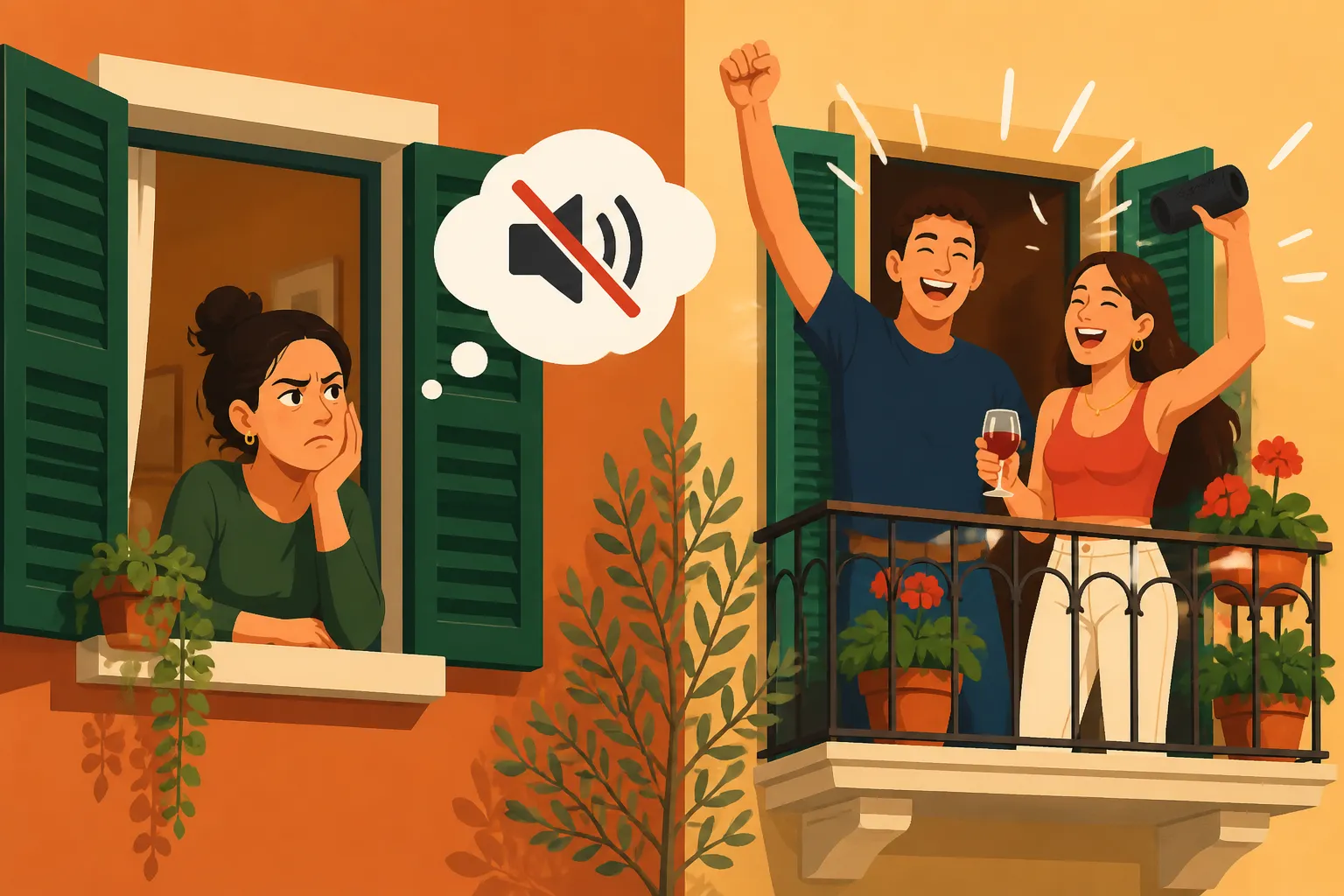
How to Deal With Noisy Neighbors in an Italian Building
Living in an Italian apartment often comes with incredible charm, but thin walls, high ceilings, echoey marble floors, and late-night social hours can turn your dream home into a daily frustration. Unreasonable noise from neighbors is one of the most common hurdles expats encounter when settling down. This guide breaks down local quiet hours, effective diplomatic strategies, legal remedies, and practical soundproofing tips to help you resolve noise issues smoothly.
Disclosure: This post may contain affiliate links. We may earn a commission at no extra cost to you if you make a purchase through these links. Read full disclosure.
Understanding Italian Building Dynamics and Noise Regulations
Moving into a classic Italian apartment building—whether a palazzo with soaring ceilings in Florence or a residential block in Milan—reveals quickly that Italian homes are built to handle heat, not necessarily sound. High-vaulted spaces, hard terrazzo or marble tile flooring, and hollow brick interior walls serve as natural amplifiers. A pair of hard-soled shoes on the floor above can sound like a drumbeat, and a lively dinner conversation next door can sound as though it is happening right in your living room. Before taking action, it helps to understand how noise is regulated socially and legally in Italy.
The Legal Framework and Quiet Hours
Every residential building in Italy operates under a set of internal regulations known as the Regolamento di Condominio. To understand how your building handles communal spaces and shared responsibilities, taking time to learn about Understanding Italian Homeowner Association (Condominio) is essential. Within these regulations, specific hours are set aside for rest, commonly referred to as orari di riposo.
While exact times vary slightly depending on the municipality (comune) and the specific building rules, quiet hours across Italy generally fall into two daily windows:
- Afternoon Riposo: Typically between 1:00 PM and 4:00 PM (or 2:00 PM to 4:00 PM). During this window, residents are expected to keep TV volumes low, refrain from playing musical instruments, avoid heavy housework like vacuuming, and minimize loud phone conversations.
- Nighttime Rest: Typically between 10:00 PM and 8:00 AM. Total quiet is expected, meaning no laundry machines on spin cycles, no loud gatherings, and no dragging of heavy furniture.
On a broader legal level, Article 844 of the Italian Civil Code governs immissioni (emissions, including noise). It states that a neighbor cannot subject your property to noise that exceeds the threshold of “normal tolerability” (normale tollerabilità). What constitutes “normal” depends on the background noise of the area—a quiet residential street in Umbria has a much lower tolerance threshold legally than a apartment overlooking a busy piazza in Naples.
If you are renting a place through mid-term housing platforms like Spotahome, keep in mind that whether you are staying for three months or three years, you are held to the exact same regolamento as long-term owners. Before signing lease agreements, reviewing Italian Rental Contracts Explained: 3+2, 4+4, Transitorio will give you a clearer picture of your contractual duties regarding building peace.
Cultural Norms Around Apartment Living
Italian culture is fundamentally social, and home life reflects this. Family lunches on Sunday afternoons, late dinners that start at 8:30 PM or 9:00 PM, and children playing indoors during hot summer afternoons are normal parts of daily life. Italians generally possess a higher tolerance for daytime domestic sounds than people from English-speaking countries might be accustomed to.
However, there is a clear distinction between standard living sounds (rumori della vita quotidiana) and disruptive negligence. Moving furniture without felt pads, wearing outdoor shoes on uncarpeted floors late at night, or letting a television blast past midnight crosses the line from cultural norm to bad neighborliness (inciviltà). Recognizing this boundary allows you to approach the situation with confidence, knowing you are asking for basic respect rather than trying to suppress normal daily living.
Step-by-Step Escalation for Handling Loud Neighbors
When noise becomes a persistent disruption, jumping straight to calling the authorities or sending angry letters often backfires, creating long-term hostility in a shared building. The key to handling noise disputes in Italy is a measured, step-by-step escalation process rooted in local customs.
Step 1: The Informal and Friendly Approach
In Italy, social harmony relies heavily on maintaining la bella figura—presenting yourself politely and allowing others to save face. Many neighbors genuinely do not realize how thin the walls or floors are, particularly if they have recently moved in or installed new hard flooring.
Your first interaction should always be warm, polite, and direct. Rather than knocking on their door late at night while angry, wait until the following morning or early afternoon.
- Start with a friendly greeting (“Buongiorno!”).
- Frame the issue around sound transmission rather than personal fault. For instance: “The sound carries so easily through these floors. When you walk in heels past 11:00 PM, it wakes up my children.”
- Offer a soft solution: “Would you mind putting felt pads on the chair legs? It helps so much with the acoustics in these old buildings.”
If speaking face-to-face in Italian feels overwhelming, staying connected through an eSIM provider like Airalo allows you to quickly draft translated phrases on your smartphone or double-check polite wording right outside your door. Alternatively, leaving a gentle, handwritten note in their mailbox can work well, provided the tone remains respectful and neighborly.
Step 2: Involving the Building Administrator
If informal chats fail or the neighbor becomes defensive, the next logical move is contacting the building administrator (Amministratore di Condominio). The administrator is responsible for enforcing the building rules (regolamento). For broader guidance on handling escalating disputes, consult Handling Tenant or Landlord Disputes: Resources.
When contacting the administrator, avoid vague complaints. Provide a structured log detailing:
1. Dates and exact times of the noise violations.
2. The nature of the noise (e.g., barking dogs, late-night loud music, drill usage during afternoon riposo).
3. Attempts you have already made to resolve the issue directly.
Send this log via standard email or, ideally, via Posta Elettronica Certificata (PEC), which holds legal standing in Italy. The administrator will typically issue a formal warning letter (richiamo) to the offending neighbor, reminding them of the quiet hours and potential fines outlined in the building code. If you want to know how building administration costs and management fees work, read up on How to Understand Condominio Fees (Spese Condominiali) in Italy.
Step 3: Involving Your Landlord or Rental Agency
If you are a tenant, your landlord has an obligation to provide you with “peaceful enjoyment” (godimento pacifico) of the property. When a neighbor’s persistent noise infringes on your ability to sleep or work, your landlord needs to step in.
Contact your landlord or managing agency in writing. Explain that the ongoing noise is making the property unlivable and ask them to intervene directly with the neighbor or the building administrator on your behalf. Landlords often carry far more weight with building administrators and neighborly property owners than short-term or expat tenants. To know where you stand legally when requesting intervention, review Tenant Rights in Italy: Evictions, Deposits, and More.
Furthermore, ensure your tenancy is legally recorded, as official registration gives you full legal standing when making formal building complaints; learn more about this in Registering Rental Contracts with Agenzia Entrate.
Step 4: Legal Action and Calling the Authorities
When noise reaches extreme levels—such as ongoing middle-of-the-night parties, domestic altercations, or persistent late-night construction—legal and municipal enforcement becomes necessary.
Under Article 659 of the Italian Penal Code, noise that disturbs the sleep or occupations of multiple people in a building or neighborhood is classified as a criminal offense (disturbo delle occupazioni o del riposo delle persone). Notice the key legal distinction: the noise must potentially disturb multiple residents, not just a single overly sensitive neighbor.
Here is how to escalate legally:
* Call the Polizia Locale or Carabinieri: For active late-night disturbances, call the general European emergency number. For details on how emergency calls function, see Emergency Medical Numbers in Italy (112, 118, 1500). Ask for an intervention to measure or log the disturbance.
* Hire an Avvocato (Lawyer): If the problem is chronic, a lawyer can draft a formal warning letter (diffida ad adempiere), demanding the noise cease under threat of civil litigation for damages to health and well-being.
* Acoustic Assessments: A certified acoustic technician (tecnico di acustica ambientale) can be hired to record decibel levels inside your home, providing court-admissible evidence of illegal sound transmission.
Soundproofing and Immediate Personal Solutions
While administrative or legal processes unfold in Italy, waiting for official action can take weeks or even months. Taking proactive physical measures inside your flat can drastically reduce noise levels and immediately lower your stress.
Practical Acoustic Hacks for Tile and High-Ceiling Flats
Because Italian flats rely heavily on hard, reflective surfaces, adding soft materials breaks down sound echoes and muffles impact noise significantly.
- Rugs and Underlays: If noise comes from below, cover high-traffic areas with dense wool rugs paired with thick felt or rubber rug pads. If the noise comes from above, politely offering to buy your upstairs neighbor a set of soft felt pads (gommini) for their chairs can solve 80% of impact noise problems for a tiny fee.
- Heavy Textiles: Hang thick, thermal acoustic curtains over windows and high interior doorways. Sound travels easily through thin interior doors typical of mid-century Italian builds.
- Strategic Furniture Placement: Place heavy wooden bookcases packed with books against shared party walls. The mass of the wood and paper acts as a natural sound baffle against vocal frequencies.
- Acoustic Panels: Decorative sound-absorbing panels can be easily ordered from online retailers like Amazon Italy and mounted using removable adhesive strips. These panels drastically dampen internal room resonance, making external noises feel far less sharp.
- Door Seals: Install rubber draft excluders around the perimeter of your main entry door (porta d’ingresso). A massive amount of sound leaks into apartments from shared stairwells and elevator shafts.
For advice on sourcing furnishings locally to damp apartment sound, check out Furnishing an Italian Apartment: Stores, Delivery, and Budget Tips. Additionally, when adding heavy rugs and drapes to historic flats, make sure room ventilation stays healthy by reading Dealing with Humidity and Mold in Italian Homes.
Choosing the Right Apartment Structure to Avoid Noise Issues
If you are currently house hunting or planning your next move within Italy, picking the right floor plan and building type can save you from sound issues altogether.
When evaluating apartments:
* Aim for the Top Floor (Ultimo Piano): While top floors can be warmer in summer, eliminating footstep noise from above is often worth the extra utility cost.
* Inspect Floor Materials: Flats with original parquet wood flooring absorb impact noise significantly better than those with ceramic or marble tiles.
* Look at Wall Construction: Reinforced concrete structures (cemento armato) built from the 1970s onwards tend to isolate vocal sounds better than thin hollow-brick internal partitions found in older conversions.
* Examine Neighborhood Density: Living right over a trattoria or lively bar might sound romantic, but outdoor tables (dehors) bring chatter well past midnight.
If you are trying to weigh the trade-offs of vibrant city centers versus quiet residential zones, take a look at our neighborhood breakdowns in Living in Milan: Neighborhoods and Practical Tips and Living in Rome: Neighborhoods and Practical Tips.
Summary Comparison of Noise Escalation Options
To help you decide which path to take based on your current situation, the table below outlines the primary avenues for resolving apartment noise issues in Italy.
| Escalation Level | Primary Contact | Best Used For | Typical Resolution Time | Legal Weight / Impact |
|---|---|---|---|---|
| 1. Informal Conversation | Offending Neighbor | Minor disturbances, heel footsteps, TV volume, lack of awareness | Immediate to 2 Days | None (Relies entirely on neighborly goodwill) |
| 2. Building Administrator | Amministratore di Condominio | Chronic quiet hour violations, loud pets, furniture dragging | 1 to 3 Weeks | Moderate (Can issue formal warnings & building fines) |
| 3. Landlord / Agency | Property Owner or Agent | Unresponsive neighbors when you are renting the flat | 1 to 2 Weeks | Moderate (Landlord can leverage property owner network) |
| 4. Local Police / Carabinieri | Polizia Locale / 112 | Late-night illegal parties, acute loud construction, altercations | Immediate (Hours) | High (Generates official police reports and incident logs) |
| 5. Legal Counsel | Avvocato (Civil Lawyer) | Severe, health-impacting chronic noise unaddressed by building | 1 to 6 Months | Maximum (Leads to formal legal warnings or court actions) |
Navigating noise issues in a new country requires patience and a firm understanding of local boundaries. By combining polite communication with structural adjustments and knowing when to leverage official channels, you can restore peace and enjoy your Italian home to its fullest.
Disclaimer
This article is for general informational purposes only and does not constitute professional advice. Laws, prices and regulations vary by location and change over time. Consult a qualified professional for guidance on your specific situation.