How to Find Family-Friendly Neighborhoods Near Italian Schools
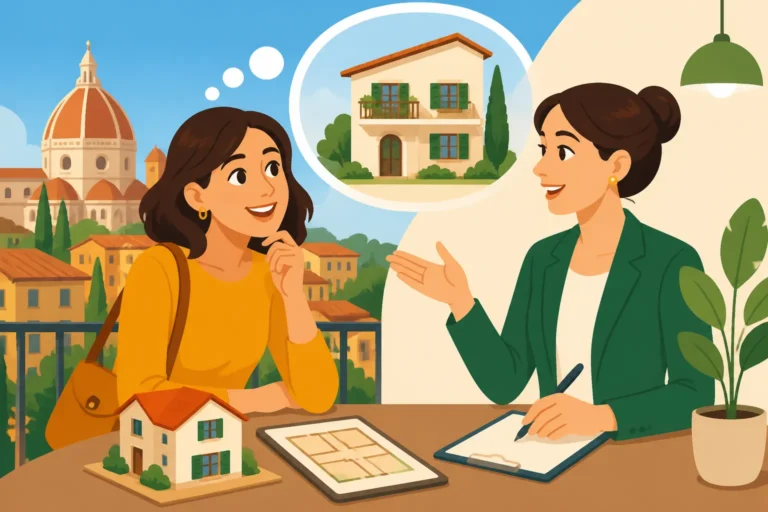
Finding a home in Italy is hard enough, but trying to pin down a family-friendly neighborhood that doesn't leave you stranded in a three-hour school run is a whole different level of stress. I remember the frantic weeks I spent circling Roman blocks, realizing that being "near" a school on a map meant nothing if a ZTL gate stood between me and the drop-off point. This guide breaks down exactly how to identify neighborhoods that offer safety, community, and proximity to quality education without the logistical nightmares.
Disclosure: This post may contain affiliate links. We may earn a commission at no extra cost to you if you make a purchase through these links. Read full disclosure.
Decoding the Italian School District System
To find the right neighborhood, you first have to understand how Italian public schools assign spots. Unlike some countries where you have total freedom of choice, the Italian system is heavily tied to your "residenza." This is where the concept of the bacino di utenza comes into play. It is essentially a catchment area or a school district boundary. When you apply for a public school, children living within the specific bacino are given priority.
I learned the hard way that even moving two streets over can sometimes push you into a different school’s jurisdiction. This is why you must check the "Stradario" (the official street-to-school map) provided by the local Comune or the school’s own website. If you have your heart set on a specific "Scuola Elementare," you need to ensure your rental contract is for a property within that exact boundary. For those looking at Education Options: Schools and Daycare for Expat Children, this residency-linked priority is the single most important factor to consider before signing a lease.
If you are leaning toward private or international options, the geographic constraints are looser, but the traffic constraints are tighter. If you choose one of the many International Schools in Italy: Finding the Right Fit, you aren't restricted by the bacino, but you are restricted by the "Raccordo" or the city's ring roads. Living in the center and driving to an international school on the outskirts can eat up four hours of your day. In these cases, the "neighborhood" search should start with the school's shuttle bus route. Many expat families find that living in a "green" suburb like the Cassia in Rome or the San Siro area in Milan is a strategic necessity rather than just a lifestyle choice.
The Infrastructure of a Family-Friendly Neighborhood
In Italy, "family-friendly" isn't just about low crime rates; it is about "vivibilità" or livability. A neighborhood that works for a single professional will likely be a disaster for a parent with a stroller. You need to look for specific urban features that define the Italian family experience. One of the most charming and practical things to look for is the "Piedibus." This is a "walking bus" where volunteers and parents walk a group of children to school along a fixed route. Neighborhoods that support a Piedibus are inherently safer, have wider sidewalks, and usually feature more pedestrian-friendly zones.
Parks and piazze are the soul of the Italian family routine. When you are scouting a neighborhood, don't just look at the apartment; look at the nearest piazza between 4:00 PM and 7:00 PM. Is it filled with kids playing soccer while parents have an aperitivo? Are there "Nonna" figures watching from the benches? This social surveillance is what makes Italian neighborhoods feel safe. You also want to ensure you are close to essential services. For instance, knowing How to Choose a Pediatra for Your Child in Italy is easier when you live in a district with a high density of family clinics.
Traffic and parking are the "hidden" dealbreakers. In cities like Florence or Rome, many family-friendly historic centers are ZTL (Zona Traffico Limitato) areas. If you live inside, you can get a permit, but if you live just outside and the school is inside, you’ll be walking every day—rain or shine. Check for "zona 30" areas, which are neighborhoods where speed limits are strictly capped at 30km/h. These are increasingly common in Milan and Bologna and are a godsend for parents of young children.
Top Family-Friendly Neighborhoods in Italy's Major Cities
Rome: Beyond the Colosseum
Rome is a patchwork of villages, and for families, the "Viale" and "Monteverde" areas are often the gold standard. Monteverde Vecchio, in particular, offers proximity to the massive Villa Pamphili park, which is essentially Rome’s backyard. It’s quiet, filled with reputable public schools, and has a distinct "small-town" feel despite being minutes from Trastevere.
Alternatively, many expats gravitate toward North Rome, specifically the areas along the Via Cassia or in the Fleming neighborhood. This is where many international schools are located. While you might feel a bit more disconnected from the "gritty" Roman experience, you gain ease of transport and larger apartment sizes. If you are settling here, make sure you understand the requirements for Registering Residency in Italy (Residenza and Anagrafe), as the local "municipio" offices in the north can be quite busy with the high volume of foreign residents. For a deeper dive into these districts, check out our guide on Living in Rome: Neighborhoods and Practical Tips.
Milan: Efficiency and Greenery
Milan has undergone a transformation in the last decade, making it arguably the most family-friendly big city in Italy. The Porta Romana district is a perennial favorite. It combines high-end residential living with fantastic schools and a library that is a hub for student activity. It’s also very walkable, which is a blessing in a city known for its grey, rainy winters.
CityLife is the "new" Milan, offering futuristic apartments, completely pedestrianized zones, and immediate access to a massive park and shopping district. It is expensive, but for families who want a "plug-and-play" lifestyle, it is hard to beat. On the more affordable side, NoLo (North of Loreto) is becoming a hub for younger, creative families, though the school quality varies street by street. If you are considering these areas, look at our detailed breakdown of Living in Milan: Neighborhoods and Practical Tips.
Florence and Bologna: The Human Scale
Florence is small enough that almost anywhere within the first ring is walkable, but the "Oltrarno" (specifically the San Frediano and Santo Spirito areas) offers a more authentic community vibe for children. However, the schools there can be crowded. Many families look toward the "Campo di Marte" area, which is home to the city's main stadium but also features some of the best residential architecture and public parks in the city.
Bologna is often ranked as the best city in Italy for children. The "Quartiere Costa-Saragozza" is the place to be. It leads up toward the hills (the Colli), offers fresh air, and houses some of the most innovative public "asili nido" (nurseries) in the country. It’s a city where the "Piedibus" isn't just a gimmick; it's a way of life.
Comparison of Neighborhood Features for Families
| Feature | Rome (Monteverde) | Milan (Porta Romana) | Florence (Campo di Marte) | Bologna (Saragozza) |
|---|---|---|---|---|
| Walkability | Moderate (Hilly) | High (Flat) | High | Very High |
| Green Space | Exceptional (Villa Pamphili) | Moderate (Parco Ravizza) | High | High (Colli nearby) |
| School Density | High | Very High | Moderate | High |
| Traffic Noise | Low to Moderate | Moderate | Moderate | Low |
| Community Feel | Very Strong | Professional/Chic | Traditional | Progressive/Active |
Practical Strategies for the Neighborhood Hunt
When you start your search, don't just rely on Italian real estate portals like Immobiliare.it or Idealista. These are great for seeing what's on the market, but they don't tell you about the "vibe" or the school quality. If you are looking for mid-term housing while you scout the perfect permanent spot, using a platform like Spotahome can be a lifesaver. It allows you to book verified apartments for a few months, giving you the "boots on the ground" time needed to visit schools and talk to local parents without the pressure of a four-year 4+4 contract.
While you are out walking these neighborhoods, you’ll be using your phone constantly for maps and looking up local "recensioni" (reviews) of parks and schools. Don't rely on expensive roaming or hunting for spotty Wi-Fi in a bar. I always recommend grabbing an eSIM from Airalo the moment you land. Having reliable data ensures you can check the "Stradario" on the fly as you stand in front of a potential building, confirming immediately which school district you are in.
Another veteran tip: go to the local "parchetto" (small park) at school pick-up time (around 4:30 PM). Strike up a conversation with the parents. Ask them about the "mensa" (school cafeteria) and the "maestre" (teachers). Italians are generally very open about their school experiences and will give you the "real" info that no official ranking will ever show. They can also tell you if the neighborhood has specific health requirements, such as What Vaccinations Are Required for School in Italy?, which can vary slightly in administrative practice between regions.
Managing the Logistics of the Move
Once you’ve found the neighborhood, the administrative scramble begins. You will need to How to Register Residency at the Italian Anagrafe quickly to secure that school spot. This process requires a valid rental contract and a "Codice Fiscale." It can be a bureaucratic headache, but it is the key that unlocks the Italian social system.
Settling in also means equipping your new home for a family. Italian apartments often come "unfurnished" (non arredato), which sometimes means even the kitchen sink is missing. To avoid the stress of navigating a suburban IKEA on a Saturday, I heavily relied on Amazon Italy. From safety gates and blackout curtains to the inevitable need for Buying School Supplies and Textbooks in Italy, having things delivered to your door saves your sanity while you are navigating the paperwork at the Questura.
Finally, remember that the "perfect" neighborhood is the one where your children feel integrated. This often means choosing a place with a local "oratorio" (church youth center) or a "centro sportivo" where they can play basketball or volleyball. Integration happens in the piazze and on the sidewalks. By prioritizing proximity to schools and community hubs, you aren't just finding a place to live; you are finding a place for your family to belong.
Disclaimer
The information provided in this guide is for informational purposes only and does not constitute legal, financial, or professional real estate advice. Italian immigration and residency laws, as well as school admission policies, are subject to change and can vary significantly between regions and municipalities. Always consult with official government sources, such as the local Questura or your city's Anagrafe, and consider seeking legal counsel for complex immigration or contract issues.