How to Register With the Agenzia delle Entrate in Italy
Standing in a windowless corridor in Rome, clutching a damp numbered ticket while the person ahead of me argued about a stamp, I realized that Italian bureaucracy isn't just a hurdle; it is a lifestyle. I have personally spent entire mornings being sent from one counter to another because I lacked a single specific photocopy of my passport. This guide is designed to save you from that frustration by explaining exactly how to register with the Agenzia delle Entrate.
Disclosure: This post may contain affiliate links. We may earn a commission at no extra cost to you if you make a purchase through these links. Read full disclosure.
Understanding the Role of the Agenzia delle Entrate
The Agenzia delle Entrate, or the AdE, is the Italian Revenue Agency. While it is easy to think of it simply as the "tax man," for an expat, it is much more than that. It is the gatekeeper to your legal existence in Italy. Without a proper registration and a subsequent tax code, you cannot rent a long-term apartment, open a local bank account, or even sign up for a mobile phone contract. It is the administrative heartbeat of the country, and unfortunately, it doesn't always beat in a way that is easy for foreigners to understand.
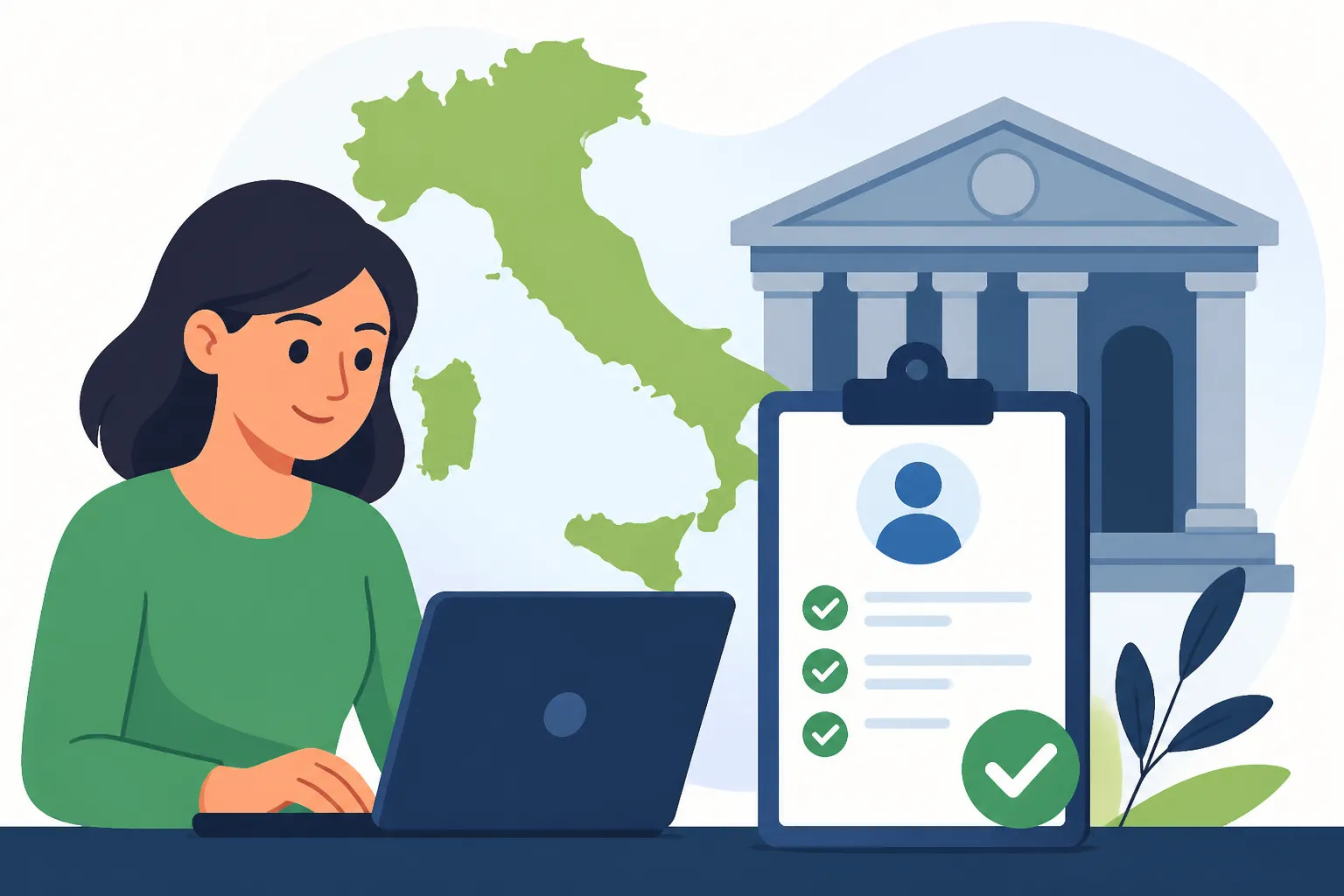
When we talk about "registering," we are usually referring to two distinct but related actions. The first is obtaining your Codice Fiscale, which is your unique fiscal identifier. The second is registering for the online portal, known as Fisconline or Entratel, which allows you to manage your taxes, view your Filing Taxes in Italy: Modello 730 vs Redditi PF, and access your digital health records. If you are planning to work as a freelancer, you will also need to deal with the AdE to open a Partita IVA.
Navigating this system requires a mix of digital savvy and old-school patience. Italy is currently in a transitional phase where everything is moving online, yet the physical offices (the Uffici Territoriali) remain vital for solving complex issues. Whether you are in a bustling city like Milan or a quiet village in Tuscany, your local AdE office will become a familiar landmark during your first year of residency.
The Essential First Step: Obtaining Your Codice Fiscale
Before you can register for any online services, you must have a Codice Fiscale. This is a 16-character alphanumeric code generated based on your name, date of birth, and place of birth. It is the "social security number" of Italy, and you simply cannot function without it. I remember the relief I felt when I finally held that slip of paper; it felt like I had finally been acknowledged by the Italian state.
To get your code, you can either apply at an Italian consulate in your home country before you move, or you can go to any local AdE office once you arrive. If you choose the latter, I highly recommend arriving at least thirty minutes before the office opens. In many cities, the queue starts early, and if you arrive at 10:00 AM, you might find that all the tickets for the day have already been distributed. You will need to fill out Form AA4/8, which is the "Domanda di attribuzione codice fiscale." Ensure you have a valid passport and a photocopy of that passport.
If you are a non-EU citizen, the process is slightly more complex as you will also need to show your visa or a Permesso di Soggiorno (Italian Residence Permit): Guide. Some offices will accept the receipt you receive from the post office after sending your "kit postale," but this varies by region. It is always wise to check the specific requirements of the office you plan to visit. If you find yourself needing to pay for administrative services or translations during this phase, using a service like Wise is often the most cost-effective way to manage currency conversions and international transfers without the hidden fees typical of traditional Italian banks.
Transitioning to Digital: Registering for Fisconline
Once you have your Codice Fiscale, the next step is to register for the Agenzia delle Entrate’s online portal. This is where the magic (and sometimes the headache) happens. The portal is called Fisconline for individuals and Entratel for professionals and businesses. Having access to this portal is crucial because it allows you to see your Understanding Italy's Tax System: A Guide for Foreigners profile and verify that your employer is correctly paying your social security contributions.
In the past, you had to request a PIN through the mail, which involved receiving half of the PIN at the office and the other half via a letter that often got lost in the legendary Italian postal system. Thankfully, that era is largely over. Today, the primary way to access the AdE portal is through the SPID (Sistema Pubblico di Identità Digitale). Think of SPID as a universal key that unlocks almost every government website in Italy.
To get your SPID, you need an Italian ID card or a valid passport, your Codice Fiscale, and an Italian mobile number. Once you have your SPID, you simply go to the Agenzia delle Entrate website and click on "Area Riservata." Select the SPID login option, authorize the access through your SPID provider’s app, and you are in. This gives you immediate access to your "Cassetto Fiscale" (tax drawer), where you can view your income declarations and any registered rental contracts. This digital shift has significantly reduced the need to stand in physical lines, provided you can navigate the SPID and Digital Identity for Italian Tax and Services setup correctly.
Comparison of Registration and Access Methods
| Method | Requirement | Speed | Best For |
|---|---|---|---|
| Consular Application | Valid Passport / ID | Slow (Weeks) | Applying before you arrive in Italy |
| In-Person Office Visit | Form AA4/8 + Passport | Fast (Same Day) | Getting a Codice Fiscale quickly upon arrival |
| SPID Login | Italian ID + Mobile Number | Instant | Accessing the online tax portal and services |
| CIE (Electronic ID) | Physical CIE Card + NFC Phone | Instant | Secure digital access without third-party SPID |
| Delegated Accountant | Power of Attorney | Variable | Complex cases or for those with limited Italian |
Navigating the Physical Office Visit
Despite the digital push, there are times when you must visit an Ufficio Territoriale. Perhaps your online registration failed, or there is a discrepancy with your The Italian Health Card (Tessera Sanitaria): Uses and How to Get One that requires a human touch. When you go, keep in mind that the culture of the office is very specific. Bureaucracy in Italy is often transactional and personal.
Dress appropriately—not necessarily in a suit, but "bella figura" applies even at the tax office. Being polite, using formal "Lei" address, and having all your documents organized in a folder can go a long way. If your Italian is shaky, bringing a friend who speaks the language or hiring a professional is a great investment. For US citizens who are juggling Italian requirements alongside their home country's obligations, consulting experts like Taxes for Expats can help clarify how your Italian registration affects your global tax standing.
Specific locations, like the office in Milan on Via Moscova or the central Rome offices, are incredibly busy. Smaller provincial offices in places like Perugia or Lucca might be quieter, but the staff there may have less experience with foreign documents. Always bring your How to Get a Codice Fiscale in Italy (and Why You Need One) certificate, your passport, your residency permit, and any lease agreements you have. It is also a good idea to have a digital copy of everything on your phone, just in case.
Registering for a Partita IVA (Freelancers and Small Businesses)
If you are moving to Italy to work for yourself, "registering with the Agenzia delle Entrate" takes on a whole new level of complexity. You will need to open a Partita IVA. This is not something I recommend doing alone. While it is technically possible to fill out the forms yourself, the choice of your "Codice ATECO" (the code that defines your business activity) will have massive implications for your tax rate and social security contributions.
Opening a Partita IVA requires you to submit Form AA9/12 to the AdE within 30 days of starting your activity. This registration triggers your relationship with INPS, the social security agency. If you are eligible for the "Regime Forfettario" (a flat-tax scheme for small businesses), your registration with the AdE is the moment you must opt-in. This scheme can drastically reduce your tax burden, often down to 5% for the first five years.
Managing this requires a high level of fiscal literacy. I found that Choosing a Commercialista (Accountant) in Italy was the single most important decision I made for my professional life here. A good commercialista will handle the AdE registration for you, ensuring that you don't miss deadlines or incorrectly categorize your business. Given the complexity of Italian labor laws and tax brackets, trying to save money by doing it yourself often leads to much larger fines down the road. If you are transferring funds to pay for your initial business setup or your accountant's retainer, using Wise can save you significant amounts on the exchange rate compared to using a high-street bank.
Managing Your Account and Ongoing Compliance
Once you are registered and have your digital access, the job isn't finished. You must keep your information updated. If you change your address, you must update your Registering Residency in Italy (Residenza and Anagrafe at the local Comune, which then communicates with the Agenzia delle Entrate. However, sometimes these systems don't sync perfectly, and you may need to log into the portal to ensure your "Domicilio Fiscale" is correct.
Your online account is also where you will pay your "F24" forms. These are the standard payment slips for everything from income tax to the TV license fee (Canone RAI). If you are working as a remote employee for a foreign company, your tax situation becomes even more nuanced. You may need to file an annual return even if you don't think you owe money in Italy. For Americans living abroad, Taxes for Expats provides specialized advice on how to navigate the Foreign Earned Income Exclusion alongside your Italian filings.
Being proactive is the key to a stress-free life in Italy. Check your "Cassetto Fiscale" at least once a quarter. Look for any notifications or "avvisi di accertamento." If you receive a letter from the AdE, do not ignore it. Most of the time, it’s a simple request for clarification, but the penalties for ignoring their correspondence can be steep. If you feel overwhelmed, remember that even veteran expats find the Cost of Hiring a Commercialista (Tax Accountant) in Italy a small price to pay for the peace of mind that comes with being fully compliant.
Final Practical Tips for Success
My final piece of advice is to manage your expectations. The Italian system is thorough, which means it moves slowly. When you submit a request for an online PIN or a change in status, it might take several days or even weeks to reflect in the system. Don't panic; this is normal.
Always keep a physical "Bureaucracy Folder" where you store every original document and at least three photocopies of each. I can't count the number of times a photocopy has saved me from having to come back the next day. If you are struggling with the online portal, the AdE has a YouTube channel and several PDF guides, though they are almost exclusively in Italian. Using a browser with a built-in translator can help, but be wary of literal translations of complex legal terms.
Ultimately, registering with the Agenzia delle Entrate is your "rite of passage" into Italian life. It signifies that you are no longer just a visitor, but a resident who is contributing to the fabric of this beautiful country. Once you have that digital login and your tax code in hand, the rest of the administrative hurdles—like getting a local doctor or buying a car—become much easier to navigate.
Disclaimer
This guide is for informational purposes only and does not constitute professional tax, legal, or financial advice. Italian regulations and administrative procedures are subject to frequent changes. Always consult with a qualified professional or the official Agenzia delle Entrate website for the most current information regarding your specific situation.