Italy Seasonal Work Visa: Everything You Need to Know
This complete guide explores the Italy Seasonal Work Visa, covering the 2026 quota system (Decreto Flussi), eligibility for agricultural and tourism jobs, and the step-by-step application process. Learn how to secure a 9-month permit and potentially convert it to long-term residency.
Disclosure: This post may contain affiliate links. We may earn a commission at no extra cost to you if you make a purchase through these links. Read full disclosure.
Introduction to Italy Seasonal Work Visa
For many, the image of Italy is inextricably linked to its harvest: the grape pickers in the vineyards of Chianti, the olive groves of Puglia, or the bustling beach resorts of the Amalfi Coast during the peak of summer. These iconic scenes are powered not just by local tradition, but by a vital international workforce. Every year, thousands of non-EU citizens travel to Italy to support the agricultural and tourism sectors, gaining a unique foothold in the European labor market.
However, working in Italy—even for a short season—requires strict legal authorization. You cannot simply arrive as a tourist and pick grapes for cash. Doing so is illegal and leaves you vulnerable to exploitation and deportation. Instead, you must apply for the Italy Seasonal Work Visa (Visto per Lavoro Subordinato Stagionale).
This visa is strictly regulated by the Italian government’s annual immigration decree, the Decreto Flussi. As labor shortages in key industries continue to rise, these visas are more valuable than ever. But the process is competitive and time-sensitive.
This guide provides a comprehensive roadmap for prospective seasonal workers. We will explain how the quota system works, which jobs qualify, and the precise steps you and your employer must take to ensure your summer in Italy is both profitable and legal.
Understanding the Seasonal Work Visa
The Seasonal Work Visa is a specific category of the National Visa (Type D) designed for non-EU citizens who intend to work in Italy for a limited period. Unlike standard work visas, which can lead to permanent residency and allow for family reunification immediately, the seasonal visa is strictly temporary.
Key Characteristics
- Duration: The visa can be valid for a minimum of 20 days and a maximum of 9 months.
- Sectors: It is exclusively reserved for the Agricultural and Tourism/Hotel sectors. You cannot get a seasonal visa for construction, IT, or factory work.
- Non-Renewable: You cannot extend this visa beyond 9 months while staying in Italy. Once the season is over, you must return to your home country.
Despite these limitations, this visa is a powerful entry point. For many, it is the first step toward building a relationship with an Italian employer that could eventually lead to a permanent position.
The Quota System: Decreto Flussi 2026
The most critical aspect of the seasonal visa is that it is subject to a numerical cap. The Italian government releases the Decreto Flussi (Flow Decree) annually, usually early in the year, which sets the exact number of workers allowed to enter.
How the Quota Works
For 2026, the government has allocated specific slots for seasonal workers to address the needs of farmers and hoteliers.
- General Quota: A large portion of the spots are open to citizens of countries with specific bilateral agreements with Italy (e.g., India, Albania, Morocco, Philippines).
- Returning Workers: A reserved sub-quota is often dedicated to workers who have already worked in Italy seasonally in the previous year. This “multi-year” authorization simplifies the process for reliable staff.
Because applications are processed on a “first-come, first-served” basis, timing is everything. Employers often prepare their applications weeks before the “Click Day” when the online portal opens. To understand the specific numbers and dates for this year, reviewing Italy’s Decreto Flussi 2026: Work Permit Quotas Explained is essential.
Eligibility and Qualifying Sectors
Not every job offer qualifies for this visa. The role must fall strictly within the definitions of seasonal labor.
1. Agriculture
This is the most common category. It includes:
- Harvesting crops (grapes, olives, fruits, vegetables).
- Seasonal planting or pruning.
- General farm labor during peak production times.
2. Tourism and Hospitality
This sector allows hotels, restaurants, and resorts to staff up for the high season.
- Waiters and bartenders.
- Housekeeping staff and porters.
- Receptionists and tour guides (if employed by a seasonal entity).
- Beach club attendants (bagnini).
The “Employer First” Rule
You cannot apply for this visa as a freelancer or a job seeker. You must have a binding job offer from an Italian employer before you can begin the process. The employer acts as your sponsor.
The Application Process: Step-by-Step
The application is a two-part process: the employer secures the authorization in Italy, and then you secure the visa in your home country.
Step 1: Employer Applies for Nulla Osta
Your prospective employer must apply for a Nulla Osta (Security Clearance) at the Sportello Unico per l’Immigrazione (SUI) – the One-Stop Shop for Immigration.
- They submit the proposed contract, detailing the salary and housing arrangements.
- They must prove that the mandatory social security contributions (INPS) will be paid.
- Once approved (usually within 20-40 days), the Nulla Osta is sent electronically to the Italian Consulate in your home country.
Step 2: Visa Application at the Consulate
Once your employer sends you the confirmation of the Nulla Osta, you must book an appointment at the Italian Embassy or Consulate in your country of residence.
- Documentation: You will present your passport, the Nulla Osta copy, the contract, and proof of return travel intent.
- Fee: The visa fee is typically around €116.
For a detailed look at navigating consular appointments, refer to How to Apply for an Italian Work Visa: Step-by-Step.
Step 3: Arrival and Residence Permit
Upon arriving in Italy, you have 8 working days to report to the Sportello Unico to sign your official contract of stay (Contratto di Soggiorno). Simultaneously, you must apply for your Residence Permit (Permesso di Soggiorno).
- You will receive a receipt (ricevuta) from the Post Office, which allows you to work legally while waiting for the physical card.
- You will be fingerprinted at the Police Headquarters (Questura).
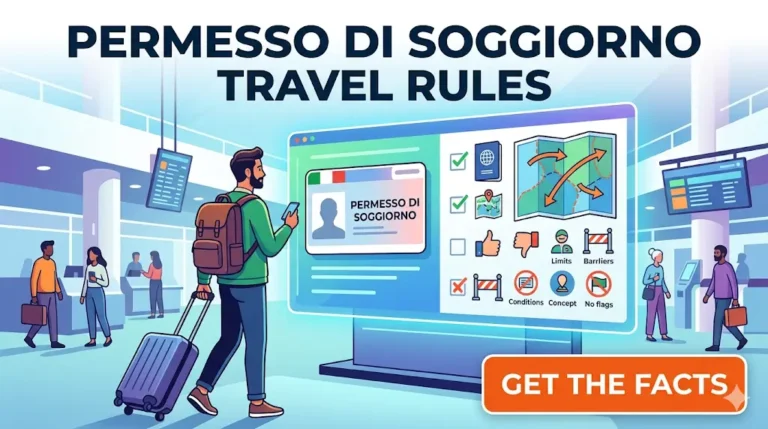
Learn more about this critical post-arrival phase in Italian Residence Permit (Permesso di Soggiorno) Explained.
Required Documents Checklist
To ensure a smooth application, both you and your employer must have your paperwork in order.
| Document | Provided By | Notes |
| Passport | Worker | Valid for at least 3 months past visa expiry. |
| Visa Application Form | Worker | National Visa (Type D) form. |
| Nulla Osta | Employer | Must be issued by SUI in Italy. |
| Employment Contract | Employer | Signed, meeting national wage standards. |
| Proof of Accommodation | Employer/Worker | Lease or employer declaration of housing. |
| Return Flight Booking | Worker | Proof of intent to leave after the season. |
| Passport Photos | Worker | Two recent, biometric standard photos. |
| Health Insurance | Worker | Often required until SSN registration is complete. |
Salary and Cost of Living
One of the biggest risks for seasonal workers is the discrepancy between expected earnings and the cost of living in Italy.
Wages
Seasonal wages in agriculture are often set by collective bargaining agreements (CCNL), but they can be low compared to other Western European nations.
- Agriculture: Hourly wages often range from €6.50 to €9.00 net.
- Tourism: Wages can be higher, especially with tips, but the hours are long.
Expenses
- Housing: Many agricultural employers provide housing, sometimes for free or for a small deduction from your salary. In tourism, you may have to find your own accommodation, which can be expensive in resort towns.
- Food: Italy offers high-quality food at reasonable prices, but eating out is a luxury.
Healthcare and Rights
As a legal worker with a residence permit, you are entitled to certain protections.
Healthcare (SSN)
Seasonal workers have the right to register with the Italian National Health Service (Servizio Sanitario Nazionale).
- Registration: You must go to the local Health Authority (ASL) with your permit and contract.
- Coverage: This grants you access to a doctor and hospital care for the duration of your permit.
Worker Rights
You are entitled to the same legal protections as Italian workers regarding safety, working hours, and sick leave. If an employer forces you to work “off the books” (in nero), you lose these protections and risk deportation. Always insist on a regular contract.
Converting to a Standard Work Permit
One of the most valuable features of the seasonal visa is the potential for conversion.
The Conversion Rules
If you have successfully completed a seasonal contract (usually at least 3 months) and you receive a new offer for a fixed-term (one year) or indefinite contract, you may be eligible to convert your Seasonal Residence Permit into a Standard Work Permit (Lavoro Subordinato).
- Quota Availability: This conversion is subject to specific quotas within the Decreto Flussi dedicated to conversions.
- Timing: You must apply for conversion before your seasonal permit expires.
This provides a legitimate pathway for seasonal workers to become long-term residents. However, you must first secure that permanent job offer. If you are handling your own housing during this transition, finding a legitimate lease is crucial.
Multi-Year Seasonal Permits
If you have entered Italy for seasonal work for two consecutive years, your employer can apply for a Multi-Year Seasonal Permit (Permesso Pluriennale).
- Validity: This permit is valid for three years.
- Benefit: It allows you to enter Italy every year for the season without applying for a new visa from scratch each time. You still must respect the 9-month maximum per year, but the bureaucratic burden is significantly reduced.
Conclusion
The Italy Seasonal Work Visa is a vital engine of the Italian economy and a fantastic opportunity for non-EU citizens to earn money and experience Italian culture. While the work is often physically demanding, the legal framework provides protection and a potential stepping stone to a longer future in Europe.
Success depends on finding a reputable employer who follows the rules and applying as soon as the quotas open. With the right preparation, your seasonal job can be more than just a summer gig—it can be the start of your Italian journey.
References
Primary sources (official)
- Ministry of Labor and Social Policies (Immigration Quotas): https://www.lavoro.gov.it/temi-e-priorita/immigrazione
- Ministry of the Interior (Sportello Unico for Immigration): https://portaleservizi.dlci.interno.it/
Other helpful sources
- Coldiretti (Italian Agricultural Association): https://www.coldiretti.it/
Disclaimer
The information provided in this article is for educational and informational purposes only and does not constitute official legal or immigration advice. Quotas, wages, and application procedures for seasonal work are subject to change by the Italian government and annual decrees. Always verify the latest requirements with the Italian Consulate in your jurisdiction or a qualified immigration professional before submitting any applications.