Moving From Italy to Germany and Northern Europe: Road Freight Options
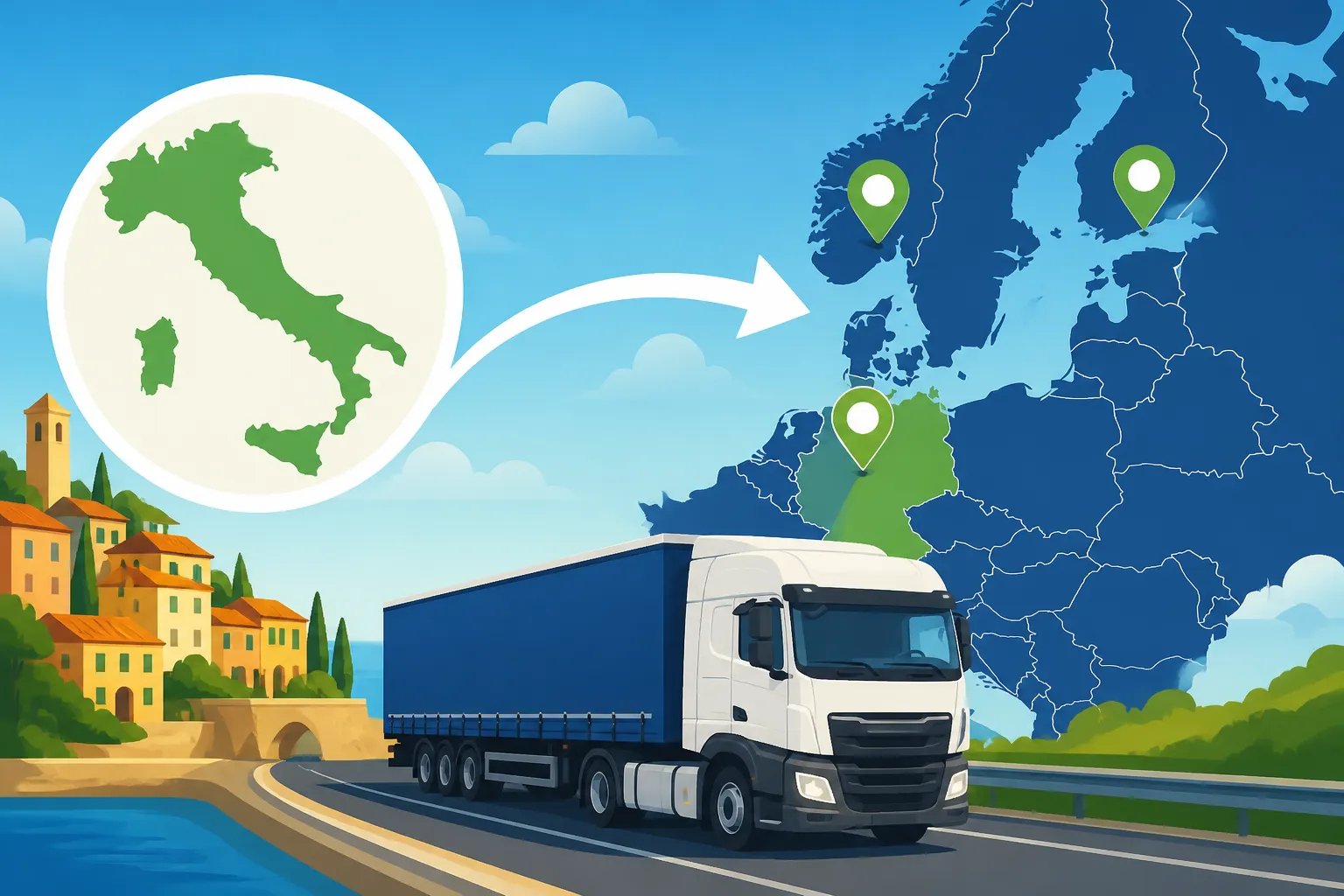
Ah, the big move! After living in Italy for years, the thought of packing up your life and heading North, whether it's to Germany, the Netherlands, or even Scandinavia, can feel like climbing Mount Blanc in flip-flops. The bureaucracy, the logistics, the sheer volume of stuff you've accumulated – it’s enough to make anyone want to just sell everything and start fresh. But trust me, you don't have to. This guide is all about navigating the process of moving your treasured belongings from Italy to Germany and Northern Europe using road freight, helping you understand your options and find the most reliable, stress-free path forward, especially with services like Sirelo.
Disclosure: This post may contain affiliate links. We may earn a commission at no extra cost to you if you make a purchase through these links. Read full disclosure.
The Unique Challenges of Moving from Italy Northward
Moving country is never a walk in the park, but relocating from Italy often comes with its own special blend of administrative hurdles and logistical quirks. It's not just about getting your belongings from point A to point B; it's about gracefully disentangling yourself from the Italian system, which, let's be honest, can feel like trying to escape a particularly charming but very sticky spiderweb.
Navigating Italian Bureaucracy for International Moves
Before your moving truck even thinks about pulling away from your Italian address, you’ll need to officially declare your departure. This involves what’s known as cancellazione anagrafica, or the cancellation of your residency with your local Comune. Neglecting this step can lead to all sorts of headaches down the line, including potential tax complications or continued obligations for local services. It’s a process that requires a bit of patience and often multiple visits to the Comune office, typically by appointment. You'll need to submit forms, often including proof of your new address abroad, and sometimes even your travel ticket if you're leaving by plane.
Beyond deregistering, you'll also have to deal with closing down utility accounts. Getting rid of your Italian contracts for electricity, gas, water, and internet can be surprisingly tricky, often requiring calls to customer service numbers that operate during inconvenient hours and in Italian only. Sometimes, it feels like they really don't want to let you go! Make sure you understand the terms for early termination and collect all final bills to avoid any lingering charges. Similarly, if you're renting, terminating your lease agreement properly is crucial. Italian rental contracts, particularly the common 4+4 or 3+2 varieties, have specific notice periods, and you'll want to ensure you get your security deposit back. It's wise to review your original contract well in advance of your move and communicate clearly with your landlord or agency. For more detailed insights into this, you might find guides on How to Cancel Utilities When Leaving an Italian Rental and Registering Residency in Italy Residenza and Anagrafe helpful.
Logistical Hurdles: Distance, Roads, and Italian Specifics
Physically moving your household goods from Italy to Northern Europe via road freight means traversing a significant distance. While Europe's road network is generally excellent, you’ll still encounter a few unique challenges starting from Italy. Many beautiful Italian towns and cities, especially older ones, have narrow streets, pedestrian zones, and strict ZTLs (Limited Traffic Zones) that big moving trucks simply cannot access. This often means your belongings will need to be shuttled from your door to a larger vehicle parked outside the restricted zone, adding an extra layer of planning and potential cost. Always discuss access issues with your chosen moving company, especially if you live in a historic center or a small village.
Furthermore, Italian driving habits and road conditions, particularly in the south or on smaller regional roads, can differ from what your northern European movers might be accustomed to. While the major autostrade are usually well-maintained, expect tolls! These can add up, so factor them into the overall cost of your move. The good news is that reputable moving companies are well-versed in these local nuances, but it pays to be informed and communicative.
Why Road Freight is Often Your Best Bet for Europe-Bound Moves
When you're looking at moving your entire life from the Mediterranean warmth of Italy up towards the cooler climes of Germany, the Netherlands, or even Scandinavia, road freight often emerges as the clear winner. It's not just about convenience; it often makes the most practical and financial sense.
Cost-Effectiveness and Convenience Compared to Other Modes
Think about it: flying your entire household contents by air cargo is almost always prohibitively expensive for anything more than a few essential boxes. And while sea freight might be an option for intercontinental moves, for moves within Europe, it's generally far too slow and complicated, involving multiple transfers between ports and land transport at both ends.
Road freight, on the other hand, offers a fantastic balance. It’s often the most cost-effective solution for moving goods across European borders. You're typically looking at a single mode of transport from your old home to your new one. This door-to-door service minimizes handling, which in turn reduces the risk of damage and simplifies the entire process. No need to worry about coordinating separate pickups and deliveries from different terminals; the same truck that picks up your belongings in Italy will, more often than not, deliver them straight to your new doorstep in Germany or elsewhere.
The convenience factor cannot be overstated. With road freight, you get more flexibility in scheduling and often faster transit times compared to sea shipping. Plus, the ease of tracking your shipment as it makes its way through Europe means less stress for you. This is where a platform like Sirelo truly shines, allowing you to easily compare multiple road freight quotes from reputable movers, giving you a clear picture of costs and services.
Understanding Different Road Freight Services
Road freight isn't a one-size-fits-all solution. Depending on the volume of your belongings and your budget, you'll typically encounter two main types of services:
- Dedicated (Full Load) Service: This is where you essentially "book" an entire moving truck or container just for your stuff. It's the fastest option, as the truck travels directly from your old home to your new one without any detours to pick up or drop off other people's goods. It offers maximum flexibility in terms of scheduling and a slightly lower risk of mix-ups since it's only your items on board. However, it's also the most expensive option, best suited for large households or those with very tight timelines.
- Groupage (Shared Load) Service: Also known as Less Than Container Load (LCL) or part-load, this service is much more common and budget-friendly for most expats. With groupage, your belongings share space in a truck or container with other people's shipments that are heading in the same general direction. The moving company consolidates multiple smaller shipments, which means you only pay for the space your items occupy. The trade-off is that transit times can be a bit longer, as the truck might make several stops along its route. Scheduling can also be less flexible, as the company needs to coordinate multiple pickups and deliveries. However, the cost savings are often significant, making it an excellent choice for smaller moves or those on a tighter budget. Many movers found through Sirelo offer both dedicated and groupage services, giving you options to fit your specific needs and finances.
Planning Your Road Freight Move: A Step-by-Step Guide with Sirelo
Moving countries is a massive undertaking, and a well-thought-out plan can make all the difference between a smooth transition and a logistical nightmare. When it comes to road freight from Italy to Northern Europe, a structured approach is key.
Getting Accurate Quotes and Choosing the Right Provider
The first, and perhaps most crucial, step is to gather accurate quotes. Don't just go with the first company you find online. You need to provide as much detail as possible about your move to get realistic pricing. This includes:
- Inventory: A comprehensive list of everything you plan to move, including furniture, boxes, appliances, and any special items (pianos, artwork). Be as precise as possible, noting dimensions for large items.
- Access: Details about your current address in Italy and your new address in Germany (or elsewhere). Are there stairs? Is there elevator access? Can a large truck park directly outside, or will a shuttle van be needed? Are there ZTLs?
- Services Required: Do you need professional packing and unpacking? Disassembly and reassembly of furniture? Storage at either end?
- Dates: Your preferred pickup and delivery dates, or a window of flexibility if you're opting for groupage.
Once you have this information, you can start requesting quotes. This is where Sirelo becomes an invaluable tool. Instead of spending hours searching for individual moving companies, filling out multiple forms, and comparing disparate quotes, Sirelo streamlines the process. You submit your move details once, and they connect you with several vetted, professional movers specializing in international road freight from Italy. This way, you get comparable quotes side-by-side, making it much easier to assess value, services included, and transit times. Be wary of hidden fees; a good quote will be transparent about everything from fuel surcharges to potential customs duties (though intra-EU moves are generally simpler on this front).
Here’s a quick comparison of factors to consider when getting quotes:
| Feature | Dedicated (Full Load) | Groupage (Shared Load) |
|---|---|---|
| Cost | Higher, as you pay for the entire truck. | Lower, as you only pay for your space. |
| Transit Time | Fastest, direct route from origin to destination. | Longer, due to multiple stops for other shipments. |
| Flexibility | High, choose specific pickup/delivery dates. | Lower, must align with the mover's schedule for other loads. |
| Volume | Ideal for large households (3+ bedrooms). | Ideal for smaller moves (1-2 bedrooms, few boxes). |
| Handling | Minimal, your items are the only ones on board. | More handling as other goods are loaded/unloaded. |
| Risk of Mix-up | Very low. | Slightly higher, but professional movers are meticulous. |
For further help in selecting a moving company, you might want to read Choosing Movers for a Relocation to Italy, even though it's about moving to Italy, the principles of choosing a good mover are universal.
Packing, Inventory, and Insurance for Your Journey North
Once you’ve selected your mover through Sirelo, the next phase is preparing your belongings.
- Packing: While you can pack yourself, for an international move, I always recommend professional packing services if your budget allows. Experienced movers use specialized materials and techniques to protect your items during transit, especially over long distances. If you do it yourself, invest in high-quality boxes, packing paper, and bubble wrap. Label every box clearly with its contents, the room it belongs in, and "fragile" where necessary.
- Inventory: Create a detailed inventory list, numbering each box and item. This isn’t just for your records; it’s crucial for insurance purposes and for checking off items upon arrival. Take photos of valuable items before they are packed. This meticulous documentation can save you a lot of grief if something goes missing or is damaged.
- Insurance: Do not skip moving insurance for an international move. Most reputable movers, including the ones partnered with Sirelo, offer various insurance options. Standard transit insurance typically covers basic liability per kilogram, which might not be enough for valuable items. Consider "all-risk" insurance, which provides more comprehensive coverage for loss or damage, though it comes at a higher premium. Read the policy carefully to understand what is covered, what exclusions apply, and the claims process. It's a small investment for peace of mind.
The Collection and Delivery Process: What to Expect
The day of collection will be a busy one. Ensure you are present, or a trusted representative is, to oversee the packing and loading. Double-check that all items on your inventory are loaded onto the truck. In Italy, especially in city centers, be prepared for potential parking challenges for the large moving vehicle. Your chosen mover should communicate this clearly and make arrangements.
As your belongings make their way across Europe, communication with your moving company is vital. Most companies offer tracking services, so you can follow your shipment’s progress. For moves within the EU, customs procedures are generally straightforward and shouldn't cause significant delays, unlike moves outside the Schengen area. However, always confirm any specific documentation requirements with your mover.
Upon arrival at your new home, again, be present for the delivery. Carefully inspect all boxes and furniture for any damage before signing the delivery receipt. Compare the delivered items against your detailed inventory list. If you find any damage or missing items, note them clearly on the delivery receipt before the movers leave. This is critical for any potential insurance claim. Unpacking assistance, if you’ve opted for it, will also be completed at this stage.
Choosing Your Destination: Germany and Northern Europe Specifics
While road freight offers a relatively seamless journey across European borders, it's always good to be aware of any specific considerations for your destination country.
Moving to Germany: What to Consider
Germany is a popular destination for expats from Italy, and for good reason. Its central location, strong economy, and robust infrastructure make it an attractive place to live and work. When your road freight shipment arrives in Germany, you'll generally find efficient and organized logistics. However, this efficiency comes with its own set of expectations. German cities, like many in Italy, have designated loading and unloading zones, and parking violations are strictly enforced. Ensure your moving company has obtained any necessary permits for parking or temporary road closures, especially if you live on a busy street.
Many German apartment buildings have elevators, which can simplify moving large furniture, but always confirm the size and weight limits. Access to residential areas can still be restricted in older city centers, necessitating smaller shuttle vehicles. The Anmeldung (registration of residency) is paramount soon after you arrive, and while it doesn't directly affect your freight, it's part of the official process of settling in. You might also want to look into Cost of Living in Italy 2026: Budgeting for Expats to get a sense of how your new German budget might compare.
Expanding Further North: Netherlands, Belgium, Scandinavia
If your final destination is beyond Germany, perhaps to the Netherlands, Belgium, or even further north into Scandinavia, the principles remain largely the same, but with slight adjustments:
- Distance and Cost: The further north you go, the longer the distance, and consequently, the higher the road freight cost will likely be. This makes groupage services even more appealing for these longer hauls.
- Regulations: While all these countries are within the EU (or Schengen Area), each may have specific local regulations regarding delivery times, noise restrictions, or city center access. Your international moving company, especially one found through Sirelo with experience in these routes, should be well-versed in these nuances.
- Infrastructure: Countries like the Netherlands boast excellent road infrastructure, but also dense urban areas where traffic and parking can be a challenge. Scandinavian countries often have more rural stretches and differing weather conditions to consider depending on the season.
No matter where in Northern Europe you're headed, the key is detailed planning and choosing a mover that offers transparency and expertise. The journey from the sun-drenched Italian landscapes to the organized, sometimes crisper, environments of Northern Europe is a big one, but with the right road freight partner, it can be remarkably smooth.
Moving from Italy to Germany or other Northern European countries doesn’t have to be a Herculean task. With road freight, you get a cost-effective, convenient, and relatively fast way to transport your entire life across borders. The secret lies in thorough planning, meticulous preparation, and, most importantly, finding a reliable moving company that understands the intricacies of international European moves. That's precisely why platforms like Sirelo exist: to simplify your search, connect you with vetted professionals, and provide you with competitive quotes so you can compare and choose with confidence. Don't let the logistics overshadow the excitement of your new adventure. Start your search on Sirelo today and make your move as smooth as a Tuscan olive oil.
Disclaimer
The information provided in this guide is for general informational purposes only and does not constitute professional advice. While we strive to keep the information up-to-date and correct, we make no representations or warranties of any kind, express or implied, about the completeness, accuracy, reliability, suitability, or availability with respect to the website or the information, products, services, or related graphics contained on the website for any purpose. Therefore, any reliance you place on such information is strictly at your own risk. Always consult with relevant professionals (e.g., legal, tax, immigration, or moving experts) for advice tailored to your specific situation.