Moving to Italy from Albania and Tunisia: Short Mediterranean Crossings
Ah, the siren call of Italy from across the Mediterranean! You might be gazing out from Durrës or Tunis, seeing that beautiful Italian coastline shimmer in the distance, and thinking, "It's just a quick hop, right? How hard can it be to move there?" My friend, as someone who’s navigated the labyrinthine wonders of Italian bureaucracy more times than I care to admit, I'm here to tell you that while the geographical distance might be short, the administrative journey can feel like crossing an ocean. This guide is going to walk you through the realistic steps and help you sidestep some common pitfalls when making the move to Italy from Albania or Tunisia.
Disclosure: This post may contain affiliate links. We may earn a commission at no extra cost to you if you make a purchase through these links. Read full disclosure.
The Initial Hurdles: Why a "Short Hop" Isn't Always Simple
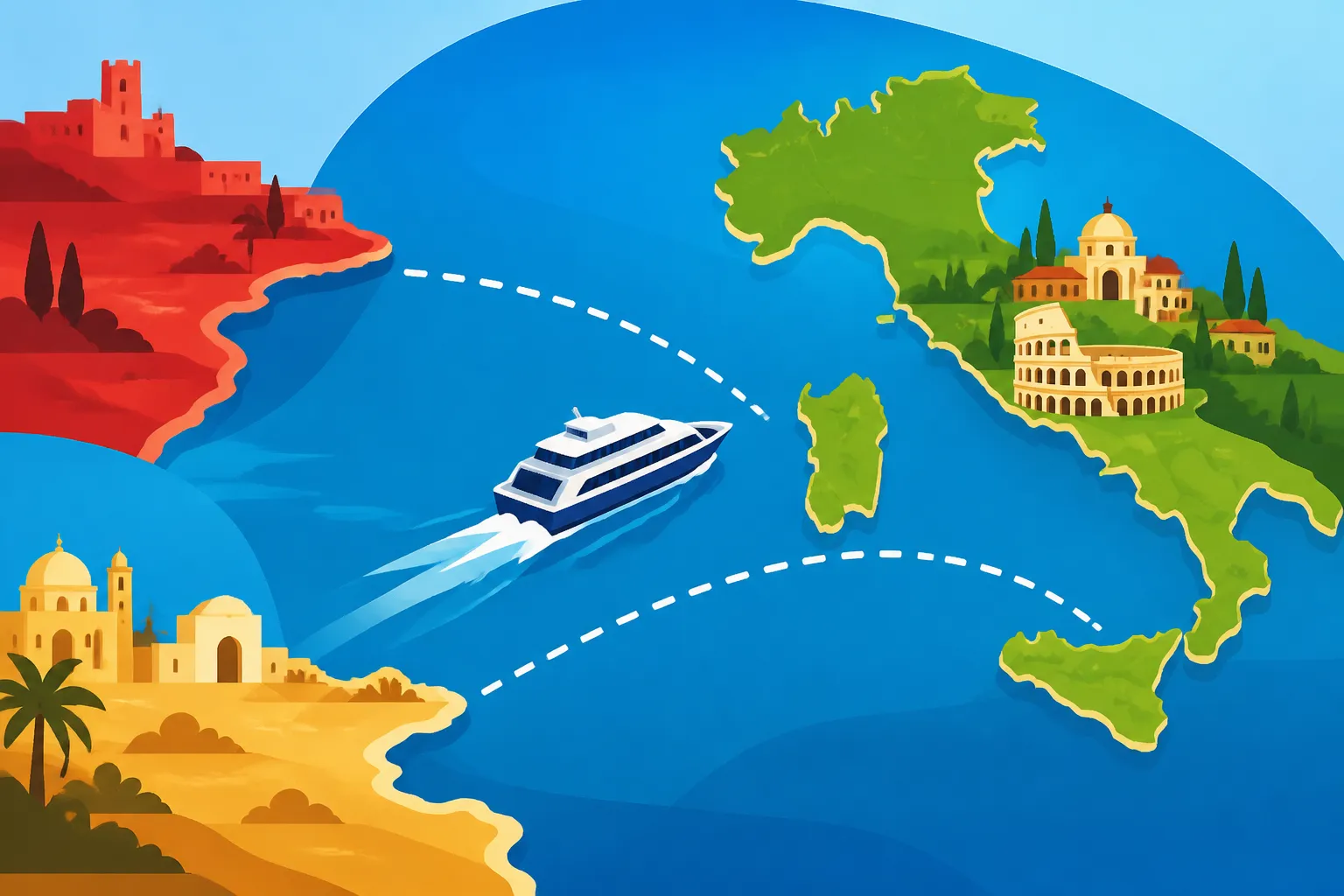
The Mediterranean glitters invitingly, connecting Albania and Tunisia to Italy with a relatively brief ferry ride or flight. This proximity can lull you into a false sense of simplicity when planning a move. You might think, "It's close, so it must be easy." But trust me, once you start diving into the paperwork, you quickly realize that distance has little to do with bureaucratic complexity. Italy, bless its beautiful heart, has its own unique way of doing things, and it demands meticulous attention to detail, especially for non-EU citizens.
Understanding Visa & Residency Requirements from Albania and Tunisia
One of the biggest eye-openers for many new arrivals from countries like Albania and Tunisia is the Italian visa and residency system. Unlike EU citizens who enjoy freedom of movement, you'll need a specific long-stay visa (Visto Nazionale, type D) before you even think about packing your bags. This isn't something you can figure out once you arrive; it's a critical pre-departure step.
For Albanians and Tunisians, common long-stay visas include those for work (lavoro subordinato), study (studio), family reunification (ricongiungimento familiare), or self-employment (lavoro autonomo). Each has its own demanding set of requirements. For instance, a work visa often requires an employer in Italy to first obtain a Nulla Osta al lavoro (clearance for employment) from the Sportello Unico per l'Immigrazione (SUI). This process can be painstakingly slow, subject to Italy's annual Decreto Flussi quotas, which dictates how many non-EU citizens can enter for work. Imagine securing a job offer, celebrating, and then realizing the actual permission to apply for the visa might only open once a year, and spots are limited! It’s enough to make you tear your hair out.
Similarly, if you're coming for family reunification, you'll need proof of adequate housing, sufficient income, and the necessary relationship documents, all duly legalized and translated. It’s a mountain of paperwork. And let’s not even start on the Permesso di Soggiorno, which is your actual residence permit in Italy, applied for after you arrive. Getting your Permesso di Soggiorno is a whole journey in itself, involving post office kits, Questura appointments, and waiting periods that can test the patience of a saint.
Navigating Customs and Importing Your Belongings
So, you’ve got your visa (or you’re on the path), and now you're looking at your life’s possessions. What about customs? You can't just toss everything onto a ferry or plane and assume it will sail through. Italy, like any country, has strict rules on what can be imported, especially for non-EU citizens. You'll need to prepare a detailed inventory of everything you’re bringing, listing quantities and estimated values. This isn't just a suggestion; it’s a requirement for customs clearance.
Expect to pay duties and VAT on certain items, especially if they are new or not considered "personal effects" that have been in your possession for at least six months prior to your move. For example, if you bought a brand new television last month and decide to bring it, you’ll likely face charges. Alcohol, tobacco, and certain food items are also highly regulated. This is where many people get tripped up. Imagine your furniture arriving at the port, and then you’re hit with unexpected fees or delays because your paperwork isn't perfect. It's frustrating, to say the least.
This is precisely why engaging with professional international movers becomes almost indispensable. They understand the nuances of Italian customs regulations and can guide you through the maze, helping you prepare the correct documentation to minimize surprises. This is where a service like Sirelo truly shines. They connect you with vetted moving companies that have experience with these specific routes and the customs involved.
Planning Your Move: Logistics Beyond the Ferry Ride
Once you start thinking beyond the initial visa and customs hurdles, the sheer volume of logistical planning can feel overwhelming. It’s not just about getting yourself and your boxes from point A to point B; it’s about setting up an entire new life.
Choosing Your Moving Method: DIY vs. Professional Movers
When considering how to actually transport your belongings, you essentially have a few options:
- DIY with a Van/Ferry: For those with minimal possessions and a strong DIY spirit, renting a van in Albania or Tunisia, driving it to the port, taking the ferry to Italy (e.g., from Durrës to Bari or Ancona, or Tunis to Palermo/Civitavecchia), and then driving to your final destination might seem appealing. However, consider the international rental agreements, the paperwork for vehicle import (even temporary), insurance across multiple countries, and the sheer exhaustion of driving yourself and your entire life. Customs clearance is still required, and doing it without a broker can lead to massive headaches and delays.
- Freight Forwarding: If you have more than a few suitcases but not a whole house, you might consider air or sea freight for your boxes. This involves dropping your items at a depot, and they are then shipped to an Italian port or airport. While seemingly more hands-off, you're still responsible for all the packing, inventory, customs documentation, and arranging pickup at the Italian end. Plus, if there are any issues at customs, you're the one dealing with it.
- Professional International Movers: This is, in my experienced opinion, the least stressful and often most cost-effective option in the long run. A full-service moving company handles everything from packing your items (if you choose), creating detailed inventories, managing customs declarations, arranging transport, and delivering to your new home in Italy. They have the expertise to navigate the complexities, ensuring your move is as smooth as possible. For moves from Albania or Tunisia, finding a reputable international mover is paramount. This is exactly what platforms like Sirelo specialize in – connecting you with movers who are specifically geared for international relocations to Italy, saving you from rogue operators and unexpected fees.
| Feature | DIY (Van/Ferry) | Freight Forwarding | Professional International Movers (e.g., via Sirelo) |
|---|---|---|---|
| Cost | Potentially lower initial, higher hidden | Moderate | Moderate to higher (value for money) |
| Effort | Very High (driving, packing, customs) | High (packing, customs, pickup) | Low (packing assistance, full customs management) |
| Customs Management | Your responsibility | Your responsibility | Handled by professionals |
| Insurance | Often complex/extra purchase | Basic cargo insurance, optional extra | Comprehensive options usually included |
| Door-to-Door Service | Only if you drive directly | Depot to depot (usually) | Standard |
| Stress Level | Extremely High | High | Significantly Lower |
| Suitability | Minimal belongings, adventurous | Mid-size shipment, budget-conscious | Any size shipment, peace of mind, complex moves |
Essential Documentation for Italian Residency
Even after you've legally entered Italy with your visa, the journey isn't over. You need to officially establish yourself as a resident. This involves obtaining your Codice Fiscale, registering for the national healthcare system, and formally registering your residency with the local Comune.
- Codice Fiscale (Italian Tax Code): This is your unique identification number in Italy, absolutely essential for everything from opening a bank account to getting a phone plan, signing a rental contract, and accessing healthcare. You can apply for it at the local Agenzia delle Entrate. It's usually one of the first things you need to do, and it's thankfully relatively straightforward, often issued on the spot if you have your passport and visa. You can learn more about How to Get a Codice Fiscale in Italy (and Why You Need One).
- Registration with the SSN (Servizio Sanitario Nazionale): Once you have your Codice Fiscale and Permesso di Soggiorno, you can register with the Italian national health service (SSN) at your local ASL (Azienda Sanitaria Locale). This grants you access to public healthcare, including choosing a Medico di Base (family doctor). This is crucial for your well-being in Italy. Our guide on How to Register for Italian Healthcare (SSN) as a Foreigner can offer specific steps.
- Iscrizione Anagrafica (Residency Registration): Within 20 days of arriving and obtaining your Permesso di Soggiorno, you must register your residency at the Anagrafe office of your local Comune. This confirms your legal address in Italy. They will send a municipal police officer to verify you actually live at the address you’ve provided. Yes, seriously! It sounds archaic, but it's part of the process. Without this, your Permesso di Soggiorno isn't fully validated, and you can't get your Carta d'Identità (ID card). Our post on Registering Residency in Italy (Residenza and Anagrafe) can help you prepare.
These steps, while individually manageable, can take weeks or even months in total, involving multiple visits to different offices and often battling language barriers. Having your household goods arrive smoothly with a company found through Sirelo can at least remove one major logistical stress point during this initial bureaucratic scramble.
Settling In: Beyond the Boxes
With your legal status sorted and your belongings in your new home, the next phase is about transforming a house into a home and truly embedding yourself into Italian life. This transition often brings its own set of challenges, distinct from the moving logistics.
Finding Accommodation and Setting Up Utilities
Finding a place to live in Italy, especially in popular cities like Rome, Milan, or Florence, can be competitive and, frankly, disheartening. You might rely on rental portals like Idealista or Immobiliare.it, but be wary of scams. Many landlords prefer not to rent to foreigners or require extensive proof of income. Understanding Italian rental contracts, such as the common 4+4 (four years, renewable for another four) or 3+2 (three years, renewable for two), is essential. Often, you'll need to pay a security deposit (cauzione), typically two or three months' rent, plus the first month’s rent upfront. It adds up quickly!
Once you have a place, setting up utilities is another Italian rite of passage. Electricity (energia elettrica), gas (gas), and water (acqua) are rarely set up when you move in. You’ll need to contact providers, often requiring specific forms, proof of residency, and your Codice Fiscale. If the previous tenant left an active contract, you might need to do a voltura (transfer the contract). If not, you’re looking at a subentro (new activation). This involves coordinating with technicians for meter readings and activations, and sometimes waiting weeks for everything to be fully functional. It's a process, to say the least, and a frustrating one if you just want to shower or cook! You'll want to check out our deep dive on Setting Up Utilities in a New Italian Home for a clearer picture.
Banking and Financial Integration
Opening an Italian bank account is another fundamental step, and while the Codice Fiscale is your key, it can still be a bureaucratic hurdle. Some banks are more expat-friendly than others. You’ll typically need your passport, Permesso di Soggiorno, Codice Fiscale, and proof of address. Don't be surprised if they ask for proof of income or a pay slip. Many expats find online-only banks like N26 or Revolut easier to set up initially, though traditional banks like Intesa Sanpaolo or UniCredit offer more comprehensive services for long-term residents.
Understanding Italy's tax system is vital. As a resident, you'll be subject to Italian income tax (IRPEF) on your worldwide income. Navigating tax returns (Modello 730 or Redditi PF) can be complex, and many expats opt to hire a commercialista (tax accountant) to ensure compliance. This is especially true if you have foreign assets or income from abroad. It's a whole new ballgame, and not one you want to mess up. Take a look at Understanding Italy's Tax System: A Guide for Foreigners for a thorough introduction.
The financial landscape might feel different from what you're used to in Albania or Tunisia, with different payment methods, a strong preference for debit cards over credit in some places, and less cash usage overall than in some non-EU countries. It’s a learning curve, but one that’s essential for daily life.
Making the Move Smoother with a Trusted Partner
As you can see, moving to Italy, even from nearby countries like Albania and Tunisia, is far more involved than a simple ferry ride. The administrative hoops, the sheer volume of paperwork, and the cultural adjustments can be exhausting. This is where a strategic approach and a reliable partner truly make a difference.
Imagine trying to coordinate the timing of your visa approval, the Nulla Osta, finding an apartment, and arranging for your household goods to be shipped and clear customs, all while trying to learn Italian phrases for "where's the Questura?" and "can I pay with card?". It’s a recipe for stress and potentially costly mistakes.
This is precisely where Sirelo comes in as your hero. Sirelo isn't a moving company itself, but rather a fantastic platform that simplifies the process of finding and comparing international movers. When you're facing a complex move to Italy, particularly from non-EU countries like Albania and Tunisia, you need movers who understand international customs, who are reliable, and who offer fair pricing.
By using Sirelo, you can:
- Get Multiple Quotes: Instead of hunting down individual moving companies, you submit your moving details once, and Sirelo connects you with several pre-vetted, reputable movers specialized in international relocations to Italy. This saves you immense time and effort.
- Compare Services: Each quote will detail the services offered, allowing you to compare not just price, but also what's included (packing, insurance, customs assistance). This transparency helps you avoid hidden fees and choose the right fit for your needs and budget.
- Read Reviews: Sirelo features reviews from other expats who have used these companies. This peer feedback is invaluable, helping you choose a mover with a proven track record of successful, stress-free relocations.
- Access Resources: Beyond just quotes, Sirelo provides a wealth of information and guides on international moving, helping you understand what to expect at each stage, from packing tips to customs regulations.
Think of Sirelo as your intelligent shortcut to finding the best moving solution for your specific journey from Albania or Tunisia to Italy. They take the guesswork out of choosing a reliable moving partner, allowing you to focus on the myriad of other tasks involved in settling into your new Italian life. Don't underestimate the value of a smooth, professionally handled relocation when you're already juggling so much bureaucracy. Let Sirelo help you secure a trusted mover so your "short Mediterranean crossing" of belongings doesn't become a long-haul headache.
Disclaimer
Please remember that immigration laws, tax regulations, and administrative procedures in Italy can change frequently. While I strive to provide accurate and up-to-date information, this guide should be used for general informational purposes only and does not constitute legal, financial, or immigration advice. It is always recommended to consult with official government sources, legal professionals, or immigration specialists for personalized guidance regarding your specific situation.