Over-the-Counter Allergy Medications in Italy
Navigating Italian pharmacies for allergy relief can be challenging. This guide covers the best over-the-counter antihistamines, nasal sprays, and eye drops available in Italy, providing brand names, active ingredients, and tips for speaking with local pharmacists.
Disclosure: This post may contain affiliate links. We may earn a commission at no extra cost to you if you make a purchase through these links. Read full disclosure.
Introduction
Understanding how to access allergy relief in Italy is an essential part of settling into your new life abroad. The Italian healthcare system differentiates strictly between medications that require a doctor’s prescription and those that can be purchased freely. Fortunately, for those suffering from mild to moderate allergic rhinitis, conjunctivitis, or minor skin reactions, a wide array of highly effective medications is available without a prescription.
However, navigating the terminology, brand names, and the unique retail environment of the Italian pharmacy can be daunting when your eyes are watering and your head is pounding. You will find that the exact active ingredients you rely on back home are readily available in Italy, though they are almost always marketed under completely different brand names. This comprehensive guide will demystify the process of buying over-the-counter allergy medications in Italy, helping you identify the right antihistamines, nasal sprays, and topical creams to keep your symptoms at bay so you can fully enjoy the Mediterranean climate.
Understanding the Italian Pharmacy System
To acquire allergy medication in Italy, you must understand the landscape of Italian medical retail. Unlike in the United States or the United Kingdom, where you might find basic painkillers and allergy pills in a convenience store or grocery aisle, Italy strictly controls the sale of pharmacological products.
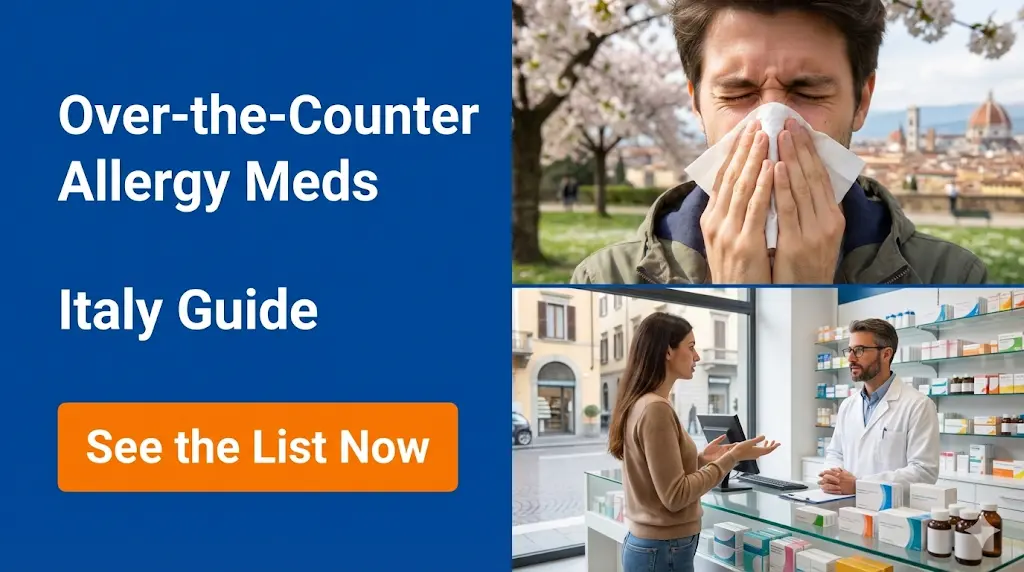
When you need medicine, you must visit a local pharmacy, easily identifiable by a large, illuminated green cross outside the building. Pharmacies in Italy are not just retail shops; they are considered front-line healthcare facilities. You will not find aisles of medications to browse. Instead, all medications, including over-the-counter drugs, are kept behind the counter. You must speak directly to the pharmacist, who holds a highly respected medical degree, to request your items. You can learn more about how to navigate these essential storefronts in our guide on Finding and Using Pharmacies in Italy.
Within the pharmacy, non-prescription drugs fall into two categories:
- OTC (Over-the-Counter): Also known as Farmaci da Banco. These can be advertised directly to the public and are available without a prescription.
- SOP (Senza Obbligo di Prescrizione): Medications without a prescription obligation. These cannot be advertised to the general public but can be recommended and dispensed freely by the pharmacist behind the counter.
Additionally, you may notice shops called Parafarmacie (identifiable by a blue cross). These outlets can sell OTC and SOP medications, as well as vitamins and cosmetics, but they are not legally permitted to dispense prescription drugs.
Common Allergy Triggers in the Italian Climate
Before seeking treatment, it is helpful to understand what might be triggering your allergies, as the flora in Italy might differ significantly from your home country. Many expats find they develop allergies to plants they have never encountered before. If you want to understand the seasonal timelines of these triggers, our article on Managing Seasonal Allergies in Italy provides a deeper dive.
Some of the most aggressive allergens in Italy include:
- Parietaria (Wall Pellitory): This is arguably the most common and persistent allergen in the Mediterranean basin. It grows in the cracks of old stone walls and ancient ruins, meaning it is prevalent even in dense urban centers like Rome and Naples. Its pollen season is exceptionally long, spanning from early spring well into autumn.
- Cypress Trees (Cipresso): The iconic, tall trees that line the roads of Tuscany and Umbria release massive amounts of pollen in late winter and early spring, often catching newly arrived expats off guard in February and March.
- Olive Trees (Olivo): Blooming in late spring, olive tree pollen is a major trigger, particularly in southern regions like Puglia, Calabria, and Sicily.
- Grasses (Graminacee): A universal allergen, grass pollen peaks in Italy during May and June.
- Saharan Dust: While not a pollen, strong Sirocco winds from North Africa frequently carry fine Saharan dust across the Mediterranean into Italy. This dust can severely irritate the respiratory tract and exacerbate existing allergic rhinitis.
Oral Antihistamines Available Over the Counter
Antihistamines are the first line of defense against systemic allergy symptoms like sneezing, runny nose, and systemic itching. They work by blocking histamine, a chemical released by your immune system during an allergic reaction. In Italy, several generations of antihistamines are available as Farmaci da Banco.
Second Generation Antihistamines
These are the most popular choices because they are formulated to be non-drowsy, allowing you to go about your day normally.
- Cetirizine: The active ingredient found in Zyrtec. In Italy, you can ask the pharmacist for Zirtec (the brand name is the same) or Reactine. Reactine is particularly popular as it combines cetirizine with pseudoephedrine, offering both antihistamine relief and nasal decongestion.
- Loratadine: Known commonly as Claritin in North America. In Italy, the pharmacist will provide this under the brand name Clarityn or Fristamin. It is highly effective for daily, non-drowsy relief.
- Fexofenadine: The active ingredient in Allegra. In Italian pharmacies, this is marketed as Fexallegra. It is excellent for severe seasonal allergic rhinitis and is known for having the lowest risk of causing drowsiness among OTC options.
- Ebastine: While less common in the US, this is a very popular second-generation antihistamine in Europe. In Italy, it is sold over the counter under the brand name Kestine.
First Generation Antihistamines
Older antihistamines cross the blood-brain barrier more easily, meaning they are highly effective but cause significant drowsiness. They are often recommended if allergies are preventing you from sleeping.
- Chlorphenamine: This is available in Italy, often combined with other ingredients for cold and flu relief, but it is less commonly prescribed strictly for daytime allergies due to its sedative effects.
- Promethazine: Often used for severe allergic reactions or hives, though usually requires a doctor’s guidance.
Table Comparing Common Allergy Medications
To help you seamlessly translate your home medicine cabinet to the Italian pharmacy counter, refer to the following comparison table:
| Active Ingredient | Common US/UK Brand | Common Italian Brand | Form |
| Cetirizine | Zyrtec / Piriteze | Zirtec, Cerchio | Oral Tablet / Drops |
| Loratadine | Claritin / Clarityn | Clarityn, Fristamin | Oral Tablet |
| Fexofenadine | Allegra | Fexallegra | Oral Tablet |
| Cetirizine + Pseudoephedrine | Zyrtec-D | Reactine | Oral Tablet |
| Fluticasone Propionate | Flonase | Flixonase | Nasal Spray |
| Beclometasone | Beconase | Rinazina Antiallergica | Nasal Spray |
| Ketotifen | Zaditor | Ketoftil | Eye Drops |
Nasal Sprays for Allergic Rhinitis
For many allergy sufferers, an oral pill is not enough to clear severe nasal congestion and sinus pressure. Italian pharmacies offer a wide variety of localized nasal treatments.
Corticosteroid Nasal Sprays
These are highly effective at reducing inflammation inside the nasal passages. Unlike decongestants, they are meant to be used daily throughout the allergy season to prevent symptoms from taking hold.
- Fluticasone: Available over the counter in Italy as Flixonase.
- Beclometasone: Often sold under the brand Rinazina Antiallergica. (Note: Be careful to specify “Antiallergica,” as standard Rinazina is a different type of medication).
Decongestant Nasal Sprays
Decongestant sprays provide rapid, temporary relief from a blocked nose by constricting blood vessels. The most famous brand in Italy is Rinazina (containing Naphazoline) or Actifed Nasale.
Warning: Italian pharmacists will strongly caution you against using these sprays for more than three to five consecutive days. Overuse leads to a condition called rhinitis medicamentosa, or rebound congestion, where the nasal passages swell even worse once the medication wears off.
Isotonic and Hypertonic Saline Sprays
Italians are staunch believers in the power of nasal irrigation using seawater solutions to physically wash pollen and dust out of the nasal cavity. You will see large displays of brands like Isomar, Sterimar, and Tonimer. These are completely drug-free, highly soothing, and can be used as many times a day as needed.
Eye Drops for Allergic Conjunctivitis
If your primary symptom is red, itchy, and watering eyes, oral antihistamines may take too long to provide relief. You will need a collirio (eye drops).
Antihistamine Eye Drops
These drops block histamine directly in the eye, stopping the itch rapidly.
- Ketotifen: Available over the counter as Ketoftil or Zaditen.
- Imidazoline/Naphazoline combinations: Brands like Imidazyl Antistaminico combine an antihistamine with a redness-reliever.
The Italian Preference for Monodose
When you purchase eye drops in Italy, the pharmacist will often ask if you prefer a standard bottle (flacone) or single-dose vials (monodose). Monodose vials are incredibly popular in Italy. They are small, sterile plastic ampoules designed for a single application. Because they do not contain the harsh preservatives necessary to keep a large bottle sterile over time, they are much gentler on sensitive eyes and are ideal for contact lens wearers.
Creams and Ointments for Skin Allergies
Allergies do not just affect the respiratory system. Contact dermatitis from touching specific plants, hives from food reactions, and severe localized swelling from insect bites are common complaints. Italy has a notorious mosquito population during the summer, including the aggressive Tiger Mosquito, which can cause massive allergic welts.
- Antihistamine Creams: For immediate relief of itchy insect bites or mild hives, Polaramin (containing dexchlorpheniramine) is the go-to over-the-counter cream in Italy.
- Hydrocortisone Creams: For contact dermatitis, eczema flare-ups, or severe inflammatory reactions, a mild topical steroid like Cortidro or Lenirit can be purchased without a prescription.
Homeopathic and Natural Alternatives
Italy has a robust market for alternative and natural medicine. In addition to standard pharmacies, you will find shops called Erboristerie (herbalists). These shops cannot sell pharmaceutical drugs, but they offer high-quality herbal extracts, teas, and natural supplements.
If you prefer a natural approach to allergy management, an erborista might recommend:
- Ribes Nigrum (Blackcurrant Extract): Widely considered in Italian natural medicine as a “natural cortisone,” this is taken in drop form to modulate the immune system and reduce allergic inflammation.
- Elicriso (Helichrysum): Used in creams and tinctures to soothe allergic skin reactions.
- Perilla Seed Extract: Often sold in capsule form to naturally reduce histamine production.
Useful Italian Phrases for the Pharmacy
Because you cannot simply browse the aisles, communicating effectively with the pharmacist is crucial. Many pharmacists in city centers speak excellent English, but learning a few key phrases will guarantee you get exactly what you need. If you want to understand the protocols behind these interactions, read our guide on Consulting a Pharmacist in Italy: Fees and Regulations.
- I have a pollen allergy: Ho un’allergia al polline.
- I have a dust allergy: Ho un’allergia alla polvere.
- I need an antihistamine: Ho bisogno di un antistaminico.
- Do you have something that does not cause drowsiness? Ha qualcosa che non fa venire sonno?
- My eyes are itchy and watering: Mi prudono e mi lacrimano gli occhi.
- My nose is completely blocked: Ho il naso completamente chiuso.
- I have a mosquito bite that is very swollen: Ho una puntura di zanzara molto gonfia.
- I would like a nasal spray with cortisone: Vorrei uno spray nasale al cortisone.
- Single-dose eye drops, please: Collirio monodose, per favore.
When to Seek a Prescription or See a Doctor
While the over-the-counter options in Italy are extensive, there are limits to what a pharmacist can legally dispense. You should seek out a medical doctor if:
- Your OTC antihistamines are completely ineffective after several days.
- You develop a chronic cough, wheezing, or shortness of breath, which could indicate allergic asthma.
- You have chronic sinus infections resulting from untreated allergic rhinitis.
In these cases, a doctor can prescribe much stronger, prescription-only medications, such as specialized asthma inhalers or stronger oral corticosteroids like Deltacortene. If you are a resident, you will consult your Medico di Base.
Crucial Emergency Information: If you or someone you are with experiences signs of anaphylaxis—such as severe swelling of the face, lips, or throat, difficulty breathing, or a sudden drop in blood pressure following a bee sting or food ingestion—do not go to a pharmacy. This is a life-threatening medical emergency. You must immediately dial 112, the universal European emergency number, to dispatch an ambulance.
Cost and Insurance for Allergy Medications
It is important to understand the financial aspect of treating allergies in Italy. Medications classified as OTC or SOP are strictly out-of-pocket expenses. They are not subsidized by the Italian National Health Service (SSN), meaning that even if an Italian doctor writes the name of an OTC antihistamine on a piece of paper for you, you will pay the full retail price at the register.
Prices for antihistamines in Italy generally range from €7 to €15 for a box of 10 to 20 tablets. Nasal sprays typically cost between €8 and €14.
However, if you are a legal resident and file taxes in Italy, you can claim a 19% tax deduction on your medical expenses. To do this, you must present your Tessera Sanitaria (Health Card) to the pharmacist before paying. The pharmacist will scan the barcode on your card, and the cash register will print a specialized receipt called a scontrino parlante (a “talking receipt”). This receipt legally ties the purchase of the medication to your tax code, allowing your accountant to easily deduct the costs at the end of the financial year.
Conclusion
Managing allergies in a foreign country can initially seem like a daunting task, but Italy’s highly organized pharmacy system ensures that world-class relief is always just around the corner. By understanding the difference between first and second-generation antihistamines, recognizing the Italian brand names for your trusted active ingredients, and embracing the clinical advice of the local farmacista, you can easily take control of your symptoms.
Do not let the spectacular Italian spring pass you by from behind a closed window. Armed with the right vocabulary and a basic understanding of the medications available, you can confidently walk into any green-crossed pharmacy from Milan to Palermo and find exactly what you need to breathe easily, stop the sneezing, and get back to enjoying your expatriate adventure in the Bel Paese.
References
Primary sources official
- Ministero della Salute: The official portal for the Italian Ministry of Health, providing national guidelines on pharmaceutical classifications and public health regulations. https://www.salute.gov.it/
- Agenzia Italiana del Farmaco (AIFA): The national authority responsible for the regulatory framework, safety, and pricing of all pharmaceuticals in Italy. https://www.aifa.gov.it/
Other helpful sources
- Federfarma: The National Federation of Italian Pharmacy Owners, offering resources on the role of community pharmacies, OTC regulations, and patient health services. https://www.federfarma.it/
Disclaimer
The information provided in this article is intended for general educational and informational purposes only and does not constitute official medical advice, diagnosis, or treatment. The availability, classification, and pricing of over-the-counter medications in Italy are subject to change based on updates from the Italian Medicines Agency (AIFA). Always consult directly with a licensed Italian pharmacist or a medical doctor before starting any new medication, especially if you are pregnant, nursing, taking other prescription drugs, or managing a chronic health condition. In the event of a severe allergic reaction or anaphylactic shock, dial the universal European emergency number 112 immediately.