Overcoming Mental Health Stigma in Italy
Navigating mental health challenges as an expat in Italy can feel isolating due to deep-rooted cultural stigmas. This guide explores the historical context of Italian mental health care, generational shifts in attitudes, and practical steps to find professional support and community.
Disclosure: This post may contain affiliate links. We may earn a commission at no extra cost to you if you make a purchase through these links. Read full disclosure.
Introduction to Overcoming Mental Health Stigma in Italy
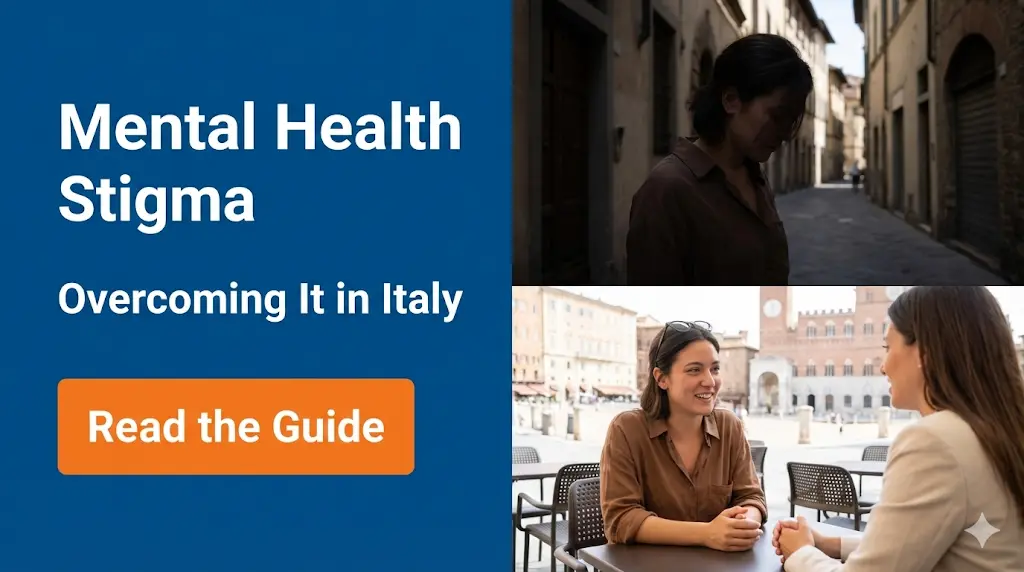
Experiencing psychological distress while living abroad is incredibly common, yet it is rarely discussed openly. When you find yourself struggling with your mental health in Italy, you are not just battling your internal emotional landscape; you are also forced to navigate the external cultural attitudes of your host country. Historically, mental health has been a heavily stigmatized topic in Italian society. The cultural inclination to project a flawless image to the outside world, combined with a fierce reliance on the family unit for emotional support, has often relegated conversations about therapy and psychiatric care to hushed whispers behind closed doors.
For an expatriate, recognizing that you need professional help is a vital first step, but taking action can feel intimidating when you are surrounded by a culture that seems to handle emotional distress differently than your home country. You might wonder if going to therapy is socially acceptable, how to find a professional who understands your cultural background, or whether your Italian friends and colleagues will judge you for seeking psychiatric care.
It is completely normal to feel overwhelmed by these cultural nuances. However, pretending the problem does not exist or attempting to “tough it out” to match perceived local standards will only exacerbate your distress. The excellent news is that Italy is currently undergoing a massive, rapid transformation regarding mental health awareness. This comprehensive guide is designed to help you understand the cultural roots of mental health stigma in Italy, explore the country’s fascinating psychiatric history, and provide you with highly actionable, practical steps to secure the professional support you deserve. By understanding the landscape, you can confidently advocate for your well-being and build a sustainable, healthy life in your new home.
The Cultural Roots of Mental Health Stigma
To understand how mental health is perceived in Italy, one must first dissect the foundational elements of Italian social culture. The stigma surrounding mental illness in the country is not born out of malice or ignorance, but rather out of deeply ingrained societal mechanisms designed to protect the individual and the family from public shame.
The Concept of La Bella Figura
At the very core of Italian social interaction is the concept of la bella figura. Literally translated as “the beautiful figure,” it extends far beyond dressing well or looking physically attractive. La bella figura is about presenting a composed, dignified, and socially appropriate image to the world at all times. It dictates how one speaks, how one behaves in public, and how one interacts with neighbors.
Admitting to mental instability, emotional breakdowns, or psychological struggles is historically viewed as the ultimate brutta figura (a bad impression). It signals a loss of control. Consequently, many Italians are culturally conditioned to mask their emotional pain behind a polished exterior. If someone is suffering from severe depression or anxiety, the societal pressure dictates that they should put on a brave face, dress impeccably, and go about their day as if nothing is wrong. For expats coming from cultures where vulnerability and “speaking your truth” are celebrated, this intense pressure to maintain appearances can feel incredibly suffocating and alienating.
The Fortress of La Famiglia
The second major pillar influencing mental health attitudes is the Italian family structure. La famiglia operates as the primary welfare and emotional support system in Italy. Traditionally, any problem—whether it is financial ruin, marital discord, or psychological distress—is expected to be resolved internally within the family unit.
In this traditional framework, seeking the help of an outside professional, such as a psychotherapist or a psychiatrist, was often viewed as a betrayal of the family’s trust. It implied that the family was broken or insufficient, and it meant airing the family’s “dirty laundry” to a complete stranger. A mother, an uncle, or a parish priest were considered the appropriate confidants for emotional turmoil. While family support is undeniably beautiful, it is rarely equipped to handle clinical psychological disorders, leading to generations of people silently suffering without proper medical intervention.
The Legacy of the Basaglia Law
You cannot discuss mental health in Italy without examining its revolutionary, yet complicated, legal history. Italy holds a unique and globally celebrated place in the history of psychiatry, largely due to the passage of Law 180 in 1978, universally known as the Basaglia Law.
A Psychiatric Revolution
Driven by the pioneering psychiatrist Franco Basaglia, Law 180 made Italy the very first country in the world to completely abolish and close all state-run psychiatric hospitals and asylums. Basaglia believed that traditional asylums were essentially prisons that stripped patients of their fundamental human dignity, exacerbating their mental illnesses through isolation, physical restraint, and abuse.
The law was incredibly progressive. It mandated that mental health patients be integrated back into society and treated in community-based mental health centers rather than being locked away. It restored civil rights to the mentally ill and forever changed the global discourse on psychiatric care.
The Unintended Consequences on Stigma
While the Basaglia Law was a monumental victory for human rights, its practical implementation inadvertently complicated the societal stigma surrounding severe mental illness. Because the massive asylums were closed, but the funding for local community centers was frequently inadequate, the burden of caring for individuals with severe psychiatric conditions fell directly onto the shoulders of their families.
Without sufficient state support, families were forced to care for relatives with schizophrenia, severe bipolar disorder, or deep clinical depression entirely on their own. Because of the aforementioned cultural emphasis on la bella figura, many families chose to hide their severely ill relatives at home to avoid neighborhood gossip. This created a paradoxical environment: Italy had the most legally progressive mental health system in the world, yet a culture of profound secrecy and shame continued to surround the topic of mental illness in everyday life.
The Generational Divide and Modern Shifts
If you are an expatriate living in Italy today, it is crucial to recognize that the cultural attitudes described above are not absolute, nor are they permanent. Italy is currently experiencing a massive generational divide regarding mental health, and the landscape is shifting at an unprecedented pace.
The Stoicism of Older Generations
Among the older generations—those who grew up in the immediate post-war era or during the implementation of the Basaglia Law—the stigma remains highly prevalent. Mental toughness and stoicism are deeply valued. In these demographics, therapy is still occasionally viewed with suspicion, reserved only for those who are perceived as “crazy” (pazzo). If you are interacting with elderly Italian landlords, neighbors, or colleagues, you may still encounter dismissive attitudes toward anxiety or burnout, often met with advice to simply “drink a good coffee and take a walk.”
Millennials Gen Z and the Normalization of Therapy
Conversely, younger Italians—Millennials and Generation Z—are actively dismantling these stigmas. Influenced by global internet culture, international travel, and a growing domestic awareness of psychological well-being, young Italians are openly discussing their mental health. Going to therapy (andare dallo psicologo) is increasingly viewed as a standard, healthy practice of self-care and personal development, rather than a shameful secret.
The Catalyst of the Pandemic and the Bonus Psicologo
The global events of 2020 served as a massive catalyst for this cultural shift. The intense, prolonged lockdowns in Italy forced the population to confront the reality of isolation, anxiety, and depression on a national scale. Mental health could no longer be ignored or swept under the rug.
In response to the escalating crisis, the Italian government introduced a groundbreaking initiative in 2022 known as the Bonus Psicologo (Psychologist Bonus). This state-funded program provided financial vouchers to citizens and legal residents to help cover the out-of-pocket costs of private psychotherapy sessions. The response was staggering. Hundreds of thousands of Italians applied for the limited funds, crashing the government portals.
This overwhelming demand proved a crucial point: Italians do want therapy, and they do value mental health care. The Bonus Psicologo fundamentally changed the national conversation, officially validating mental health care as a vital medical necessity supported by the state. This normalization makes it significantly easier for expats to seek help without feeling entirely at odds with their host culture.
The Expat Dilemma Facing a Double Stigma
As a foreigner in Italy, you are likely dealing with a unique phenomenon: a double layer of stigma. Not only must you navigate the residual cultural stigmas of Italian society, but you must also confront the internal stigma associated with being an expatriate who is “failing” to live the dream.
The Dolce Vita Myth
The world sells a very specific, highly curated vision of Italy. It is the land of La Dolce Vita (the sweet life), characterized by effortless beauty, endless leisure, and culinary perfection. When you move to Italy and find yourself crying on your bathroom floor because you cannot figure out how to pay your utility bill, or feeling a crushing sense of loneliness despite being surrounded by stunning architecture, a profound sense of guilt often arises.
Expats frequently internalize the idea that they are ungrateful. They tell themselves, “I live in one of the most beautiful countries in the world; I have no right to be depressed.” This guilt prevents them from speaking out. They fear that complaining about their mental health will result in friends back home calling them privileged or local Italians dismissing them as weak foreigners who cannot handle the lifestyle.
It is absolutely vital to separate the aesthetic of Italy from the logistical and emotional reality of expatriation. You are allowed to appreciate the beauty of the Colosseum while simultaneously seeking professional help for clinical anxiety. Validating your own experience is the first step toward healing. If you are struggling to find your footing, you should immediately begin exploring Mental Health Support in Italy: Resources for Expats to understand the specific avenues available to you.
Public versus Private Mental Health Care
Once you have decided to seek professional help, you must navigate the Italian medical system. Italy offers a dual healthcare system, and understanding the differences between the public and private sectors is essential for securing the right mental health support.
The Public System Servizio Sanitario Nazionale
If you are a legal resident registered with the Italian public healthcare system (SSN), you have the right to access mental health services. The primary entry point is usually your assigned general practitioner (medico di base), who can refer you to a specialist.
The public system operates Community Mental Health Centers (Centri di Salute Mentale or CSM) and family counseling clinics (Consultori Familiari). The major advantage of the public system is the cost; consultations and psychiatric care are either completely free or require a very minimal co-payment (ticket).
However, the public system presents massive hurdles for expats. It is chronically underfunded, resulting in exceptionally long waiting lists for non-emergency therapy. More importantly, finding an English-speaking psychologist or psychotherapist within the public system is incredibly rare. Because effective therapy requires absolute linguistic fluency and cultural nuance, the public system is often a dead end for foreigners who are not highly fluent in Italian.
The Private Healthcare Sector
Due to the limitations of the SSN, the vast majority of expatriates utilize the private healthcare sector for their mental health needs. The private sector offers immediate availability, superior comfort, and the crucial ability to select a practitioner who speaks your native language.
In major cities like Rome, Milan, Florence, and Naples, there are robust networks of private, English-speaking psychologists and psychiatrists who cater specifically to the international community. While you must pay out-of-pocket for private care, the fees are generally more affordable than those in the United States or the United Kingdom. If you hold a comprehensive international expat health insurance policy, a significant portion of these private therapy costs may be reimbursed.
To help you visualize your options, refer to the comparative breakdown below.
| Feature | Public System (SSN) | Private Sector |
| Cost per Session | Free or minimal ticket (€20 – €35) | €50 – €120+ out-of-pocket |
| Waiting Times | Long (weeks to months) | Short (days to one week) |
| Language | Almost exclusively Italian | English and other languages widely available |
| Choice of Therapist | Assigned by the regional center | You choose your preferred professional |
| Best Used For | Severe psychiatric emergencies, low budgets | Routine therapy, culture shock, immediate care |
Practical Steps for Expats Seeking Help
Overcoming the stigma and actively seeking help requires a strategic approach. Here are practical, actionable steps you can take to secure mental health support while living in Italy.
1. Validate Your Need for Help
Do not wait for a full psychological breakdown to seek therapy. Acknowledge that navigating the Italian bureaucracy, dealing with language barriers, and missing your home country are valid triggers for distress. Give yourself permission to prioritize your mental health just as you would prioritize a physical injury.
2. Find the Right Professional
It is crucial to understand the legal distinctions in Italy. A Psicologo (Psychologist) can offer counseling and emotional support. A Psicoterapeuta (Psychotherapist) has completed advanced training and is qualified to treat deeper clinical disorders. A Psichiatra (Psychiatrist) is a medical doctor who can prescribe pharmacological treatments. To begin building your professional care team and understand how to book appointments, review our detailed guide on Accessing Mental Health Care: Therapists and Psychiatrists.
3. Embrace Telehealth and Digital Platforms
If you live in a rural Italian town or a small coastal village where English-speaking professionals are unavailable, geography is no longer a barrier. The rise of telehealth has revolutionized expat mental health care. You can easily connect with licensed, bilingual therapists based in Milan or Rome via secure video calls. Additionally, many expats utilize global digital therapy platforms to connect with therapists from their home countries. For a comprehensive look at the specific digital tools available, explore Mental Health Apps and Services in Italy.
4. Understand Medication Regulations
If you require psychiatric medication, you cannot simply walk into an Italian pharmacy with a prescription from your home country. Foreign prescriptions for controlled substances like antidepressants or anti-anxiety medications are not valid in Italy. You must book a private consultation with an Italian psychiatrist or your local medico di base to have your medical history evaluated and a localized Italian prescription issued.
Building a Community to Break the Silence
Therapy and psychiatric care are foundational, but overcoming stigma also requires breaking the silence in your everyday life. Isolation is the greatest enemy of mental health. Finding a community of people who understand exactly what you are going through is a incredibly powerful therapeutic tool.
Expats in Italy often form deeply bonded communities because they share the unique, highly specific challenges of adapting to the Italian lifestyle. Joining local expat groups, participating in language exchange meetups, or attending international networking events allows you to share your frustrations in a safe, non-judgmental environment. When you casually mention your struggles with culture shock or anxiety to a fellow expat, you will almost always be met with profound empathy and a shared sense of relief.
Do not isolate yourself behind the heavy wooden shutters of your Italian apartment. Actively seek out your “tribe.” If you are unsure where to begin looking for these supportive social networks, taking the time to read about Connecting with Expat Communities in Italy will provide you with excellent starting points for socializing in your new city.
Conclusion
The decision to relocate to Italy is a courageous pursuit of a richer, more vibrant life. However, it is entirely normal for that journey to be accompanied by periods of profound psychological distress. While the historical and cultural stigmas surrounding mental health in Italy present undeniable challenges, the landscape is rapidly evolving into one of acceptance and support.
You do not have to sacrifice your mental well-being to uphold the illusion of La Dolce Vita, nor do you have to conform to the stoic silence of la bella figura. By understanding the limitations of the public system, actively utilizing the private, English-speaking networks available, and leaning into the support of the expatriate community, you can successfully manage your mental health. Asking for help in a foreign country is not a sign of failure; it is the ultimate act of resilience. Take the first step today, reach out to a professional, and ensure that your Italian adventure is as healthy and fulfilling on the inside as it appears on the outside.
References
Primary sources (official)
- Ministero della Salute: The official Italian Ministry of Health portal, detailing the structure of Community Mental Health Centers (CSM) and the rights of patients under the Servizio Sanitario Nazionale. https://www.salute.gov.it/
- Consiglio Nazionale dell’Ordine degli Psicologi: The National Council of the Order of Psychologists, providing verified registries of licensed psychologists and psychotherapists across Italy. https://www.psy.it/
Other helpful sources
- Telefono Amico Italia: A national listening and emotional support charity providing crisis intervention and resources for overcoming isolation. https://www.telefonoamico.it/
- The Local Italy: An English-language news network featuring extensive reporting on the implementation of the Bonus Psicologo and cultural shifts in Italian mental health awareness. https://www.thelocal.it/
Disclaimer
The information provided in this article is intended for general educational and informational purposes only and does not constitute official medical, psychiatric, or psychological advice. Cultural attitudes, mental health legislation, and the availability of public and private healthcare resources in Italy are subject to change. If you are experiencing a mental health emergency, severe psychological distress, or active suicidal ideation, please dial the universal European emergency number 112 immediately, or proceed to the nearest hospital emergency room (Pronto Soccorso). Always consult directly with a licensed mental health professional or registered medical doctor for personalized clinical care.