TB Screening for Immigrants in Italy
Navigating health regulations is crucial when moving abroad. This comprehensive guide explains Italy’s tuberculosis (TB) screening policies for immigrants, detailing visa requirements, occupational health mandates, reception center protocols, and how to access free TB care through the Italian healthcare system.
Disclosure: This post may contain affiliate links. We may earn a commission at no extra cost to you if you make a purchase through these links. Read full disclosure.
Introduction to TB Screening for Immigrants in Italy
Tuberculosis remains one of the world’s most significant global health challenges. While it is entirely preventable and curable, the highly contagious nature of the airborne bacteria means that immigration and global mobility are closely intertwined with TB monitoring protocols. Many popular destination countries for expatriates—such as the United Kingdom, Australia, and the United States—have implemented incredibly strict pre-departure medical screening programs. In those nations, citizens of high-burden countries cannot even submit a visa application without first providing a negative chest X-ray or a medical certificate from an approved, state-sanctioned clinic.
Italy, however, approaches tuberculosis screening from a vastly different philosophical and bureaucratic angle. The Italian public health model is rooted in the constitutional right to health and a pragmatic approach to universal care, prioritizing in-country screening and localized occupational medicine over pre-departure consular mandates. The procedures you will face depend entirely on your specific immigration status, your country of origin, your intended profession in Italy, and whether you are arriving as a standard expatriate or a humanitarian migrant.
This extensive, highly detailed guide is designed to completely demystify the landscape of TB screening for immigrants in Italy. We will thoroughly explore whether you need a TB test for your initial visa application, detail the rigorous screening protocols implemented in humanitarian reception centers, and explain the occupational health mandates that affect expatriate healthcare workers and teachers. Furthermore, we will break down the specific medical procedures used in Italy—from the Mantoux skin test to advanced IGRA blood work—and explain exactly how you can access entirely free, world-class treatment through the national healthcare system, regardless of your documentation status.
Understanding Tuberculosis: Global Context and Italy
To fully grasp why screening policies exist, it is important to understand the medical nature of tuberculosis. TB is an infectious disease caused by the bacterium Mycobacterium tuberculosis. It primarily attacks the lungs (pulmonary TB) but can also affect other parts of the body, such as the kidneys, spine, and brain (extrapulmonary TB). The bacteria spread through the air when a person with active pulmonary TB coughs, sneezes, or speaks.
A critical distinction in medical screening is the difference between Latent Tuberculosis Infection (LTBI) and active TB disease.
- Latent TB Infection (LTBI): The individual has the TB bacteria in their body, but their immune system is effectively fighting the infection and preventing the bacteria from multiplying. People with LTBI have no symptoms, are not sick, and, most importantly, cannot spread the bacteria to others. However, without preventative treatment, LTBI can eventually activate and become disease.
- Active TB Disease: The bacteria are actively multiplying and destroying tissue. The individual experiences severe symptoms—such as a persistent cough lasting more than three weeks, chest pain, coughing up blood, fatigue, night sweats, and profound weight loss—and is highly contagious.
Italy is officially classified by the World Health Organization as a “low-incidence” country for tuberculosis, typically reporting fewer than 10 cases per 100,000 people annually. Because the domestic rate is so low, the Italian Ministry of Health carefully monitors imported cases of the disease to prevent localized outbreaks, focusing its resources heavily on early detection and rapid, free treatment for vulnerable populations.
Do Standard Visas Require a TB Test in Italy?
If you are an expatriate planning to move to Italy—whether you are an American retiree, an Indian software engineer, a Canadian student, or a British digital nomad—your first and most pressing question is likely: “Do I need to submit a tuberculosis test to the Italian consulate to get my visa?”
The definitive answer is no.
Unlike the United Kingdom (which requires a pre-departure TB certificate from residents of over 100 specific countries) or Australia (which requires comprehensive medical panels for long-stay visas), the Italian Ministry of Foreign Affairs does not require a pre-departure medical certificate or a negative chest X-ray for standard national visas.
If you are applying for a Work Visa (Visto per Lavoro Subordinato), a Student Visa (Visto per Studio), an Elective Residence Visa (Visto per Residenza Elettiva), or the new Digital Nomad Visa, you will not be asked to undergo a TB test as part of your consular application packet. You simply need to provide the standard documentation regarding your finances, your background checks, your housing, and your general private health insurance policy. The Italian government relies on its robust domestic healthcare system to manage public health rather than imposing border-level medical blockades for standard legal immigrants.
Mandatory TB Screening for Humanitarian Migrants
While standard expatriates bypass border health screenings, Italy implements highly structured, systematic TB screening protocols for humanitarian migrants, asylum seekers, and refugees. Because of its geographical location in the Mediterranean, Italy is a primary entry point for hundreds of thousands of migrants arriving from countries in Africa, the Middle East, and Asia, many of which are designated by the WHO as high-burden TB areas.
Arrival at Hotspots and Reception Centers
The Italian Ministry of Interior, in direct collaboration with the Ministry of Health and international organizations like the Red Cross and Médecins Sans Frontières (Doctors Without Borders), operates a “Hub and Spoke” reception system. When undocumented migrants or asylum seekers arrive at coastal “hotspots” or are transferred to regional reception centers (such as CARA or CIE facilities), they undergo immediate health triage.
Safeguarding the health of the migrants and preventing outbreaks in crowded reception centers is a massive public health priority. National guidelines mandate that all newly arrived migrants receive a medical screening.
The Medical Screening Protocol
In many regional hubs, particularly in regions like Emilia-Romagna and Lombardy, the protocol involves systematic active case finding.
- Symptom Questionnaires: Migrants are interviewed (often with the help of cultural mediators) regarding their health history, exposure to TB, and any current symptoms like chronic coughs or night sweats.
- Chest Radiographs (CXR): In advanced regional hubs, mobile X-ray machines are used to administer chest X-rays to all arriving adults, regardless of whether they show symptoms. This rapid screening allows medical staff to immediately isolate individuals who show radiological signs of active pulmonary TB.
- Latent TB Screening: For migrants who clear the initial X-ray but come from highly endemic countries, local health authorities frequently follow up with skin tests or blood tests to detect Latent TB Infection. If LTBI is detected, the individual is offered preventative antibiotic therapy to ensure the infection does not activate during their time in the reception system.
Occupational TB Screening for Expatriates
While standard expats do not need a TB test for their visa, many will encounter mandatory TB screening after they arrive in Italy due to the country’s stringent occupational health and safety laws.
In Italy, the Testo Unico sulla Salute e Sicurezza sul Lavoro (Consolidated Law on Health and Safety at Work) mandates that employers protect their workers and the public from occupational hazards, including biological risks. This involves a professional known as the Medico Competente (Company Doctor).
Healthcare Professionals and Medical Staff
If you are an expatriate relocating to Italy to work in the medical field—such as a doctor, nurse, dentist, paramedic, or elder-care worker—you are legally required to undergo comprehensive infectious disease screening before you can commence your duties. Your employer’s Medico Competente will schedule a medical visit that includes a mandatory TB screening (usually an IGRA blood test or a Mantoux skin test), alongside screenings for Hepatitis B, Hepatitis C, and HIV. To understand more about the nuances of local employment and occupational health checks, you can explore our guide on Work Culture in Italy: What Expats Should Expect.
Childcare and Education Sectors
Similarly, individuals working closely with vulnerable populations may be subjected to TB screening. If you are an expat hired to work as a teacher in an international school, a childcare provider, or a social worker in a community center, your pre-employment physical will frequently include a tuberculosis test to ensure you do not pose a transmission risk to children.
How TB Testing Works in Italy: The Medical Procedures
If you are subjected to occupational screening, or if your doctor suspects you have been exposed to tuberculosis, you will encounter the highly standardized diagnostic procedures utilized by the Italian medical system.
The Tuberculin Skin Test (Mantoux)
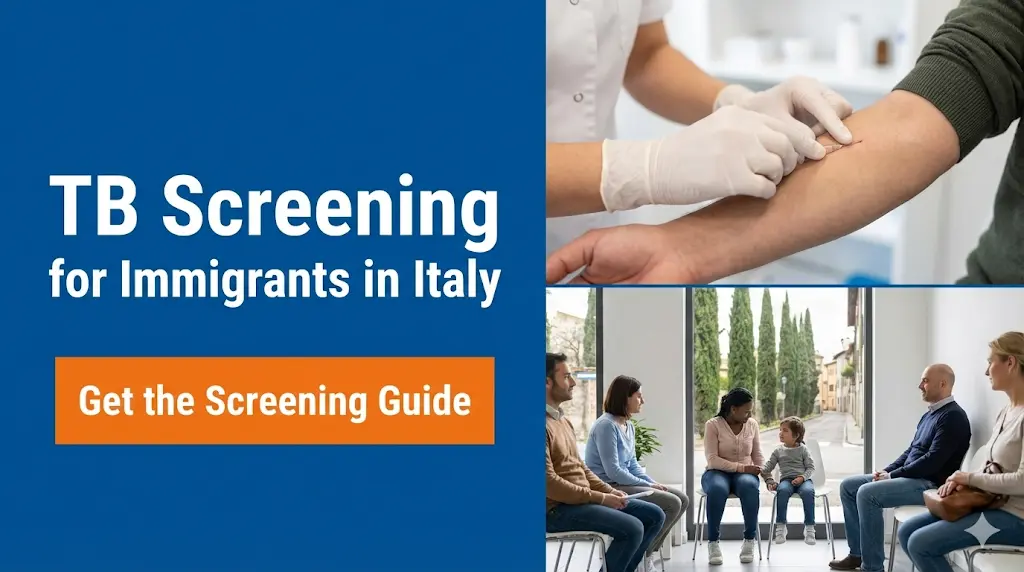
The most traditional method for detecting TB infection is the Tuberculin Skin Test (TST), widely known in Italy as the Test di Mantoux. A healthcare professional injects a tiny amount of a fluid called tuberculin just beneath the skin on the inside of your forearm. You must return to the clinic 48 to 72 hours later so the doctor can measure the physical reaction (a raised, hard bump). A positive result indicates that you have been infected with TB bacteria, though it cannot distinguish between latent infection and active disease.
Interferon Gamma Release Assays (IGRA)
In modern Italian hospitals and occupational health clinics, the IGRA blood test (often referred to by the brand name QuantiFERON) is becoming the preferred screening method, particularly for foreign-born individuals. The IGRA requires a simple blood draw. It is far more specific than the Mantoux test and is completely unaffected by previous BCG (Bacille Calmette-Guérin) vaccinations. Many expats from countries where the BCG vaccine is standard in childhood will test “false positive” on a skin test, making the IGRA blood test the most accurate and stress-free option.
Chest Radiographs and Sputum Cultures
If your Mantoux or IGRA test returns a positive result, indicating that TB bacteria are present in your body, the Italian doctor is legally required to determine if the disease is active. You will be immediately scheduled for a chest X-ray (radiografia del torace). If the X-ray shows abnormalities indicative of TB, you will be asked to provide sputum samples (phlegm coughed up from the lungs). The laboratory will culture these samples to definitively diagnose active pulmonary tuberculosis and determine which specific antibiotics will effectively kill the bacterial strain.
Accessing TB Care Through the Italian Healthcare System (SSN)
One of the greatest strengths of the Italian Republic is its commitment to universal healthcare. Article 32 of the Italian Constitution defines health as a fundamental right of the individual and in the interest of the collective community. Because tuberculosis is a highly infectious public health threat, access to diagnosis and treatment is legally guaranteed and provided entirely free of charge to everyone on Italian soil.
Documented Expats and the Tessera Sanitaria
If you are a legally residing expatriate, you will integrate into the public health system and receive your official health card. For detailed instructions on this bureaucratic process, consult our resource on Obtaining the Italian Health Card (Tessera Sanitaria). With this card, if you are diagnosed with Latent TB Infection or Active TB Disease, all your specialist consultations, diagnostic imaging, and prolonged antibiotic therapies (which typically last between six and nine months) are fully covered by the Servizio Sanitario Nazionale (SSN) without requiring expensive out-of-pocket co-payments.
Undocumented Migrants and the STP Code
Italy’s approach to public health correctly recognizes that infectious diseases do not check passports or visas. For irregular migrants, individuals who have overstayed their visas, or newly arrived immigrants who have not yet secured their residency documents, accessing medical care is protected through the STP code (Straniero Temporaneamente Presente – Temporarily Present Foreigner).
An undocumented individual can visit any local health authority (ASL) or public hospital and request an STP card. It is completely free and valid for six months (and is renewable). Crucially, the STP code guarantees access to urgent and essential medical care, which explicitly includes the diagnosis, treatment, and ongoing medication for communicable diseases like tuberculosis. Furthermore, Italian law strictly prohibits healthcare workers from reporting undocumented patients to the immigration police (Questura). This ensures that fear of deportation does not deter individuals from seeking life-saving, outbreak-preventing medical care. If you want to understand the broader structure of this incredible system, you can review Healthcare in Italy: An Expats’ Guide.
| Immigration Status | Pre-Arrival Visa TB Test Required? | In-Country Screening Trigger | Healthcare Access Method |
| Standard Expatriate / Digital Nomad | No | Occupational medicine (if working in healthcare/education) | Tessera Sanitaria (SSN) |
| International Student | No | University clinical placements (medical students) | Voluntary SSN Registration / Private Insurance |
| Asylum Seeker / Refugee | No | Mandatory upon arrival at regional reception hubs | Tessera Sanitaria / specialized SSN integration |
| Undocumented Migrant | No | Voluntary hospital visits / Outreach programs | STP Code (Straniero Temporaneamente Presente) |
Debunking Myths: Immigration and Tuberculosis Rates in Italy
In recent years, political discourse across Europe has frequently attempted to link the arrival of immigrants directly to outbreaks of infectious diseases. In Italy, sensationalist media headlines have occasionally claimed that immigration has “brought tuberculosis back” to the peninsula. It is important for expatriates to separate political rhetoric from scientific fact.
The Italian Ministry of Health and the Istituto Superiore di Sanità (National Institute of Health) have repeatedly debunked these claims with hard data. Comprehensive studies tracking thousands of migrants arriving on Italian coasts reveal that they almost never present with active, contagious tuberculosis upon arrival. The people undertaking these arduous journeys are generally young and physically resilient.
The reality of TB in the immigrant population is related to the reactivation of latent infections. A migrant may harbor a latent, dormant TB infection from their country of origin. The profound physical stress of the migration journey, combined with malnutrition, psychological trauma, and the overcrowded, poor living conditions occasionally found in temporary reception centers, can cause their immune system to weaken. This immune suppression allows the dormant bacteria to reactivate into active TB disease after they have been living in Italy for several months or years. The Italian medical strategy is therefore focused not on border closures, but on robust social integration, improving living conditions, and providing rapid medical intervention to prevent this reactivation.
Legal Rights and Confidentiality Regarding Infectious Diseases
Facing a tuberculosis diagnosis in a foreign country can be terrifying, and expatriates often worry about the social and legal ramifications. Italian medical law provides ironclad protections regarding patient confidentiality.
If you are diagnosed with TB, your doctor is required to report the case to the regional health authorities for epidemiological tracking and to initiate contact tracing (testing your family and close colleagues to ensure the bacteria hasn’t spread). However, this data is strictly anonymized. Your employer cannot legally fire you for contracting tuberculosis. If you require medical leave to isolate and begin treatment until you are no longer contagious, you are protected by Italian sick leave laws (malattia), which guarantee your job security and provide financial compensation through the national social security institute (INPS) during your recovery.
Step-by-Step: What to Do If You Suspect You Have TB in Italy
If you develop a persistent cough that lasts for more than three weeks, unexplained weight loss, and severe night sweats while living in Italy, you must act responsibly and seek medical attention immediately.
- Contact Your General Practitioner: Book an appointment with your assigned Medico di Base. Explain your symptoms clearly. If you require linguistic assistance, do not hesitate to ask a bilingual friend to accompany you.
- Use Emergency Services if Necessary: If you are coughing up blood or experiencing severe chest pain and difficulty breathing, do not wait for a doctor’s appointment. Go immediately to the nearest hospital emergency room. For detailed information on navigating these urgent situations, refer to our guide on Emergency Medical Services in Italy: 112 and Hospitals.
- Follow the Specialist Protocol: You will be referred to the Infectious Disease department (Reparto di Malattie Infettive) or a specialized pneumology clinic.
- Adhere to Therapy: If diagnosed, you must take your prescribed antibiotics exactly as directed, every single day, for the entire duration of the treatment plan, even after you feel better. Stopping early can lead to deadly drug-resistant TB.
Conclusion
Understanding the medical and bureaucratic landscape of a new country is a hallmark of a well-prepared expatriate. While tuberculosis is a serious global health issue, the Italian approach to TB screening and treatment is a testament to the country’s profound dedication to public health, human rights, and social solidarity.
By eliminating stressful pre-departure visa screening mandates for standard expats, and instead focusing immense resources on localized occupational health checks and comprehensive care for vulnerable migrant populations, Italy effectively protects its residents. Whether you are an expat taking a routine IGRA blood test for a new teaching job, or a resident navigating the magnificent but complex SSN healthcare framework, you can take comfort in knowing that Italy provides deeply confidential, entirely free, and highly advanced medical care to everyone who needs it. Embrace your Italian journey with the peace of mind that your health and safety are supported by one of the finest medical systems in the world.
References
Primary sources (official)
- Ministero della Salute (Italian Ministry of Health): The central governmental portal providing epidemiological data on tuberculosis, national prevention guidelines, and occupational health screening requirements. https://www.salute.gov.it/
- EpiCentro – Istituto Superiore di Sanità: The national epidemiological portal providing comprehensive reports on the health screening of newly arrived migrants and the integration of infectious disease control in Italy. https://www.epicentro.iss.it/
Other helpful sources
- European Centre for Disease Prevention and Control (ECDC): European guidelines on the management of tuberculosis screening for migrant populations. https://www.ecdc.europa.eu/
- Expatica Italy: Practical guides for foreign residents navigating the Italian healthcare system, occupational medicine requirements, and securing the Tessera Sanitaria. https://www.expatica.com/it/healthcare/
Disclaimer
The information provided in this article is intended for general educational and informational purposes only and does not constitute official medical, legal, or immigration advice. Healthcare laws, visa requirements, and occupational screening mandates in Italy are subject to frequent legislative updates. Always consult directly with the official Italian Embassy or Consulate in your home country regarding visa requirements. If you are experiencing symptoms of a medical emergency or suspect you have an infectious disease, please seek immediate assistance from a licensed Italian medical professional or dial the universal European emergency number 112.