Sorting Trash in Italy: Glass, Plastic, Organics
Staring at a greasy pizza box at midnight, completely paralyzed by the fear of a municipal fine, is a universal expat rite of passage. I once received a terrifying sixty-euro penalty because I threw a receipt into the paper bin instead of general waste. This guide decodes Italy’s ruthless recycling rules so you can confidently throw away your garbage.
Disclosure: This post may contain affiliate links. We may earn a commission at no extra cost to you if you make a purchase through these links. Read full disclosure.
The Shock of the Raccolta Differenziata
Cracking the Color Codes and Rules
When you move to Italy, you quickly realize that throwing things away is an Olympic sport. The national recycling system, known as raccolta differenziata, is heavily localized. The Italian Ministry of the Environment mandates strict recycling quotas, but they leave the execution up to individual municipalities (Comuni). This means the rules in Rome can be completely different from the rules in Milan, Florence, or a small Tuscan village.
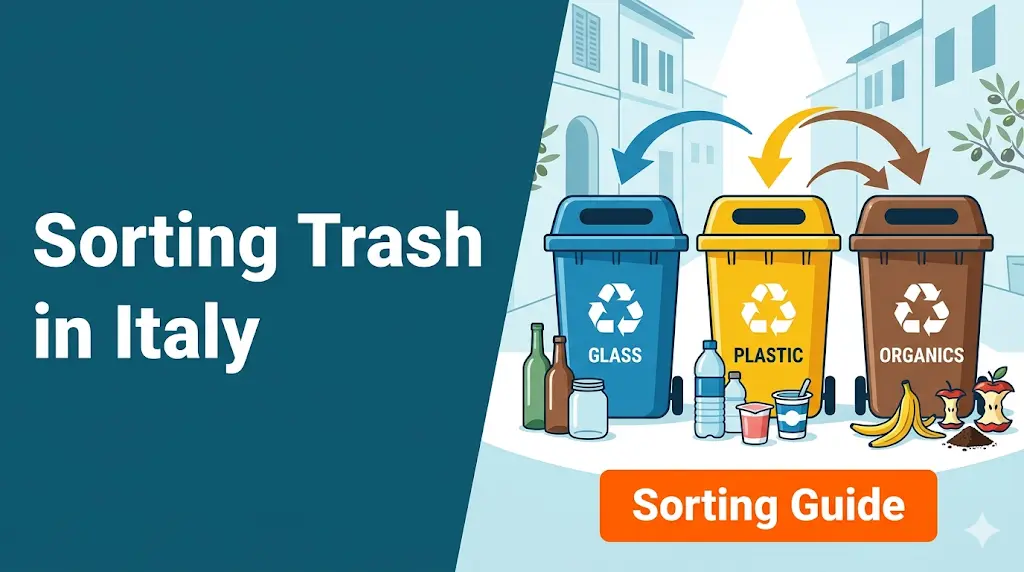
In Italy, waste is sorted into separate bins: glass, plastic and metals, organic waste, and general trash. Glass goes into designated containers, plastics into recycling bins, and food waste into organic bins. Rules vary by municipality, so check local guidelines carefully to avoid fines and ensure proper recycling practices.
Your first hurdle is figuring out which color corresponds to which type of waste. While the national packaging consortium (CONAI) has pushed for standardization (e.g., yellow for plastic, blue for paper, green for glass, brown for organic, and grey for general waste), many cities still use their own legacy color codes. Before you throw anything away, you must verify the rules of your specific town. Understanding this localized system is deeply connected to your initial bureaucratic setup, an administrative reality we cover in Registering for Trash Collection with Comune.
If you throw the wrong item into the wrong bin, the garbage collectors (netturbini) will literally refuse to empty it. They will slap a bright red “Non Conforme” (Non-Compliant) sticker on your bin, leaving your trash to rot on the street until you dig through it, fix your mistake, and wait for the next cycle.
The Door to Door Schedule (Porta a Porta)
In most modernized Italian cities and towns, waste collection is strictly porta a porta (door-to-door). You do not have a massive communal dumpster on your street corner where you can throw everything at once. Instead, the Comune issues a highly specific weekly calendar. For example, plastic might only be collected on Tuesday mornings, and paper on Thursday evenings.
If you miss the collection window, you are forced to hoard that trash inside your apartment for another week. If you are struggling to understand these strict timelines, you must review the protocols detailed in Managing Waste and Recycling Schedules in Italy. When I first arrived, I was constantly checking the municipal PDF schedules on my phone while standing on the curb. I highly recommend downloading a data eSIM from Airalo before you move. Keeping Airalo active on your smartphone ensures you have instant, high-speed mobile internet to check the Comune website or translate collection rules on the fly, saving you from leaving the wrong bin on the sidewalk and angering your neighbors.
Navigating the Tricky Trash Categories
Organics and the Greasy Pizza Box Rule
Organic waste (Umido or Organico) is heavily regulated. You cannot use standard plastic grocery bags to line your kitchen compost bin; you must use certified sacchetti biodegradabili (biodegradable bags). If you use a regular plastic bag for food scraps, the facility cannot process it, and you will be fined.
The ultimate test of Italian recycling is the pizza box. Expats instinctively throw the entire cardboard box into the paper bin (Carta e Cartone). This is a massive mistake. If the cardboard is stained with grease or melted cheese, it is contaminated and cannot be recycled as paper. You must physically tear the box in half. The clean lid goes into the paper bin, while the greasy base must be torn into smaller pieces and thrown into the organic bin (or general waste, depending on your specific town’s rules). Managing this level of detail requires serious kitchen organization, a spatial challenge that is amplified by the realities discussed in Typical Furnishing Level of Italian Homes.
Plastics, Metals, and Glass Quirks
The plastic bin (Plastica) is strictly for packaging materials (water bottles, food trays, wrappers). Hard plastics, like a broken plastic chair, an old Tupperware container, or a child’s toy, are not considered packaging and must go to the local ecological island (isola ecologica). In many towns, metal (aluminum cans, tin foil) goes into the same bag as plastic, but in others, it goes with glass.
Glass (Vetro) is exclusively for glass bottles and jars. Crystal glasses, Pyrex baking dishes, and broken ceramic plates cannot go into the glass bin because their melting temperatures are different; they belong in general waste. Finally, cash register receipts are made of thermal paper and cannot be recycled with normal paper; they must also go into general waste.
| Waste Category (Italian) | English Equivalent | What Goes In | Common Mistakes (Do NOT put in) |
| Umido / Organico | Organic / Food Scraps | Fruit peels, coffee grounds, greasy pizza boxes. | Standard plastic bags, liquids. |
| Carta e Cartone | Paper & Cardboard | Newspapers, clean boxes, paper packaging. | Receipts, greasy paper, juice cartons (often goes with plastic). |
| Plastica e Metalli | Plastic & Metal | Water bottles, food trays, aluminum cans, foil. | Hard plastic toys, dirty containers. |
| Vetro | Glass | Glass bottles, food jars. | Crystal, ceramics, Pyrex, mirrors. |
| Secco / Indifferenziato | General / Non-Recyclable | Diapers, receipts, broken ceramics, vacuum dust. | Anything that can be recycled elsewhere. |
Managing Fines and Tiny Kitchens
Microchips and Condominio Wars
Italy takes waste enforcement very seriously. Many municipalities now issue microchipped bags or bins with barcodes tied directly to your municipal tax profile. Every time you throw away general waste (Secco), a scanner records it. If you throw recyclables into the general waste to avoid sorting them, the municipal police will literally open your trash bags, find an old envelope with your name on it, and mail you a fine ranging from €50 to €300.
If you live in an apartment building, the fines can be communal. If one tenant ruins the shared paper bin by throwing a greasy pizza box inside, the city will fine the entire condominio, leading to furious passive-aggressive notes in the lobby. Handling these tense building dynamics is a major part of Common Tenant vs Landlord Issues in Italy. If you are trying to split communal fines fairly with roommates, mastering local payment methods is essential, which we cover heavily in Using Mobile Payment Apps Satispay etc in Italy.
Expat Solutions for Organizing Space
Sorting waste into five different categories requires five different bins, which is a logistical nightmare in a tiny, historic Italian kitchen. When I moved into my first flat, I spent days tripping over plastic bags. Instead of walking miles to a massive suburban hypermarket to find the right bins, I quickly turned to Amazon Italy.
You can order vertical, stackable recycling stations directly from Amazon Italy that are specifically designed to fit under compact European sinks. Having these space-saving bins delivered straight to your door via Amazon Italy makes adhering to the complex daily collection schedules incredibly simple and hygienic. Furthermore, you can use Amazon Italy to buy the mandatory biodegradable organic bags in bulk, ensuring you are never caught empty-handed and forced to break the rules.
If the thought of setting up these complicated utilities and trash taxes is overwhelming, your choice of initial housing is critical. To bypass the immediate stress of municipal trash registration, veteran expats rely on Spotahome. By booking a mid-term apartment through Spotahome, you are securing a verified property where the landlord often maintains the trash taxes in their name and already has the correct bins and sorting rules set up in the kitchen. Using Spotahome provides a massive administrative shield, giving you a functional basecamp while you figure out the neighborhood rules, effectively saving you from the chaotic miscommunications highlighted in Avoiding Rental Scams on Italian Housing Websites. Once you are comfortable and have mastered Navigating Italian Bureaucracy Comune and Prefettura, you can tackle the heavy lifting of Setting Up Utilities in Italy and registering for your own bins with total confidence.
References
Primary sources (official)
- Ministero dell’Ambiente e della Sicurezza Energetica – Riciclaggio e gestione rifiuti – https://www.mase.gov.it/portale/riciclaggio-e-gestione-rifiuti
- CONAI (Consorzio Nazionale Imballaggi) – Struttura e regole di riciclo – https://www.conai.org/
Other helpful sources
- Junker App – The leading digital waste sorting assistant for municipalities in Italy – https://junker.app/
- The Local Italy – How to recycle and throw out rubbish in Italy – https://www.thelocal.it/
Disclaimer
The information provided in this article is for educational and informational purposes only. Waste management rules, color codes for bins, and the scheduling of porta a porta (door-to-door) collection are strictly governed by individual municipal ordinances (regolamenti comunali) and local waste management authorities (such as AMA in Rome or AMSA in Milan). Failure to properly sort waste (raccolta differenziata) can result in significant administrative fines. Always check the official website of your specific Comune or download a localized waste-sorting app (like Junker) to verify the exact rules for your residential street.