Shipping Bicycles, Skis, and Outdoor Gear to Italy
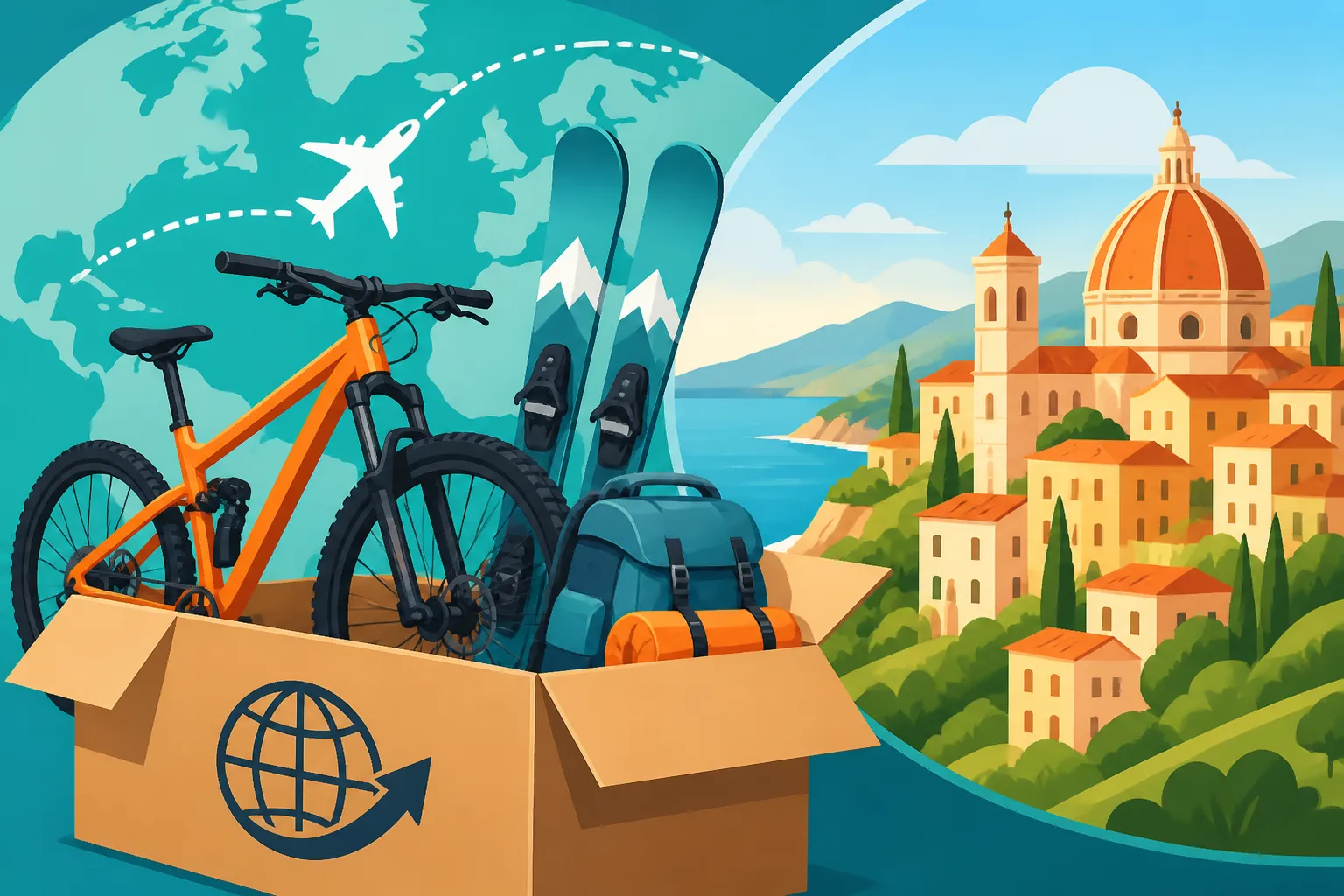
I’ve watched friends land in Milan with everything sorted except the one thing they cared about most. The carbon road bike sat in a warehouse in Genoa for weeks, or the skis arrived with a cracked base. Getting bicycles, skis, and outdoor gear to Italy is its own logistics puzzle. This guide covers how to pack, ship, declare, and receive it all without the heartbreak.
Disclosure: This post may contain affiliate links. We may earn a commission at no extra cost to you if you make a purchase through these links. Read full disclosure.
Why Outdoor Gear Is the Trickiest Part of an Italy Move
Moving a sofa is simple. It’s a box with legs. Your outdoor gear is different. The bicycle that cost more than your first car, the touring skis tuned for Dolomites powder, the climbing rack, the kayak, the paddleboard: these are oddly shaped, fragile in specific places, and often worth more than the furniture combined. They’re also the things you’ll want first. Plenty of people move to Italy partly for the mountains, the lakes, and the Ligurian trails, and nobody wants to spend the first Sunday on Lake Garda without the bike.
I learned this the hard way on my first move. I treated my mountain bike like any other item on the inventory, and it ended up wedged between a wardrobe and a box of books. It arrived in Bologna with a bent rear derailleur hanger and a scratched top tube. Nothing catastrophic, but enough to make me want to cry in the stairwell of my new building. The second time, I planned the gear separately. It made all the difference.
The Dimensions and Fragility Problem
Outdoor gear breaks every rule removal crews use to pack a truck efficiently. Skis are long and thin, so they get placed in gaps where heavier items can shift onto them. Bicycles have protruding parts: derailleurs, disc rotors, brake levers, and handlebars snag and bend under pressure. Carbon frames can crack internally from a point load, with no visible damage, which is the worst kind of damage because you only find out on a fast descent.
Water sports gear has its own issues. Hard-shell kayaks and rigid paddleboards take up a lot of volume, and removal companies price by volume. A single board can noticeably change your quote. Inflatable boards are far easier, but the pump, fins, and paddle still need protecting.
Then there’s camping and climbing kit: stoves, fuel bottles, ice axes, crampons, avalanche probes, and ropes. Most of it packs small, but some of it raises flags with carriers and customs, which brings us to the paperwork.
Customs, Batteries, and the Paperwork Nobody Warns You About
How customs treats your gear depends heavily on where you’re moving from. Coming from another EU country, your belongings generally move freely with no customs declaration at the border. Coming from the UK, the US, Switzerland, Australia, or anywhere else outside the EU, your gear is part of a customs import, and how it’s classified matters. The full picture is in EU vs Non-EU Moves to Italy: Why Customs Treats Them Completely Differently, but here’s what it means for outdoor equipment.
Non-EU movers can usually bring personal belongings into Italy without paying duty, as long as the goods are genuinely used and have been in your possession for a qualifying period before the move. A brand-new pair of skis bought the week before you leave, still with the shop tags on, looks like goods you’re importing to resell, not personal effects. Keep receipts, take photos of your gear in use, and don’t leave obviously new items in their retail packaging. The details of the exemption are covered in Trasferimento di Residenza: The Italian Duty Exemption for Personal Effects, and the rules on how long you need to have owned things are in The Twelve-Month Ownership Rule: Proving Your Goods Qualify for Exemption.
E-bikes deserve their own warning. Lithium batteries are classed as dangerous goods for transport, and every carrier, shipping line, and airline has its own rules about whether they’ll take them, how they must be packed, and whether the battery must travel separately. Some removal companies won’t put an e-bike battery in a sea container at all. Others will with specific packaging and documentation. Ask about this directly before you accept any quote. Don’t assume it’s fine because the bike itself is fine.
Fuel canisters for camping stoves, gas cartridges, and avalanche airbag packs with compressed gas cylinders are routinely refused. Plan to buy fuel in Italy instead. Every outdoor shop from Decathlon branches to small mountain stores in Bormio sells it. Bladed and pointed tools such as ice axes, multi-tools, and large knives also need thought. See Shipping Tools, Knives, and Sports Equipment to Italy: Legal Limits for what’s allowed, and Prohibited and Restricted Items in a Move to Italy: What Gets Seized for the broader list of things that shouldn’t go in the container.
Your Shipping Options Compared
There’s no single right way to get gear to Italy. The best method depends on how much you have, how valuable it is, how soon you need it, and whether the rest of your household is moving too. Here are the three main routes.
Shipping Gear Inside Your Household Removal
For most people moving a full home, the simplest answer is to include the gear in the main removal. That might be a road freight truck from Germany or France, a shared groupage load, or a sea container from North America arriving at Genoa, Livorno, or Naples. The crew packs it, it’s on the inventory, and it’s covered by the same insurance policy as everything else.
The advantages are real. One contract, one delivery, one point of contact if something goes wrong. Professional international movers handle bikes and skis all the time, and the good ones have proper bike boxes, ski tubes, and padding. If you’re moving a full household anyway, the extra cost of adding gear is often modest compared with shipping it separately.
The drawbacks are timing and control. A sea container can take a long time door to door, and groupage loads wait until the truck or container is full before leaving. If you’re arriving in October and want to ski in December, that may be fine. If you’re arriving in May and want to ride straight away, it may not. You also depend entirely on the crew’s packing care. Ask how they handle bikes specifically, because “we’ll wrap it in a blanket” is not a good answer for a carbon frame. If you’re unsure whether to share a load or book your own, Full Load vs Groupage to Italy: Cost Break-Even by Cubic Metre walks through the numbers.
Specialist Bike and Ski Couriers
Some couriers and luggage-forwarding services specialize in sports equipment. You pack your bike in a box or hard case, or your skis in a ski bag, and they collect it and deliver it door to door, usually much faster than a removal. They’re popular with people who want their bike waiting when they arrive, and with seasonal workers heading to resorts like Courmayeur, Cervinia, or Madonna di Campiglio.
The trade-off is that you do all the packing, and the courier’s liability cover may be limited unless you buy extra protection. Read the terms on fragile items and carbon frames carefully. Some exclude cosmetic damage, some exclude damage where the packaging was judged inadequate, and some exclude e-bikes altogether. Sending from outside the EU, you’ll also handle customs paperwork yourself, or at least supply the information for it.
Couriers work best for one or two bikes, a single ski bag, or a small group of boxes. Once you’re sending a whole garage of kit, the per-item cost adds up quickly and the household removal usually wins. For a broader comparison of small-volume options, see Excess Baggage vs Air Freight vs Courier: Sending 50-200kg to Italy.
Flying It as Sports Baggage
Many airlines accept bikes and skis as checked sports equipment for an extra fee. If you’re flying into Milan Malpensa, Bergamo, Venice, Turin, or Verona, all common gateways to the Alps and lakes, this can be the fastest option. Your gear lands when you do.
Baggage handling, though, is not kind. Ski bags get thrown, bike boxes get dropped on their ends, and the airline’s liability for damaged sports equipment is usually limited. A hard bike case and a padded double ski bag help a lot. Check the airline’s own page for current fees, size limits, and battery rules before you book, because they differ widely and change. E-bike batteries are generally not accepted in checked baggage, so e-bike owners usually rule this option out.
Once you’re settled, getting your gear around the country is another subject. For bikes and skis on Italian trains and buses, see Travelling With a Bike, Surfboard, or Skis in Italy: Transport Rules.
| Method | Best for | Speed | Who packs | Main risk | E-bike friendly |
|---|---|---|---|---|---|
| Household removal | Full home moves with lots of gear | Slowest, especially by sea | Professional crew | Delay, poor packing by careless crews | Depends on the company, ask first |
| Specialist sports courier | One or two bikes, a ski bag | Fast | You | Limited liability, customs paperwork | Often restricted |
| Airline sports baggage | Gear you need on arrival | Fastest | You | Rough handling, low airline liability | Battery usually refused |
| Separate small shipment or freight | Bulky kit like kayaks or boards | Moderate | You or the forwarder | Volume pricing, customs paperwork | Case by case |
Using Sirelo to Find a Removal Company That Handles Gear Properly
If your bikes and skis are going with the rest of your household, which for most families and long-term movers they should, the biggest decision is which removal company to trust. This is where Sirelo becomes the most useful tool you can have. When I moved my second time, I used it to compare international movers side by side instead of ringing around one company at a time and getting quotes in completely different formats.
How the Comparison Works
Sirelo is a moving comparison platform. You fill in one request with your origin, your destination in Italy, your rough moving date, and what you’re taking, and it matches you with international removal companies that cover your route. Those companies then send you quotes directly. You can also read reviews from other customers, which for gear-heavy moves is gold. A review that says “they boxed my two road bikes perfectly” tells you more than any brochure.
The real benefit is time and leverage. Instead of spending a week explaining your move to company after company, you describe it once. Instead of one quote that you can’t judge, you get several you can put side by side. When one mover quotes far less than the others, it’s a sign to ask what’s missing. When one mover clearly mentions bike boxes and ski protection while the others don’t, that’s a sign of who knows what they’re doing. Check Sirelo’s own site for how the service works on your specific route and what the request involves.
What to Write in Your Request
The quality of the quotes you get depends on the quality of the information you give. Movers can only price what they know about, so be specific about your gear. Vague requests produce vague quotes, followed by a surprise surcharge on moving day when the crew discovers two kayaks in the garage.
When you submit your Sirelo request, include the following:
- List every bicycle separately, noting frame material and whether it’s carbon, aluminium, or steel, and flag any e-bikes clearly with the battery type.
- List skis and snowboards by number of pairs and whether you’ll provide bags or need the mover to supply protection.
- Give approximate dimensions for anything bulky, such as kayaks, rigid paddleboards, roof boxes, and bike trailers.
- Mention items that may be restricted, like stove fuel, gas cylinders, avalanche airbag packs, and ice axes, so the mover can tell you upfront what they won’t carry.
- Note whether you want the crew to pack the gear or whether you’ll pack it yourself, because this affects both price and insurance cover.
- Describe access at your Italian address, including floor level, whether there’s a lift, and whether the street is in a ZTL or historic centre.
- Say whether any gear needs to go into storage rather than straight to your new home.
That last point matters more than you’d think. Many people arrive in Italy and rent short-term while they look for a permanent place, and a ski quiver doesn’t fit in a furnished one-bedroom in Trastevere. More on storage below.
Reading the Quotes That Come Back
When the quotes arrive through Sirelo, don’t just look at the total. Put them in a simple comparison and go through them line by line. The things to look for with outdoor gear are specific.
First, check whether bikes and skis are named in the inventory or lumped into a general volume estimate. If they’re named, the company has priced them properly. If they’re not, ask. Second, check what packing materials are included. A good mover will mention bike boxes or crates, ski tubes, and extra padding for fragile frames. Third, check the insurance. Is it valued per item or by total shipment? Does it cover damage to items you packed yourself? Are carbon frames excluded or capped? Moving Insurance for Shipments to Italy: Coverage, Valuation, and Claims explains how these policies work, and Comparing International Removal Quotes for Italy: Line Items That Hide Costs covers the hidden surcharges that turn up in Italian deliveries.
Fourth, look at how each company handles e-bike batteries. A clear written answer, whether yes with conditions or no, is a good sign. A non-answer is not. Finally, read the reviews on Sirelo for each shortlisted company and search them for words like “bike”, “skis”, or “damaged”. Fifteen minutes of reading can save you from the one mover whose crew treats a carbon frame like a broom handle.
Once you’ve chosen, get the gear-specific details confirmed in writing. If the quote says your road bike will be crated, the paperwork should say so. If anything goes wrong, that line is what your claim depends on.
Packing, Delivery, and Storage Once You Arrive
Whichever method you choose, how the gear is prepared and received determines whether it arrives ready to ride or ready for the bike shop. Even with a professional crew, a bit of preparation on your side goes a long way.
Packing Bikes, Skis, and Bulky Gear Step by Step
If you’re packing yourself, or preparing items before the crew arrives, here’s the process I use now. It works for road, gravel, and mountain bikes alike.
- Clean everything thoroughly. Mud and soil on tyres, boots, tents, and bike frames can cause problems with biosecurity or customs inspections on some routes, and dirt hides damage you’ll want to have photographed.
- Photograph each item from several angles, with close-ups of frames, wheels, ski bases, and edges. These photos are your evidence if you need to claim.
- Remove the pedals, lower or remove the seatpost, and turn or remove the handlebars so the bike sits flat.
- Remove the rear derailleur or at least protect it, because it’s the part most likely to bend. Zip-tie it to the chainstay inside padding.
- Put plastic spacers between disc brake pads and between fork dropouts so nothing gets compressed during transit.
- Deflate tyres partially, wrap the frame tubes in pipe insulation or foam, and pack the bike in a proper bike box or hard case.
- Remove e-bike batteries and pack them as the carrier instructs. Never ship a battery the carrier hasn’t explicitly approved.
- For skis, strap the pairs base to base with protective strips, pad the tips and tails, and use a padded bag. Pack boots separately in a sturdy box.
- Empty and dry tents, sleeping bags, and wetsuits completely before packing, since damp kit in a sealed container for weeks produces mould.
- Bag small parts like pedals, bolts, quick-release skewers, and ski binding tools, label them, and tape the bag inside the box so nothing goes missing.
Bike shops in your home country will often give away the cardboard boxes new bikes arrive in, which are perfect for shipping. In Italy, local shops are equally helpful when you need them for a trip later.
Delivery Day at an Italian Address
Italian delivery days have their own special flavour of chaos. Historic centres in cities like Florence, Rome, and Bologna sit inside ZTL zones where trucks need permits. Streets in Ligurian towns and hill villages can be too narrow for anything bigger than a van. Many older buildings have tiny lifts, sometimes squeezed into the stairwell decades after construction, that fit a person and a suitcase but not a bike box standing upright, and certainly not a pair of long skis.
This is where accurate information in your quote request pays off. A mover who knows the address is a fourth-floor walk-up in Genoa’s centro storico can plan a shuttle van and an extra pair of hands. One who doesn’t will turn up with a full-size truck, find it can’t get in, and charge you for the transfer on the spot. For everything that can go wrong at the door, see Delivery Day in an Italian Building: Narrow Streets, Lifts, and Permits.
When the gear arrives, check it before you sign. Unpack the bike boxes and ski bags there and then if possible, and note any visible damage on the delivery paperwork. Many claims fail because the customer signed “received in good condition” while the boxes were still taped shut. If you can’t open everything, write that the goods were received unchecked. Then check properly within the window your insurance allows and report anything quickly with your before-and-after photos.
Where All That Gear Actually Lives
Here’s the part almost nobody plans for: Italian apartments, especially in cities, are rarely designed for outdoor gear. There’s no garage, no basement workshop, and often no shed. Some buildings have a cantina, a storage cellar in the basement assigned to each flat, which is perfect for skis and camping kit if your rental includes one. Some have a shared courtyard, but the condominio rules may forbid leaving bikes there, and theft of good bikes from courtyards and street racks is a real problem in cities like Milan and Rome.
Many cyclists I know keep their good bike inside the apartment on a wall hook and use a cheaper city bike for errands. Ski owners in Turin or Milan often keep their skis at a ski depot or with a friend in the mountains, especially if they ski every weekend at Sestriere or in the Valtellina. If you’re between homes when the shipment lands, temporary storage is worth arranging before the truck arrives. Storage While You Relocate: Home-Country Units vs Italian Deposito compares keeping things back home with using a local deposito, and you can include storage in your Sirelo request so the movers quote for it alongside delivery.
Timing is the final piece. Gear is one of the last things you pack and one of the first things you want, so build it into the overall plan instead of handling it as an afterthought. The week-by-week sequence in An International Move to Italy: The 12-Week Planning Calendar shows when to book movers, when to sort out paperwork, and when to start dismantling bikes so you’re not doing it at midnight before collection.
| Item | Biggest risk | Key packing step | Ask your mover about |
|---|---|---|---|
| Carbon road or gravel bike | Hidden frame cracks | Hard case or crate, padded tubes | Crating and carbon cover in insurance |
| Mountain bike | Bent derailleur and rotors | Remove derailleur, spacers in brakes | Bike box supply |
| E-bike | Battery refused or mishandled | Remove and pack battery per carrier rules | Written battery policy |
| Skis and snowboards | Base and edge damage | Strap base to base, padded bag | Placement away from heavy items |
| Kayak or rigid board | Volume cost and impact damage | Foam padding, cover | Volume pricing and shuttle access |
| Camping and climbing kit | Restricted items, mould | Remove fuel, dry everything | List of refused items |
If there’s one takeaway from my two moves, it’s this: treat your outdoor gear as its own small project inside the bigger move. Describe it honestly, compare movers who know how to handle it, and get the details in writing. Using Sirelo to put several international removal quotes side by side, with reviews from people who’ve already shipped their bikes and skis, is the quickest way I know to find a company that will get your gear to Italy in one piece. Then you can spend your first free weekend on a trail above Lake Como or a piste in Val Gardena instead of on the phone with a claims department.
Disclaimer
This article is for general informational purposes only and does not constitute professional advice. Laws, prices and regulations vary by location and change over time. Consult a qualified professional for guidance on your specific situation.