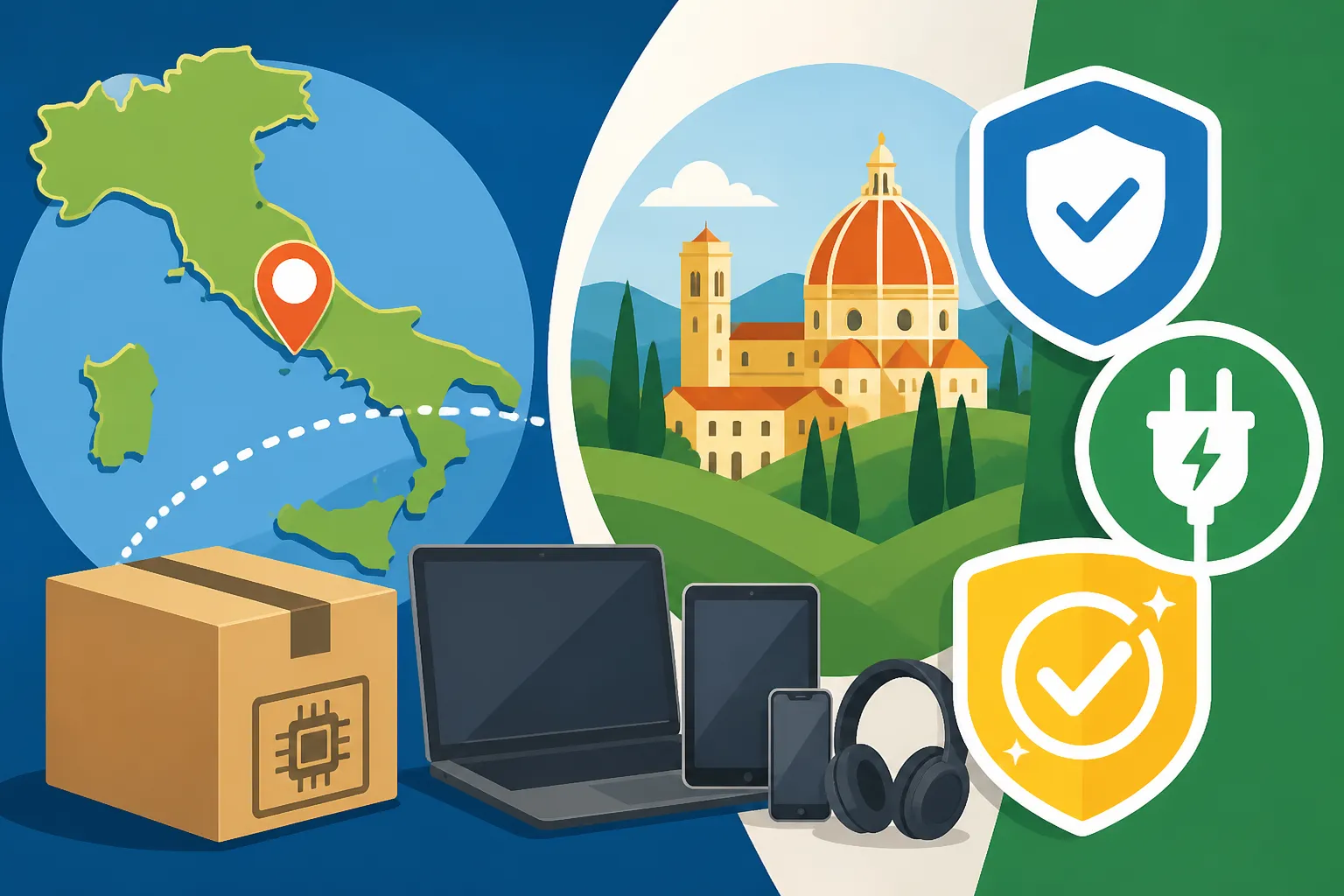
Shipping Electronics to Italy: Warranty, Voltage, and CE Marks
Moving your life to Italy is an adventure, a dream for many, but let's be real – the practicalities can quickly turn into a bureaucratic nightmare, especially when it comes to your beloved electronics. You're probably sitting there wondering, "Can I even plug in my hairdryer? Will my fancy TV become an expensive paperweight? What about those obscure symbols on the back of my laptop?" Believe me, you're not alone. Every expat moving here grapples with this. This comprehensive guide will walk you through the often-confusing world of Italian electrical standards, CE marks, warranties, and help you decide what electronics to bring, what to leave behind, and how a trusted partner like Sirelo can simplify the entire relocation, including the tricky part of shipping your valuable electronics.
Disclosure: This post may contain affiliate links. We may earn a commission at no extra cost to you if you make a purchase through these links. Read full disclosure.
The Italian Electrical Landscape: Understanding Voltage and Plugs
One of the first practical hurdles you'll face when bringing electronics to Italy from outside the European Union is the difference in electrical standards. This isn't just about needing a physical adapter; it's about fundamental differences in how electricity is delivered, and getting it wrong can be costly, or even dangerous.
Voltage and Frequency: The Shocking Truth (or not!)
Italy, like the rest of mainland Europe, operates on a standard voltage of 230V (Volts) and a frequency of 50Hz (Hertz). Now, if you're coming from North America (USA, Canada, Mexico), you're accustomed to 120V and 60Hz. This difference is absolutely crucial. Plugging a 120V device directly into a 230V Italian outlet without a voltage converter is like trying to force a square peg into a round hole, except the peg might explode. Or, at the very least, it will fry your device. The high voltage will overwhelm the internal components, causing irreparable damage, often accompanied by a distinct burning smell and a puff of smoke – not the welcoming aroma you want in your new Italian home.
Conversely, if you bring a 230V European device to a 120V country, it would likely operate at a much lower power, if at all, because it's not receiving enough voltage. It's underpowered and inefficient, but at least less likely to cause damage. The frequency (Hz) is also important, especially for devices with motors or clocks, as it affects their speed and timing. While many modern electronics like laptops and phone chargers are "dual voltage" (meaning they can handle both 100-240V and 50/60Hz, look for labels like "INPUT: 100-240V ~ 50/60Hz"), older appliances, kitchen gadgets, and anything with a heating element or a powerful motor are often single-voltage devices. Always check the label on your device itself, not just the adapter. It’s often in tiny print, but it’s there.
Adapters vs. Converters vs. Transformers: What You Really Need
So, what's the difference between all these gadgets, and which one will save your favorite gadget from an untimely demise? This is where many expats get confused, and honestly, it’s a minefield if you don’t know what you’re looking for.
A simple plug adapter is merely a physical connector that allows your device's plug to fit into an Italian outlet (Type F or L, typically the latter, with three round pins in a row). It does absolutely nothing to change the voltage. Think of it as a translator for physical shapes, not electrical language. You'll need one of these even for your dual-voltage devices. If you plan to rent, make sure to ask your landlord about the type of outlets. Understanding your new dwelling and its Electrical Outlets and Appliances: What to Expect can save you a lot of grief.
A voltage converter is a more complex device that changes the voltage. These are typically smaller, lighter, and designed for low-wattage devices that have heating elements or simple motors, like basic hair dryers (though many modern travel hair dryers are dual voltage now!), curling irons, or shavers. They often work by chopping the voltage waveform, so they're generally not suitable for sophisticated electronics with microprocessors, such as computers, gaming consoles, or anything with a timer. Using a converter with these types of devices can damage them over time due to the altered waveform.
For high-wattage appliances or sensitive electronics not designed for dual voltage, you'll need a step-down transformer. These are significantly heavier, bulkier, and more expensive than converters, as they contain copper coils that genuinely transform the electrical current. If you're bringing a full-sized kitchen mixer, a high-powered vacuum cleaner, or a vintage stereo system from a 120V country, a transformer is likely your only safe bet. However, even with a transformer, the frequency difference (50Hz vs 60Hz) can still impact motor-driven appliances, potentially causing them to run slower or wear out faster. Considering the bulk, cost, and potential for reduced appliance lifespan, many expats decide it's simply not worth bringing these items and instead factor new purchases into their Cost of Living in Italy 2026: Budgeting for Expats.
Navigating CE Marks and Electrical Safety Standards in Italy
Beyond the voltage and plug conundrums, another critical factor for your electronics in Italy is the CE mark. This isn't just a quirky European symbol; it's a declaration of conformity that directly impacts safety, legality, and even your ability to get items serviced.
What is the CE Mark and Why Does it Matter?
The CE mark (which stands for Conformité Européenne or European Conformity) is a mandatory certification mark for products sold within the European Economic Area (EEA). When a product bears the CE mark, the manufacturer declares that the product meets EU safety, health, and environmental protection requirements. For electronics, this means they comply with directives like the Low Voltage Directive, the Electromagnetic Compatibility (EMC) Directive, and the Restriction of Hazardous Substances (RoHS) Directive. It's essentially Europe's stamp of approval that an electronic device is safe to use and won't cause interference or harm.
Why is this so crucial for expats? Well, if your electronics, especially larger ones like TVs, refrigerators, or even certain power tools, don't bear the CE mark, they might not be legally compliant for use or sale in Italy. While customs might let your personal, non-CE marked laptop through without a fuss, trying to claim insurance if a non-compliant appliance causes a fire could become a massive headache. Moreover, obtaining repairs for non-CE marked items can be nearly impossible, as Italian repair shops often won't touch them due to liability concerns. It’s a very real scenario that many foreigners only discover after the fact, wishing they’d thought about it before shipping their entire home.
Compliance and Customs: Avoiding Headaches
When your belongings arrive at Italian customs, the presence (or absence) of the CE mark could theoretically cause issues, particularly for brand-new, boxed items that customs might suspect are intended for resale rather than personal use. While personal effects generally have more leniency, any item that clearly doesn't meet EU safety standards might be flagged. This rarely happens for used personal items, but it's a risk you should be aware of, especially if you're importing niche or specialty electronics from outside the EU. For larger-scale moves, consider researching services for Choosing Movers for a Relocation to Italy who can also offer advice on customs declarations for your electronics.
Furthermore, beyond personal safety and customs, there are practical implications. For instance, if you bring a non-CE marked smart TV from the US, you might find that certain apps or digital services aren't fully compatible, or that its internal tuners aren't designed for Italian broadcasting standards. While adapters might solve the plug issue, regional software differences and safety compliance are harder to circumvent. Selling or giving away non-CE marked electronics in Italy can also be problematic due to consumer protection laws, meaning your "hand-me-down" could end up being e-waste rather than a charitable gesture. It’s always best to be informed on general rules and laws, much like learning Italian Customs, Etiquette, and Social Life for daily interactions.
Warranty Woes and Repair Realities for Imported Electronics
So, you've figured out the voltage and the CE mark. But what happens if your cherished imported device decides to conk out? This is where many expats discover another layer of complexity that often tips the scales towards buying new.
International Warranties: A Myth or a Miracle?
Let me tell you, "international warranty" often sounds like a beautiful dream, but in reality, it's more often a myth, especially for major appliances and consumer electronics. Most manufacturer warranties are geographically restricted. That fantastic warranty you got with your new fridge in the US? It's highly unlikely to be honored by the manufacturer's Italian branch. Why? Because different regions have different product models, spare parts, and regulatory requirements (like the CE mark we just talked about). The Italian service center for Brand X might not even stock parts for the US version of your appliance.
This means that if your non-EU device breaks down in Italy, you'll almost certainly be paying for out-of-warranty repairs. And trust me, Italian repair costs can be substantial, often making it more economical to simply buy a new, locally compliant device. Imagine the frustration of having a high-end appliance break down, only to be told by every repair shop that they either can't fix it, or the cost of fixing it outweighs its value. It's enough to make you pull your hair out! Many expats consider these factors when looking into the wider picture of The Ultimate Guide to Renting and Buying a Home in Italy and furnishing their new residences.
The "Buy New" Dilemma vs. Shipping Your Old Tech
This brings us to the ultimate decision point: Is it truly worth shipping your electronics to Italy? For many items, the answer, unfortunately, is often no. The combination of voltage differences, the absence of a CE mark, and invalid warranties creates a compelling argument for a "buy local" strategy for most appliances and certain high-value electronics.
Consider the true cost: the shipping fee itself, the cost of transformers (which can be expensive and cumbersome), the potential for early device failure due to frequency differences, and the certainty of footing the entire repair bill if something goes wrong. When you add all this up, often the price difference between shipping your old appliance and buying a new one in Italy that is designed for 230V, has a CE mark, and comes with a local warranty, becomes negligible. Sometimes, buying new is actually cheaper in the long run, and definitely less stressful.
But don't despair! Planning is key, and this is where a trusted moving partner really shines. Companies found through platforms like Sirelo specialize in international relocations and understand the intricacies of customs declarations, fragile item handling, and coordinating logistics to minimize stress. They can help you make an informed decision by giving you accurate shipping quotes, which you can then weigh against the cost of purchasing new items in Italy.
Making the Smart Choice: What to Ship, What to Sell, What to Buy
Deciding what electronics to bring and what to replace upon arrival can feel overwhelming. Let’s break it down into a practical checklist to help you make informed decisions, ensuring a smoother transition to your Italian home.
Assessing Your Electronics: A Practical Checklist
Before you pack a single box, grab a pen and paper (or your favorite spreadsheet app) and go through your electronics. This isn't just about labeling; it's about making a strategic decision for each item.
| Electronic Item Type | Voltage Compatibility Check (230V) | CE Mark (EU Standard) | Warranty in Italy | Recommendation |
|---|---|---|---|---|
| Laptops/Smartphones/Tablets | Most are dual-voltage (100-240V, 50/60Hz) | Yes, if bought in reputable market | Often international or easily adaptable if within brand's EU network | SHIP: Usually safe with a simple plug adapter. |
| Chargers (USB, camera, etc.) | Most are dual-voltage (100-240V, 50/60Hz) | Yes, if bought in reputable market | N/A (low cost item) | SHIP: Safe with a simple plug adapter. |
| Hair Dryers/Stylers (high wattage) | Check carefully (often single voltage 120V or 230V) | Varies | Unlikely | BUY NEW: High wattage, safety risk with converters, better to buy 230V locally. |
| Kitchen Appliances (blenders, mixers, toasters) | Rarely dual-voltage (often 120V) | Unlikely if non-EU | Unlikely | SELL/DONATE: Purchase new. Cost of transformer/risk not worth it. |
| Coffee Machines | Rarely dual-voltage (often 120V) | Unlikely if non-EU | Unlikely | SELL/DONATE: Purchase new. Italy is coffee capital, plenty of options. |
| Televisions | Often region-specific voltage and tuner standards | Unlikely if non-EU | Unlikely | SELL/DONATE: Tuner incompatibility, heavy, fragile, expensive to ship. Buy new. |
| Gaming Consoles | Often dual-voltage (check power brick) | Check carefully (region-locked content possible) | Unlikely | SHIP (with caution): Voltage usually fine, but region-locked games/DVDs can be an issue. |
| Printers/Scanners | Check carefully (some dual-voltage, some single) | Varies | Unlikely | CONSIDER: If reliable and dual-voltage, ship. Otherwise, buy new. |
| Power Tools | Rarely dual-voltage (often 120V) | Unlikely if non-EU | Unlikely | SELL/DONATE: Safety concerns, transformer cost. Buy new locally. |
| Electric Toothbrushes/Shavers | Often dual-voltage | Varies | Unlikely | SHIP: Usually safe with adapter, charging bases typically flexible. |
| Computers (Desktops) | Check power supply unit (PSU) for 100-240V compatibility | Check carefully | Unlikely | CONSIDER: If PSU is universal, can ship. Monitor may need separate power considerations. |
| Sound Systems/Stereos | Rarely dual-voltage | Unlikely if non-EU | Unlikely | SELL/DONATE: Heavy, bulky, and voltage/frequency issues can degrade audio quality. |
Key takeaway: If an item is dual-voltage (like most laptops, phones, and their chargers) and you're comfortable with a simple plug adapter, go ahead and ship it. For anything with a heating element, a motor, or anything large and heavy, seriously consider the cost and hassle versus buying new in Italy. Remember that a reliable internet connection is crucial for many of these devices, so researching Internet and Mobile Providers in Italy: TIM, Vodafone, and More is a good parallel task.
The Shipping Solution: Partnering with Experts like Sirelo
Once you've made your choices about what to bring, the next step is finding a trustworthy way to get your valuable items to Italy. This isn’t just about putting things in a box; it’s about navigating international logistics, customs, and ensuring your precious belongings arrive safely. This is where a dedicated moving platform like Sirelo becomes an invaluable partner for expats like us.
Partnering with experts like Sirelo is absolutely crucial here. They connect you with a network of reliable international movers who are well-versed in navigating the specific challenges of shipping to Italy, including understanding customs requirements for personal effects, and ensuring your precious cargo—especially delicate electronics—is packed, transported, and delivered with the utmost care. It’s all about minimizing the stress that comes with an international relocation.
By using Sirelo, you can gather multiple competitive quotes from pre-vetted international moving companies. This helps you budget not just for the shipping itself, but also for any new electronics you might decide to purchase upon arrival, allowing for a financially sound decision-making process. Their platform simplifies the comparison of services and costs, and provides access to valuable resources that clarify common expat moving dilemmas, from understanding customs paperwork to advice on packing fragile items like your more robust electronics. For larger shipments, this kind of expert assistance is vital.
So, before you even begin packing, consider exploring the comprehensive moving solutions offered through Sirelo. It’s more than just a moving comparison site; it’s a strategic partner in your new Italian adventure, ensuring that whether you choose to ship your favorite tech or buy new, your relocation is as smooth as possible. Ready to take the guesswork out of your move? Get free quotes from trusted international movers today with Sirelo.
Disclaimer
Please note that while every effort has been made to provide accurate and up-to-date information, electrical standards, customs regulations, and warranty policies can change. This guide is for informational purposes only and does not constitute professional advice. Always verify specific requirements with official sources, manufacturers, and your chosen international moving company before making final decisions about shipping your electronics to Italy.