Maximizing Safety: Smoke Detectors and Alarms in Italian Homes
Staring at the bare ceiling of my new apartment, I realized something terrifying: there was absolutely no smoke detector. I spent my first winter terrified of my ancient gas heater because there wasn’t a single alarm in my Roman flat. This guide explains why Italian homes lack standard fire safety devices, the hidden gas dangers, and how to properly equip your apartment.
Disclosure: This post may contain affiliate links. We may earn a commission at no extra cost to you if you make a purchase through these links. Read full disclosure.
The Shocking Reality of Italian Fire Safety Laws
If you are relocating from North America, the UK, or Northern Europe, you are likely conditioned to expect a hardwired smoke detector in every bedroom and hallway. In Italy, discovering that your newly rented apartment is completely devoid of any fire or gas alarms is a harsh expat initiation.
Residential vs. Commercial Requirements
The Italian legal system approaches fire safety with a distinctly different philosophy than Anglo-Saxon countries. Italian fire prevention laws (such as the historic D.M. 246/1987 and its recent updates) focus heavily on structural and commercial safety. The law mandates strict fire resistance for condominium stairwells, heavy fire doors for underground parking garages, and intense regulations for buildings over 12 to 24 meters high.
However, when it comes to the private interior of a standard residential apartment, there is no national mandate forcing landlords of long-term leases to install smoke or carbon monoxide detectors. While recent laws require these devices for short-term tourist rentals (like weekend Airbnbs), a standard 4+4 long-term lease offers no such protection. It does not matter if you are navigating the Italian visa policy for dual nationals or arriving on a standard work permit; local landlords simply are not legally obligated to provide you with an alarm.
If you are using a platform like Spotahome to secure your initial bridge housing, you might find that some properties offer higher safety standards, as Spotahome properties are geared toward international mid-term tenants. However, once you transition out of a Spotahome rental and sign a permanent, unfurnished lease directly with an Italian landlord, you are entirely responsible for your own safety equipment. Adding “buy alarms” to your Checklist: All You Need Before Moving to Italy is absolutely critical before you spend your first night in a new place.
The Hidden Danger of Older Gas Appliances
The lack of mandatory alarms is particularly terrifying because Italian homes rely heavily on indoor gas appliances. Unlike modern electric heating systems, many Italian apartments utilize an indoor caldaia (gas boiler) mounted directly inside the kitchen or bathroom to provide heating and hot water.
If an older caldaia is poorly ventilated or has not been serviced properly, it can leak carbon monoxide—an odorless, colorless, and lethal gas. Furthermore, many historic city centers or rural homes are not connected to the municipal methane grid. Instead, they rely on a bombola (a heavy liquid petroleum gas cylinder) hidden directly under the kitchen counter to fuel the stove.
Having a tank of explosive gas sitting inches from your oven without a localized alarm is a massive mental hurdle for expats. If you are setting up a remote office under Italy’s new digital residency pilot for expats, you will be spending the vast majority of your time inside this apartment, making it imperative that you proactively mitigate these invisible domestic risks.
Essential Alarms Every Expat Needs to Install
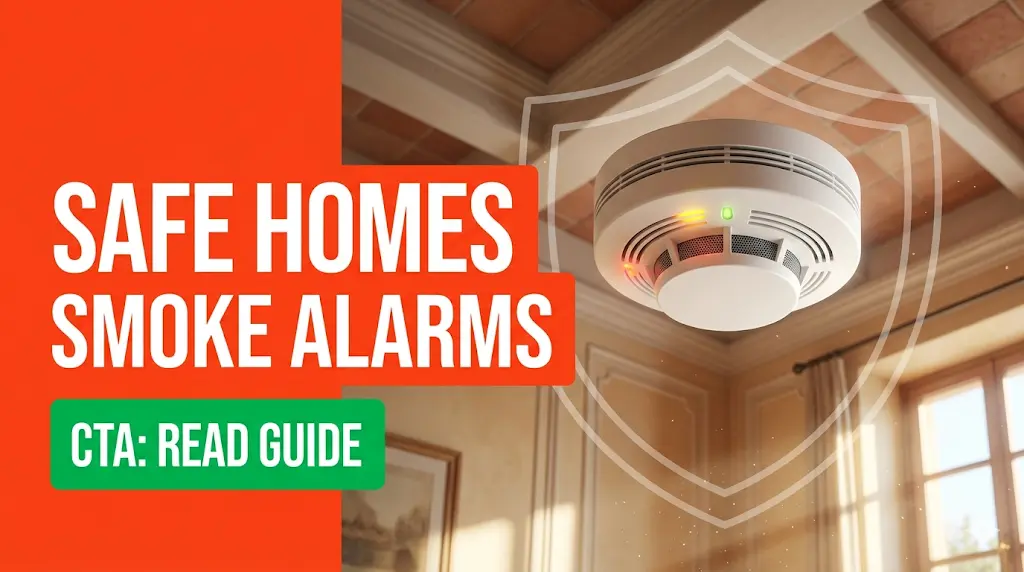
To fully protect yourself and your family, you cannot rely on a single, generic smoke detector. Because Italian homes feature unique hazards, you must install a layered alarm system tailored to the specific threats in your apartment.
Rilevatori di Fumo (Smoke Detectors)
Standard smoke detectors are designed to sense smoldering fires from electrical faults, cooking disasters, or burning furniture. You should install at least one in the hallway outside the bedrooms and one in the main living area. Do not install them directly above the stove in a small Italian kitchen, or you will trigger a false alarm every time you boil pasta water. Look for detectors that comply with the European UNI EN 14604 standard.
Rilevatori di Monossido di Carbonio (CO Alarms)
If your apartment has an indoor caldaia, a gas stove, or a traditional wood-burning fireplace, a carbon monoxide detector is non-negotiable. Because CO is slightly lighter than air and mixes evenly, these should be placed at breathing height (around 1.5 meters off the floor) in the room containing the gas appliance, as well as in the main sleeping areas. If your spouse and children are joining you, satisfying the Conditions for working while on Italy Family Reunification Visa is only the administrative half of the battle; keeping them physically safe from carbon monoxide poisoning is your immediate domestic priority.
Rilevatori di Gas Metano/GPL (Explosive Gas Detectors)
This is the detector most expats forget to buy. A standard smoke or CO detector will not warn you if your stove is leaking explosive gas. You need a dedicated gas leak detector.
- For Methane (City Gas): Methane is lighter than air. The detector must be installed high up on the wall, near the ceiling.
- For GPL/LPG (Bombola Gas): Propane and butane are heavier than air. If your stove uses a bombola, the detector must be installed low to the ground, near the floorboards, where the pooling gas will accumulate first.
| Type of Alarm (Italian) | Primary Hazard Detected | Ideal Installation Location | Warning Sign |
| Rilevatore di Fumo | Fire, burning materials, electrical smoke | Ceiling in hallways and living rooms | Visible smoke, burning smell |
| Rilevatore di Monossido di Carbonio | Carbon Monoxide (Silent killer from bad ventilation) | Breathing level (1.5m), near the caldaia and bedrooms | Odorless, causes dizziness/nausea |
| Rilevatore di Gas Metano | City gas leak (Explosion risk) | High on the wall (30cm from ceiling) in the kitchen | Rotten egg smell |
| Rilevatore di Gas GPL | Bombola tank leak (Explosion risk) | Low on the wall (30cm from floor) near the tank | Rotten egg smell |
How to Equip Your Italian Home Without the Hassle
Walking into a local ferramenta (hardware store) and trying to explain the difference between carbon monoxide and methane gas in broken Italian is a deeply frustrating experience. Local hardware stores often carry very limited stock, and the packaging will be entirely in Italian, making it difficult to verify the device’s technical specifications.
Navigating Local Stores vs. Online Shopping
To bypass the language barrier and secure reliable equipment, the most efficient method is to use Amazon Italy. By searching for these specific alarms on Amazon Italy, you can run the product descriptions through a translator, read reviews from other international buyers, and guarantee that the devices meet rigorous EU safety standards.
Furthermore, when you first move into a new apartment, your name will not immediately be registered on the building’s front intercom. Standard Italian couriers will simply abandon the delivery if they cannot find your nameplate. By ordering your safety equipment through Amazon Italy, you can choose to have the alarms routed directly to a secure, automated locker at a nearby supermarket or post office. This ensures you can pick up your life-saving devices on your own schedule, even while you are still navigating How to change your address with the Questura in Italy to get your name legally added to the doorbell.
Be sure to account for these setup costs when budgeting your relocation; if you are organizing the Acceptable financial proof for Italy self-employment visa, keeping a small cash buffer for domestic safety upgrades is a wise financial move.
Dealing with Landlords and Installation
If you purchase hardwired alarms, you must ask your landlord for permission before altering the apartment’s electrical grid. However, the vast majority of modern, battery-operated smoke and CO detectors can be mounted using heavy-duty 3M adhesive tape, meaning you do not need to drill into the landlord’s ceiling or ask for permission.
Many expats now opt for smart alarms that sync directly to their smartphones, providing alerts even when they are out of the house. Setting these up can be tricky if your home internet is not yet activated. During those crucial first weeks, when you are anxiously tracking the Timelines for picking up your permesso di soggiorno in Italy and lack a local Wi-Fi connection, relying on Airalo is a massive advantage.
By downloading an Airalo eSIM, you guarantee immediate, high-speed cellular data on your phone. You can use Airalo to download the smart home apps, translate the Italian safety manuals in real-time, and configure your new alarms over a cellular hotspot. Staying connected via Airalo prevents you from being left in an unprotected apartment simply because Telecom Italia hasn’t arrived to install your router yet. Finally, once your alarms are active and your home is secure, consider buying a small fireproof safe to store your immigration documents; dealing with the Consequences of losing your permesso di soggiorno card in a domestic fire is a bureaucratic nightmare you must avoid at all costs.
References
Primary sources (official)
- Corpo Nazionale dei Vigili del Fuoco (National Fire Brigade): https://www.vigilfuoco.it/
- Ministero dell’Interno (Ministry of Interior – Domestic Safety Guidelines): https://www.interno.gov.it/
Other helpful sources
- Protezione Civile (Civil Protection Department – Domestic Risks): https://www.protezionecivile.gov.it/
- UNI – Ente Italiano di Normazione (Italian Standardization Body): https://www.uni.com/
Disclaimer
The information provided in this article is for general informational purposes only and does not constitute official safety, legal, or housing advice. Italian fire safety laws, structural mandates for landlords, and the technical requirements for indoor gas appliances are subject to frequent regional updates. Always consult with a certified Italian technician (idraulico or caldaista) to inspect your gas boiler and ensure your safety devices are installed in strict accordance with the manufacturer’s guidelines and local municipal codes.