Italy’s ETIAS implementation date and what travelers need
Arriving at Rome-Fiumicino only to be threatened with deportation because you missed a sudden electronic filing requirement is a terrifying new reality. I remember the sheer panic of almost missing a flight because I misunderstood the sudden rule changes. This guide clarifies the repeatedly delayed ETIAS implementation date for Italy and explains exactly how to prepare your travel documents.
Disclosure: This post may contain affiliate links. We may earn a commission at no extra cost to you if you make a purchase through these links. Read full disclosure.
The Shifting ETIAS Launch Date and Current Timelines
Why the System Was Delayed Again
The European Travel Information and Authorisation System (ETIAS) has become a bureaucratic ghost that continually haunts expat travel plans. Originally slated for release as early as 2021, the system has faced monumental delays due to the massive technological infrastructure required to connect police and immigration databases across 30 European countries. The primary roadblock holding up the ETIAS launch has been the parallel rollout of the Entry/Exit System (EES).
The EES is the physical hardware counterpart to the digital ETIAS software. The EES replaces physical, ink passport stamps with digital biometric tracking. It began its phased rollout in late 2025 at major European borders and is scheduled for full, mandatory implementation by April 2026. Because ETIAS relies entirely on the biometric and tracking infrastructure of the EES to function accurately, the ETIAS launch had to be continuously pushed back until the border kiosks were actually plugged in and operational.
The Q4 2026 Rollout and Grace Periods
The European Commission recently confirmed that ETIAS will officially launch in the last quarter of 2026. This is a massive relief for anyone planning a European summer vacation. It means that throughout 2025 and most of 2026, travelers from the United States, the United Kingdom, Canada, Australia, and over fifty other visa-exempt countries can continue to enter Italy under the traditional, pre-registration-free rules.
However, when Q4 2026 arrives, a highly structured implementation phase begins. First, a six-month “soft launch” transition period will commence. During this time, border guards and airlines will actively encourage travelers to apply for the authorization, but they will not explicitly deny you entry if you arrive without an ETIAS, provided you meet all other standard entry conditions. Following this transition, a subsequent six-month grace period will be implemented specifically for first-time visitors under the new system. Understanding these exact administrative phases is critical so you are not caught off guard by a sudden enforcement shift, a survival lesson deeply explored in Navigating Italian Bureaucracy Comune and Prefettura.
The Impact on Frequent Travelers and Digital Nomads
The combination of EES and ETIAS fundamentally changes the game for digital nomads and frequent business travelers. In the past, border guards manually counted passport stamps to ensure you had not violated the Schengen 90/180-day limitation. This analog system allowed some travelers to accidentally (or intentionally) slip through the cracks.
With the implementation of the EES biometric database, your time inside the Schengen Area will be tracked automatically down to the exact minute. The ETIAS authorization does absolutely nothing to extend your allowed time in Italy. It simply pre-clears you to board the flight. If you attempt to stay 91 days, the digital system will instantly flag you as an overstayer upon exit, subjecting you to severe fines and a multi-year entry ban. If you wish to stay longer, you can no longer rely on border leniency; you must pursue legitimate immigration pathways like the Italian Elective Residence Visa VRE Complete Guide or the newly established digital nomad routes.
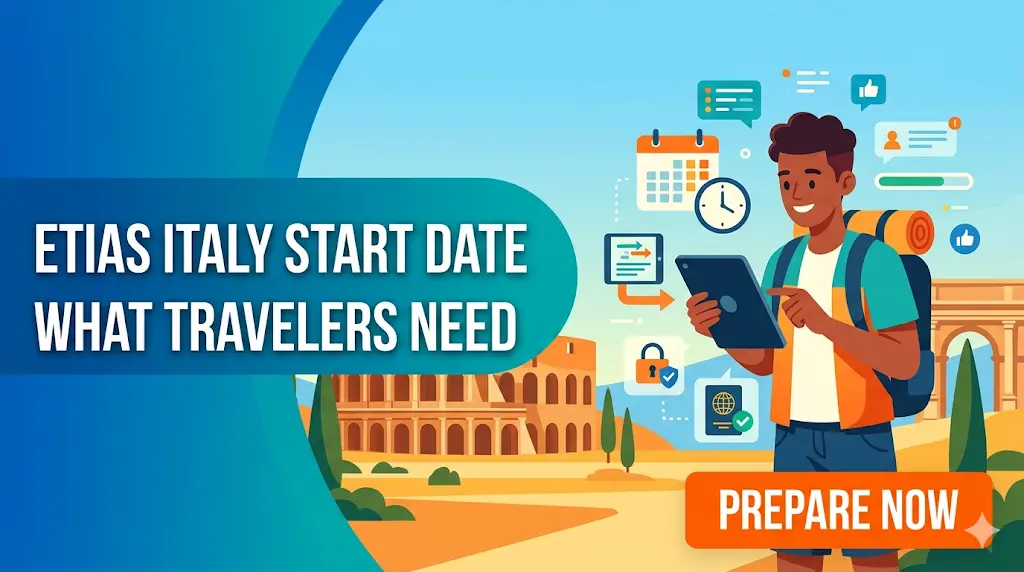
How ETIAS Affects Your Border Experience
The Digital Application Process and New Fees
When ETIAS officially becomes mandatory, the era of purely spontaneous travel to Italy will be over. You must apply for the travel authorization online before heading to the airport. The application will ask for your biographic data, passport details, current occupation, and uncomfortable background questions regarding your criminal history, past travel to conflict zones, and any prior deportations from European territories.
The system is designed to check these details against Europol, Interpol, and the Schengen Information System (SIS), issuing approvals within minutes for the vast majority of applicants. Once approved, the ETIAS is digitally linked to your passport’s microchip and remains valid for three years, or until your current passport expires. The application fee was initially set at €7, though recent administrative updates suggest the final cost may rise to €20. You can review the rigid nature of European border fees and visa processing requirements in Schengen Visa Requirements Italy.
Mixed Status Families and Expat Exemptions
A major source of anxiety surrounds expats who already live and work in Italy. If you hold a valid Italian residence permit or a long-stay National Visa (Type D), you are completely exempt from the ETIAS requirement. Your physical residence permit acts as your ultimate border clearance.
The deep confusion arises for mixed-status families. For example, if you are an expat working in Milan on a corporate visa, but your visa-exempt parents are flying over from Canada to visit you, they will absolutely need an approved ETIAS. Italian border police have actively warned that mixed-status families traveling together should carry printed evidence of their respective legal statuses to avoid interrogations at passport control. Navigating the different levels of scrutiny between airport border security and local municipal police is a complex dynamic detailed in Italy Border police vs immigration office who checks documents. Furthermore, if you are currently traveling on a fragile postal receipt while waiting for your permit to be renewed, you must fiercely guard your paperwork, a stressful reality we cover in Renewing Your Italian Permesso di Soggiorno.
| Traveler Profile | ETIAS Required in Q4 2026? | Maximum Allowed Stay | Primary Border Requirement |
| Visa-Exempt Tourist (US, UK, CA) | Yes, mandatory online application. | 90 days out of any 180 days. | ETIAS Approval & EES Biometrics |
| Italian Resident (Permesso holder) | No, completely exempt. | Unlimited (tied to permit validity). | Physical Residence Permit Card |
| National Visa Holder (Type D) | No, completely exempt. | Duration of the Visa (typically 365 days). | Valid Visa Sticker in Passport |
| Schengen Visa Holder (Type C) | No, standard visa rules apply. | 90 days out of any 180 days. | Approved Schengen Visa |
Document Preparations and Health Coverage
Dealing with Background Checks and Certified Translations
While the European Commission promises that ETIAS approvals will be largely automated, flags in the system will immediately trigger intense manual reviews. If you share a name with a person of interest in a European database, or if you declare a past legal issue from decades ago, your ETIAS application will be paused or outright denied.
If your ETIAS is denied, you have the right to appeal the decision through the Italian consulate. To successfully overturn a denial, the consulate will demand comprehensive proof that you are not a security threat. This typically involves submitting extensive criminal background checks, court records, and vital certificates from your home country. Because the Italian government operates strictly in Italian, these dense legal documents are completely useless if submitted in English.
Getting your complex legal records translated quickly for an ETIAS appeal is exactly why you must rely on RushTranslate. By utilizing RushTranslate, you ensure that the Italian consular officer receives certified, legally accurate documents formatted to the government’s exact stringent standards. Do not attempt to translate court records yourself. A single mistranslated legal term regarding your past history can cause the consulate to uphold your ETIAS refusal permanently. Relying on RushTranslate guarantees full compliance with the strict standards of the Italian Ministry of Foreign Affairs. Having your pristine RushTranslate files properly organized is the absolute most effective way to overturn a refusal and save your trip. You will also heavily rely on these kinds of certified translation files later if you decide to pursue permanent local pathways.
Crossing Borders with Rock Solid Insurance
A massive, widespread misconception spreading through expat communities is that an approved ETIAS guarantees your entry into Italy. It absolutely does not. It only guarantees your right to check in at the airport and board the plane. When you land at the arrival gates in Rome or Naples, the Italian border police retain the ultimate, unquestionable authority to deny you entry.
Even with an approved ETIAS and a clear biometric scan, border guards are legally mandated to verify that you have sufficient financial means and valid travel health insurance to cover your stay. If a border guard pulls you aside and asks how you plan to pay for a sudden medical emergency, handing them a generic, low-coverage credit card insurance pamphlet will likely result in an intense interrogation or a denied entry.
To completely protect your entry rights, you should secure a robust policy through Cigna Global before you fly. Using Cigna Global is a bulletproof way to satisfy the strict health insurance demands of European border officials. Because Cigna Global is an internationally recognized expat insurance provider, their certificates of coverage instantly prove to the border police that you are not a financial liability to the Italian state. Presenting a Cigna Global PDF on your smartphone immediately satisfies the border health checklist.
Securing Cigna Global not only guarantees a smoother interaction with aggressive border guards, but it also ensures you are safely covered from the exact moment you land. This premium safety net protects your physical health and your savings while you navigate the country, a crucial survival tactic we cover heavily in Healthcare in Italy An Expats Guide. You must maintain this private coverage until you officially move to Italy on a long-term basis and successfully navigate Registering with the Italian Public Healthcare System SSN.
References
Primary sources (official)
- European Union – Official ETIAS Website – https://travel-europe.europa.eu/etias_en
- European Union – Official Entry/Exit System (EES) Information – https://travel-europe.europa.eu/ees_en
Other helpful sources
- VisaHQ – ETIAS start date pushed to late 2026 – https://www.visahq.com/news/2026-01-20/it/etias-start-date-pushed-to-late-2026-what-uk-and-other-visa-exempt-travellers-to-italy-need-to-know-now/
- The Independent – EU Entry-Exit system and Etias updates – https://www.independent.co.uk/travel/news-and-advice/eu-visa-entry-exit-uk-brexit-etias-start-date-price-b2792549.html
Disclaimer
The information provided in this article is for educational and informational purposes only and does not constitute official legal or immigration advice. The implementation timeline for the European Travel Information and Authorisation System (ETIAS) is managed by the European Commission and is officially scheduled for the final quarter of 2026, subject to further operational readiness updates. ETIAS is a travel authorization, not a visa, and does not override the strict 90/180-day Schengen stay limit. An approved ETIAS does not guarantee entry into Italy; the Polizia di Frontiera retains absolute discretion to deny entry if travelers fail to provide proof of onward travel, financial subsistence, or adequate health coverage at the border.