Registering With Your Local ASL in Italy: A Practical Guide
You finally have your residency permit or your employment contract in hand, but then you realize you cannot actually see a doctor without a specific piece of paper from a windowless office across town. I remember standing in line at 7:00 AM in a rainy Florence suburb, clutching my folder of documents like a shield, only to be told I was missing one specific photocopy. This guide solves the confusing maze of registering with your local ASL so you can access the healthcare you deserve.
Disclosure: This post may contain affiliate links. We may earn a commission at no extra cost to you if you make a purchase through these links. Read full disclosure.
Understanding the ASL and the Italian National Health System
The first thing you need to wrap your head around is that the Italian healthcare system, known as the Servizio Sanitario Nazionale (SSN), is not a single monolith managed from Rome. Instead, it is decentralized into regional entities and further subdivided into local hubs called the Azienda Sanitaria Locale, or ASL. Each ASL is responsible for a specific geographic area, and this is where you will go for everything from registering for your health card to booking a specialist visit. If you move from Milan to a small town in Tuscany, you have to leave one ASL and register with another; they don't always talk to each other as efficiently as we might hope.
What Exactly is an ASL and Why Does It Matter
The ASL is essentially the administrative heart of your local medical life. It is the gatekeeper. Without a successful registration at your local ASL office, you technically do not exist within the public health system. This means you won't have a family doctor, you won't be able to get subsidized prescriptions, and you could face significant bills if you end up in the emergency room for a non-life-threatening issue. For many of us, the ASL is the first place we encounter the "real" Italy—the one with numbered tickets, specific office hours that seem to change without notice, and the necessity of bringing every document you’ve ever signed since moving here.
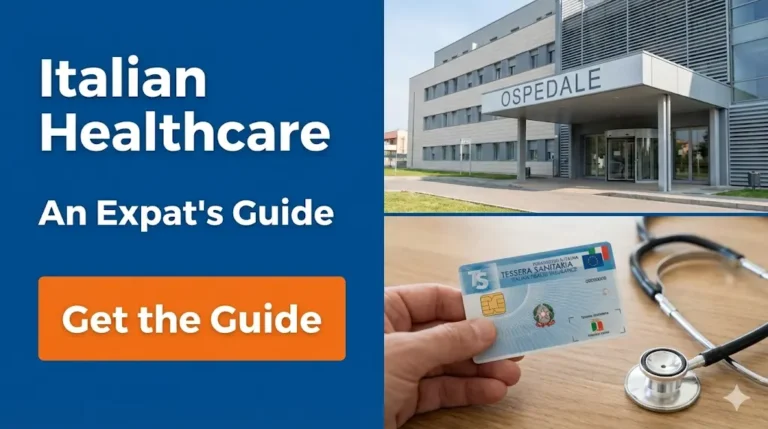
It is worth noting that Healthcare in Italy: An Expats' Guide provides a broader look at the system, but the ASL is where the rubber meets the road. Each office operates with a degree of autonomy. While the law is national, the interpretation of that law can feel very local. You might find an office in Rome that accepts digital copies of your lease, while an office in a smaller commune might demand three physical copies stamped by the local tax office. This regional variation is why you should always check the specific website of your city's ASL (e.g., ASL Roma 1, ATS Milano) before you head out the door.
The Benefits of Being in the SSN System
Once you are registered with the ASL, you gain access to one of the most comprehensive public health systems in the world. This includes free or very low-cost visits to a family doctor, highly subsidized laboratory tests, and access to public hospitals. For most expats, the peace of mind that comes with being "in the system" is invaluable. You aren't just paying for current care; you are buying into a safety net that covers major surgeries and chronic condition management without the threat of medical bankruptcy.
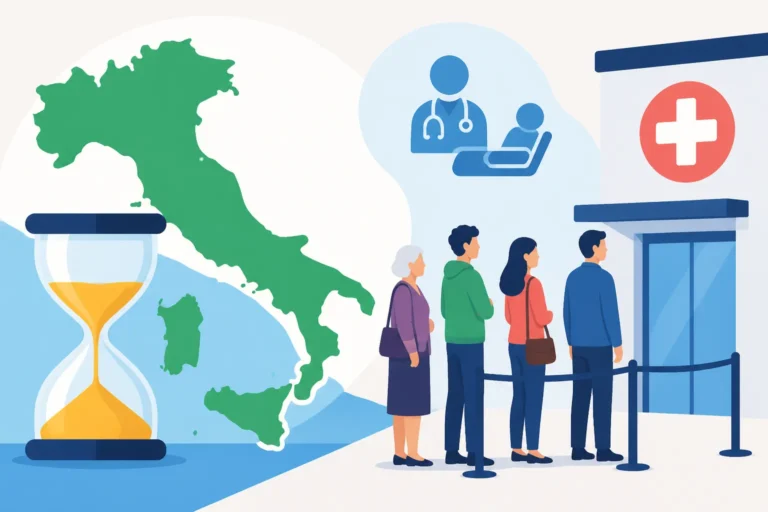
However, because the public system can sometimes have long wait times for non-urgent specialist appointments, many expats choose to supplement their SSN coverage. This is where brands like Cigna Global come into play, offering a way to bypass the public queues while still maintaining your ASL registration for primary care. Having both means you can see your local Italian doctor for a quick flu check but use a private clinic for a specialized MRI if the public wait time is several months.
Who Needs to Register with the ASL
Not everyone in Italy follows the same path to health coverage. Your residency status, your visa type, and your employment situation determine whether your registration is mandatory, voluntary, or if you even qualify at all. Understanding where you fit in the hierarchy of Italian bureaucracy will save you from being turned away at the counter after waiting two hours for your number to be called.
Mandatory vs Voluntary Registration
In Italy, registration is either iscrizione obbligatoria (mandatory) or iscrizione volontaria (voluntary). Mandatory registration applies to those who are working (self-employed or employees), those seeking work but registered with the employment office, or family members of Italian or EU citizens. If you fall into this category, the service is generally free because your taxes or social security contributions cover the cost. You are entitled to the same level of care as any Italian citizen.
On the other hand, students and those on an elective residence visa (often retirees) usually fall under voluntary registration. This means you must pay an annual fee to join the SSN. The cost is calculated based on your total global income from the previous year, with a minimum floor that changes periodically. For many retirees, this cost is still significantly cheaper than private insurance in their home country, but it requires a bit more paperwork, including a bank transfer (F24 form) that must be completed before you even show up at the ASL office. For those who find this process too cumbersome or who are only in Italy for a short stint, SafetyWing offers a flexible alternative that can cover you while you navigate these administrative hurdles.
EU Residents vs Non-EU Residents
The rules diverge sharply depending on your passport. If you are an EU citizen, you have the right to healthcare based on EU treaties, but you still need to register if you are staying for more than three months. Usually, you’ll need to prove you are working or that you have sufficient resources and a Using Your European Health Insurance Card (EHIC) in Italy won't be enough for long-term residency; it is meant for tourists, not residents. EU citizens often find the process slightly smoother, but the documentation requirements for residency are still strict.
Non-EU residents have the additional hurdle of the Permesso di Soggiorno (residence permit). Your health coverage is usually tied to the validity of this permit. If your permit expires, your health coverage technically expires too, even if you have applied for a renewal. I’ve lived through the anxiety of having a "temporary" paper receipt for my permit and wondering if the ASL clerk would accept it to renew my health card. Usually, they do, but they will only give you a temporary health card that lasts until the date on your receipt. It’s a constant cycle of administrative maintenance that defines the expat experience in Italy.
Step-by-Step Guide to Your First ASL Visit
Going to the ASL for the first time is a rite of passage. It is loud, it is often crowded, and it requires a level of patience that you might not have needed in your home country. But if you go prepared, you can usually get everything sorted in a single visit. The key is to over-prepare your documentation so that no matter what the clerk asks for, you have it ready to slide under the glass partition.
Finding Your Local Office and Booking
The first step is identifying which office actually serves your neighborhood. In large cities like Rome or Milan, there are dozens of offices, but you must go to the one designated for your specific zona or municipio. You can find this by searching for "Scelta e Revoca" (Selection and Revocation of doctors) along with your city name. Some offices now allow you to book an appointment online through a portal or via an app, which I highly recommend. Walking in without an appointment is still possible in some regions, but you might find yourself waiting half a day.
When you arrive, look for a machine that spits out paper tickets. There will be several categories. You want the one for "Scelta e Revoca" or "Iscrizione SSN." If you are unsure, don't be afraid to ask someone in line, "È qui per il medico di base?" (Is this for the family doctor?). Italians are generally very helpful if they see you struggling with the ticketing machine. Once you have your number, keep a close eye on the digital display. The numbers don't always go in a logical sequence, and if you miss your turn, you are back to square one.
Essential Documents You Must Bring
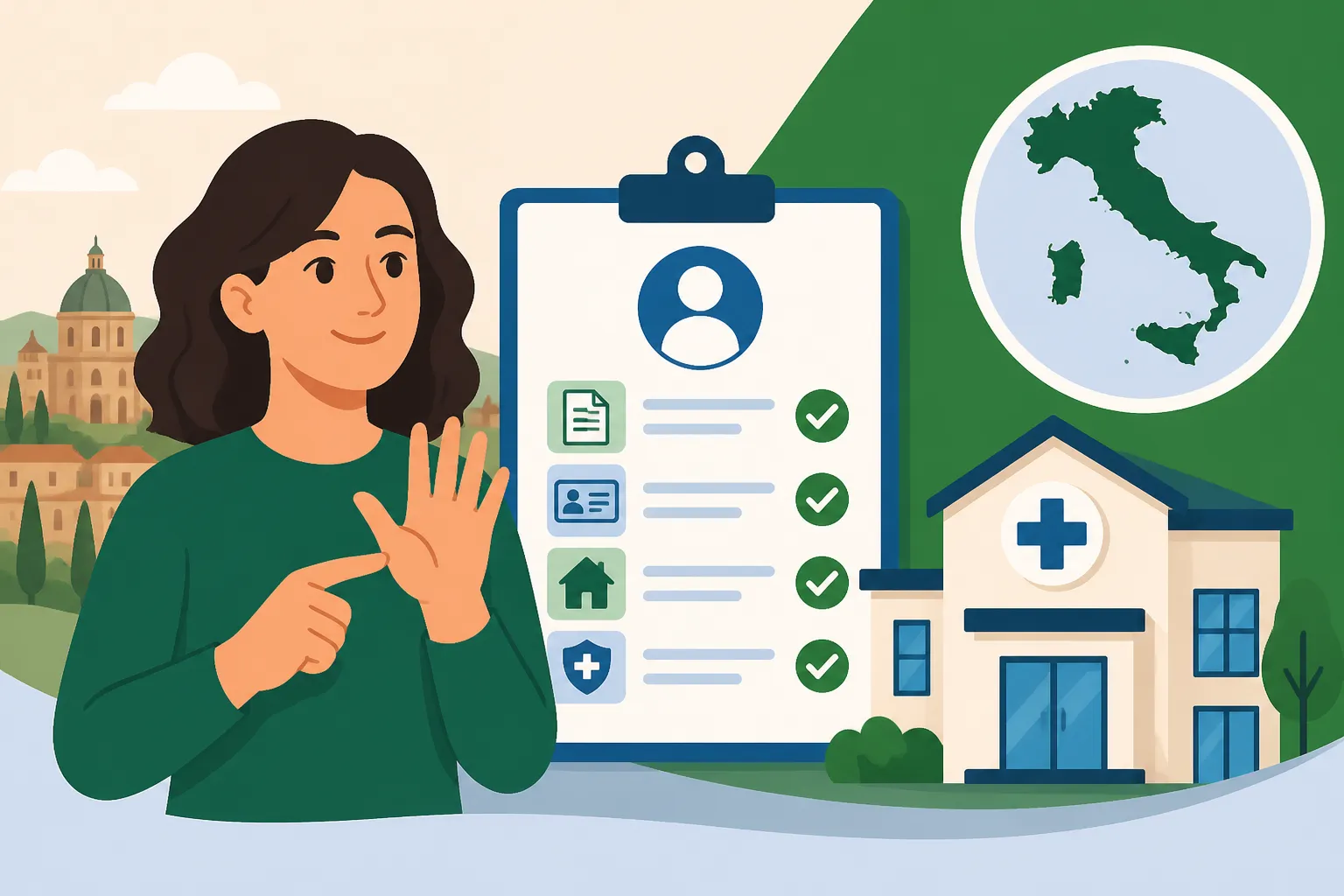
This is where most people fail. Do not assume they will make copies for you; they won't. You should bring the original and at least one photocopy of the following:
- Valid Passport: Including the page with your entry stamp or visa.
- Permesso di Soggiorno: Or the Post Office receipt (ricevuta) if you are still waiting for the card.
- Codice Fiscale: The official certificate or the plastic card.
- Proof of Residency: A certificato di residenza or a self-declaration (autocertificazione) if the office allows it.
- Employment Contract or Evidence of Income: This proves you are eligible for mandatory registration.
- Payment Receipt (for voluntary registration): If you are a student or retiree, you need the stamped F24 form showing you've paid the annual fee.
Having everything in a neat folder makes a huge difference. In my experience, showing the clerk that you are organized immediately lowers their stress level, and they are much more likely to help you if a small issue arises. If you are struggling with the nuances of these documents, How to Register for Italian Healthcare (SSN) as a Foreigner offers a deeper dive into the specific paperwork requirements for different visa types.
| Document | Purpose | Needed For |
|---|---|---|
| Passport | Identity Verification | Everyone |
| Codice Fiscale | Tax Identification | Everyone |
| Permesso di Soggiorno | Residency Legal Status | Non-EU Citizens |
| F24 Receipt | Proof of Payment | Voluntary Registrants (Students/Retirees) |
| Employment Contract | Proof of Contribution | Workers (Mandatory) |
Choosing Your Medico di Base
The final act of your ASL registration is choosing your Medico di Base, or family doctor. This person is your primary point of contact for everything medical. They are the ones who write your prescriptions, give you referrals for specialists, and provide the "sick notes" (certificato di malattia) you need for work. You cannot just go to any doctor; you must be on the specific list of a doctor who has "slots" available in your district.
Why the Doctor Choice Matters
Your relationship with your family doctor can make or break your experience with the Italian health system. Some doctors are incredibly tech-savvy, allowing you to request prescriptions via WhatsApp or email. Others require you to show up in person and wait in a crowded hallway for every single signature. When you are at the ASL desk, the clerk will often flip a computer monitor toward you or hand you a binder full of names and addresses. You have to pick one right then and there.
It is wise to do your homework before you go to the ASL. Look up doctors in your neighborhood online. Check their hours. Some only work two hours in the morning, while others have evening slots. If you have children, you won't be looking for a Medico di Base but rather a Choosing a Pediatrician in Italy (Pediatra di Libera Scelta). The process is similar, but the doctors specialize in children up to age 14. A good family doctor will guide you through the system, while a poor one will simply be a bureaucratic hurdle you have to jump over every time you need a blood test.
How to Find an English-Speaking Doctor
For many expats, the language barrier is the biggest concern. While many younger Italian doctors speak excellent English, it is not guaranteed. If your Italian is still a work in progress, you should specifically look for Where to Find English-Speaking Doctors and Clinics before your ASL visit. You can search for doctor names on expat forums or local Facebook groups to see who is recommended for English speakers.
When you are at the ASL window, you can ask the clerk, "Quale di questi medici parla inglese?" (Which of these doctors speaks English?). They may not always know, but sometimes the system has a note. If you choose a doctor and later realize you can't communicate with them, don't panic. You can always go back to the ASL (or use their online portal) to change your doctor. This is a very common procedure called cambio medico. It’s important to have someone you trust, especially when discussing complex health issues or navigating Emergency Medical Services in Italy: 112 and Hospitals where clear communication is vital.
Managing Costs and Insurance Gaps
While the SSN is a public service, it is not always "free" in the way people assume. There are co-pays, known as ticket, for specialist visits and diagnostic tests. Furthermore, there is often a gap between when you arrive in Italy and when you finally get your health card. Managing these financial aspects is a key part of staying healthy without breaking the bank.
Understanding Registration Fees and Co-payments
If you are a voluntary registrant, the fee is not a one-time thing; it is an annual payment that expires on December 31st every year, regardless of when you signed up. If you register in November, you pay the full year's fee and have to pay again in January. This is a quirk of the Italian system that catches many people off guard. For workers, the "cost" is hidden in your payroll taxes, so you don't see it directly.
Once you are registered, you will receive a The Italian Health Card (Tessera Sanitaria): Uses and How to Get One. This card is what you show at the pharmacy and the specialist's office. The co-pay (ticket) for a specialist visit is usually around 30 to 50 Euros, depending on the region and the type of visit. However, certain groups are exempt from these costs due to low income, age, or chronic illness. If you think you qualify for an exemption, you must ask the ASL clerk about an esenzione code, which will be printed on your prescriptions.
When to Use Private Insurance
Even with a health card, there are times when the public system isn't enough. If you need a dermatologist or a physical therapist, the public wait list in a city like Rome can be months long. This is why many expats keep a private policy like Cigna Global. It allows you to book a private appointment for the following week and get reimbursed, while still using the SSN for your basic needs and expensive medications.
For digital nomads or those in the very early stages of their move, SafetyWing provides an excellent "bridge." It covers you for emergencies and unexpected illnesses before you have successfully navigated the ASL registration process. Many expats get caught in the "bureaucracy trap"—they need a health card to get residency, but they need residency to get a health card. Having private insurance is often a requirement for your initial visa, and it provides a vital safety net while you wait for the Italian government to process your paperwork. For a more detailed comparison, check out Public vs Private Health Insurance in Italy.
Renewing and Updating Your Registration
Your journey with the ASL doesn't end once you get your first card. In Italy, your status is always subject to change. Whether your work contract ends, you move house, or your residency permit is up for renewal, you will eventually find yourself back at that familiar ASL window.
Expiry Dates and Permesso di Soggiorno Links
For non-EU citizens, the expiration date of your health coverage is usually tied to the expiration date of your Permesso di Soggiorno. This can be incredibly frustrating if you are dealing with the slow processing times of the Questura (police headquarters). If your permit is about to expire, you must take your renewal receipt to the ASL to get a temporary extension of your health coverage.
Sometimes, the system updates automatically, and a new plastic Obtaining the Italian Health Card (Tessera Sanitaria) will arrive in the mail. But more often than not, you have to initiate the renewal yourself. If you move to a new apartment in a different part of the city, you must update your address with the ASL. This ensures that your health card is mailed to the correct place and that you are assigned to a doctor within a reasonable distance of your new home. This process is called Registering with an Italian Family Doctor (Medico di Base) and is often handled at the same time as your address update.
Changing Your Address or Doctor
Life changes, and your healthcare needs will too. Perhaps you’ve heard of a better doctor from a neighbor, or you’ve moved to a new neighborhood and don't want to travel an hour for a prescription. Changing your doctor is surprisingly easy. In many regions, you can now do this through an online portal called the Fascicolo Sanitario Elettronico. You simply log in with your SPID (digital identity) and select a new doctor from the available list.
If you cannot do it online, a quick trip to the ASL is all it takes. You don't need a reason to change doctors; it is your right as a resident. Just bring your ID and your current health card. They will print out a new paper certificate (libretto sanitario) with your new doctor's details on it. This paper is actually more important than the plastic card in many medical settings, so keep it safe. Always remember that the system is designed to be local, so your Finding Doctors and Hospitals in Italy experience will improve greatly once you have a doctor who knows you and is located nearby.
Healthcare Comparison: SSN vs. Private Insurance
| Feature | Italian National Health (SSN) | Private Health Insurance |
|---|---|---|
| Primary Care | Via assigned Medico di Base | Choice of any private doctor |
| Cost | Free or low-cost co-pays (Ticket) | Monthly premiums + potential deductibles |
| Wait Times | Can be long for non-urgent specialists | Usually very short (days) |
| Specialist Access | Requires GP referral (impegnativa) | Direct booking often allowed |
| Facilities | Public hospitals and clinics | Private hospitals/luxury clinics |
| Medication | Heavily subsidized | Reimbursed based on policy |
Medical and Legal Disclaimer
The information provided in this guide is for informational purposes only and is based on personal experiences and general knowledge of the Italian healthcare system. Italian laws and regional administrative procedures are subject to frequent changes. This article does not constitute legal or medical advice. Always consult with the official website of your local ASL, the Ministry of Health, or a qualified legal professional regarding your specific residency and healthcare situation. If you are experiencing a medical emergency in Italy, dial 112 immediately.