How to Manage a Chronic Condition Under Italy’s SSN
Moving to a new country while managing a long-term illness is like trying to solve a Rubik's cube while standing in a post office line—it is complicated, a bit slow, and requires a lot of patience. I remember the absolute dread I felt when my supply of specialized medication started running low before I had my Italian health card in hand. This guide explains exactly how to navigate the Italian public health system to ensure your chronic condition is managed effectively and affordably.
Disclosure: This post may contain affiliate links. We may earn a commission at no extra cost to you if you make a purchase through these links. Read full disclosure.
Navigating the Initial SSN Enrollment for Chronic Care
The first hurdle any expat faces is moving from being a "visitor" to a "resident" in the eyes of the Italian healthcare system. To manage a chronic condition, you cannot simply rely on your travel insurance forever. You need to get into the Servizio Sanitario Nazionale (SSN). I’ve spent many mornings at the local ASL (Azienda Sanitaria Locale) office, and the most important thing I learned is that your first point of contact is everything. You must start by How to Register for Italian Healthcare (SSN) as a Foreigner to get your tax code and residency sorted, which eventually grants you the precious Tessera Sanitaria.
Once you have your card, your absolute best friend in this journey is your Medico di Base. This is your primary care physician, and in Italy, they are the gatekeepers to everything. When you are Registering with an Italian Family Doctor (Medico di Base), do not just pick the one closest to your house. Try to find one who has experience with your specific condition or at least one who is willing to listen to your history. When you walk into that first appointment, bring every single piece of medical history you have from your home country. Ideally, have your latest specialist reports translated into Italian. Your doctor needs this paper trail to justify the prescriptions and specialist referrals they will eventually write for you.
If you are still waiting for your residency to clear or are in a transitional phase, the public system can feel out of reach. For those in this "gray zone," having a private policy from Cigna Global can be a lifesaver, as it allows you to see specialists immediately without waiting for the Italian bureaucracy to catch up. Similarly, if you are a digital nomad or moving frequently before settling, SafetyWing offers flexible options that can cover you until you are fully integrated into the local SSN.
Understanding Exemption Codes and the Cost of Chronic Care
The most beautiful part of the Italian system for someone with a chronic illness is the concept of the "esenzione" or exemption code. Italy recognizes that certain conditions require lifelong monitoring and medication, and they don't want the "ticket" (co-payment) system to bankrupt you. This is why it is vital to understand Health Exemption Codes in Italy (Esenzione): Who Qualifies. Your Medico di Base is the one who initiates the request for an exemption code based on your diagnosis. For instance, if you are Managing Diabetes and Hypertension in Italy, you will likely be assigned a code like 013 or 031, which covers most of your related blood tests, specialist visits, and medications.
Once this code is printed on your health card and entered into the system, your costs drop significantly—often to zero for anything directly related to that specific illness. However, getting that code can sometimes involve a trip to a public specialist first. Your family doctor might not be allowed to just "give" you the code based on a foreign report; they may need a "convalida" (validation) from an Italian public specialist. This is a common point of frustration, but once it’s done, it’s done for good.
| Exemption Type | What it Covers | How to Get It |
|---|---|---|
| Patologia Cronica | Specific tests and meds for your condition | Specialist diagnosis + ASL registration |
| Malattie Rare | Highly specialized care for rare diseases | Certified regional center validation |
| Invalidità | Broad coverage based on disability percentage | Medical commission assessment |
| Reddito | General healthcare for low-income residents | Annual declaration at the ASL |
Keep in mind that while the SSN is incredibly generous with chronic care, there are often long waiting lists for the very specialists you need to see to get your exemption. I have known people who waited six months for a public endocrinology appointment. In these cases, using a private plan like Cigna Global to see a private specialist for the initial diagnosis can bridge the gap, even if you plan to use the public system for your long-term medication. It’s about playing the system strategically to get the care you need when you need it.
Booking Specialists and Managing Long-Term Medications
Once you are in the system and have your doctor, the next step is the actual management: the "ricetta" (prescription) and the "impegnativa" (referral). Italy has moved toward a digital system called the "ricetta elettronica," which is fantastic. Your doctor can often email you the prescription code, which you then take to any pharmacy. For chronic patients, this makes Refilling Chronic Prescription Drugs in Italy much easier than the old days of paper slips. However, for "fascia C" drugs (those not covered by the government), you will still pay full price unless your condition qualifies them for coverage under your exemption.
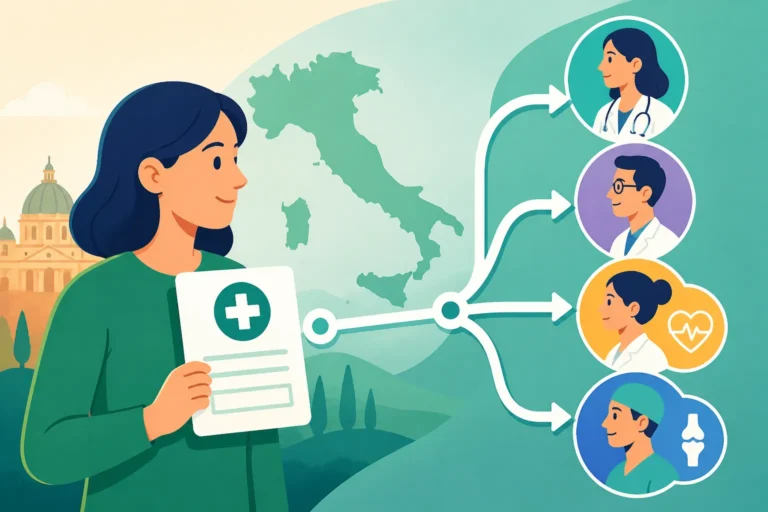
When it comes to seeing specialists, you will deal with the CUP (Centro Unico di Prenotazione). This is the centralized booking system for the public health service. Understanding Specialist Referrals in Italy: How the Impegnativa Works is key here. Your doctor writes a referral with a priority code (U for urgent, B for fast, D for deferred, and P for planned). If you have a chronic condition, your regular check-ups will usually be "P," which can mean a long wait. To avoid this, many expats check Finding and Using Pharmacies in Italy to see if they offer basic diagnostic services like blood pressure monitoring or glucose testing to keep things stable between official doctor visits.
I highly recommend setting up your The Electronic Health Record in Italy (Fascicolo Sanitario Elettronico). This is an online portal where all your prescriptions, blood test results, and specialist reports are stored. It’s a game-changer because you can show any doctor in the country your full history on your smartphone. It also helps when you need to prove the Cost of Healthcare in Italy: What Expats Need to Know for tax deduction purposes later in the year.
Integrating Private Insurance for Faster Access
Let’s be honest: the public system in Italy is excellent for the "big stuff," but it can be frustratingly slow for routine management. If your chronic condition requires quarterly scans or blood work, the stress of navigating the CUP system every three months can take a toll. This is where a hybrid approach works best. Many veteran expats maintain their SSN registration for their daily medications but use Cigna Global to access private clinics for their specialist consultations and diagnostic imaging. This allows you to skip the months-long queues and choose your own doctor, often one who speaks fluent English.
Private clinics in Italy are world-class, but the costs can add up if you are paying out of pocket for every visit. A comprehensive plan ensures that if your condition suddenly requires a more intensive intervention, you aren't stuck waiting for a public hospital bed. For those who travel frequently out of Italy, SafetyWing is a great supplement because it provides international coverage that the SSN usually won't provide outside of Europe. If you're managing a condition like asthma or a heart issue, knowing you have coverage whether you're in Rome or visiting family back home is a huge relief.
Finally, always keep a physical and digital "emergency kit" for your condition. This should include your Italian exemption codes, a list of your current dosages in their Italian brand names, and the contact information for your Medico di Base. Dealing with a chronic illness is enough of a burden; don't let the Italian bureaucracy make it heavier. By getting your exemption code early and utilizing the digital tools available, you can spend less time in waiting rooms and more time enjoying the life you moved to Italy for.
Medical Disclaimer
The information provided in this article is for informational and educational purposes only and does not constitute professional medical advice, diagnosis, or treatment. Always seek the advice of your physician or other qualified health provider with any questions you may have regarding a medical condition. Never disregard professional medical advice or delay in seeking it because of something you have read on this website. Healthcare regulations and the SSN procedures in Italy are subject to change; please consult with your local ASL or a legal professional for the most current administrative requirements.