How to Get a Criminal Background Check for an Italian Visa
Navigating the Italian visa process often feels like trying to win a game where the rules are written in invisible ink and change every Tuesday. I remember the absolute panic I felt when my consulate officer casually mentioned I needed a federal-level criminal background check with a "gold seal" I’d never heard of. This guide breaks down exactly how to secure that elusive document so you don't lose your mind.
Disclosure: This post may contain affiliate links. We may earn a commission at no extra cost to you if you make a purchase through these links. Read full disclosure.
Why Italy Requires a Criminal Background Check
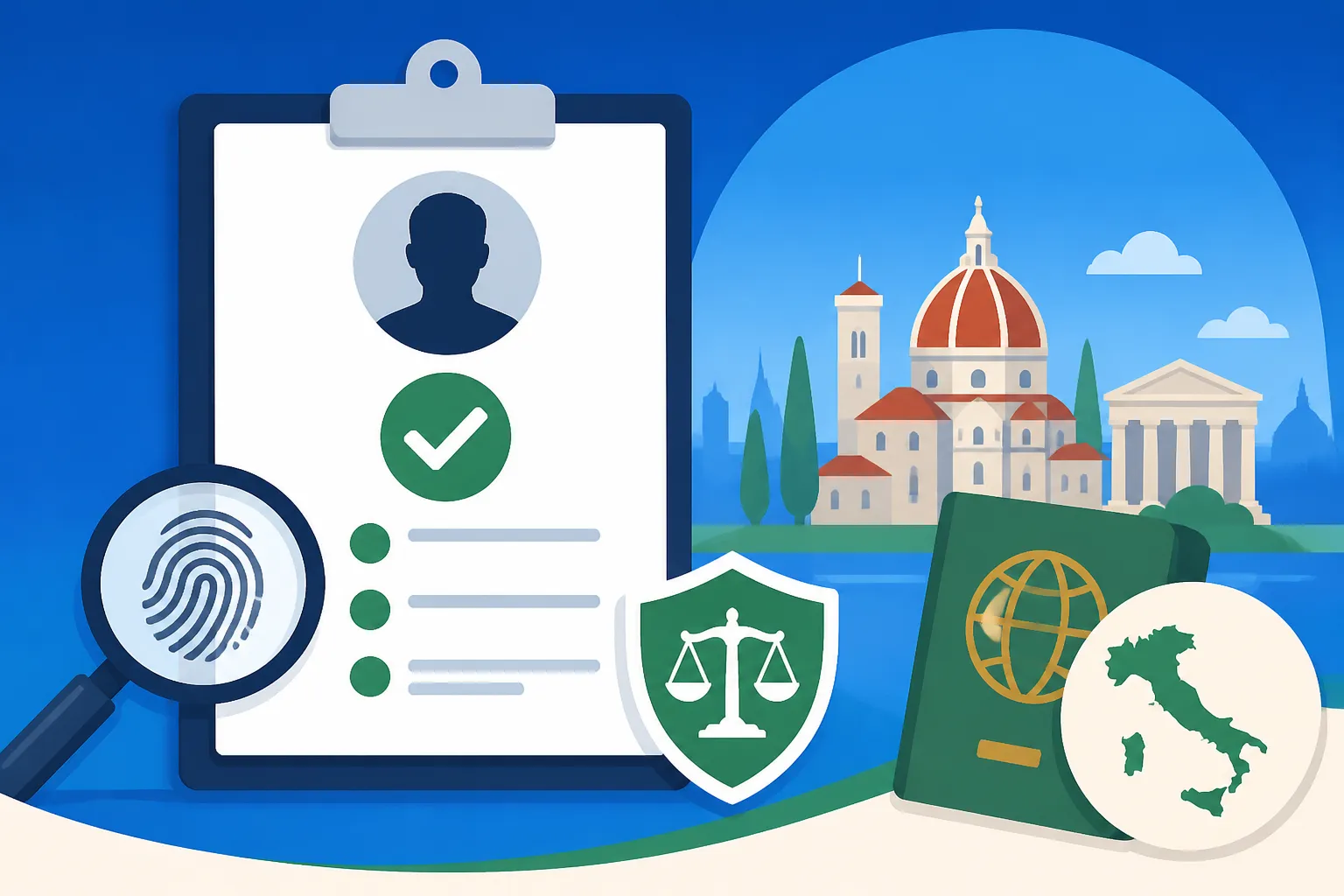
When you decide to move to Italy for more than 90 days, the Italian government wants to ensure you are not a threat to public safety. This isn’t just a formality; it is a core component of the "security" check conducted by the Ministry of the Interior. Whether you are applying for the Italy Digital Nomad Visa: Eligibility and Application or looking into How to Obtain an Italian Work Visa, proving your "clean" history is mandatory for almost all long-stay national (Type D) visas.
The requirement usually applies to every country where you have resided for more than six months since the age of 14, though specific consulates may only ask for records from the last five to ten years. If you’ve been a bit of a global nomad, this can turn into a logistical marathon. I’ve spoken to expats who had to coordinate documents from three different continents simultaneously, which is exactly as stressful as it sounds. You have to prove that you haven't committed crimes that would lead to a "Nulla Osta" (entry clearance) being denied.
Identifying the Correct Type of Background Check
One of the biggest mistakes newcomers make is getting a local or state-level check when Italy requires a federal one. In the United States, for example, a "Police Clearance" from your local sheriff won't cut it. You must obtain an FBI Identity History Summary. Similarly, in the UK, a basic DBS check is often insufficient for visa purposes; you typically need the ACRO Police Certificate.
If you are applying for Elective (Retirement) Visa Italy: Requirements and Limits, the consulate will scrutinize these documents heavily. They are looking for specific wording and a comprehensive search of national databases. If your document says "State Only" or "Local Records Only," expect it to be rejected at the window, sending you back to square one. Always confirm with your specific consulate’s website, as requirements can vary slightly between the Italian Consulate in New York versus the one in London or San Francisco.
The Step by Step Process for US Citizens
For Americans, the FBI background check is the gold standard. You can apply directly through the FBI’s CJIS division or use an FBI-approved channeler. While channelers are faster, be careful: some consulates only accept the "standard" FBI output. I personally used an electronic submission at a participating USPS location, and I had my results in my inbox within two hours. However, the digital PDF is just the beginning.
Once you have the PDF or the hard copy, you cannot simply print it and hand it to the Italian officials. It must be a "certified" version that is eligible for an Apostille. If you go the digital route, make sure you follow the instructions for obtaining a result that is "Apostille-ready." This often means having the FBI mail you a hard copy on secure paper or ensuring the digital file has the proper electronic signature from the CJIS Assistant Director.
Obtaining the Apostille The Crucial Legalization Step
This is where most people get tripped up. An Apostille is an international certification that authenticates the origin of a public document. Since Italy is a member of the Hague Convention, they require all foreign official documents to be apostilled by the government that issued them. For an FBI check, this means the US Department of State in Washington, D.C., must attach the Apostille.
Be warned: the processing times for federal Apostilles can range from four to twelve weeks. I’ve seen people lose their visa appointments because they underestimated this delay. You cannot get a federal document apostilled at your local Secretary of State office. It has to go to the federal level. If you are in a rush, there are expediting services, but even they are at the mercy of the Department of State’s backlog. While you wait, it’s a good idea to start looking into Getting Health Insurance in Italy: Public and Private Options, as companies like Cigna Global are frequently used by expats to meet the "comprehensive coverage" requirement while their paperwork is in limbo.
Translation Requirements into Italian
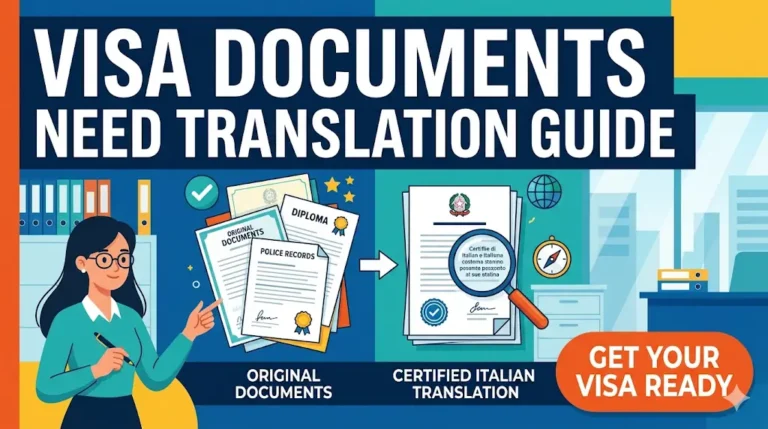
Once you have your background check and its accompanying Apostille, the entire package must be translated into Italian. The Italian consulate or the Questura (police headquarters) in Italy will not accept an English-language document. This isn't just about translating the words; it's about a "certified" or "sworn" translation, known in Italy as a traduzione giurata.
For many visa types, such as when you How to Apply for the Italy Digital Nomad Visa Step-by-Step, you can use services like RushTranslate or Translayte to get high-quality translations that meet the initial consulate requirements. These agencies are familiar with the specific terminology used in criminal records. However, if you are already in Italy and applying for residency, the local court (Tribunale) may require the translator to physically go to the court and sign an oath of accuracy. Always check if your consulate requires the translation to be legalized by them or if a professional certification from a service like Translayte is sufficient.
Comparative Overview of Background Check Requirements
| Country | Required Document | Issuing Authority | Typical Validity |
|---|---|---|---|
| United States | Identity History Summary | FBI (Federal) | 6 Months |
| United Kingdom | ACRO Police Certificate | ACRO Criminal Records Office | 6 Months |
| Canada | Certified Criminal Record Check | RCMP (Fingerprint based) | 6 Months |
| Australia | National Police Check | Australian Federal Police | 6 Months |
| Ireland | Police Certificate | Garda Síochána | 6 Months |
Obtaining a Background Check if You Are Already in Italy
Sometimes you need a background check while you are already living in the Bel Paese—perhaps for a job or a specific residency renewal. In this case, you need the Certificato del Casellario Giudiziale. This document summarizes any criminal convictions you may have accrued while living in Italy. It is issued by the Procura della Repubblica, which you can find in major cities.
To get this, you usually need to make an appointment or show up during specific morning hours at the local court’s office. You will need your passport and your How to Get a Codice Fiscale in Italy (and Why You Need One). You will also need to buy marche da bollo (revenue stamps) from a local tabaccheria. There is a standard fee and an "urgent" fee if you need it the same day. Navigating this office is a classic Italian experience—lots of waiting, a bit of confusion, but generally successful if you have your stamps ready. This is a common step for those Booking and Attending Questura Appointments in Italy.
Managing the Validity Window
One of the most heart-wrenching scenarios is having a perfectly prepared background check expire before your visa interview. Most Italian consulates consider these documents valid for only six months from the date of issuance. This six-month clock starts the moment the FBI or ACRO issues the report, not when you get the Apostille or the translation.
If you are dealing with a complex move, you have to time everything perfectly. If you get the background check too early, it might expire while you wait for the Apostille. If you get it too late, you won't have the Apostille in time for your appointment. I suggest applying for the background check roughly 4-5 months before your intended move date. This gives you a buffer for the Apostille and translation by RushTranslate without hitting the expiration limit.
Dealing with Record Entries
What if you actually have something on your record? I get asked this a lot. A minor misdemeanor from twenty years ago usually isn't a deal-breaker for a visa, but you must be transparent. The Italian authorities value "honesty" in the application. If you have a record, you may be required to provide a written explanation or additional court documents (also apostilled and translated) showing the resolution of the case.
However, certain serious crimes—especially those involving violence, drugs, or organized crime—will lead to an automatic rejection. If you are worried about your history, it may be worth consulting an immigration lawyer before you pay the non-refundable visa fees. While you are sorting out the legal side, ensure your other requirements are solid, such as your health coverage from providers like Cigna Global, to show the consulate you are a well-prepared and low-risk applicant.
Final Preparations for the Consulate Interview
When you finally walk into that consulate with your folder, your criminal background check should be the "star" of your document stack. It should be the original FBI/ACRO document, with the Apostille physically stapled or attached (never remove the staple!), followed by the professional translation from a service like Translayte.
I always recommend making two high-quality color photocopies of the entire authenticated set. Sometimes the official will keep the original, and sometimes they only want a copy after verifying the original. Having these copies ready shows that you understand the system. While you’re at it, double-check that you have your Apostilles and Sworn Translations for Italian Visas in order for your birth or marriage certificates if your visa type requires them. The more organized you are, the faster the officer can click "approve."
Navigating the Casellario Giudiziale Online
In recent years, Italy has modernized its internal systems. You can now actually request the Certificato del Casellario Giudiziale online through the Ministry of Justice website. However, there is a catch: you usually still have to go to the office in person to pick it up, or you must have a digital signature (Firma Digitale) to receive a digital version.
For expats, the physical pickup is usually easier. You select the Procura where you want to collect it, fill out the form online, and they will send you a confirmation email. When you go to pick it up, bring your ID and the required revenue stamps. If you are helping a family member, you will need a signed proxy (delega) and a copy of their ID. This is a lifesaver if you are trying to balance a job and the myriad of tasks involved in How to Get a Sworn (Giurata) Translation for Italy.
Dealing with Lost or Stolen Documents
It happens to the best of us. You’re in the middle of a move, and a folder goes missing. If you lose your apostilled background check, you generally have to start the entire process over. The US Department of State does not "re-issue" Apostilles for lost documents; they only apostille the specific physical paper sent to them.
This is why digital backups are your best friend. While a scan won't replace an original at the consulate, having a copy of the FBI report and the Apostille number can help you track things down or at least provide "proof of effort" if you need to reschedule an appointment. Always keep your vital documents in a fireproof, waterproof "go-bag" during your transition to Italy.
Frequently Asked Questions About Italian Visa Background Checks
I often hear from people who are confused about the "fingerprint" requirement. Yes, for an FBI check, you will need to provide a full set of fingerprints. Many people do this at local police stations, but using a USPS location that offers "FBI Fingerprinting" is significantly cleaner and faster. The digital transmission means fewer errors than the old-school "ink and roll" cards.
Another common question is whether the background check is needed for children. Generally, Italy only requires these records for applicants aged 14 and older. If you are moving with a young family, you can focus your energy on How to Get a Sworn (Giurata) Translation for Italy for school records instead. For the adults, though, there are no shortcuts. Every person over the age limit must have their own individual, apostilled, and translated record.
Disclaimer
This guide is based on personal experience and general administrative practices in Italy. Immigration laws and consulate requirements can change without notice. Always verify the current requirements with the official website of the Italian Ministry of Foreign Affairs (Esteri) or your local Italian Consulate before submitting any applications. This information does not constitute legal advice.