How to Buy Trenitalia and Italo Tickets and Save Money
Navigating Italy's public transport system can feel like deciphering an ancient Roman scroll, especially when you’re just trying to get from one beautiful city to another without breaking the bank. The good news is, Italy boasts an excellent, extensive, and relatively efficient train network. The less good news is, figuring out the best way to buy tickets and secure a decent price often comes with a steep learning curve. This guide is here to flatten that curve, helping you understand Italy's two main train operators – Trenitalia and Italo – and equipping you with all the insider tips to buy your tickets smartly and save some precious euros for gelato.
Understanding Italy's Train Landscape: Trenitalia vs. Italo
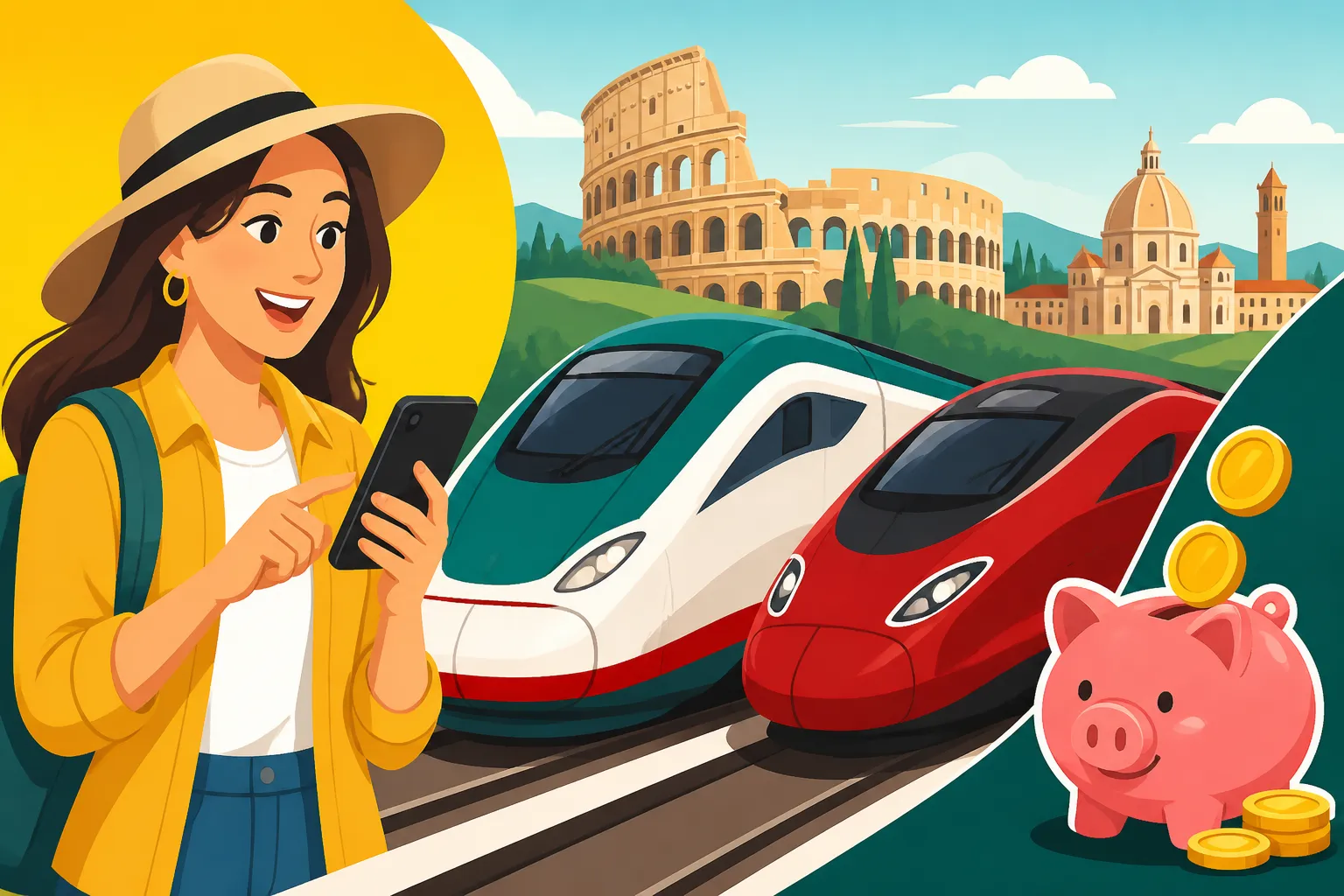
When you're looking to travel by train in Italy, you're primarily going to encounter two big players: Trenitalia and Italo. Think of them like rival teams, each with their own strengths and quirks. Understanding their differences is the first step in becoming a savvy Italian train traveler.
Disclosure: This post may contain affiliate links. We may earn a commission at no extra cost to you if you make a purchase through these links. Read full disclosure.
Trenitalia: The National Carrier
Trenitalia is the grand old dame of Italian railways, the national carrier with a sprawling network that reaches almost every corner of the country. It's the most comprehensive option, offering everything from lightning-fast high-speed routes to leisurely regional lines.
Trenitalia operates a tiered system of trains, each designed for different needs and budgets. The stars of their fleet are the "Frecce" trains (Frecciarossa, Frecciargento, Frecciabianca), which are their high-speed services. The Frecciarossa, or "Red Arrow," is their flagship, connecting major cities like Milan, Rome, Florence, and Naples at speeds up to 300 km/h. These are comfortable, modern trains, often with Wi-Fi and dining options onboard. The Frecciargento ("Silver Arrow") covers similar routes but might include slightly slower sections or serve a few more intermediate stops, while the Frecciabianca ("White Arrow") often operates on conventional lines, connecting smaller cities and coastal towns, still at a good pace but not quite "high-speed."
Beyond the Frecce, Trenitalia runs a vast network of regional trains, often labeled as "Regionale" or "Regionale Veloce" (fast regional). These are your workhorses for shorter distances, connecting smaller towns and offering a more local, albeit slower, experience. Unlike the Frecce, regional train tickets generally have fixed prices, meaning the cost doesn't fluctuate with demand, and you don't need to buy them far in advance. However, a crucial point for these is that physical tickets must be validated before boarding to avoid hefty fines, a classic expat lesson learned the hard way! We'll dive into validation later, but it’s something you absolutely need to know.
Italo: The Private High-Speed Competitor
Then there's Italo, the sleek, stylish newcomer that's been shaking things up in the Italian rail market. Italo is a private operator, focused exclusively on high-speed routes between Italy's major cities. Think of them as the boutique challenger offering a premium experience. Their network is more limited than Trenitalia's, primarily connecting cities like Turin, Milan, Venice, Bologna, Florence, Rome, and Naples. You won't find Italo trains chugging through quaint regional stops; they're all about speed and direct connections.
Italo trains are known for their modern design, comfortable seating, and often competitive pricing, especially if you book in advance. They boast distinct classes like Smart (their equivalent of standard), Prima (first class with more space), and Club Executive (a truly luxurious experience with dedicated lounge access at some stations). For many popular routes, Italo offers a strong alternative to Trenitalia, often with slightly different schedules and prices, making it worthwhile to check both when planning your journey. Their booking process is generally very user-friendly, and they are a great option for those looking to travel quickly and comfortably between Italy's urban hubs.
How to Purchase Your Train Tickets (And Where to Find Deals)
Now that you know the players, let’s talk about getting your hands on those tickets. The world of online booking has revolutionized train travel in Italy, making it much easier than the days of long queues at the station with minimal English support.
Online: Your Best Bet for Savings
For the vast majority of expats and tourists, booking online is the easiest, most efficient, and often most economical way to buy train tickets in Italy.
Official Websites (Trenitalia.com, ItaloTreno.it): These are your primary sources. Both websites are available in English and offer the full range of tickets, fares, and seat selections.
- Trenitalia.com: This site gives you access to all Trenitalia services, from the high-speed Frecce to the regional trains. You can select your journey, choose your preferred class (Standard, Business, Executive for Frecce), and pick from various fare options like Base, Economy, and Super Economy. The key is to book Frecce tickets as far in advance as possible to snag the cheaper Economy and Super Economy fares, which are limited and sell out quickly. Regional tickets, as mentioned, have fixed prices, so booking them online just ensures you have your ticket in hand, but won't save you money on the fare itself.
- ItaloTreno.it: Similar to Trenitalia, Italo's official site is straightforward. You can compare their different environments (Smart, Prima, Club Executive) and choose between fare options like Low Cost, Economy, and Flex. Again, the Low Cost and Economy fares are your best friends for saving money, but they are less flexible and disappear faster.
Third-Party Aggregators (Omio, Booking.com): While the official sites are excellent, sometimes using a third-party aggregator can streamline your search. Platforms like Omio allow you to compare prices and schedules for both Trenitalia and Italo simultaneously, which is incredibly convenient. You don't have to jump between two different sites to see all your options. This can be especially helpful if you're not tied to a specific operator or if you're looking for the absolute cheapest ticket regardless of who's running the train. Omio's interface is often very user-friendly, and it consolidates all your travel details in one place. Other general travel sites like Booking.com also sometimes integrate train ticket booking options, making it a one-stop shop if you're also looking for accommodation. While their prices are usually the same as the official sites, occasionally you might find a slight difference due to promotions or fees, so it's always worth a quick cross-check.
Offline: When and Why You Might Use It
While online booking is king, there are times when you might find yourself needing to buy a ticket offline. Perhaps your phone battery died, or you're already at the station and need a last-minute regional ticket.
- Ticket Machines (Self-service): Available at most train stations, these machines are a lifesaver. They offer multiple language options (usually including English), accept cash and credit/debit cards, and allow you to buy tickets for both regional and high-speed services. They're generally easy to use, letting you select your destination, time, and even specific seat on high-speed trains. Just be patient; sometimes they can be a bit slow, and remember to retrieve your ticket from the dispenser!
- Ticket Counters (Biglietteria): For those who prefer human interaction or have complex travel needs, the traditional ticket counter is still an option. However, be prepared for potential queues, especially in major stations, and a possible language barrier if your Italian isn't up to par. This is where you might encounter some of the frustrations of Italian bureaucracy, but the staff can be incredibly helpful when you manage to communicate your needs.
- Tabaccherie and Travel Agencies: For regional tickets, many tabaccherie (tobacco shops, easily identified by a white 'T' on a blue sign) and small travel agencies in towns sell tickets. This is super convenient for last-minute regional trips, especially in smaller towns where there might not be a staffed station. Just note that they might charge a small service fee.
The Golden Rule: Book in Advance!
I cannot stress this enough, especially for high-speed (Frecce and Italo) tickets: book as far in advance as possible. Italy's high-speed train tickets operate on a dynamic pricing model, similar to airlines. The closer you get to the departure date, and the more popular the route or time, the higher the price will climb. The cheapest "Super Economy" and "Low Cost" fares are limited and are the first to sell out. For popular routes like Rome to Florence or Milan to Venice, especially during peak seasons or holidays like Ferragosto, booking a month or two out can mean saving 50% or more compared to buying a few days before.
Regional train tickets, bless their consistent hearts, have fixed prices, so booking them in advance won’t save money or guarantee a seat, but it saves you the hassle at the station. This is a key difference when comparing High-Speed Trains in Italy: Trenitalia, Italo, Routes, and Savings versus Regional Trains in Italy: How to Use Them and Save.
Strategies to Save Money on Italian Train Tickets
So you've chosen your operator and know where to buy. Now, let's get tactical about saving those euros.
Flex Your Dates and Times
Flexibility is your friend when it comes to train ticket pricing. If your travel plans allow, play around with your departure dates and times:
- Off-Peak Travel: Mid-week (Tuesday, Wednesday, Thursday) is almost always cheaper than Friday, Saturday, or Sunday. Similarly, early morning or late evening trains often have lower fares than those during conventional commuting or midday hours.
- Compare Across Days: On the official websites (and aggregators like Omio), you can often see a calendar view or easily check prices for adjacent days. A slight shift in your itinerary could result in significant savings.
For example, a Frecciarossa ticket from Rome to Florence might cost €50 for a mid-morning train on a Saturday, but only €29 for an early Tuesday morning departure, if booked far enough in advance. It's about finding those sweet spots in the schedule.
Choose the Right Ticket Class and Fare
Both Trenitalia and Italo offer various fare options and classes, each with different price points and levels of flexibility. It’s a trade-off: more flexibility usually means a higher price.
Trenitalia Fares:
- Base: This is the most expensive but also the most flexible fare. You can change your ticket an unlimited number of times before departure and even after, and get a refund (minus a fee). Best for last-minute changes.
- Economy: A mid-range option. Offers some flexibility but usually with a fee for changes. No refunds are generally allowed.
- Super Economy: This is the cheapest fare, but it's completely inflexible. No changes, no refunds. Once you buy it, that's your ticket, no matter what.
- Classes: Beyond fares, Trenitalia's Frecce trains offer Standard, Business, Premium, and Executive classes. Standard is perfectly comfortable for most travelers, while Business offers more space and usually a welcome drink/snack. Only upgrade if you value the extra perks or truly need the space.
Italo Fares:
- Flex: Similar to Trenitalia's Base, this is the most flexible option allowing changes and refunds (with a fee).
- Economy: A good balance of price and some flexibility. Changes typically come with a fee.
- Low Cost: Italo's cheapest fare, but like Trenitalia's Super Economy, it's non-refundable and non-changeable.
- Environments: Italo offers Smart (standard), Prima (first class with more services), and Club Executive (premium with dedicated services). Smart is usually more than adequate for most journeys.
Your choice here depends entirely on your travel style and certainty of plans. If you're a meticulous planner with no surprises, Super Economy or Low Cost are fantastic for saving money. If you're prone to last-minute changes (or traveling with unpredictable kids), the Base or Flex fares might save you headaches and cash in the long run.
Leverage Loyalty Programs and Special Offers
If you plan to travel extensively by train in Italy, consider signing up for the operators' loyalty programs:
- CartaFRECCIA (Trenitalia): This free loyalty card allows you to accumulate points for every journey, which can then be redeemed for discounts or free tickets. Members also get access to exclusive promotions and discounted fares, often referred to as "Special Frecce" offers that pop up regularly.
- Italo Più (Italo): Italo's loyalty program also rewards frequent travelers with points for discounts and offers.
Both companies frequently run promotions, so keep an eye on their websites, sign up for their newsletters, or follow their social media accounts. You’ll often find 2-for-1 deals on Saturdays, family offers, or discounts for groups. Sometimes, travel platforms like GetYourGuide might bundle train tickets with tours, offering a slight discount if you're planning activities.
Consider Regional Trains for Shorter Distances
For trips under two hours, especially if you're venturing off the main high-speed corridors, regional trains can be your best friend.
- Fixed Prices: As mentioned, regional tickets don't change price, so there's no penalty for buying last-minute.
- No Reservations: These trains usually don't have reserved seating, meaning you just hop on and find an empty spot.
- Slower but Scenic: While slower than their high-speed counterparts, regional trains often offer a charming, unhurried journey through the Italian countryside, connecting you directly to smaller towns that the Frecce trains bypass.
For instance, if you're traveling from Florence to Siena, a regional train is your only direct train option and will cost you a fixed, low price. This is a different experience compared to Getting Around Italy: Trains, Buses, Flights, and Car Hire, which offers a broader overview.
Common Pitfalls and Pro Tips for Expats
Even with all this knowledge, Italy can throw a few curveballs. Here are some extra tips to ensure your train journey is smooth sailing.
Understanding Ticket Validation
This is absolutely critical for physical regional train tickets.
- Physical Regional Tickets: If you buy a paper ticket for a regional train (Regionale or Regionale Veloce) from a machine or counter, you must validate it before boarding. Look for small green or yellow machines, usually near the entrance to the platforms. Insert your ticket, wait for a stamp or beep, and then retrieve it. Failure to do so can result in a fine of €50 or more, plus the cost of the ticket. I’ve seen this happen to countless unsuspecting tourists – don't be one of them!
- Digital Tickets: For high-speed trains (Frecce and Italo) and regional tickets bought online (which often come as a QR code or PNR code), no validation is needed. Your ticket is already valid for the specific train, date, and seat. Just show the code to the conductor on your phone or a printout.
Navigating Stations and Platforms
Italian train stations, especially in major cities, can be bustling and sometimes a bit confusing.
- Check Your Binario (Platform): Always check the electronic display boards for your train number and corresponding binario (platform) a good 15-20 minutes before departure. Platforms can change at the last minute, so don't rely on what was printed on your ticket if it's an older printout.
- Dealing with Strikes (Scioperi): Italy is famous for its strikes. Scioperi can affect public transport, including trains. Keep an eye on local news or official Trenitalia/Italo announcements, particularly if traveling during major public holidays (check Italian Public Holidays: What Services Are Closed). Often, essential services are guaranteed, but many trains might be canceled or delayed.
- Luggage: There are generally no strict luggage limits on Italian trains, but be mindful of fellow passengers. You'll find overhead racks and spaces between seats or at the end of carriages for larger bags. On high-speed trains, try to board promptly to secure space for your luggage.
For general safety and security at busy train stations, it's always wise to be aware of your surroundings and keep an eye on your belongings. Read up on Staying Safe in Italy: Common-Sense Tips for Travelers for more comprehensive advice.
Learning Basic Italian Train Vocabulary
While many staff speak some English, knowing a few key terms can make your journey much smoother and help you navigate unexpected situations. This is where a little effort in Italian Language and Everyday Communication for Visitors goes a long way.
Here’s a quick cheat sheet:
| Italian Term | English Translation | Context |
|---|---|---|
| Biglietto | Ticket | "Un biglietto per Roma, per favore." (A ticket for Rome, please.) |
| Binario | Platform | "Qual è il binario per il treno per Firenze?" (Which platform for the train to Florence?) |
| Partenza | Departure | Look for this on the information boards. |
| Arrivo | Arrival | Also on information boards. |
| Convalida | Validate | "Devo convalidare il biglietto?" (Do I need to validate the ticket?) |
| Frecciarossa/Italo | High-speed train (Trenitalia/Italo brands) | The fast services. |
| Regionale | Regional train | Slower, local trains with fixed prices. |
| Posto | Seat | "Ho prenotato il posto." (I booked the seat.) |
| Ritardo | Delay | A common word to hear over the loudspeaker. |
| Soppresso | Cancelled | Hope you don't hear this one! |
| Carrozza | Carriage/Coach | Your carriage number. |
| Cambio | Change (of trains) | "C'è un cambio a Bologna?" (Is there a change at Bologna?) |
Armed with these strategies and a little patience, you'll be zipping across Italy by train like a seasoned local, saving money and stress along the way. Happy travels!
Disclaimer
The information provided in this guide is for general informational purposes only and is subject to change. While we strive to keep the content up-to-date, train schedules, prices, fare rules, and operational procedures for Trenitalia and Italo can vary. It is always recommended to check the official websites of Trenitalia and Italo, or reputable third-party booking sites like Omio, for the most current and accurate information before making travel plans.