What Closes During Italian Holidays and Ferragosto?
Arriving in Italy during a major holiday or at the height of August can feel like stepping into a beautiful, sun-drenched ghost town if you aren't prepared for the cultural shifts. Many tourists find themselves stranded without groceries or facing locked doors at major attractions because they underestimated the Italian commitment to rest. This guide explains exactly what closes during Italian holidays and Ferragosto so you can navigate these periods like a seasoned local.
Disclosure: This post may contain affiliate links. We may earn a commission at no extra cost to you if you make a purchase through these links. Read full disclosure.
The Reality of Italian Holidays and the Ghost Town Phenomenon
If you come from a culture where retail never sleeps and 24-hour convenience is the norm, the Italian approach to public holidays will be a legitimate shock to your system. In Italy, a holiday is not just a day off; it is a sacred cultural pause. During these times, the pulse of the country slows significantly, and the administrative machinery grinds to a complete halt. This isn't just about the shops being closed; it’s about a fundamental shift in how the country operates.
Understanding the National Holiday Calendar
Italy has a robust calendar of national holidays that go far beyond Christmas and New Year’s Day. Key dates include January 6th (Epiphany or La Befana), April 25th (Liberation Day), May 1st (Labor Day), and June 2nd (Republic Day). On these days, you should expect all public offices, banks, and schools to be closed. In smaller towns, this extends to almost every commercial enterprise.
The frustration for many foreigners is that these closures often don't appear on digital maps in real-time. You might see a "regular hours" notice on a search engine only to find a handwritten "Chiuso" sign taped to the window. Understanding Italian Public Holidays: What Services Are Closed is the first step in avoiding a day spent wandering in search of an open pharmacy or a loaf of bread.
The Sacredness of the Italian Ponte
In Italy, we have a concept called the "ponte" (bridge). If a public holiday falls on a Tuesday or a Thursday, many Italians—and consequently many businesses—will take the Monday or Friday off as well to create a long four-day weekend. This is particularly prevalent in public administration and professional services.
If you are an expat trying to renew your residency permit or open a bank account, a holiday on a Thursday effectively means the office is dead to the world from Wednesday afternoon until the following Monday morning. It is highly recommended to check How to Plan Travel Around Italian Public Holidays before scheduling any important bureaucratic appointments. This bridge culture also affects traffic and public transport, as entire cities seem to migrate toward the countryside or the coast simultaneously.
Regional and Local Saint Days
Beyond the national holidays, every city and village in Italy has its own "Santo Patrono" (Patron Saint). Rome celebrates San Pietro e Paolo on June 29th, while Milan honors Sant'Ambrogio on December 7th. On these days, the specific city effectively treats it as a national holiday. Offices close, and local businesses often follow suit.
If you are traveling between cities, you might find Milan buzzing while Florence is completely shut down. This regionality is one of Italy's charms, but it can be a logistical nightmare for the uninformed. I once made the mistake of trying to handle urgent paperwork in Turin on June 24th (San Giovanni), only to find the entire city celebrating with a parade while every office I needed was shuttered. Always double-check the local calendar for your specific destination.
Ferragosto: The Great August Exodus
While individual holidays are a hurdle, Ferragosto is an entirely different beast. Falling on August 15th, it marks the Feast of the Assumption, but its roots go back to the Roman Feriae Augusti. In modern Italy, Ferragosto isn't just a day; it represents the pinnacle of the summer shutdown. For at least two weeks surrounding this date, the interior of Italy’s major cities can feel eerily empty as millions of Italians head for the water.
Why Italy Shuts Down in Mid-August
For decades, the traditional Italian work model involved a collective summer vacation. Large factories would close for the entire month, and small family-run businesses would follow. While the modern economy has forced some flexibility, the cultural gravity of August remains. If you are in Rome or Milan in mid-August, you will notice that the "locals" are almost entirely gone, replaced by heat-exhausted tourists.
This exodus means that the neighborhood "alimentari" (grocery store), the local hardware shop, and your favorite family-run trattoria will likely have a sign saying "Chiuso per Ferie" (Closed for Vacation) for two or even three weeks. Understanding What Happens in Italy on Ferragosto (August 15?) is crucial because the closures are not just for the day itself, but often for the entire middle stretch of the month.
What Actually Closes: From Shops to Services
The most significant impact of Ferragosto is on small, independent businesses. While major supermarkets and international chains in city centers might stay open with reduced hours, the soul of the neighborhood usually goes on hiatus. This includes specialty shops like bakers, butchers, and dry cleaners.
Public services also take a hit. Expect fewer buses and trams, and don't even dream of getting a non-emergency appointment with a specialist or a lawyer. Even some gas stations in rural areas may switch to "self-service only" as the attendants take their annual break. If you’re planning a trip during this time, platforms like Omio are essential for checking if regional train lines are running their full schedules or if they have moved to the "Festivo" (holiday) timetable, which is much more limited.
The Survival Strategy for Tourists and Expats
Surviving Ferragosto requires a "buy ahead" mentality. If you need specific medication, specialized food items, or household repairs, get them sorted by the first week of August. By the 10th, the window of opportunity begins to close.
For dining, don't assume your favorite spot will be open just because it’s a tourist area. Many high-end restaurants in the city close because their regular suppliers are also on vacation. Conversely, coastal resorts will be at 150% capacity. This is when Visiting Italy in Summer: Heat, Crowds, and Coastal Escapes becomes your most valuable resource, as it helps you decide whether to join the crowd at the beach or enjoy the quiet (but closed) streets of the city.
| Category | Typical Status (Holidays/Ferragosto) | Advice for Expats/Tourists |
|---|---|---|
| Public Offices (Questura, Comune) | Strictly Closed | Do not plan any paperwork +/- 3 days of a holiday. |
| Major Museums | Open (Closed Dec 25/Jan 1/May 1) | Check GetYourGuide to see if slots are actually bookable. |
| Neighborhood Grocery Stores | Closed or Half-day | Stock up on essentials 48 hours in advance. |
| Banks and Post Offices | Strictly Closed | Use ATMs; expect no mail delivery for several days. |
| Family-run Restaurants | Likely Closed | Look for hotel restaurants or international chains. |
| Public Transport | Reduced "Festivo" Schedule | Check Omio for real-time updates on train cuts. |
Practical Impacts on Travel, Transport, and Essential Services
The logistics of moving around Italy change significantly when a holiday hits. The "Festivo" schedule is the standard for Sundays and holidays, and it generally means that frequency is cut in half, or in some rural cases, service stops altogether. This is not the time to "wing it" with your travel plans.
Public Transport Limitations and Holiday Schedules
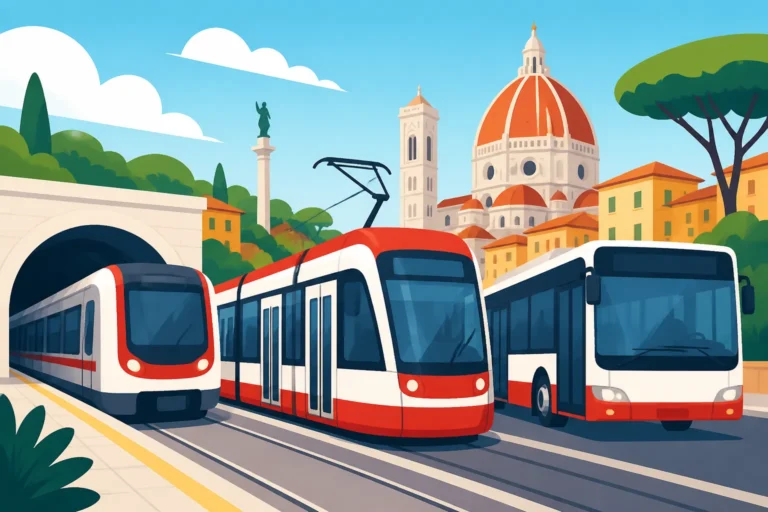
On a holiday like May 1st or Ferragosto, the city metro might run every 15 minutes instead of every 5. Regional trains that normally ferry commuters into the city every half hour might only run once every two hours. If you are relying on High-Speed Trains in Italy: Trenitalia, Italo, Routes, and Savings, you are generally safer, as these premium lines continue to run, though they often sell out weeks in advance as Italians travel to see family.
The real danger is the "Last Mile." You might get to the main station in Florence, but the local bus to your villa in the hills might not be running at all. Always use apps like Omio to verify the specific date of your travel, as the system will account for the "Festivo" status. If you are stuck, remember that taxis also charge a "Festivo" supplement, making your trip slightly more expensive.
Healthcare and Emergency Services During Shutdowns
Health doesn't take a holiday, but the standard healthcare system does. Your "Medico di Base" (Family Doctor) will not be available. If you have a non-emergency issue on a holiday or weekend, you must look for the "Guardia Medica," which is the out-of-hours medical service.
For true emergencies, the Emergency Medical Services in Italy: 112 and Hospitals remain fully operational, but the ER (Pronto Soccorso) will likely be more crowded than usual. For minor needs, look for the "Farmacia di Turno." Every neighborhood has a rotating schedule of pharmacies that must remain open during holidays and nights. You can usually find the list posted on the door of any closed pharmacy. Knowing Finding and Using Pharmacies in Italy and How to Find a Farmacia di Turno (Night Pharmacy) in Italy is perhaps the most important safety tip for anyone living in or visiting the country.
Supermarkets and Daily Logistics
In the past, every supermarket closed on holidays. Today, in big cities like Rome, Milan, or Florence, the larger "Ipercoop" or "Carrefour" stores might stay open, but they often close early—sometimes as early as 1:00 PM. In smaller towns, however, the shutdown remains absolute.
If you are staying in an Airbnb, don't assume you can arrive on a holiday afternoon and find a place to buy milk and coffee. If your arrival coincides with a holiday, use Booking.com to find a hotel with an on-site restaurant for your first night, or check GetYourGuide for food tours that are still running, as they often have pre-arranged access to places that remain open. This saves you from the "empty fridge" panic that many first-timers experience.
Planning Ahead: How to Navigate the Closures Successfully
While the closures can be frustrating, they are also an opportunity to experience a slower, more traditional version of Italy. The key is to shift your expectations and your schedule to match the local rhythm rather than fighting against it.
Booking Accommodations and Transport in Advance
Because holidays like Easter, Christmas, and Ferragosto involve massive internal migration, everything sells out. This is not the time to look for a last-minute deal. I always recommend using Booking.com at least three to four months out for holiday periods. Not only will prices be higher, but the best-located spots will be gone by February for the summer rush.
Similarly, train tickets for peak holiday dates should be secured early. Using Omio allows you to compare Italo and Trenitalia side-by-side to find the few remaining seats. If you wait until you arrive in Italy to buy a ticket for August 14th or 16th, you will likely find yourself standing in the corridor of a slow regional train for five hours—or worse, unable to travel at all.
Securing Tours and Activities Before the Rush
Major sites like the Colosseum, the Uffizi, and the Pompeii ruins are generally open on most holidays (excepting the "big three": Dec 25, Jan 1, and May 1), but they are incredibly busy because Italians are also off work and visiting them. This is where Staying Safe in Italy: Common-Sense Tips for Travelers comes in—crowds are prime territory for pickpockets.
To avoid three-hour queues, use GetYourGuide to book "skip-the-line" entries well in advance. During Ferragosto, these slots are like gold. Also, keep in mind that the heat in August is brutal. Many outdoor sites are best visited early in the morning, which means you need those tickets secured before you even leave home.
Adapting to the Italian Pace of Life
Ultimately, the best way to handle Italian closures is to embrace them. If the shops are closed, do as the Italians do: pack a picnic, head to a public park or a nearby beach, and simply enjoy the sun. The "Bella Figura" and the "Dolce Far Niente" (the sweetness of doing nothing) are at their peak during these times.
Instead of getting frustrated that you can't buy a new pair of shoes on May 1st, use the day to wander the quiet backstreets of a city like Venice or Rome, which are usually choked with commerce. The silence of a major Italian city on a holiday morning is one of the most beautiful experiences you can have as an expat or a visitor. Just make sure you bought your coffee beans the day before.
Disclaimer
This guide is intended for informational purposes only. While every effort is made to provide accurate and up-to-date information regarding Italian holidays and Ferragosto closures, schedules can change at the discretion of local authorities or individual business owners. Always verify specific opening hours and transport schedules directly with the service providers before traveling.