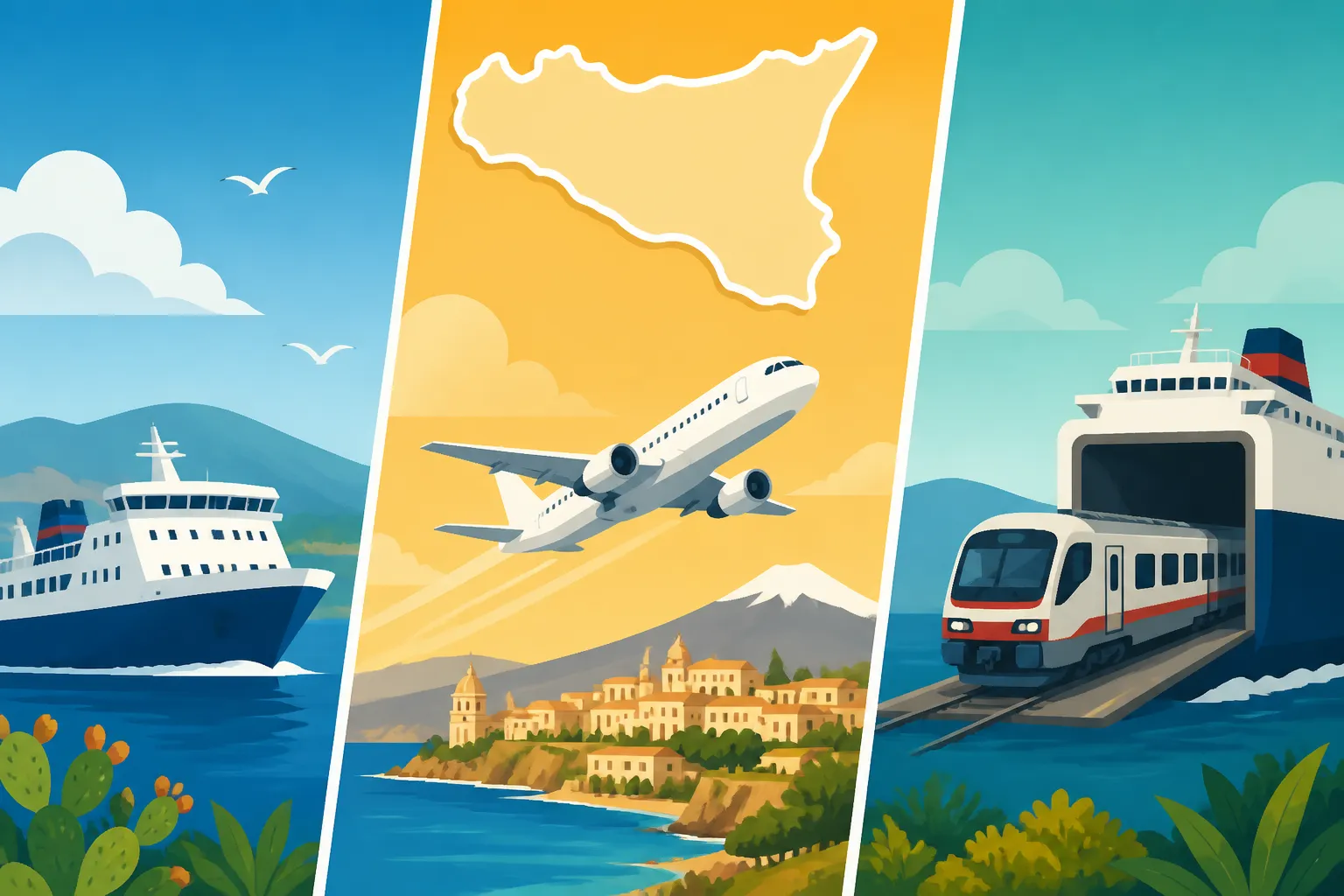
Getting to Sicily: Ferry vs Flight vs the Train That Boards a Ship
Ah, Sicily! The very name conjures images of sparkling seas, ancient ruins, and plates piled high with pasta alla Norma. But for many of us expats and seasoned travelers, the thought of actually getting to Italy's largest island can quickly turn that romantic dream into a logistical nightmare. Forget the straightforward flights of other European destinations; reaching Sicily often involves a delightful, yet sometimes bewildering, array of choices – from zipping across the skies to chugging along rails, or even sailing the seas. This guide is here to untangle all those options, compare the good, the bad, and the distinctly Italian, and show you how to navigate your journey seamlessly, ensuring your Sicilian adventure starts with ease.
Disclosure: This post may contain affiliate links. We may earn a commission at no extra cost to you if you make a purchase through these links. Read full disclosure.
The Sicilian Dream: Why Getting There Feels Like a Quest
Sicily is more than just an island; it's a world unto itself, steeped in history, vibrant culture, and breathtaking landscapes. For those of us who have lived in Italy for a while, or those just planning their first big trip, the allure is undeniable. However, the unique geographical position and the historical development of its infrastructure mean that getting there isn't always as simple as booking a direct flight to Rome or Milan. It's often a multi-modal puzzle that can leave even the most seasoned traveler scratching their head.
The Allure of Italy's Largest Island
Let's be honest, who doesn't dream of Sicily? I remember my first thoughts of it—the promise of Etna's brooding presence, the sun-drenched beaches of San Vito Lo Capo, the bustling markets of Palermo, and the ancient Greek theaters nestled in Taormina. It’s a place where history whispers from every stone, where the food is legendary, and where life feels lived with an intensity that's both exhilarating and profoundly human. For many, it's the Italy they picture in their minds: rugged, authentic, and utterly captivating. You want to experience that, to immerse yourself in it, and the journey itself becomes part of that anticipation.
The Logistics Headache for Expats and Travelers
But then reality hits. You open your laptop, ready to book, and suddenly you're faced with a bewildering menu of options: fly, ferry, or… a train that actually boards a ship? It’s enough to make you want to throw your hands up in exasperation and just settle for another weekend in Tuscany. The challenge isn't just picking a mode of transport; it's understanding the regional nuances, the connections, the potential delays, and the various booking platforms. It feels like you need a degree in Italian logistics just to get there. That's where a tool like Omio becomes an absolute game-changer, helping you effortlessly compare and book these diverse options, saving you both time and stress.
Flying to Sicily: Speed, Convenience, and a Dash of Stress
For many, the first thought for any significant journey is flying. It's often the quickest, and sometimes, surprisingly, the most economical way to cover long distances. Sicily has a decent network of airports, connecting it to the Italian mainland and wider Europe. But like everything in Italy, flying here has its own particular quirks and considerations.
Major Airports and Airlines Serving Sicily
Sicily boasts several key airports, each serving different parts of the island. The main international hubs are:
- Palermo Falcone Borsellino Airport (PMO): Located in the north, this is a popular choice for those heading to Palermo, Cefalù, or the western part of the island. It's well-connected with regular flights from major Italian cities like Rome, Milan, and Naples, as well as numerous European destinations.
- Catania Fontanarossa Airport (CTA): Situated on the eastern coast, this airport is usually the best option for visiting Catania, Taormina, Mount Etna, and the southeastern Baroque towns. It's often the busiest airport, with extensive connections across Italy and Europe.
- Trapani Birgi Airport (TPS): Smaller and located in the west, this airport is often served by budget airlines like Ryanair. It's ideal if your destination is Trapani, Marsala, or the Egadi Islands.
- Comiso Airport (CIY): This relatively newer, smaller airport in the southeast is another good option for reaching Ragusa, Modica, and Noto, particularly for those looking to explore the Val di Noto region without a long drive from Catania.
Major airlines operating these routes include Italy's own ITA Airways, as well as budget carriers like Ryanair, EasyJet, and Volotea. For seamless booking across all these options, including comparing routes and prices from different airports, Omio is incredibly useful, allowing you to see all the flight possibilities in one go.
Pros and Cons of Air Travel
Let's weigh it up. Flying certainly has its distinct advantages, but it's not without its drawbacks, especially when you factor in the Italian travel experience.
Pros:
- Speed: This is the big one. A flight from Rome to Palermo or Catania takes roughly an hour, a stark contrast to the many hours of land and sea travel. If you're on a tight schedule or just want to maximize your time on the island, flying is unbeatable.
- Reach: Flights can take you directly from many European cities, saving you the hassle of first traveling through mainland Italy. This is particularly appealing for those coming from further afield.
- Comfort (During the flight): Once you're in the air, it's typically a smooth and relatively comfortable journey, especially on a modern aircraft. You can sit back, relax, and anticipate your arrival.
Cons:
- Airport Logistics: Getting to and from the airport can eat into your travel time and budget. Rome's Fiumicino (FCO) and Milan's Malpensa (MXP) are massive hubs, and navigating them can be a trek. Even smaller airports require coordination for transfers into the city center. This often means additional bus or taxi costs and travel time, effectively extending your "quick" flight by several hours.
- Baggage Restrictions and Costs: Budget airlines are notorious for their strict baggage policies. That seemingly cheap flight can quickly become expensive once you add a checked bag, priority boarding, and seat selection. Forget about spontaneously bringing back a crate of Sicilian wine if you're flying with just a carry-on!
- Environmental Impact: For environmentally conscious travelers, flying is the least sustainable option. If you're trying to minimize your carbon footprint, this might not be your first choice.
- Lack of Scenery: While quick, you miss out on the incredible changing landscapes of Italy that you'd experience by train or ferry. The journey becomes purely functional, rather than part of the adventure.
Navigating Sicilian Airports
Once you land in Sicily, the journey isn't over. Sicilian airports are generally well-organized, but like many places, they have their own rhythm. From Palermo's Falcone Borsellino, you can catch the Trinacria Express train directly to Palermo Centrale, or choose from various bus services like Prestia e Comandè. From Catania Fontanarossa, the ALIBUS shuttle service takes you to the city center and main train station every 20 minutes. Car rental is also a popular option, especially if you plan to explore the island widely, but remember to factor in potential ZTLs and parking challenges in cities. You might want to check out our guide on Renting a Car in Italy: ZTLs, Insurance, and Driving Tips before you arrive. Again, using a platform like Omio can help you find not just flights, but also onward train or bus connections from Sicilian airports, streamlining your entire travel plan.
The Romance (and Reality) of Ferry Travel to Sicily
There's something inherently romantic about traveling by sea, especially to an island as storied as Sicily. The ferry offers a different pace, a chance to breathe, and often, the opportunity to bring your car. But the reality can sometimes be a bit less dolce vita and a bit more practical challenge.
Key Ferry Routes and Operators
Sicily is very well-connected by ferry from mainland Italy, with several major ports serving as gateways. The main routes include:
- Naples to Palermo: This is one of the most popular and scenic routes, typically an overnight journey. Grandi Navi Veloci (GNV) and Tirrenia are the primary operators, offering a range of cabins, restaurants, and amenities. It’s a fantastic way to arrive in Palermo refreshed and ready to explore.
- Civitavecchia (Rome's Port) to Palermo/Termini Imerese: If you're starting from the Rome area, Civitavecchia offers connections. GNV and Grimaldi Lines operate these routes. Termini Imerese is a smaller port near Palermo, sometimes a slightly cheaper or alternative option.
- Salerno to Palermo/Messina: Another southern port, Salerno, offers connections, often with Grimaldi Lines. This can be a good alternative if Naples is too busy or you're coming from further south.
- Villa San Giovanni to Messina: This is the shortest and most frequent crossing, essential for anyone driving or taking the train to Sicily. It's a quick hop across the Strait of Messina, with ferries departing every 20-30 minutes, primarily operated by Caronte & Tourist. This is less of a "cruise" and more of a vital transport link.
- Reggio Calabria to Messina: Similar to Villa San Giovanni, this route also offers frequent, short crossings to Messina, often quicker to reach from certain parts of Calabria.
Booking these ferries, especially during peak season, is crucial. Websites like Omio can bundle these ferry tickets with your entire journey, making the comparison of departure times and operators incredibly simple.
The Ferry Experience: What to Expect Onboard
The ferry experience can vary dramatically depending on the route and operator. On the longer overnight journeys from Naples or Civitavecchia, you're essentially on a mini-cruise ship.
- Cabins: You can book anything from a simple armchair seat to a private cabin with an en-suite bathroom. For overnight trips, a cabin is highly recommended for a good night's sleep.
- Amenities: Most larger ferries offer restaurants (from self-service cafeterias to à la carte dining), bars, shops, and sometimes even cinemas or play areas for children. You can enjoy a leisurely meal, watch the sunset over the Tyrrhenian Sea, and truly unwind. This is a journey, not just a transfer.
- Bringing a Car: One of the biggest advantages of the ferry is the ability to bring your own vehicle. This is invaluable if you plan to explore the more remote parts of Sicily, which often lack extensive public transport. Just be prepared for the added cost and the sometimes chaotic boarding process at Italian ports!
- Messina Strait Crossing: The short crossing from Villa San Giovanni or Reggio Calabria to Messina is a different beast entirely. It's a workhorse route. You drive your car onto the ferry, park, and then head upstairs for the short 20-30 minute journey. There are usually basic cafes on board, but most people just stay with their cars or enjoy the sea breeze. It's a functional, quick crossing, perfect for linking mainland Italy with Sicily.
Pros and Cons of Ferry Journeys
Considering a ferry? Here’s what you need to know about setting sail for Sicily.
Pros:
- Vehicle Transport: The undisputed champion if you're traveling with your own car, motorbike, or even a campervan. This gives you unparalleled freedom once you arrive in Sicily.
- Relaxed Pace: It's a chance to slow down, disconnect, and enjoy the journey itself. The sea air, the views, and the absence of airport security lines can be incredibly refreshing.
- Comfort (with a cabin): An overnight ferry in a private cabin can be surprisingly comfortable, allowing you to arrive at your destination rested.
- Generous Baggage Allowance: Unlike airlines, ferries are far more lenient with baggage. You can pack as much as your car can hold, or bring larger items without incurring hefty fees.
- Unique Experience: There's a certain charm to arriving in a new place by sea, seeing the coastline gradually appear on the horizon. It adds an adventurous element to your trip.
Cons:
- Time-Consuming: Long-distance ferry journeys are slow. An overnight trip takes 10-12 hours, plus boarding and disembarkation time. This might not be suitable if you're short on time.
- Cost: While basic seats can be cheap, adding a car and a private cabin for an overnight journey can quickly make the ferry more expensive than a budget flight, especially for solo travelers.
- Weather Dependent: Ferries are subject to weather conditions. Strong winds or rough seas can lead to delays or even cancellations, leaving you stranded. This is a real concern, especially in winter or during stormy periods.
- Port Logistics: Italian ports, while bustling and authentic, can also be a bit chaotic. Finding your way, dealing with check-in, and maneuvering your vehicle can be stressful, especially for first-timers.
- Motion Sickness: If you're prone to seasickness, this might not be the best option for you. Even on large ferries, rough waters can be uncomfortable.
For those venturing by ferry, Omio can help compare operators, routes, and prices, and even provide details on specific vehicle requirements, making the planning much easier.
The Train That Boards a Ship: A Unique Italian Experience
This is truly one of Italy's most unique travel experiences, and one that often catches first-time visitors by surprise. The idea of an entire train being loaded onto a ferry to cross the sea might sound like something out of a vintage movie, but it's a very real and active part of reaching Sicily.
Understanding the Messina Strait Crossing
The Strait of Messina, separating mainland Italy (Calabria) from Sicily, is a narrow stretch of water, only about 3 kilometers (2 miles) at its narrowest point. For centuries, it's been a critical bottleneck for transport. While bridges have been proposed and debated for decades, the tried-and-true method for trains and cars to cross remains the ferry.
When you book a train ticket from, say, Rome or Naples to Palermo or Catania, your journey will include this extraordinary segment. The train travels south along the Calabrian coast to the port town of Villa San Giovanni. Here, the magic happens: the train is uncoupled into sections, and these sections are then shunted directly onto massive ferry boats specially designed for this purpose. Passengers usually disembark from the train carriages (though some older guides might tell you you can stay onboard, it's generally discouraged and often not allowed for safety reasons) and head to the upper decks of the ferry for the short crossing.
The Journey: From Mainland to Sicilian Rails
Once the train is securely loaded onto the ferry, the vessel sets sail across the Strait to Messina in Sicily. The crossing itself is quick, typically 20-30 minutes, and offers fantastic views of both the Calabrian and Sicilian coastlines, with Mount Etna often visible in the distance on a clear day. You'll join other foot passengers and car travelers on the upper decks. There's usually a cafeteria onboard where you can grab a quick coffee or snack.
Upon arrival in Messina, the process is reversed. The train carriages are carefully shunted off the ferry and reassembled on the tracks. You then re-board your train, which continues its journey through Sicily, heading either west towards Palermo or south towards Catania and other destinations. The whole process of loading, crossing, and unloading can add a significant amount of time to the journey (typically 1.5 to 2 hours in total), but it's an experience you won't forget. To manage such a multi-stage trip efficiently, comparing train schedules and securing your tickets through a platform like Omio is incredibly helpful, as it provides a consolidated view of these complex routes.
Pros and Cons of the Train-Ferry Hybrid
Choosing the train-ferry option is a definite experience, but let's look at its practicalities.
Pros:
- Unique Cultural Experience: This is perhaps the biggest draw. It’s a genuine slice of Italian life and a throwback to an older era of travel. It's a story you'll tell when you get back home.
- Convenience (once booked): If you book a direct train ticket from a major Italian city to a Sicilian one, the entire multi-modal journey is handled for you. You don't have to worry about separate ferry tickets or transfers, though you do have to disembark and re-board.
- Comfort (on the train): Italian trains, especially the Frecciarossa or Intercity services, are generally comfortable, offering space to move around, dining cars, and scenic views for the mainland portion of the journey. You can relax and enjoy the landscape as you head south. Consider using Italy’s public transport and checking out our guide on High-Speed Trains in Italy: Trenitalia, Italo, Routes, and Savings for tips on longer rail journeys.
- Scenic Views: The journey down the Italian boot, passing through diverse landscapes, and then the stunning Strait of Messina crossing, offers plenty of visual delights.
- Environmental Friendliness: Compared to flying, train travel is a more sustainable option, especially for long distances within Europe.
Cons:
- Time-Consuming: This is arguably the slowest option for long distances. A train journey from Rome to Palermo can easily take 10-12 hours, sometimes more, largely due to the time spent on the Messina Strait crossing logistics.
- Logistical Stops: The process of uncoupling, loading, disembarking, re-boarding, and re-coupling is fascinating but adds significant downtime where you're not actively moving towards your destination.
- Potential for Delays: Any delay on the rail line or with the ferry connections can compound, leading to a much longer journey than anticipated. Patience is definitely a virtue here.
- Limited Routes: Not all trains continue onto Sicily. High-speed trains, for example, usually terminate at Villa San Giovanni, requiring a separate local connection or bus to Messina. It's typically the Intercity and night trains that make the full crossing.
- Less Flexibility: Once you're on the train, your schedule is fixed. There's no popping off at a scenic town unless it's a planned stop.
For those planning to experience this unique journey, booking through Omio is highly recommended. It seamlessly integrates these complex train-ferry routes, allowing you to see departure times, prices, and even estimated journey durations, cutting through the confusion of multiple booking sites.
Comparing Your Options: Which Way to Sicily is Right for You?
So, you've got a clearer picture of the main ways to reach Sicily. But how do you choose? It really boils down to your priorities: how much time you have, your budget, what kind of experience you're looking for, and whether you need to bring a vehicle.
Cost, Time, and Comfort Breakdown
Let's put it all into a handy comparison. Keep in mind that prices are estimates and can fluctuate wildly based on booking in advance, seasonality, and specific routes.
| Feature | Flight (e.g., Rome-Palermo/Catania) | Ferry (e.g., Naples-Palermo, overnight) | Train (e.g., Rome-Palermo/Catania, Intercity) |
|---|---|---|---|
| Travel Time | 1-1.5 hours (flight) + 2-4 hours (airport) | 10-12 hours (overnight) + 1-2 hours (port) | 10-14 hours (including Strait crossing) |
| Cost Range | €40 – €200+ (one-way, incl. baggage) | €60 – €250+ (one-way, foot/car + cabin) | €50 – €150+ (one-way, seat/sleeper) |
| Comfort | Good during flight, can be stressful at airports | Excellent with cabin, variable with basic seats | Good with train, unique experience on ferry |
| Luggage | Strict limits, often extra fees | Generous, especially with a car | Moderate, can be stored overhead or at ends |
| Vehicle | No (unless you rent upon arrival) | Yes, for an extra fee | Yes, if your car is also loaded onto a car ferry |
| Experience | Quick & efficient, functional | Relaxed, scenic, mini-cruise feel | Adventurous, unique, scenic, slow-travel vibe |
| Best For | Time-sensitive travelers, direct European links | Bringing a car, relaxed pace, overnight journeys | Unique experience, sustainable travel, enjoying the journey |
This table immediately shows the trade-offs. If speed is king, flying wins, but Omio makes it easy to compare the full cost, including potential baggage fees, across different airlines. If you’re touring with your car, the ferry is your best bet, and Omio can help you find those specific vehicle-inclusive bookings. For the truly adventurous or those prioritizing sustainability, the train-ferry combination, again easily compared on Omio, offers a memorable journey.
Who Each Option Suits Best
-
Flights are ideal for:
- Short Trips: If you only have a few days in Sicily and want to maximize your time on the island.
- Time-Sensitive Travelers: Business travelers or those with tight schedules.
- International Connections: If you're coming from outside Italy and want the most direct route.
- Budget-Conscious (without a car): Often the cheapest option if you pack light and book in advance.
- First-timers: It can feel less daunting than navigating ferry terminals with a car.
-
Ferries are ideal for:
- Road Trippers: If you're bringing your car and plan to explore Sicily's nooks and crannies independently.
- Families: More space for kids to move around, and you can bring more luggage.
- Relaxed Travelers: Those who enjoy slow travel and seeing the coastline from the sea.
- Overnight Travel Preference: If you prefer to travel while you sleep and arrive refreshed.
-
The Train-Ferry Hybrid is ideal for:
- Adventure Seekers: Travelers looking for a truly unique and memorable experience.
- Eco-Conscious Travelers: A more sustainable alternative to flying for long distances.
- Those without a Car: If you're relying on public transport within Sicily, the train can be a comfortable way to get there.
- Sightseers: Offers fantastic views of Italy's diverse landscapes and the Messina Strait.
- Those on a budget (for seats): Often comparable to budget flights, especially if booked well in advance. For onward travel within Sicily, platforms like Omio can also help you compare local train and bus services, making your journey from Messina to your final destination effortless.
Remember, the "best" option is the one that aligns with your personal travel style and needs. And with a single search on Omio, you can explore all these possibilities side-by-side.
Booking Your Sicilian Adventure: Making It Easy with Omio
Now that you're armed with all this knowledge, you might still feel a bit overwhelmed by the sheer number of websites, operators, and potential connections. This is precisely where a fantastic platform like Omio comes into its own. It's the multi-tool for all your Italian travel needs, especially for a complex journey to Sicily.
Why Omio Simplifies Complex Travel
Let's face it, navigating multiple Italian transport websites can be a challenge, even for those of us who've lived here for years. You're bouncing between Trenitalia for trains, various ferry operators, and then a host of airlines, all with different interfaces, languages, and booking processes. It's a recipe for confusion and missed connections.
Omio cuts through all that. Think of it as your personal travel assistant, consolidating all your options in one place. Whether you're considering the high-speed rail to a ferry port, a direct flight, or that quirky train-on-a-ship, Omio pulls up all available routes, compares prices and travel times, and lets you book directly.
Here’s why it’s a lifesaver for Sicily-bound travelers:
- One-Stop Search: Enter your origin and destination (e.g., Milan to Palermo), and Omio shows you all flights, trains, and ferries available, sorted by price, speed, or a combination. No more endless browser tabs!
- Transparent Pricing: See the real costs upfront, including potential hidden fees (like baggage for flights), allowing you to make an informed decision.
- Multi-Operator Comparison: Compare ITA Airways with Ryanair, GNV with Tirrenia, and Trenitalia with regional buses, all on one screen. This is particularly valuable for complex routes to Sicily.
- Multilingual Support: For those still perfecting their Italian, Omio offers a user-friendly interface in multiple languages, making the booking process far less intimidating.
- Mobile App Convenience: Book and manage your tickets on the go with their easy-to-use app. Your e-tickets are right there on your phone.
- Journey Planning: It helps visualize your entire journey, including transfers between different modes of transport, giving you a clearer picture of what to expect.
From finding the perfect connection to booking your tickets securely, Omio takes the stress out of planning your trip to Sicily. You can quickly see, for example, if combining a train journey with a short flight from Naples is more efficient than the long ferry ride, or if the train-ferry combo offers a better overall experience for your budget.
Step-by-Step Booking with Omio
Ready to book your Sicilian adventure? Here’s a quick guide to using Omio:
- Visit the Omio Website or App: Open your browser or launch the Omio app.
- Enter Your Details: Input your starting city (e.g., Rome), your destination in Sicily (e.g., Catania), and your desired travel dates.
- Search for Connections: Hit "Search," and Omio will get to work, pulling up all relevant options.
- Filter and Compare: You'll see a list of flights, trains, and ferries. Use the filters to sort by price, duration, number of changes, and even specific transport types if you have a preference. This is where the magic happens – seeing all options clearly laid out.
- Review Details: Click on a specific journey to see more details, including stops, estimated travel times for each leg, and operator information. For a unique experience like the train that boards a ship, Omio will clarify that it’s a multi-modal journey.
- Select Your Ticket: Choose the option that best suits your needs and budget.
- Enter Passenger Information: Fill in your name and other required details.
- Secure Payment: Complete your booking with your preferred payment method.
- Receive Your Tickets: Your tickets will be sent to you via email and will also be accessible in the Omio app. You’re all set for Sicily!
Using Omio truly simplifies what could otherwise be a fragmented and frustrating booking process. It ensures you spend less time navigating bureaucracy and more time dreaming about that first cannoli or the azure waters of the Ionian Sea.
Disclaimer
The information provided in this guide is intended for general informational purposes only and is based on typical travel conditions and regulations in Italy. Transport schedules, prices, and policies are subject to change due to operational decisions, seasonal variations, and unforeseen circumstances (such as strikes or weather events). Always verify the latest information directly with transport providers and official sources before making travel arrangements. While efforts have been made to ensure accuracy, this guide does not constitute professional advice. We recommend consulting official government and transportation websites for the most current and specific details relevant to your travel plans.