How to Avoid Pickpockets on Rome’s Metro and Buses
It's an unfortunate truth that alongside the breathtaking beauty and history of Rome, there's another, less charming aspect many visitors and even seasoned expats come to terms with: the persistent presence of pickpockets, especially on the city's bustling public transport. It's not a scare tactic, but a realistic heads-up that these skilled individuals thrive in crowded spaces, often leaving you feeling violated and helpless. This guide isn't here to dampen your Roman holiday spirit, but to arm you with practical, battle-tested advice to navigate Rome's metro and buses with confidence and keep your valuables safe.
Disclosure: This post may contain affiliate links. We may earn a commission at no extra cost to you if you make a purchase through these links. Read full disclosure.
The Harsh Reality: Understanding Rome's Pickpocket Scene
Let's be blunt: pickpocketing in Rome isn't some rare occurrence; it's a well-oiled operation, and they are incredibly good at what they do. I've heard countless stories, and even had a few close calls myself over the years. It's not about being paranoid, but about being informed and prepared. These individuals, often working in teams, blend seamlessly into the crowds, and before you even realize what's happening, your wallet, phone, or passport could be gone. It's a frustrating aspect of traveling in such a beautiful city, and it preys on distraction and vulnerability.
Where and How They Operate
The pickpocketing "hotspots" in Rome are almost always where the crowds are thickest, especially those involving tourists who are often more distracted and less aware of their immediate surroundings. Think of it as their hunting ground.
The Rome Metro is probably the most notorious, particularly lines A and B. During peak hours, these trains are absolutely packed, providing the perfect cover for nimble fingers. Key stations to be extra vigilant at include:
- Termini Station: The main transportation hub, constantly buzzing with arriving and departing travelers. It's chaotic, loud, and a prime target zone. Whether you're buying tickets, waiting for your train, or transferring between lines, keep your guard up.
- Colosseo and Barberini/Spagna (Metro A): These are stops for major tourist attractions. People are often looking up at the historical wonders, buried in guidebooks, or trying to snap photos, making them incredibly easy targets. Imagine trying to get that perfect shot of the Colosseum or the Spanish Steps, completely absorbed, and not noticing the hand slipping into your bag.
- Ottaviano/Cipro (Metro A): The gateway to the Vatican City and St. Peter's Basilica. Again, huge crowds of pilgrims and tourists.
Beyond the metro, certain bus routes are also infamous. The problem isn't the buses themselves, but the sheer volume of tourists who use them to get to popular sights, often standing shoulder-to-shoulder.
- Bus 64 (Termini to Vatican): This route is practically a mobile pickpocket academy. It runs past many major attractions, is perpetually full of tourists, and provides ample opportunities for thieves to operate. I've had friends who were targeted multiple times on this very bus.
- Bus H (Termini to Trastevere): Another popular route that connects the central station with the charming Trastevere neighborhood. While Trastevere itself is less of a hotspot, the bus ride there and back, especially during evening hours, can be risky.
Their tactics are varied and often designed to distract you. It's rarely a violent confrontation; it's subtle, quick, and highly professional. Common methods include:
- The "Bump and Grab": Someone might "accidentally" bump into you, creating a momentary distraction while an accomplice slips into your pocket or bag. This is particularly common when getting on or off crowded trains or buses.
- The "Map Sellers" or "Petition Signers": While not always pickpockets, these individuals, often working in pairs or small groups, approach tourists with maps or clipboards, using them as a shield to block your view of their hands while they reach for your belongings.
- The "Newspaper/Jacket Drape": A common technique where a newspaper or a jacket is casually draped over your bag or arm, masking the movement of their hand as they open a zipper or lift a wallet.
- Creating a Diversion: One person might drop coins, shout, or start a fake argument to draw everyone's attention, while another silently works through the crowd.
It's a frustrating reality to acknowledge, but knowing these patterns is the first step in protecting yourself. These aren't opportunistic kids; they are organized and adept.
Who Are the Targets?
Pickpockets aren't random in their choices; they are masters of observation, looking for the easiest marks. Unfortunately, if you’re a tourist, you’re often exactly what they're looking for.
- The Distracted Tourist: This is their prime target. Anyone glued to their phone, navigating a map, looking lost, admiring architecture, or simply caught up in conversation with travel companions is an easy mark. When your attention is divided, you're less likely to notice someone invading your personal space. I've seen countless tourists with phones practically glued to their faces while riding the metro, completely oblivious to their surroundings.
- Easily Accessible Valuables: This is perhaps the biggest giveaway. Wallets peeking out of back pockets, phones casually slipped into an open jacket pocket, backpacks worn loosely on the back, or tote bags left unzipped are practically an invitation. They go for what's easiest to grab without drawing attention. A simple open zipper can mean the difference between a safe journey and a lost passport.
- Those Carrying "Too Much": Wallets stuffed with cash, multiple credit cards, passports, and all documents in one bag. If they get one bag, they get everything. It's far better to spread your valuables around or only carry what you absolutely need for the day.
- Families or Large Groups: While there's safety in numbers for some things, groups can also be easily distracted. One parent might be focused on children, another on directions, creating multiple points of vulnerability. When people are chatting loudly and not paying attention to their periphery, they become easy prey.
- Those with Obvious "Tourist Gear": Big cameras slung loosely, brand new shoes, or flashy jewelry can make you stand out. While you shouldn't feel you need to completely overhaul your wardrobe, looking overly flashy can unfortunately attract unwanted attention.
The goal is to not look like an easy mark. It's about perception and making yourself a less appealing target than the next person.
Essential Strategies to Outsmart Pickpockets on Rome's Public Transport
Now that we've covered the unfortunate reality, let's talk about how to become a less appealing target. This isn't about being scared, it's about being smart. As an expat who's been here a while, these are the habits I've developed, and I encourage everyone visiting to adopt them too. It really does make a difference.
Securing Your Valuables
This is your first line of defense. The easier it is for a pickpocket to access your stuff, the higher the chance it'll disappear.
- Body-Worn Security:
- Money belts or neck pouches: These might feel a bit dorky, but they are incredibly effective for passports, extra cash, and secondary credit cards. Worn under your clothes, they are virtually undetectable and inaccessible to thieves. Just remember to only access them in private, never on the street or in public transport.
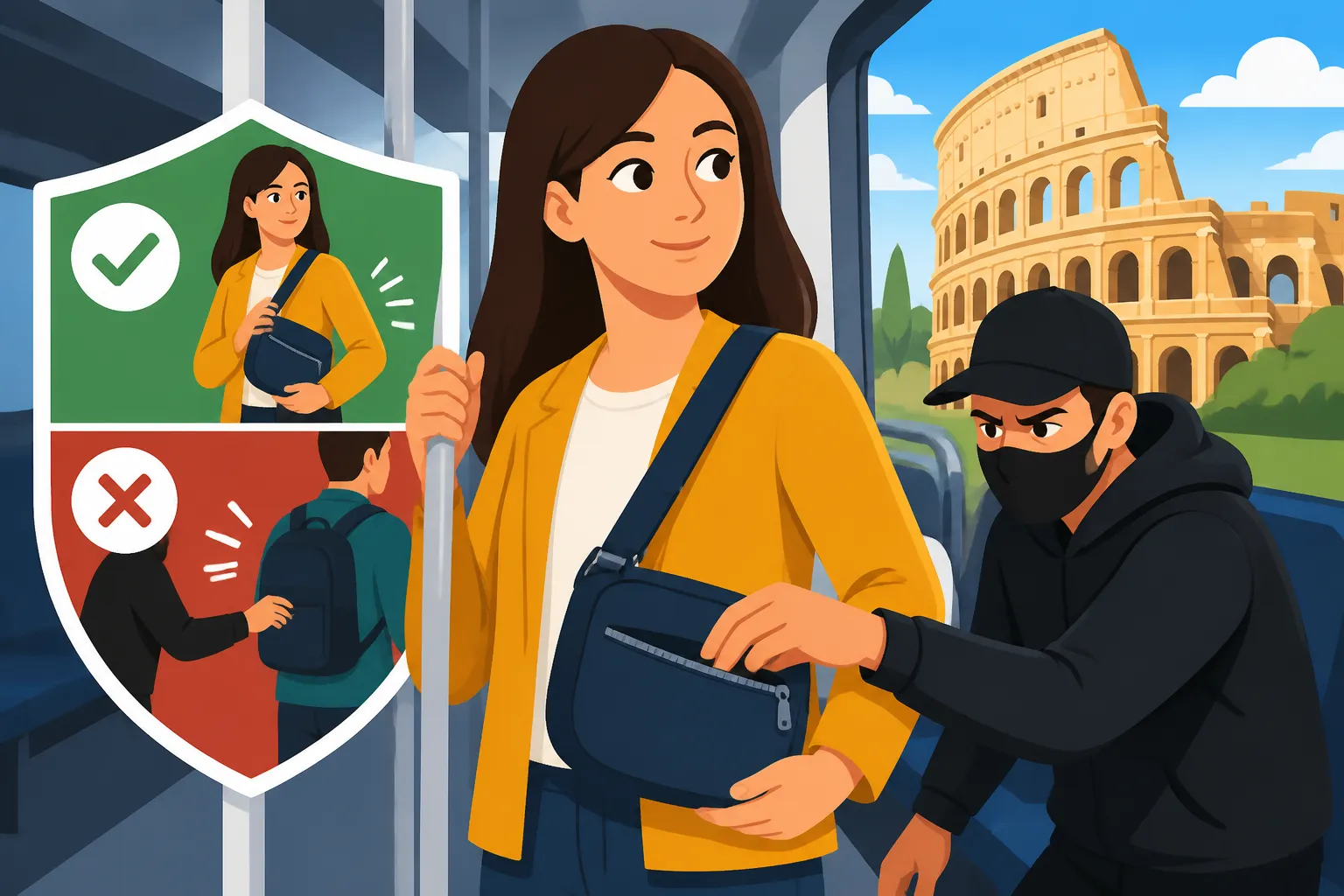
- Cross-body bags (worn in front): If you prefer a bag, a sturdy cross-body bag with a secure zipper is a good option. Critically, wear it across the front of your body with the flap or zipper facing you. Keep a hand on it in crowded areas. This position makes it much harder for someone to open without you noticing.
- Zippered inner pockets: If your jacket or trousers have internal zippered pockets, use them for your phone or a small amount of cash. These are harder to access quickly.
- Bag Types and Placement:
- Anti-theft backpacks: There are many brands now that offer slash-proof material, hidden zippers, and even RFID-blocking pockets. While an investment, they offer significant peace of mind.
- Locking zippers: Some bags come with small loops where you can attach a tiny padlock to the main compartment zippers. This won't stop a determined thief with wire cutters, but it adds a valuable delay and makes you a less appealing target.
- Backpacks on your chest: In incredibly crowded places like the Rome Metro during rush hour, swing your backpack around to your front, holding it against your chest. Yes, it's a bit awkward, but it makes your bag completely visible and secure. I promise, you'll see plenty of locals doing this on the bus or metro.
- Avoid leaving bags unattended: Even for a second. This includes placing it on an empty seat beside you, or on the floor. Keep it in your lap or firmly between your feet, with a strap wrapped around your leg, if you absolutely must.
- The "No Back Pocket" Rule: I cannot stress this enough. Your wallet, phone, or anything else in your back pocket is as good as gone in a crowded Roman bus or metro. It’s the easiest, most common target. Just don’t do it.
For more generalized tips on keeping your belongings safe, you might find some useful insights in our guide on Staying Safe in Italy: Common-Sense Tips for Travelers.
Situational Awareness is Your Best Friend
Being aware of your surroundings isn't about being paranoid; it's about being present and mindful. This greatly reduces your vulnerability.
- Be hyper-aware in crowded areas: This includes not just the metro and buses, but also platforms, bus stops, and particularly when you're getting on and off public transport. This is when the "bump and grab" tactic is most prevalent. People are jostling, pushing, and everyone is focused on getting where they need to go. Keep your bag close and secure, and be aware of anyone pressing too close.
- Limit phone use in public: As tempting as it is to scroll through Instagram or check your next destination, being engrossed in your phone makes you a perfect target. Your attention is elsewhere, and you won't notice approaching threats. If you need to check directions, do so quickly, then put your phone away. Better yet, step into a quieter corner or shop to orient yourself. Also, beware of "snatch and grab" thieves on scooters in busier streets who will grab phones right out of your hand. For reliable connectivity without having your phone out constantly, consider options like Mobile Data and eSIMs for Travel in Italy.
- Trust your gut: If someone is getting uncomfortably close, if a situation feels off, or if you notice someone intently watching you or your bag, move away. Change cars on the metro, step off the bus, or simply turn around and face a different direction. Your intuition is often your best security system.
- Be wary of distractions: Remember the tactics mentioned earlier? Someone dropping coins, a child running into you, or an overly friendly person trying to engage you in conversation – these can all be diversions. Your response should be to immediately check your belongings, secure them, and politely but firmly disengage.
- Avoid standing near the doors on metro/buses: Thieves often position themselves near the doors, especially on the metro. They wait for the doors to open, snatch something, and then dash off the train just as the doors close, leaving you stranded inside. Try to move further into the carriage if possible.
- Look confident, even if you're not: Walk with purpose, make eye contact (but don't stare), and project an air of confidence. Pickpockets often target those who appear hesitant, lost, or overly engrossed in their own world.
To get a better understanding of how Rome's public transport system works, which can help you navigate with more confidence, check out our detailed guide on Getting Around Italian Cities: Metro, Tram, and Buses.
Blending In (or At Least Not Standing Out)
While you can't completely camouflage yourself as a local, you can avoid making yourself an obvious target.
- Dress smart but not flashy: Rome is a stylish city, and Italians generally dress well. This doesn't mean you need designer clothes, but avoid overly casual attire that might scream "tourist." More importantly, avoid wearing expensive jewelry, flashy watches, or carrying overtly branded, high-end handbags that are a clear signal of wealth. Simplicity and comfort are key.
- Tone down overt tourist behavior: Resist the urge to walk around with a large, unfolded paper map (use your phone discreetly or plan your route before leaving your accommodation). Avoid loud conversations in English if possible, especially on public transport where many locals try to keep to themselves. Being observant of local behavior can also help you blend in more; for example, Italians tend to keep their voices down in public spaces. Understanding a bit about Italian Social Customs: Greetings, Gestures, and Personal Space might give you an edge.
- Keep documents safe at your accommodation: You absolutely do not need to carry your passport with you daily unless there's a specific reason (e.g., train travel to another country, buying a SIM card). Most hotels have a safe in the room or at reception. Take a photocopy of your passport and visa, or a clear photo on your phone, to carry with you. This will suffice for most ID checks. Keep your main stash of cash and all but one credit card securely locked away. For considerations about where you stay, our guide on Accommodation in Italy: Hotels, B&Bs, and Agriturismi can offer some tips on finding secure lodging.
Practical Steps and What to Do if the Unthinkable Happens
Despite all precautions, sometimes bad luck strikes. It's important to know what to do if you do become a victim, as well as take proactive steps before you even leave your hotel.
Pre-Departure and On-The-Go Preparations
Forewarned is forearmed, and a little preparation goes a long way in mitigating the impact of being pickpocketed.
- Photocopy and Scan Important Documents: Before your trip, make several photocopies of your passport, visa, driver's license, credit cards (front and back, noting the emergency numbers to call), and travel insurance policy. Keep one set of photocopies in your luggage, separate from the originals. Scan these documents and email them to yourself or save them on a secure cloud drive, so you can access them from anywhere. This is crucial for replacing documents swiftly if they're stolen.
- Distribute Cash and Cards: Never, ever carry all your cash, all your credit cards, and your debit card in one place. Divide them. Keep some cash in your wallet, another amount in a separate, secure pocket or money belt, and a backup credit card in a completely different location (e.g., a hotel safe). This way, if one item is stolen, you're not completely stranded. Speaking of cash, our guide on How Much Cash Should You Carry When Traveling in Italy? offers great advice.
- Inform Your Bank and Credit Card Companies: Before traveling, notify your bank and credit card companies of your travel dates and destinations. This prevents them from flagging legitimate overseas transactions as fraud and freezing your cards. Also, make sure you have their international emergency numbers stored somewhere secure, not just on your phone (which might be the item stolen).
- Consider Travel Insurance: This is a non-negotiable for me. Good travel insurance can cover the cost of stolen items, emergency travel document replacement fees, and even unexpected medical expenses. It won't bring back your sentimental items, but it can certainly ease the financial burden and stress. If you're wondering about coverage, our article Do You Need Travel Insurance to Visit Italy? provides excellent context.
- Secure Hotel Room Safes: When booking accommodation, check if there's an in-room safe or a safe available at the reception. Platforms like Booking.com often list these amenities. Always use it for your passport, extra credit cards, large sums of cash, and any expensive jewelry you're not wearing.
Immediate Actions if You're Pickpocketed
Being pickpocketed is a terrible feeling—a mix of anger, frustration, and violation. It's easy to panic, but try to stay calm and follow these steps.
- Confirm What's Missing: As soon as you suspect something is gone, check all your pockets and bags. Sometimes items simply shift. If something is indeed missing, try to pinpoint where and when you last had it.
- Cancel Credit Cards Immediately: This is your top priority. Use a friend's phone or find a public phone to call your bank and credit card companies to report the theft. The faster you do this, the less likely you are to be liable for fraudulent charges. Our guide on Tips to Avoid Credit Card Fraud in Italy offers additional useful information.
- Report to the Police (Questura or Carabinieri): You must file a police report. This is essential for any insurance claim and for replacing documents like your passport. You can go to the nearest Questura (State Police) or Carabinieri station. While language can be a barrier, many larger stations in Rome will have English-speaking officers or be able to find someone to help. Be prepared to provide as much detail as possible about what was stolen, where, and when. Ask for a copy of the denuncia (police report). Don't expect them to recover your items, but the report is vital for administrative purposes.
- Contact Your Embassy or Consulate: If your passport was stolen, contact your country's embassy or consulate in Rome as soon as possible. They can help you with emergency travel documents, which will be necessary to leave Italy. This can be a lengthy process, so don't delay. For more detailed steps, refer to What to Do If You Lose Your Passport in Italy.
- Re-evaluate Your Finances: Once your cards are canceled, figure out how you'll access money. Rely on your emergency cash stash or backup credit cards. If you need money sent from home, services like Western Union or MoneyGram can be useful, but remember to have valid ID to pick up funds.
Alternative Transport and Guided Tours for Peace of Mind
Sometimes, avoiding the known hotspots of pickpocket activity means choosing different ways to get around or different types of experiences.
- Taxis and Ride-Sharing: Rome's official white taxis are generally safe, albeit more expensive. You can find them at designated taxi stands (like at Termini Station or major piazzas), or book via apps like FreeNow. While Uber Black operates in Rome, it's more costly and less widespread than regular taxis. For short distances or when you're carrying a lot of luggage, a taxi can be a worthwhile investment to avoid crowded public transport.
- Walking More (Where Feasible): Rome is a city best explored on foot. Many of the major attractions are walkable from each other, especially in the historic center. This not only allows you to soak in the atmosphere but also reduces your reliance on crowded buses and metros. Plus, you’re generally less vulnerable when walking down a street than crammed into a subway car.
- Utilize Regional and High-Speed Trains: If you're traveling between cities or even to some of Rome's immediate surroundings (like Tivoli or Ostia Antica), consider using Trenitalia's regional trains (which are often less crowded than city buses/metro) or high-speed trains. When booking intercity travel, platforms like Omio can help you compare and purchase tickets for different train operators like Trenitalia and Italo, which can be a more secure way to travel. Learn more about booking these options in our guide on High-Speed Trains in Italy: Trenitalia, Italo, Routes, and Savings.
- Join Guided Tours: Many tourists opt for guided tours, especially for popular sites like the Colosseum, Vatican Museums, or day trips from Rome. Tour guides are usually very aware of pickpocketing risks and will often explicitly warn their groups and offer advice on keeping belongings safe. Being part of a guided group can also make you a less attractive target compared to a solo, distracted tourist. Companies like GetYourGuide offer a wide array of options, and your guide often acts as an extra set of eyes. For exploring destinations outside the city, our guide on Best Day Trips From Rome by Train also highlights places where organized tours might be a good idea.
- Consider Airport Transfers: Upon arrival at Rome Fiumicino Airport, especially if you're tired and carrying luggage, arranging a private transfer or taking the Leonardo Express train (which is quite secure, though Termini at the other end is still a hotspot) might be preferable to navigating a crowded local bus. We cover these options in detail in How to Get From Rome Fiumicino Airport to the City Center.
Remember, the aim isn't to be fearful, but to be smart. By varying your transport methods and leveraging services designed for convenience and safety, you can significantly reduce your risk.
Here's a quick reference to help you visualize common risks and solutions:
| Situation/Location | Common Pickpocket Tactic | Recommended Safety Measures |
|---|---|---|
| Crowded Metro/Bus (Lines A/B, Bus 64, H) | Bump & Grab, Distraction, Door Snatch | Backpack on chest, cross-body bag in front, hand on valuables, avoid phone use. |
| Termini Station (Ticket lines, platforms) | Jostling, Diversion, Bag Slashing | Keep bags secured, use money belt, be vigilant in queues, don't leave luggage unattended. |
| Tourist Sites (Colosseum, Vatican) | "Map Sellers," Petitioners, Crowds | Secure valuables, ignore distractions, keep small cash in accessible but secure pocket. |
| Restaurants/Cafes (Terraces) | Bag taken from chair, phone from table | Keep bag in lap or hooked to chair leg, phone in secure pocket. |
| General Street Walking | Scooter snatch (phone), Group encirclement | Walk confidently, avoid flashy displays, keep phone securely stored. |
Disclaimer
The information provided in this guide is for general informational purposes only and does not constitute professional advice. While we strive to provide accurate and up-to-date information, circumstances can change. Always exercise caution, rely on your personal judgment, and consider consulting official sources or local authorities for the most current safety guidelines. Travel involves inherent risks, and individual experiences may vary.