Cheapest Days and Times to Travel in Italy: Price Pattern Guide
Ah, Italy! The land of la dolce vita, incredible food, and breathtaking landscapes. But let's be real, for us expats and keen tourists, navigating the costs of getting around this beautiful country can feel like a labyrinth, especially when you're trying to stretch your euros. You want to see it all, but you don't want your travel budget to vanish faster than a gelato on a hot August day, right? This guide is going to pull back the curtain on the actual price patterns of Italian travel, focusing on the cheapest days and times to travel, and crucially, how smart planning with tools like Omio can save you a pretty penny.
Disclosure: This post may contain affiliate links. We may earn a commission at no extra cost to you if you make a purchase through these links. Read full disclosure.
The Italian Travel Pricing Maze: Why Costs Swing So Wildly
Anyone who's tried to book a last-minute train from Rome to Florence during a long weekend knows the sting of Italian travel prices. It feels like a gamble sometimes, doesn't it? One day a ticket is €29, the next it's €79 for the exact same route. It’s not just you, I promise. This isn't random; it's the beautiful, frustrating dance of supply and demand, coupled with Italy's love for holidays and a good ponte (long weekend).
Supply and Demand: The Eternal Dance of Travel Prices
Imagine everyone in Milan suddenly decided they needed a seaside escape to Liguria on the same sunny Saturday morning. What happens? Prices for those train tickets and bus seats skyrocket. This is textbook supply and demand. Italian transport companies, much like airlines worldwide, use dynamic pricing models. This means the price of your ticket isn't fixed; it changes based on how many seats are left, how close to the departure date you're booking, and how popular that specific route and time typically are. If a train is nearly full, remaining tickets will be more expensive. If it’s empty, you might snag a fantastic deal. It’s a bit of a cat-and-mouse game, and knowing the patterns helps you win. This is where a reliable platform like Omio becomes invaluable, as it often shows you price comparisons across different carriers and times, giving you an edge.
Peak Seasons and Local Holidays: The Budget Busters
Italy has some truly magical times of year, but many of them coincide with national holidays, school breaks, and prime tourist seasons, all of which act as major budget busters. Think of August, particularly the week leading up to and including Ferragosto (August 15th), when what feels like the entire country descends upon the beaches and mountains. Or Easter, Christmas, and the long weekends created by national holidays like April 25th (Liberation Day) and May 1st (Labor Day). During these periods, travel demand goes through the roof. Even regional travel becomes competitive.
For instance, trying to get from Naples to the Amalfi Coast during high summer is always going to be pricier and more crowded than a crisp October day. The same goes for popular routes to major art cities like Florence or Venice during spring and autumn. If your dates aren't completely flexible, you'll need to accept that you might be paying a premium. But even then, there are tricks, which we'll get into, to mitigate those costs. Keeping an eye on the official list of Italian Public Holidays: What Services Are Closed can help you anticipate these surges. Knowing when these peaks occur can help you plan around them, or at least prepare for higher costs.
Decoding the Calendar: Cheapest Days and Times to Hit the Road
Now for the juicy part! While dynamic pricing means no absolute guarantees, there are very clear patterns that emerge from Italian travel data. Knowing these can genuinely save you a significant chunk of change, whether you’re planning a weekend jaunt or a longer adventure. This is where using a robust booking site like Omio really shines, as it allows you to easily compare prices across different days and times to pinpoint these savings.
The Mid-Week Sweet Spot: Tuesdays, Wednesdays, and Thursdays
This is almost universally true for travel in Italy: Tuesdays, Wednesdays, and to a lesser extent, Thursdays, are your best friends when it comes to finding cheaper train and bus tickets. Why? Because most people travel for leisure on weekends, returning to work or school on Monday mornings. Business travelers often move on Mondays and Fridays. This leaves the middle of the week comparatively quieter.
For example, if you're planning a trip from Bologna to Milan, checking prices for a Tuesday afternoon often reveals significantly lower fares than for the preceding Friday evening or the following Sunday morning. I’ve personally saved 30-40% just by shifting my travel by a day or two. These mid-week days see less overall demand, especially for high-speed routes like those connecting major cities. This quiet period is your prime opportunity to grab those coveted "Super Economy" tickets from Trenitalia or Italo, which are often the first to disappear for peak travel times. When you're searching on Omio, try playing around with your departure dates to see these fluctuations in real-time. You might be surprised how much difference a single day makes.
Early Mornings and Late Nights: The Quiet Hours
Just as there are quieter days, there are quieter times within each day. Generally speaking, the earliest morning departures (think 6:00 AM to 8:00 AM) and late-night services (after 8:00 PM) tend to be cheaper. Most people prefer the comfort of a mid-morning departure or an early afternoon arrival. The rush hour for commuters in Italy is typically between 7:30 AM and 9:00 AM, and then again between 5:00 PM and 7:00 PM. These are times when trains are packed with people heading to and from work, and consequently, prices can be higher.
Consider a hypothetical journey from Turin to Rome. A train leaving at 7:30 AM might be €60, while the one at 10:00 AM could be €85, and a late-night option at 9:00 PM might drop back down to €55. This is especially true if you’re looking at longer routes that might be less appealing for a super early start or a very late finish. It requires a bit of an adjustment to your schedule, perhaps waking up a bit earlier or arriving a bit later, but the savings can be substantial. When you use a platform like Omio, it’s easy to sort results by price, making these early bird/night owl deals immediately apparent.
The Perils of Weekends and Ponti: When to Steer Clear
This almost goes without saying, but weekends, especially long weekends or ponti, are prime-time travel in Italy. If you can avoid traveling on Friday evenings, all day Saturday, or Sunday afternoons/evenings, your wallet will thank you. The demand is at its absolute peak, and prices reflect that. Everyone wants to escape the city or visit family, leading to crowded stations and significantly higher fares.
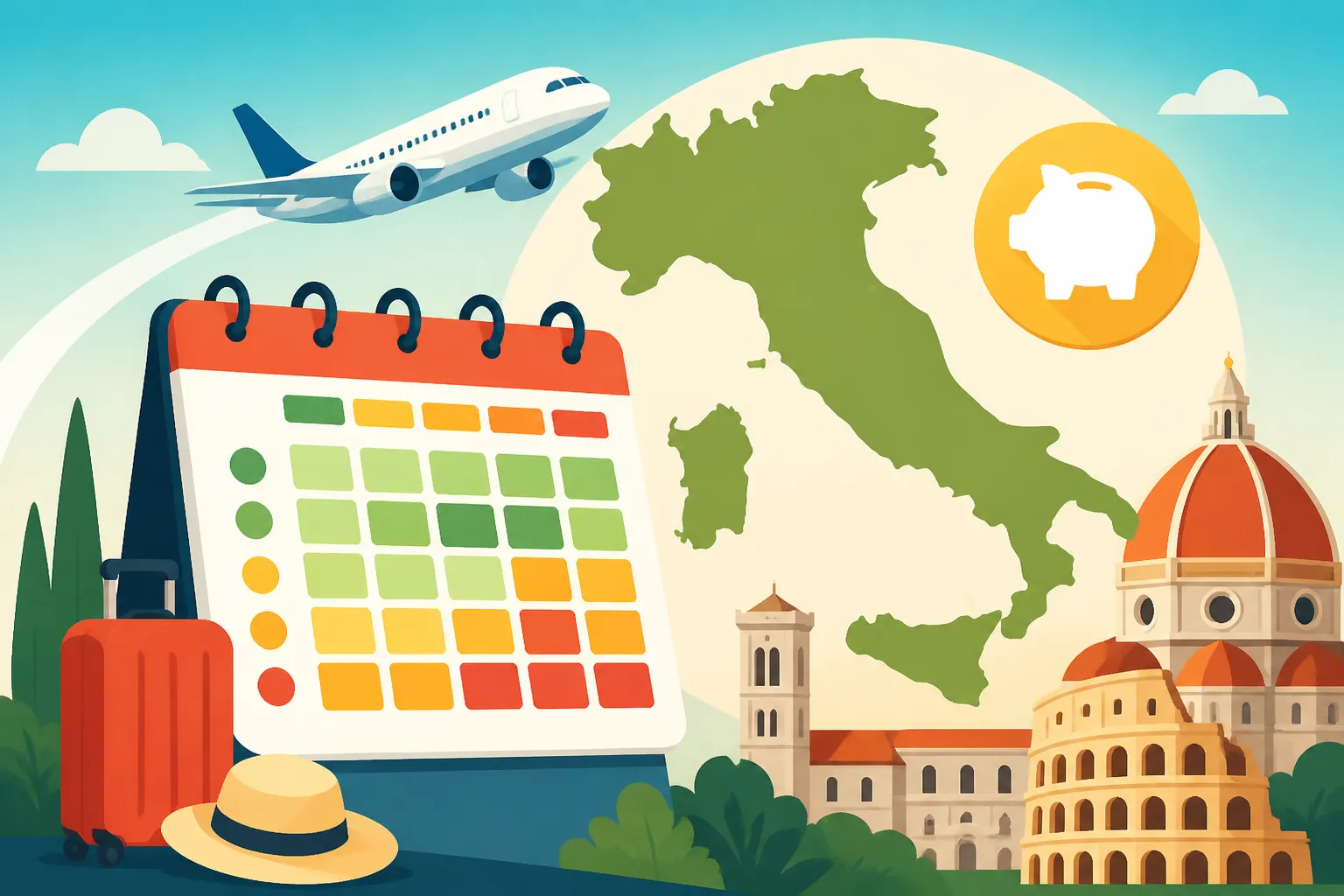
Local holidays, too, can create mini-peak periods. While national holidays impact the whole country, a city's patron saint day or a regional festival can cause a localized surge in travel. For instance, if you're planning a trip to Venice during the Festa del Redentore or to Siena during the Palio, expect higher prices and immense crowds. This is where planning well in advance is not just a suggestion, but a necessity. If you absolutely must travel on a weekend, try to book as far out as possible, aiming for those mid-week booking periods we discussed. Otherwise, be prepared to pay a premium. Sites like Omio often have calendar views that can highlight which dates are more expensive, giving you a visual cue for these busy times. For more detailed insights on specific rail journeys, checking out how to Buy Trenitalia and Italo Tickets and Save Money is always a good idea.
| Travel Day | Optimal Time | Typical Demand | Price Tendency |
|---|---|---|---|
| Monday | Mid-morning (after 9:30 AM), Late evening (after 8 PM) | High (morning commute) | Moderate-High |
| Tuesday | All day, especially mid-morning to late afternoon | Low | Low-Moderate |
| Wednesday | All day, especially mid-morning to late afternoon | Low | Low-Moderate |
| Thursday | Mid-morning, Late evening | Moderate | Moderate |
| Friday | Mid-morning, Early afternoon | High (evening rush) | High |
| Saturday | Early morning (before 9 AM), Late evening | Very High | Very High |
| Sunday | Early morning (before 9 AM), Late evening (after 8 PM) | Very High (afternoon/evening rush) | Very High |
Mastering the Art of Booking: Your Omio Strategy
Finding the cheapest days and times is one thing, but actually securing those deals requires a smart booking strategy. In Italy, especially for popular routes and high-speed trains, procrastination is your enemy. This is where leveraging a comprehensive booking platform like Omio becomes incredibly powerful, allowing you to not just find, but also confidently book, the best value options.
The Early Bird Catches the Discount: Booking in Advance
This is perhaps the single most impactful piece of advice for saving money on Italian train travel. High-speed train tickets with Trenitalia (Frecciarossa, Frecciargento, Frecciabianca) and Italo are released typically 3-4 months in advance, and the cheapest "Super Economy" or "Economy" fares are limited and snapped up quickly. Waiting until a few weeks or even days before your trip will almost certainly mean you pay top dollar, especially for popular routes like Milan to Rome or Florence to Venice.
For example, if you know you want to travel from Rome to Naples in June, start looking for tickets in March or April. You'll likely find tickets for €19 or €29. Wait until two weeks before, and that same ticket could easily be €70 or €80. It's a huge difference! This is not like some countries where last-minute deals pop up. In Italy, particularly for trains, last-minute usually means expensive. Buses might offer slightly more flexibility, but the principle holds. You can learn more about this by reading our guide on How Early Should You Book High-Speed Trains in Italy? Omio streamlines this process by letting you search far in advance across multiple providers at once, showing you exactly when those cheapest tickets are available.
The Flexibility Factor: How Adjustable Plans Save Money
While booking in advance is key, having some flexibility with your travel dates and times can unlock even greater savings. If you're not tied to a specific day or a precise hour, you can easily shift your journey to those cheaper mid-week, early morning, or late-night slots we discussed.
Imagine you're planning a week-long trip, and you have a couple of internal travel days. Instead of saying, "We'll go from Florence to Milan on Saturday," try to be open to a Tuesday or Wednesday. Or if you're set on a Friday departure, be willing to take the 6:00 AM train instead of the 10:00 AM. This flexibility compounds your savings. Using a tool like Omio that allows you to view prices across a range of dates on a calendar can be a game-changer. You can visually identify the cheapest days for your desired route and adjust your itinerary accordingly. This is particularly useful for expats with slightly more fluid schedules.
Why Omio is Your Best Friend for Finding Deals
Okay, full disclosure: I’ve used Omio countless times myself, and it's genuinely an expat's best friend for finding travel deals in Italy. Navigating the separate websites of Trenitalia, Italo, and the myriad of regional bus companies can be a headache, especially with language barriers and slightly different booking systems. Omio simplifies all of this by consolidating results from multiple transport providers – trains, buses, and even flights – into one easy-to-use platform.
Here's why Omio is so effective:
- Comparison at a Glance: Instead of hopping between Trenitalia and Italo websites, Omio shows you all available options side-by-side. You can immediately see which provider offers the best price for your desired route and time, including those coveted "Super Economy" fares.
- Highlighting Cheapest Options: The platform often highlights the cheapest tickets, making it effortless to spot those mid-week, early morning bargains. When you're dealing with a variable pricing model, having this clear overview is invaluable.
- User-Friendly Interface: Booking is straightforward, in English, and you get digital tickets delivered directly to your phone. No more struggling with ticket machines or worrying about validation. It significantly reduces the administrative stress that can often accompany travel in Italy.
- Route Discovery: Sometimes, the fastest train isn't the cheapest, or even the best option. Omio can show you bus alternatives that might be significantly less expensive, even if they take a bit longer. This broadens your options and helps you make truly informed, budget-conscious decisions.
- Multimodal Journeys: Planning a complex journey involving a train and then a bus connection? Omio can help you piece that together, showing you the most efficient and often cheapest multimodal routes.
In essence, Omio acts as your personal travel agent, sifting through the complexities of Italian transport pricing to present you with the clearest, most economical path. So, when you're ready to plan your next Italian adventure, make sure Omio is your first stop.
Beyond the Clock and Calendar: More Ways to Save on Italian Travel
While timing your travel perfectly and booking wisely are paramount, there are other clever strategies you can employ to further reduce your travel expenses in Italy. Think of these as supplementary hacks that, when combined with your Omio strategy, create an airtight budget plan. Getting around Italy: Trains, Buses, Flights, and Car Hire provides a good overview of all transport options.
Embrace the Slower Journey: Regional Trains and Buses
High-speed trains are fantastic for efficiency, but they come at a price. Don't underestimate the charm and cost-effectiveness of Italy's regional trains (treni regionali) and intercity buses. These might take a bit longer, making more stops, but their tickets are significantly cheaper and often have fixed prices, meaning you don't face the same drastic price hikes closer to departure.
For instance, a regional train from Florence to Pisa might cost a mere €9, while a high-speed Frecciarossa on a similar distance, if one existed, would be many times that. Similarly, a bus from a major city to a smaller town could be a fraction of the cost of a train. For shorter distances or if you're not in a hurry, regional options are a no-brainer. They also offer a different, often more scenic, perspective of the Italian countryside, chugging through charming small towns you might otherwise miss. Omio also includes many of these regional bus and train services in its search results, allowing for easy comparison. For specific regional bus networks, check out Intercity Buses in Italy: FlixBus and Regional Networks.
Group Travel and Loyalty Programs: Discounts in Numbers
If you’re traveling with a group or planning extensive travel within Italy, look into potential group discounts or loyalty programs offered by Trenitalia or Italo. Trenitalia, for example, often has offers like "Speciale 2×1" (travel 2 for the price of 1) on Saturdays, or "Family" offers. Italo also has similar promotions. While these are usually tied to specific conditions or booking windows, they can provide massive savings if they align with your plans.
For frequent travelers, signing up for loyalty programs like Trenitalia's CartaFRECCIA or Italo Più can earn you points that can be redeemed for future travel. While this might not be immediately beneficial for a one-off tourist trip, for expats who travel frequently within Italy, these points can add up to free journeys. Always check the "offers" or "promotions" section of the operators' websites or keep an eye out when searching on Omio, as it sometimes flags these deals.
Smart Travel Choices: What Else Impacts Your Wallet
Beyond just timing and booking, your overall travel choices play a huge role in your budget.
- Accommodation: Where you stay can impact your travel costs. Staying slightly outside the city center, but near good public transport, can drastically reduce nightly rates. Then, your commute via local bus or metro is often very affordable. Consider Accommodation in Italy: Hotels, B&Bs, and Agriturismi for different options.
- Luggage: If you're flying low-cost carriers within Italy, remember to factor in baggage fees. Buses and trains generally have more generous luggage allowances, but it's always wise to check beforehand. Omio usually clarifies baggage policies when you're comparing options.
- Food: Eating out for every meal quickly drains the budget. Embrace grocery shopping at local markets (mercati) or supermarkets, making your own lunches, and enjoying aperitivo with free snacks instead of a full dinner. Our guide on Italian Food Culture: Eating Well as a Visitor has some fantastic tips.
- Car Rentals: While a car offers flexibility, be mindful of fuel costs, tolls, and the infamous ZTLs (Limited Traffic Zones) in many Italian cities. Often, it's cheaper and less stressful to rely on public transport for city-to-city travel and rent a car only for exploring rural areas where public transport is sparse. Consult Renting a Car in Italy: ZTLs, Insurance, and Driving Tips if you're considering this option.
By combining savvy timing, strategic booking through Omio, and these broader money-saving travel hacks, you can truly experience the magic of Italy without breaking the bank. Happy travels!
Disclaimer
The information provided in this guide is for general informational purposes only and is based on typical travel patterns and experiences in Italy. Travel prices are dynamic and subject to change by transport providers (Trenitalia, Italo, bus companies, etc.) without prior notice. While platforms like Omio strive to provide the most up-to-date pricing, fares can fluctuate rapidly. Readers are advised to always verify current prices, schedules, and terms directly with the transport providers or through reputable booking platforms like Omio before making any travel commitments. We are not responsible for any discrepancies or changes in pricing or availability.