Ferragosto, Easter, and Ponti: Italy’s Worst Weeks to Book Late
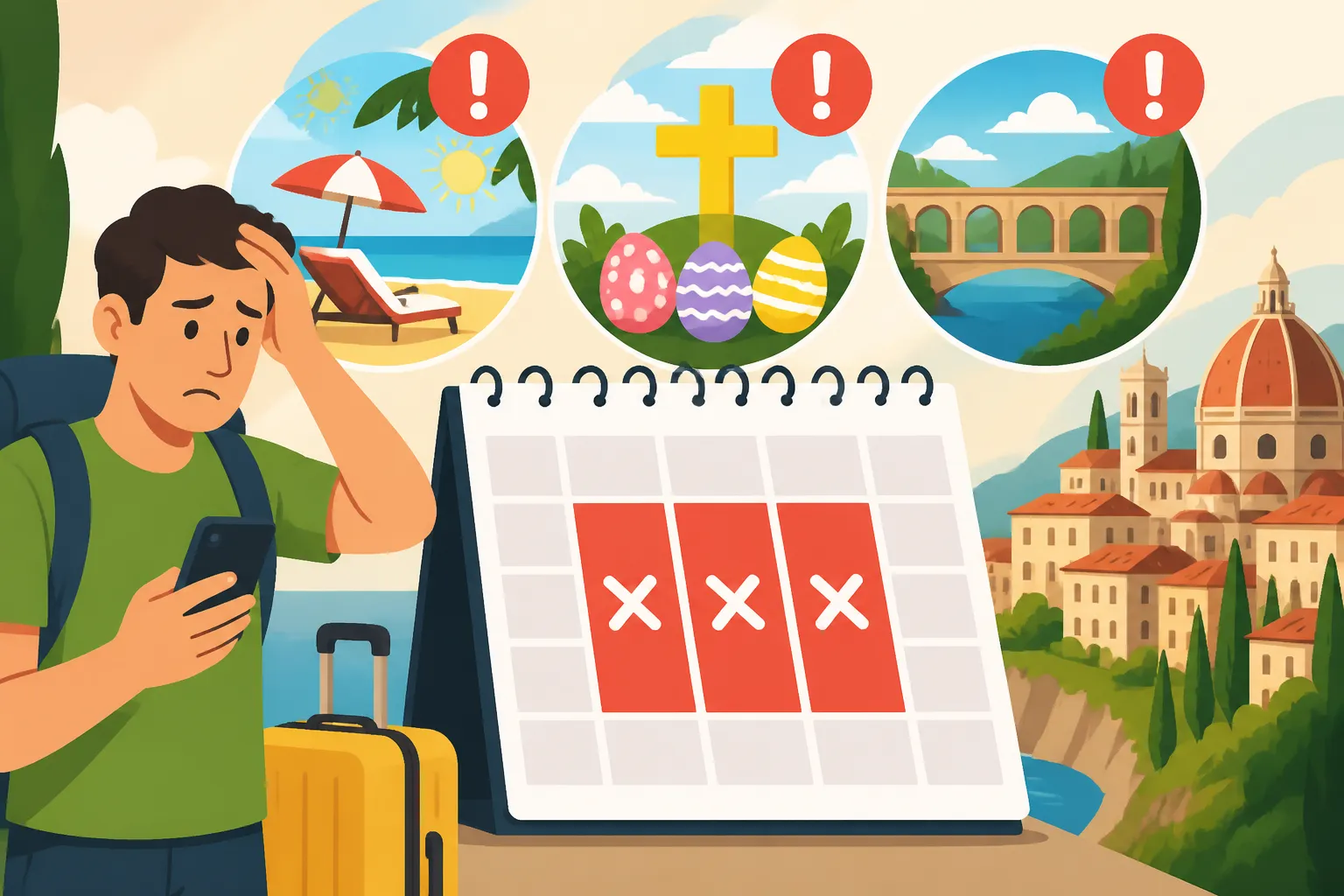
Ah, Italy! The land of dolce vita, stunning landscapes, and, let's be honest, bureaucratic nightmares and travel challenges, especially when everyone decides to hit the road at the same time. If you've ever tried to book a last-minute train ticket or find an affordable hotel during major Italian holidays like Ferragosto or Easter, you know the panic of finding everything either fully booked or priced astronomically. This guide is here to shed light on Italy's busiest travel periods – Ferragosto, Easter, and those infamous ponti – explaining why they're a nightmare for late planners and, more importantly, how you can navigate them like a seasoned expat by booking smart, particularly with a reliable platform like Omio.
Disclosure: This post may contain affiliate links. We may earn a commission at no extra cost to you if you make a purchase through these links. Read full disclosure.
The Italian Holiday Phenomenon: Why Everyone Travels at Once
Italy isn't just a place of ancient ruins and delicious food; it's a country deeply rooted in tradition, and that includes a vibrant calendar of public holidays. While these holidays are wonderful for locals to gather with family and take a much-deserved break, for anyone trying to travel during these times, they can quickly turn into a logistical headache. Imagine millions of people all trying to get to the same beaches, mountains, or cities at once – that's the reality of Italian holiday travel.
Ferragosto: The Great August Exodus
Let's start with Ferragosto, shall we? August 15th, the Feast of the Assumption, is more than just a public holiday; it's practically a national institution. Its roots go all the way back to ancient Roman times, a festival celebrating the end of agricultural labors. Today, it marks the absolute peak of the Italian summer holiday season. Many Italians, especially those from the bustling cities, take off for their annual month-long vacation, often culminating around Ferragosto itself.
The impact of this mass exodus is something truly unique. Cities like Milan, Rome, and even Florence can feel eerily quiet, with many local shops, restaurants, and businesses closing their doors for weeks. It’s a ghost town in some urban areas! Conversely, coastal resorts, mountain towns, and popular lake destinations become incredibly, almost impossibly, crowded. Trying to find a spot on a beach in Puglia or secure a table at a trattoria in Liguria without a reservation during this period is a fool's errand. You'll find yourself battling for space, paying premium prices, and perhaps feeling more frustrated than relaxed. Booking well in advance, ideally months before, is not just recommended, it’s practically mandatory.
Easter (Pasqua): A Time for Family and Travel
Easter, or Pasqua as it's known in Italy, is another massive travel period, deeply interwoven with religious and family traditions. While Christmas might be a bit more subdued in terms of domestic travel, Easter is when families reunite, churches fill, and many take advantage of the long weekend. The holiday officially includes Easter Sunday and Easter Monday (Pasquetta), creating a guaranteed three-day break that most Italians seize as an opportunity for a quick trip.
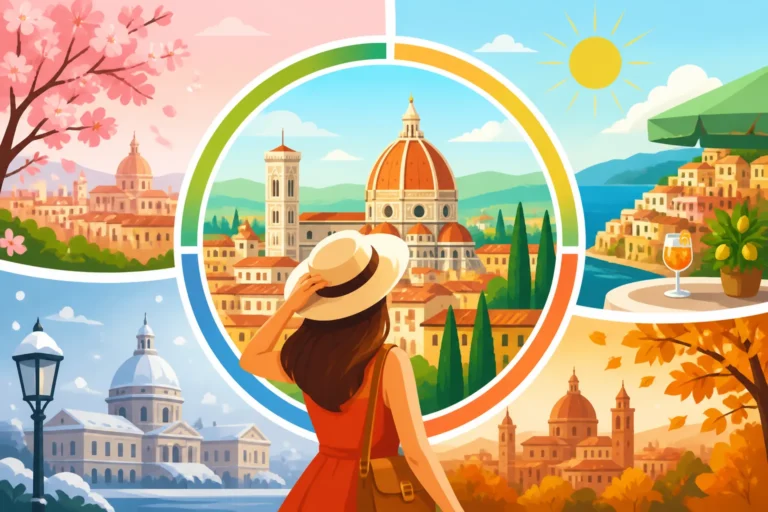
Think about it: after the long, grey days of winter, the first signs of spring coincide with a national holiday. What better excuse to escape to the countryside, visit a historic city, or even head down to the coast for some early sun? This means popular destinations like Rome, with its Vatican celebrations, Florence, Naples, and the ever-charming Amalfi Coast, become absolutely swamped. Accommodation prices soar, and train tickets, even for regional lines, vanish at an alarming rate. It’s a beautiful time to be in Italy, with spring flowers blooming and a palpable sense of renewal, but you need to plan meticulously to avoid the crush.
Ponti: Bridging Days for Longer Breaks
Beyond the major holidays, Italy has a wonderful tradition of "ponti" – literally meaning "bridges." These are those magical days off that fall conveniently close to a weekend, allowing Italians to "bridge" a public holiday to Saturday and Sunday, creating a delightful long weekend. Common ponti include Liberation Day (April 25th), Labour Day (May 1st), Republic Day (June 2nd), All Saints' Day (November 1st), and the Immaculate Conception (December 8th).
Each of these ponti sparks a flurry of domestic travel. Suddenly, a regular three-day weekend can stretch to four or even five days, and everyone wants to make the most of it. This phenomenon leads to sudden surges in demand for everything from train tickets to agriturismo stays. While each ponte might not be as universally impactful as Ferragosto, they are frequent, and the collective effect on travel logistics throughout the year is significant. If your travel plans coincide with any of these ponti, you absolutely must factor in the increased crowds and higher costs. It’s a pattern you’ll quickly recognize as an expat, and it’s why savvy travelers turn to platforms like Omio to stay ahead of the curve.
The Practical Headaches of Peak Season Travel
When millions of people decide to move at the same time, even in a country as well-equipped for tourism as Italy, things get challenging. The romantic ideal of spontaneous Italian adventures quickly evaporates when faced with the realities of peak season.
Sky-High Prices and Scarce Availability
This is probably the most immediate and painful consequence of traveling during Italy's busiest weeks. Hotels, B&Bs, and even hostels hike their prices, often reaching double or triple their off-season rates. And it's not just accommodation. Flights, especially domestic ones, become disproportionately expensive. Train tickets, particularly for high-speed routes with Trenitalia or Italo, are snapped up months in advance, leaving only the most expensive, last-minute options – if any at all.
I once tried to book a room in a small Tuscan town for a ponte weekend just a month out. Everything was booked solid, or the prices were so outrageous I genuinely thought there was a typo. It felt like I was being punished for not having a crystal ball! The sheer demand during these periods creates a sellers' market for every aspect of travel. This is where tools like Omio become indispensable. By allowing you to compare prices across trains, buses, and even flights, and ideally, booking months in advance, you can often mitigate these shocking price increases. Without forward planning, your budget for a week in Italy could easily stretch into what would normally cover two weeks during the shoulder season.
The Battle for a Seat: Public Transport Overload
Beyond the cost, there's the sheer physical experience of traveling during peak Italian holidays. Imagine standing-room-only on a high-speed train from Rome to Florence, even with a reserved seat, because the aisles are packed with people. Or trying to squeeze onto a local bus in a coastal town during Ferragosto, only to find it already overflowing. Airports become chaotic, check-in lines are endless, and security queues stretch for what feels like miles.
The railway stations, particularly in major hubs like Milano Centrale or Roma Termini, turn into buzzing anthills. Everyone is rushing, sometimes confused, often with huge suitcases. Even if you've managed to secure your ticket, navigating the crowds to find your platform can be an ordeal. This is not the relaxing, scenic journey you might have envisioned. Intercity buses, though sometimes a more affordable alternative, also face heavy demand and can get stuck in the inevitable holiday traffic jams on the autostrada. It's a stark reminder that while Italy's public transport network is extensive, it has its limits when faced with a national exodus. Planning your journey and securing your spot well in advance through a platform like Omio is key to avoiding unnecessary stress. For more on navigating train travel, check out our guide on High-Speed Trains in Italy: Trenitalia, Italo, Routes, and Savings.
Tourist Traps and Overcrowded Destinations
The impact isn't limited to transport and accommodation; it extends to the very places you've come to see. Iconic landmarks like the Colosseum in Rome, the Uffizi Gallery in Florence, or the canals of Venice become absolutely inundated with visitors. What might be a serene, contemplative experience during the off-season turns into a jostle for a good photo op, long queues stretching for hours, and the constant hum of many, many voices.
It can be truly disheartening to finally arrive at a bucket-list destination only to find yourself unable to properly appreciate it due to the sheer volume of people. Restaurants, particularly those in prime tourist areas, might inflate prices or offer less authentic fare, knowing they have a captive audience. The charm of wandering quaint streets can be lost when you're caught in a slow-moving human current. It forces you to rethink your approach to sightseeing and consider whether the peak-season buzz is worth the compromise in experience. Our guides on Rome for First-Time Visitors: Neighborhoods and Highlights and Florence for First-Time Visitors: What to See and Skip offer insights into managing crowds in these popular cities, but during Ferragosto or Easter, even those tips become a bigger challenge.
Strategies for Surviving (and Enjoying) Italy's Busiest Weeks
So, does this mean you should just avoid Italy during these festive periods? Not necessarily! With the right mindset and strategic planning, you can still have an incredible experience, often by embracing a slightly different approach.
The Art of Early Booking with Omio
Let's be blunt: if you plan to travel during Ferragosto, Easter, or any major ponte, early booking isn't just a good idea, it's your absolute superpower. And this is precisely where Omio shines as your hero. Imagine having a single platform that allows you to compare and book tickets for trains, buses, and even flights across Italy – well, that's Omio. No more hopping between different railway sites, bus company pages, and budget airlines. Omio brings it all together, presenting you with a clear, consolidated view of your options.
Here’s how to make Omio your best friend: start searching for your travel well in advance – we're talking three to six months ahead for trains and flights, and even longer for accommodation. Use Omio to meticulously compare routes, travel times, and prices across different carriers like Trenitalia, Italo, and FlixBus. You can set price alerts for your desired routes, so Omio notifies you when fares drop or are at their lowest. This proactive approach allows you to snatch up those coveted, affordable tickets before they disappear or before prices inflate beyond recognition. Omio also often highlights flexible ticket options, which can be a lifesaver if your plans shift slightly. By centralizing your search and booking through Omio, you're not just buying a ticket; you're buying peace of mind, knowing you've secured the best possible option during a truly competitive travel season.
Embracing Off-the-Beaten-Path Destinations
When the major cities and coastal hotspots are bursting at the seams, consider diverting your gaze to Italy's lesser-known gems. This is a fantastic way to experience authentic Italy without the crushing crowds. Instead of fighting for a spot on a packed train to Cinque Terre, perhaps explore the quieter, equally beautiful towns of Cilento in Campania, or the hidden villages in Le Marche.
Italy is filled with thousands of borghi (small villages) that offer incredible history, charm, and gastronomic delights, often at a fraction of the cost and with far fewer tourists. These places might require a bit more research and potentially more localized transport (which, again, Omio can often help with by showing connections to regional bus lines or local trains). Think about exploring the hills of Umbria, the wild landscapes of Basilicata, or the serene lakes beyond Como and Garda. Not only will you find more authentic experiences, but you’ll also contribute to a more sustainable form of tourism, spreading the benefits beyond the usual hotspots. You might even find incredible Accommodation in Italy: Hotels, B&Bs, and Agriturismi at far more reasonable prices.
Travel Smart: Mid-Week Departures and Flexible Plans
A cardinal rule for surviving Italian holiday travel is to avoid the predictable rush. If a ponte creates a long weekend from Friday to Monday, don't travel on Friday evening or Monday afternoon. These are the absolute peak travel times, when everyone else is also trying to get somewhere or get back home. Instead, try to be flexible with your travel dates.
Can you depart on the actual holiday itself, or even the day after? Often, prices drop significantly and crowds thin out slightly on the holiday morning (e.g., Easter Sunday or Ferragosto morning) because most people have already arrived at their destinations. If you have the luxury of flexibility, consider traveling mid-week or extending your trip to avoid the main rush days entirely. For example, instead of a Friday-Monday trip, aim for a Tuesday-Friday excursion around a ponte. This strategy, combined with Omio's comprehensive search capabilities, allows you to pinpoint those less congested and often more affordable travel windows. Omio makes it easy to compare prices across different days, helping you find those sweet spots in the travel calendar.
Essential Tips for Navigating Italian Holiday Travel
Even with meticulous planning, Italian holiday travel comes with its own quirks and challenges. Being prepared for these can make all the difference between a frustrating experience and a memorable one.
Be Prepared for Closures and Limited Services
One of the biggest shocks for newcomers, especially during Ferragosto or Easter Monday (Pasquetta), is how many businesses simply close. In major cities, particularly during Ferragosto, it can feel like entire neighborhoods shut down. Many family-run restaurants, boutique shops, and even some supermarkets will be closed, as owners and staff take their own holidays. This is a cultural norm, not an inconvenience designed for tourists!
Before a major holiday, it's wise to stock up on groceries, especially if you're staying in an apartment with a kitchen. Always check the opening hours of any restaurants or attractions you plan to visit. While major tourist sites usually remain open, local businesses might operate on reduced hours or close completely. Even pharmacies might only have a limited number on duty (farmacie di turno), which rotate being open for emergencies. Knowing this in advance can save you a lot of running around and disappointment. Our guide on Italian Markets: Food, Antiques, and Flea Markets can offer alternatives if grocery stores are scarce, and Italian Pharmacies: Prescription, Over-the-Counter, and Supplies will tell you how to find an open one.
Master the Art of Local Transportation
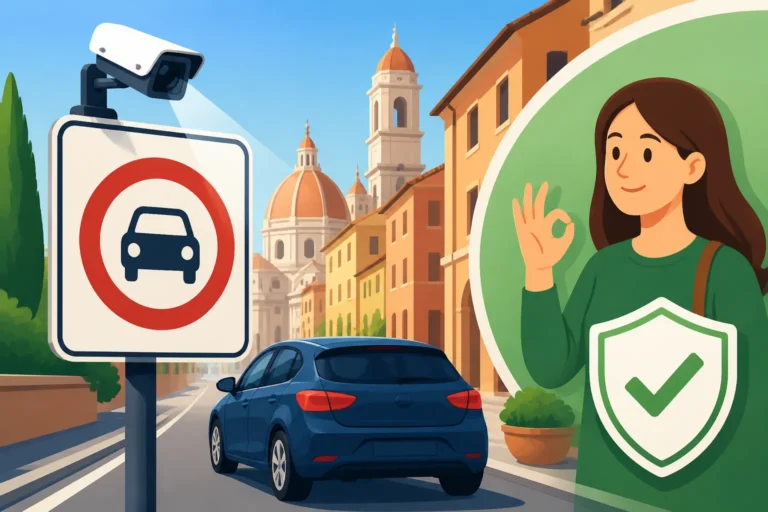
While intercity travel might be chaotic, getting around within a city can also present challenges. If you've decided to brave driving, remember that ZTLs (Limited Traffic Zones) are strictly enforced in most Italian city centers, and parking during peak season can be an absolute nightmare. Trying to find a parking spot in a crowded coastal town during August can easily eat up hours of your precious vacation time.
For getting around Italian cities, embrace public transport. Buses, trams, and metro systems (in larger cities like Rome and Milan) generally run, though they might be on a reduced holiday schedule. The key is to be prepared for crowded conditions and potential delays. Taxis might also be harder to hail or subject to surge pricing. For many, walking is truly the best way to explore and soak in the atmosphere, as long as your destination is within reasonable distance. Using Omio for your main journeys, and then relying on local public transport or your feet within towns, is often the most sensible approach. Consider reading our tips on Renting a Car in Italy: ZTLs, Insurance, and Driving Tips if you're set on driving.
Pack Patience and a Sense of Humor
Honestly, this might be the most valuable tip of all. Italy, at the best of times, operates on its own unique rhythm, a beautiful dance between efficiency and charming chaos. During peak holidays, that chaos factor gets cranked up to eleven. Trains might be delayed, restaurant service could be slower than usual, and you'll definitely encounter more crowds than you'd prefer.
Instead of letting these inevitable frustrations sour your experience, try to lean into the Italian way: piano piano (slowly, slowly) and with a shrug. Acknowledge that you're part of a grand, national moment of celebration and travel. Pack your patience, maintain a sense of humor, and remember that even a delayed train can offer an unexpected opportunity for people-watching or a good book. Travel insurance, like that discussed in Travel Insurance for Trips to and Within Italy, can also give you a bit more peace of mind for those unexpected bumps. Sometimes, the best memories are made when things don't go exactly to plan, as long as you're open to the adventure.
The Omio Advantage: Your Solution to Holiday Travel Stress
Let’s circle back to what makes Omio such a game-changer when navigating Italy's peak travel periods. As an expat who’s seen it all, I can confidently say that simplifying your travel planning is non-negotiable during these times. Omio isn't just another booking site; it's a strategic partner that can transform your holiday travel from a frantic scramble into a smooth, enjoyable experience.
Seamless Booking Across Multiple Modes
The genius of Omio lies in its ability to offer a truly multi-modal search and booking experience. You want to travel from Rome to Palermo? Omio won’t just show you trains; it will also present bus routes and flight options, complete with journey times and prices, all on one screen. This is incredibly powerful during peak times when direct routes might be sold out or exorbitant. You might find that a combination of a high-speed train to a regional hub and then a comfortable bus is far more efficient and affordable than a flight during Ferragosto.
This seamless integration allows you to be truly flexible and creative with your travel plans, something absolutely vital when competition for tickets is fierce. You can easily compare the pros and cons of taking a swift Italo train versus a budget-friendly FlixBus, or even a short domestic flight if prices align. Omio streamlines what would otherwise be a complex, multi-tab browsing nightmare, saving you precious time and mental energy, which, believe me, you'll need for navigating the actual crowds.
Real-Time Information and Customer Support
During peak travel times, delays, schedule changes, and unexpected disruptions are simply a part of the landscape. Imagine being at a busy train station during a ponte, your train is delayed, and you're struggling to understand the Italian announcements. This is where Omio steps in to offer an invaluable layer of support.
When you book through Omio, you often receive real-time updates on your journey directly to your phone. This means you're informed about any delays or platform changes as they happen, often before the official station announcements or in clearer English. Should you encounter a significant issue, Omio’s customer support can be a lifeline, helping you re-book or find alternative solutions – a service that is almost impossible to get directly from individual transport providers during busy periods. Having that reliable source of information and assistance in your pocket is a massive stress reducer, especially when the crowds and language barrier add extra pressure.
Maximizing Savings and Finding the Best Deals
Let's be real: money talks. And during Italy’s busiest weeks, it often shouts. Omio's biggest commercial advantage is its capability to help you find the most cost-effective travel solutions, even when demand is at its highest. By aggregating options from a wide array of providers, Omio can often uncover combinations or less obvious routes that might be significantly cheaper than the first few options you'd find on individual sites.
For instance, maybe the direct high-speed train from Rome to Milan is fully booked or incredibly expensive for your desired Ferragosto date. Omio might show you a slightly longer, but much more affordable, regional train route or a comfortable overnight bus journey. Or perhaps a flight from a smaller, secondary airport proves to be a fantastic deal. Omio empowers you to make an informed decision, balancing cost, time, and convenience, ensuring you get the most bang for your buck. Use Omio to book early, compare wisely, and travel smarter, especially during these high-demand periods. It's truly the best way to ensure your journey in Italy remains a dolce experience, not a disastro.
| Italian Holiday | Typical Dates | Primary Impact | Travel Advice | Omio Advantage |
|---|---|---|---|---|
| Ferragosto | August 15th (peak August) | Cities empty, coastal/mountain areas packed; many local businesses closed. | Book 3-6 months ahead for accommodation & transport. Seek out less-traveled inland areas. Expect closures. | Compare trains, buses, flights for best August deals. Real-time updates crucial for delays. |
| Easter (Pasqua & Pasquetta) | Late March/April | Major cities (Rome, Florence) and popular tourist sites extremely crowded. | Book 3-5 months ahead. Consider religious sites in smaller towns. Anticipate higher prices. | Centralized search for early bird tickets across all modes. Find alternative routes if direct are full. |
| Ponti (Long Weekends) | April 25th, May 1st, June 2nd, Nov 1st, Dec 8th | Regional hotspots, lakes, and popular borghi see sudden influx of domestic tourists. | Avoid Friday evening/Monday afternoon travel. Be flexible with travel dates if possible. | Easy comparison of mid-week options. Price alerts for specific ponte dates. Find last-minute alternatives. |
Disclaimer
The information provided in this guide is intended for general informational purposes only and is based on current understanding and common practices for travel within Italy. Travel regulations, visa requirements, public holiday dates, and service availability can change rapidly. Always verify the latest information from official government sources, transport providers, and accommodation bookings before making any travel arrangements. While Omio is a recommended tool for booking, specific terms and conditions for tickets and services are subject to the individual providers.