How Much Cash Should You Carry When Traveling in Italy?
Ah, the eternal question for anyone visiting or living in Italy: how much cash should you actually carry? It’s a dilemma many of us expats have grappled with, trying to balance the convenience of cards with Italy’s persistent love affair with physical money. This guide is here to shed some light on navigating the payment landscape, ensuring you’re never caught out, whether it’s for a quick espresso or a market find.
Disclosure: This post may contain affiliate links. We may earn a commission at no extra cost to you if you make a purchase through these links. Read full disclosure.
The Evolving Landscape of Payments in Italy
Italy, with its rich history and deep-rooted traditions, has often clung to cash with a tenacious grip. However, like many other European nations, it's slowly but surely stepping into the digital age. This shift creates a fascinating, and sometimes confusing, duality for visitors and new residents alike.
Italy's Shift Towards Digital Payments
For years, the Italian government has been actively pushing for a reduction in cash transactions, primarily to combat tax evasion. You might have seen news about initiatives like "cashback" programs, where consumers received a percentage back on digital purchases, or incentives for businesses to adopt POS (Point of Sale) terminals. These efforts are making a noticeable difference, especially in larger urban centers and more modern establishments.
You’ll find that major supermarkets, department stores, chain restaurants, hotels, and most modern boutiques are fully equipped to accept credit and debit cards. Visa and Mastercard are almost universally accepted, often with contactless payment options, making transactions incredibly swift. Even many local gelaterie or pasticcerie now have card machines, especially if they cater to tourists. If you're using apps to book things like trains via Omio or experiences through GetYourGuide, paying by card is a given, removing any cash concerns for these larger pre-planned expenses.
Where Cash Still Reigns Supreme
Despite the digital push, there are still plenty of scenarios where cash isn't just preferred, but often necessary. These are often the places that offer the most authentic Italian experiences, which is why it’s so important to be prepared.
Think about stepping into a tiny tabaccheria – those ubiquitous corner shops selling everything from cigarettes and bus tickets to stamps and lottery scratchers. Many of these, particularly in smaller towns or less touristy neighborhoods, still operate predominantly on cash for small purchases. Trying to buy a €1.50 bus ticket with a credit card might earn you a polite but firm refusal, or at least a sigh of exasperation. The same goes for local outdoor markets, whether you’re buying fresh produce, artisanal cheeses, or a quirky souvenir. Vendors at these stalls often deal exclusively in cash, and they appreciate exact change.
Then there are the charming, family-run trattorie tucked away on a side street, especially outside major cities. While many have adapted, some still prefer cash or might have a minimum spend for card payments. And let's not forget the quintessential Italian ritual: a quick espresso at the counter of a bar. Italians often pay for their coffee with coins or a small bill. Pulling out a credit card for a €1.20 espresso at a bustling bar can disrupt the flow and isn't the most bella figura.
The Coperto and Small Bills Conundrum
One specific aspect of Italian dining that often catches foreigners off guard is the coperto (cover charge) or servizio (service charge). This is a fee per person, often a few euros, that covers bread, linens, and general table service, and it's a completely normal part of dining out. While it will be added to your bill and can often be paid by card along with your meal, having small bills on hand can make things smoother, especially if you want to pay just this portion or split it among friends.
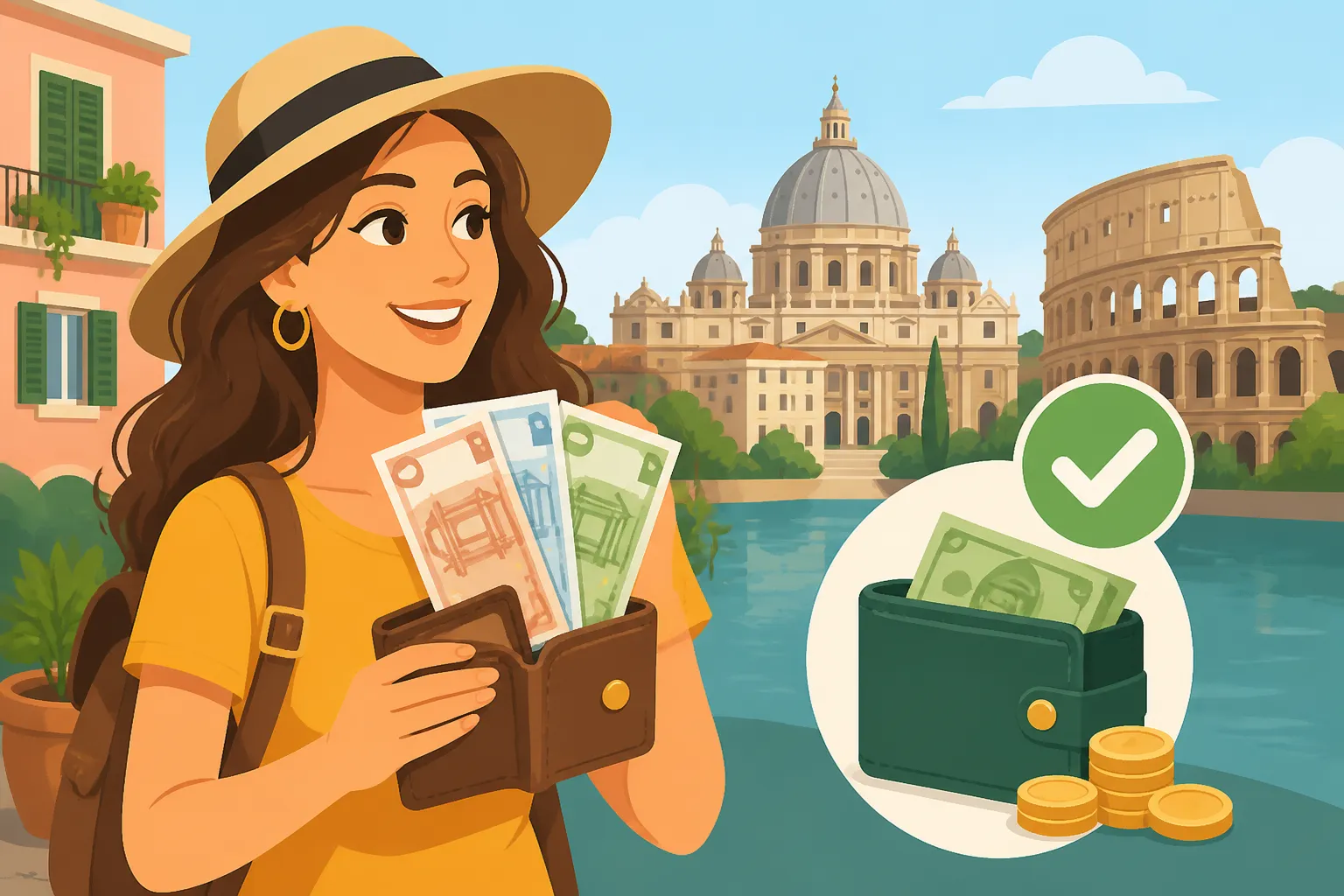
More broadly, Italian vendors, particularly for small transactions, truly appreciate small denominations. Attempting to pay for a €3 gelato with a crisp €50 note is generally frowned upon. It inconveniences the vendor who then has to dig for change, and it can even be seen as a bit presumptuous. Always try to carry a good mix of €5, €10, and €20 notes, along with plenty of coins, for these daily interactions. It shows respect for local customs and simply makes your transactions smoother and more pleasant.
How Much Cash to Carry: A Practical Approach
So, how much actual cash should you have jingling in your pocket when you’re out and about in Italy? There’s no one-size-fits-all answer, but we can break it down into practical daily amounts and specific situations.
Daily Budget for Small Expenses
For day-to-day incidental expenses, I generally recommend having about €30-€50 per person in cash. This isn't for your main meals or big shopping sprees, which can usually be handled by card. This amount covers those crucial small transactions that crop up throughout the day:
- Your morning cappuccino and cornetto: A few euros.
- A mid-morning bottle of water or a soda: Another couple of euros.
- That irresistible gelato in the afternoon: €3-€5.
- A quick slice of pizza from a street vendor for a snack: €4-€7.
- Bus or metro tickets: Usually €1.50-€2 per ride, often bought in a tabaccheria or newsstand that might prefer cash.
- Tips for a tour guide: While not mandatory in Italy, a small cash tip for excellent service is always appreciated.
- Public restrooms: Many public toilets, or those in bars (especially in train stations), might cost €0.50-€1 to use.
Let's imagine a hypothetical day out in Florence. You start with coffee, grab a quick panino from a small shop, buy a couple of postcards from a market stall near Ponte Vecchio, enjoy a gelato after visiting the Uffizi, and take a local bus back to your accommodation. All these small, authentic moments add up, and having cash makes them seamless. If you consistently rely on cards for these micro-purchases, you might find yourself scrambling for an ATM or feeling awkward.
When to Carry More, When to Carry Less
The amount of cash you carry should also be flexible, depending on your plans for the day.
Carry more cash (e.g., €70-€100 per person) if you anticipate:
- Visiting smaller towns or rural areas: These places are less likely to have widespread card acceptance, especially for local shops and eateries.
- Spending a day at a local market: Whether it's a food market, flea market, or artisan fair, cash is typically king here.
- Taking local taxis or certain public transport: While major city taxis increasingly accept cards, it's always good to have cash as a backup, and smaller town taxis might be cash-only.
- Having dinner at a rustic, traditional agriturismo or trattoria: Some of the most charming spots, especially if off the beaten path, might prefer cash.
Carry less cash (e.g., €20-€30 per person) if your day involves:
- Mostly major tourist attractions with pre-booked tickets: Most museums, galleries, and major sites can be booked online using platforms like Booking.com for accommodations or GetYourGuide for tours, and tickets are paid for by card.
- Shopping at high-end boutiques or large department stores: These establishments are fully equipped for card payments.
- Dining at larger, modern restaurants in city centers: They almost always accept cards.
- Days primarily focused on walking around well-serviced city areas: You'll have easy access to ATMs if needed.
Crucially, always prioritize safety. Italy, like any popular tourist destination, has its share of petty crime, particularly pickpocketing in crowded areas. Never flash large sums of cash, and always keep your money in a secure place, like a money belt or inside pocket, rather than a back pocket or easily accessible purse. For tips on how to stay safe, consider reading our guide on Avoiding Pickpockets in Italy's Tourist Areas.
The €100-€150 Rule for Initial Arrival
When you first land in Italy, whether at Rome's Fiumicino or Milan's Malpensa, it's a smart move to have a moderate amount of cash on hand, perhaps €100-€150 in smaller denominations (€5, €10, €20 notes are ideal). This covers your immediate needs without the stress of finding an ATM right away.
Imagine arriving after a long flight, tired and disoriented. You might need cash for:
- A taxi from the airport or train station: While major airport taxis in cities like Rome and Milan often accept cards, a local transfer or a smaller taxi in a less major hub might not.
- A quick snack or coffee at the airport or station: Small convenience stores or coffee bars might be cash-preferred.
- Public transport tickets: If you're taking a bus or regional train, you might need cash for tickets from a machine or tabaccheria. Our guide on Getting Around Italy: Trains, Buses, Flights, and Car Hire offers more detailed advice on transport options.
Having this initial buffer allows you to settle in, get to your accommodation, and then calmly locate an ATM or assess your cash needs without added pressure.
Accessing and Managing Your Cash in Italy
Beyond deciding how much cash to carry, understanding how to get more and how your cards work is equally important. Italy’s banking system can feel a little different, but it’s generally straightforward once you know the ropes.
ATMs (Bancomat) and Withdrawal Fees
ATMs in Italy are called Bancomat. You'll find them widely available in cities and even smaller towns, typically outside banks, in larger supermarkets, or at Post Offices (Poste Italiane). Major Italian banks include UniCredit, Intesa Sanpaolo, and Monte dei Paschi di Siena, and their ATMs are generally reliable.
When using an ATM, always look for the logo of your card network (Visa, Mastercard, Maestro, Cirrus). Be aware of potential fees:
- Your home bank's foreign transaction fee: This is usually a percentage of the withdrawal.
- The Italian bank's withdrawal fee: Some Italian banks might charge a small fee, though many do not for international cards. This fee (if any) should be disclosed before you complete the transaction.
- Dynamic Currency Conversion (DCC): This is the most common trap. When offered the option to be charged in your home currency (e.g., USD, GBP) or in EUR, always choose EUR. Allowing the ATM to convert to your home currency typically results in a much worse exchange rate.
To minimize fees, consider using a travel-friendly debit card that offers fee-free foreign withdrawals. And try to make fewer, larger withdrawals rather than many small ones, to reduce the impact of flat fees. If you're thinking of a longer stay, you might eventually look into How to Open a Bank Account in Italy.
Credit and Debit Card Acceptance
As mentioned, Visa and Mastercard are the most widely accepted credit and debit cards in Italy. American Express is accepted in many larger, tourist-oriented establishments, but less so in smaller shops or traditional trattorie. Discover cards are generally not accepted.
- Contactless payments: Increasingly popular, especially for smaller transactions. Look for the contactless symbol on POS terminals.
- Mobile payments: Apple Pay, Google Pay, and other mobile wallets are gaining traction, particularly in larger stores and cities.
- Always have a backup: Carry at least two different cards (e.g., one Visa, one Mastercard) from different banks, and keep them separate. If one gets lost, stolen, or blocked, you have an alternative.
- Notify your bank: Before you travel, inform your bank of your travel dates and destinations to prevent your card from being flagged for suspicious activity and temporarily frozen.
Our comprehensive guide on Using Credit Cards Abroad: Fees in Italy dives deeper into how to manage your card payments effectively while avoiding unnecessary charges.
Traveler's Checks and Currency Exchange
Let's be blunt: Traveler's checks are essentially obsolete in Italy. You will be hard-pressed to find a bank or business willing to cash them, and even if you do, the exchange rate will be abysmal, and the process will be lengthy. Leave them at home.
For currency exchange, avoid exchanging money at airports or major train stations. The exchange rates offered are notoriously poor, and fees are high. ATMs (Bancomat) offer the best rates, as they use the interbank exchange rate, albeit with potential withdrawal fees. If you absolutely need to exchange physical currency (which I rarely recommend), look for a bank in a city center, but even then, compare the rates carefully. You can learn more about this in Currency Exchange at Airports vs Banks in Italy.
Practical Scenarios and Brand Mentions
Let’s get into some real-world examples to illustrate when cash or card is your best bet, weaving in some useful tools.
Paying for Transport
Getting around Italy involves a mix of payment methods.
- Local Buses and Trams: In most Italian cities, you need to buy tickets before boarding from a tabaccheria, newsstand, or sometimes a vending machine at a major stop. These often prefer cash for such small purchases. Once on board, remember to validate your ticket in the machine! On some routes, you might be able to buy a ticket from the driver, but expect it to cost more and definitely require exact cash.
- Trains: For regional and high-speed trains (like Trenitalia's Frecciarossa or Italo), booking online is highly recommended, especially for long-distance routes. You can easily do this directly on the Trenitalia or Italo websites, or through convenient apps like Omio, which allows you to compare and book tickets for various transport options across Europe, all paid by card. If you need a last-minute regional ticket at a smaller station, vending machines often accept cards, but sometimes cash is quicker or the only option.
- Taxis: In larger cities like Rome, Milan, or Florence, most official taxis (those with meters and taxi signs) now accept card payments. However, it's always a good idea to confirm with the driver before you get in: "Accettate carta?" (Do you accept card?) or "Posso pagare con la carta?" (Can I pay with card?). For shorter rides, or in smaller towns, cash is often still preferred.
Dining Experiences
Italian food is a cornerstone of the experience, and how you pay can vary greatly.
- Upscale Restaurants and Tourist-Heavy Eateries: In most mid-to-high-end restaurants, especially those in popular tourist zones or larger cities, credit and debit cards are widely accepted. You can expect a smooth, card-based transaction here.
- Small, Family-Run Trattorie or Osterie: This is where cash becomes more important. Particularly in smaller towns, or even tucked-away gems in big cities, these establishments might operate primarily on cash. Always be prepared to ask if they accept cards. If they don't, it's not a slight; it's just how they do business. Having €30-€50 in cash per person for these meals is a good idea.
- Cafés and Bars: As mentioned, a quick espresso or cappuccino at the counter is almost always a cash transaction. For a longer sit-down experience with pastries, cards are more commonly accepted.
- Gelaterie: While many tourist-heavy gelaterie accept cards, especially in cities, smaller, more traditional spots might prefer cash for a €3 cone.
Shopping and Activities
- High-Street Shops and Department Stores: If you're buying clothes, electronics, or other items from well-known brands or large retailers, cards are universally accepted.
- Local Markets: This is prime cash territory. For fresh produce, souvenirs, leather goods from a street vendor, or anything from a flea market, cash is king. Prepare to haggle a little (politely!) and have plenty of small bills. Check out our guide on Shopping in Italy: Markets, Boutiques, and Outlets for more insights.
- Museums and Attractions: For major museums like the Colosseum or the Uffizi Gallery, it’s often best to book tickets online in advance. Websites and apps like GetYourGuide offer skip-the-line tickets and guided tours, all payable by card. This saves time and ensures availability. For smaller, lesser-known churches, archaeological sites, or local museums, cash might be required for entry, so always check their website beforehand or have some small bills ready.
- Accommodation: Hotels and larger B&Bs will always accept cards. For smaller, independent guesthouses or agriturismi (farm stays) in rural areas, confirming their payment methods when you book via sites like Booking.com is a good practice. They might occasionally prefer or even require cash, especially for a small balance due.
Here’s a quick summary table to help you visualize common payment scenarios:
| Type of Purchase / Location | Preferred Payment Method | Typical Amount of Cash Needed | Notes |
|---|---|---|---|
| Espresso at a bar | Cash | €1-€5 | Always have small coins for quick coffees at the counter. |
| Local markets (food, small items) | Cash | €10-€30 | Vendors appreciate exact change. |
| Small local trattoria/gelateria | Cash (often) | €20-€50 | Especially in rural areas; always ask "Accettate carte?". |
| Tabaccheria (bus tickets, stamps) | Cash | €5-€15 | For bus tickets, lottery, small purchases. |
| Street vendors | Cash | €5-€20 | Souvenirs, snacks. |
| Public transport (on-board purchases) | Cash (sometimes) | €1-€3 | Buy tickets at tabaccheria beforehand if possible. |
| Larger shops, supermarkets | Card | €0 | Credit/debit cards, contactless widely accepted. |
| Chain restaurants, hotels | Card | €0 | Major establishments are well-equipped for card payments. |
| Online bookings (trains, tours) | Card | €0 | Use apps like Omio, GetYourGuide, Booking.com for convenience. |
| Museum entry (major) | Card | €0 | Pre-booking online is often recommended anyway. |
| Taxis | Card/Cash | €15-€40 | Ask before getting in; larger cities more likely to have card readers. |
Safety and Best Practices
Carrying cash comes with responsibilities, especially when you're in an unfamiliar place. Here are some seasoned expat tips to keep your money safe and your travel smooth.
Spreading Your Money Around
This is perhaps the most crucial safety tip. Never keep all your cash, or all your cards, in one place. If your wallet or bag gets stolen, you don’t want to lose everything.
- Divide your cash: Keep your daily "pocket money" in an easily accessible but secure wallet or front pocket. Stash the rest of your larger cash reserves (e.g., your €100-€150 emergency fund) in a money belt worn under your clothes, a zippered inner jacket pocket, or a secure bag that isn't easily snatched.
- Separate cards: Keep your primary credit/debit card in your wallet and a backup card (or two) completely separate – perhaps in a hotel safe, a different bag, or another person's wallet if you're traveling with a partner.
- Hotel safe: Utilize the safe in your hotel room for passports, extra cash, and secondary cards you don't need for the day. While generally safe, still take precautions; if it's not bolted down, it's not entirely secure.
For more in-depth advice on keeping your valuables safe, make sure to read our detailed guide on Avoiding Pickpockets in Italy's Tourist Areas. It covers practical strategies to mitigate risks.
Alerting Your Bank
Before you even step on the plane, call your bank (or log into their online portal) to inform them of your travel plans. Provide your travel dates and the countries you'll be visiting. This simple step can prevent your bank from flagging international transactions as suspicious activity and temporarily freezing your card, leaving you in a lurch at a crucial moment. Also, make sure you have the international emergency contact number for your bank written down or stored on your phone (not just on your card, in case it's lost!).
Small Change is Your Friend
This bears repeating because it's so important for daily life in Italy. Always try to accumulate and use small denominations. When you make a larger purchase at a supermarket, department store, or a restaurant, pay with a larger bill (€20 or €50 if you have it) to break it down and get smaller change back. This way, you’ll always have coins and €5 or €10 notes ready for that quick espresso, a market purchase, or a public toilet. Italian vendors genuinely appreciate this, making your interactions smoother and more pleasant.
Disclaimer
Please note that while this guide provides comprehensive advice based on typical experiences, rules and practices regarding payments and banking in Italy can evolve. It's always a good idea to check for the most current information closer to your travel dates. This content is for informational purposes only and does not constitute financial or legal advice.