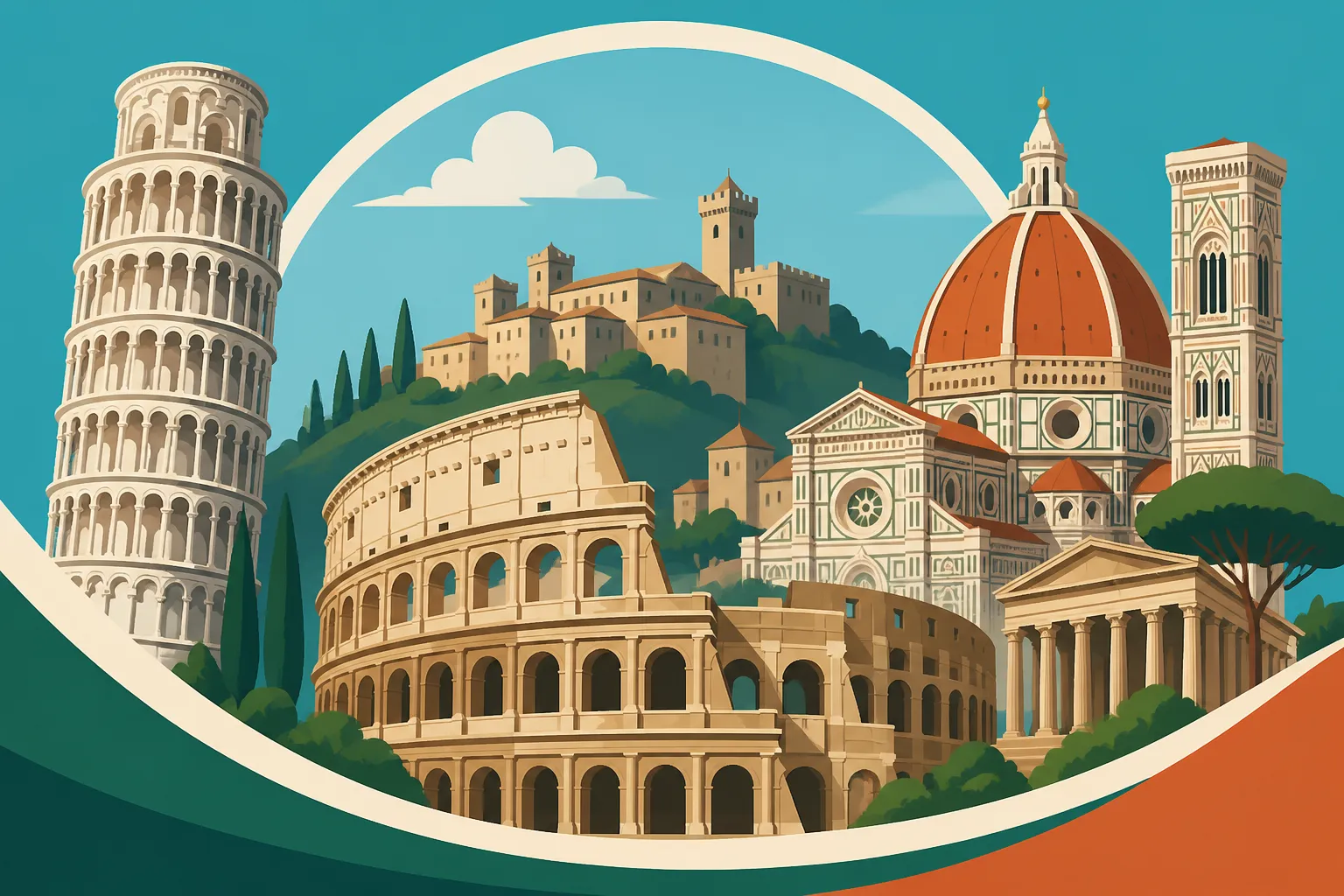
Italy’s UNESCO World Heritage Sites: A Visitor’s Guide
Oh, Italy. Just when you think you've seen it all, it throws another breathtaking wonder your way. Trying to grasp the sheer number of UNESCO World Heritage Sites here can feel like trying to sip from a firehose – utterly overwhelming, but oh so rewarding. This guide is here to help you make sense of it all, delving deep into some of Italy's most iconic and fascinating sites, offering insights for both the curious tourist and the seasoned expat looking to explore beyond their immediate stomping grounds.
Disclosure: This post may contain affiliate links. We may earn a commission at no extra cost to you if you make a purchase through these links. Read full disclosure.
The Significance of UNESCO Sites in Italy and Why They Matter to You
Living in or visiting Italy, you'll quickly realize that history isn't just in museums; it's literally everywhere. The local piazza, the ancient bridge, the church on the corner – often, these are testaments to centuries of human endeavor. But UNESCO sites? They're the crème de la crème, recognized globally for their outstanding universal value, meaning they hold a special significance for all of humanity.
More Than Just "Old Stuff": The Cultural and Historical Value
It’s easy to look at an ancient ruin or a medieval town and think, "Okay, that's old." But UNESCO status elevates these places, giving them a protective mantle and signaling their profound importance. When you visit a UNESCO site in Italy, you're not just seeing "old stuff"; you're stepping into a living classroom, a testament to human creativity, resilience, and ingenuity across millennia. Think about the incredible feats of engineering by the Romans, the artistic explosion of the Renaissance, or the architectural prowess of the pre-Roman civilizations. Each site tells a unique, compelling story, offering a tangible link to our shared past. These aren't just pretty backdrops for your Instagram; they are places where history was made, where art flourished, and where civilizations rose and fell, leaving an indelible mark on the landscape and our collective consciousness.
Navigating the Sheer Volume: Italy's Unique Position
Italy, with its rich tapestry of history, art, and natural beauty, holds the record for the most UNESCO World Heritage Sites in the world, boasting over 50 cultural and natural properties. This incredible concentration can be both a blessing and a curse. A blessing because you're never far from a site of global importance, no matter where you are in the country. A curse because, well, how do you choose? It’s enough to make your head spin! Many expats I know, after years here, still haven't managed to scratch the surface, feeling a mix of awe and slight guilt. Don't fall into the trap of feeling like you must see them all on one trip. Instead, focus on a region, or a particular type of site that truly sparks your interest, and dive deep. Each one offers such a wealth of detail that a rushed visit does it a disservice.
Italy's Natural UNESCO Gems: Beyond the Roman Ruins
While Italy is most famous for its cultural heritage, its natural landscapes are equally stunning and, thankfully, also recognized by UNESCO. These sites offer a refreshing contrast to bustling cities and ancient ruins, providing opportunities for outdoor adventures and a connection with pristine nature.
The Dolomites: Majesty in the Mountains
If you've ever found yourself scrolling through images of jagged, pink-hued peaks piercing the sky, you've likely seen the Dolomites. This mountain range in northeastern Italy is a truly spectacular natural wonder, a designated UNESCO World Heritage site for its unique geomorphology and breathtaking beauty. The Dolomites are a paradise for hikers, climbers, and skiers, offering everything from gentle strolls through alpine meadows to challenging via ferratas. The region boasts 18 peaks rising above 3,000 meters (9,840 feet), characterized by dramatic vertical walls, sheer cliffs, and deep valleys.
What truly sets the Dolomites apart is their distinct geological structure, primarily dolomite rock, which gives them their characteristic light color and forms incredible spires and towers. At sunset, these mountains catch the light in an ethereal way, glowing pink and orange in a phenomenon known as enrosadira. It's a sight you won't soon forget. You can spend days exploring charming mountain villages like Cortina d'Ampezzo or Val Gardena, enjoying hearty South Tyrolean cuisine, and breathing in the crisp mountain air. Whether you're a seasoned mountaineer or simply looking for stunning scenery, the Dolomites offer an unforgettable experience that makes for a wonderful contrast to Italy's more historical offerings.
Mount Etna: A Living Volcano's Allure
Standing proudly on the eastern coast of Sicily, Mount Etna is Europe’s most active stratovolcano and a captivating natural UNESCO site. Unlike many dormant volcanoes, Etna is a living, breathing geological marvel, constantly shaping the landscape around it with its impressive eruptions, lava flows, and ash plumes. Its designation acknowledges its scientific importance for geology and volcanology, as well as its unique cultural significance for the local communities who have lived alongside it for millennia.
Visiting Etna offers a truly unique experience. You can take organized tours that ascend to various elevations, sometimes even to the active craters, depending on current volcanic activity and safety regulations. Imagine walking across recent lava fields, feeling the warmth of the earth beneath your feet, and seeing steam vents hiss from the ground. The stark, moon-like landscapes near the summit offer panoramic views of the Ionian Sea and the Sicilian interior, a dramatic tableau of raw natural power. Remember, always check local conditions and go with experienced guides – Etna is beautiful, but it's a force of nature that demands respect.
Ancient Beech Forests: Europe's Untouched Wilderness
While perhaps less dramatic than volcanic peaks or towering mountains, Italy's Ancient and Primeval Beech Forests are a truly remarkable UNESCO Natural World Heritage site, recognized as part of a larger transnational site that includes similar forests across Europe. These ancient woodlands offer a glimpse into the pristine forests that once covered much of the continent, largely untouched by human intervention for centuries. They are crucial for understanding the post-glacial expansion of beech trees across the Northern Hemisphere and represent an outstanding example of undisturbed temperate forest ecosystems.
These particular Italian forests are scattered across several national parks and protected areas, from the Pollino National Park in the south to the Foreste Casentinesi National Park in central Italy. They are sanctuaries of biodiversity, home to rare plants and animals, and offer a serene, almost magical atmosphere for those willing to venture off the beaten path. Walking through these ancient woods, surrounded by colossal, centuries-old beech trees, feels like stepping back in time. It’s a wonderful opportunity to experience a different, quieter side of Italy's natural heritage, a reminder that the wild heart of Europe still beats strong.
Tracing History: Iconic Archaeological Sites and Ancient Cities
When you think of Italy, ancient history often springs to mind. And for good reason! The country is dotted with archaeological sites that bring the Roman Empire and even earlier civilizations to life in spectacular fashion. These are sites that truly transport you to another era.
Pompeii, Herculaneum, and Torre Annunziata: Frozen in Time
The archaeological areas of Pompeii, Herculaneum, and Torre Annunziata offer an unparalleled window into Roman life, famously preserved by the catastrophic eruption of Mount Vesuvius in 79 AD. These sites are a stark, emotional reminder of the immense power of nature and the sudden fragility of human existence. When you walk through the streets of Pompeii, you see the ruts carved by chariot wheels, you enter homes with vibrant frescoes still adorning the walls, and you can almost hear the echoes of daily life. It’s eerily intimate.
Herculaneum, though smaller, often feels even more preserved due to the different way it was engulfed by volcanic material. Wooden structures, including furniture and roof beams, were carbonized rather than vaporized, offering an even more detailed glimpse into the daily lives of its inhabitants. Torre Annunziata, often overlooked by tourists, features the magnificent Villa Oplontis, believed to be owned by Nero's second wife, Poppaea Sabina. Its luxurious frescoes and grand scale provide insight into the opulent lifestyles of the Roman elite. Getting to these sites from Naples is relatively easy via the Circumvesuviana train, making them a popular, if sometimes crowded, destination. Many people also opt for guided tours to fully grasp the significance of what they are seeing, and services like GetYourGuide can be helpful for finding reputable tour operators and skipping the long queues.
The Roman Forum and Colosseum: Heart of an Empire
No visit to Rome is complete without encountering the awe-inspiring ruins of the Roman Forum and the iconic Colosseum. These sites, together with Palatine Hill, form a colossal archaeological park that represents the very heart of the ancient Roman Empire. The Colosseum, an architectural marvel and the largest amphitheater ever built, still stands as a powerful symbol of Rome's imperial might and its brutal gladiatorial spectacles. Imagine the roar of the crowds, the clash of swords – it's a truly visceral experience.
Adjacent to the Colosseum lies the Roman Forum, once the bustling political, religious, and commercial center of the city. As you wander among the crumbled temples, basilicas, and triumphal arches, you're literally treading on centuries of history. It can be hard to visualize the grandeur of what once stood here, but with a good guide or an audio tour, the stories of emperors, senators, and everyday Romans come alive. Similarly, ascending Palatine Hill offers not only fantastic views over the Forum and Colosseum but also allows you to explore the sprawling palaces of emperors. To make the most of your visit to these highly popular sites and avoid the infamous queues, consider booking tickets online in advance. Many travelers find that combining these sites into a full day of exploration offers the most enriching experience. For tips on navigating these historical wonders efficiently, you might find our guide on Visiting the Vatican: St. Peter's and the Museums helpful, as similar strategies apply to managing crowds and making advance bookings.
Valley of the Temples Agrigento: Greek Grandeur in Sicily
Venturing south to Sicily, you'll discover another incredible archaeological treasure: the Valley of the Temples in Agrigento. This UNESCO site is one of the most outstanding examples of Greater Greece art and architecture, a series of remarkably preserved ancient Greek temples standing majestically against the backdrop of the Mediterranean Sea. Dating back to the 5th century BC, these Doric temples rival those found in Greece itself in terms of scale and preservation.
The Temple of Concordia is particularly breathtaking, one of the best-preserved Greek temples in the world, often compared to the Parthenon. Walking through the olive groves and almond trees, encountering the Temples of Hera Lacinia, Olympian Zeus, Castor and Pollux, and Heracles, you get a profound sense of the power and cultural sophistication of the ancient Greek civilization that once thrived here. The site is especially magical at sunset when the stone takes on a warm, golden hue. It’s a testament to Sicily’s rich and complex history, showcasing influences that extend far beyond the Roman era. For those exploring Sicily for Travelers: Cities, Coast, and Volcanoes, a visit to Agrigento is an absolute must.
Artistic Masterpieces and Architectural Wonders
Italy's contribution to art and architecture is undeniable, and many of its UNESCO sites are vibrant, living museums, showcasing centuries of artistic genius woven into the fabric of cities and unique structures.
Historic Centers: Florence, Venice, Rome, Naples and Beyond
Several of Italy's most beloved cities have their historic centers designated as UNESCO World Heritage Sites, a testament to their unparalleled artistic and architectural contributions. These aren't just single buildings, but entire urban landscapes that embody centuries of development and cultural exchange.
Take Florence, for instance. Its historic center is a Renaissance masterpiece, a breathtaking collection of palaces, churches, and squares that define an entire artistic movement. Walking through its narrow streets, you're surrounded by the works of Michelangelo, Brunelleschi, and Leonardo da Vinci. Every corner feels like a postcard. Then there's Venice, a city unlike any other, built on a lagoon, its canals and bridges creating an ethereal, almost dreamlike atmosphere. Its unique relationship with water, its Byzantine and Gothic architecture, and its rich history as a maritime republic make it utterly captivating. Exploring Venice often involves mastering its unique public transport system; our guide on Getting Around Italian Cities: Metro, Tram, and Buses might offer some useful navigation tips.
Rome, of course, extends far beyond its ancient core; its historic center encompasses Baroque piazzas, grand Renaissance churches, and winding medieval alleyways. The layering of history here is astounding, with ancient Roman foundations supporting medieval buildings, crowned with Renaissance facades. And let's not forget Naples, a vibrant, chaotic, and utterly authentic city whose historic center is a dense network of ancient streets, churches, and palaces, revealing thousands of years of history, from Greek foundations to Baroque splendor. Each of these cities offers a different flavor of Italy's rich artistic and architectural heritage, making it impossible to pick a single favorite.
Assisi: Saint Francis and Franciscan Masterpieces
Nestled on the slopes of Mount Subasio in Umbria, the town of Assisi and its Franciscan sanctuaries are a UNESCO site of profound spiritual and artistic significance. This is the birthplace of Saint Francis, one of the most revered figures in Christianity, and the spiritual home of the Franciscan Order. The centerpiece is the Basilica of Saint Francis, a truly magnificent complex comprising two churches (the Lower and Upper Basilica) built one above the other, both adorned with frescoes by some of the greatest medieval artists, including Giotto and Cimabue.
These frescoes are not only masterpieces of art but also revolutionary narrative cycles that transformed religious storytelling. Visiting Assisi is a deeply moving experience, regardless of your religious beliefs. The serene beauty of the town, with its pink stone buildings, narrow alleys, and sweeping views of the Umbrian countryside, provides a perfect backdrop for contemplation. Beyond the Basilica, you can explore other Franciscan sites like the Eremo delle Carceri, a hermitage in the woods where St. Francis and his followers retreated for prayer, offering a glimpse into the simplicity and devotion of his life.
The Trulli of Alberobello: Unique Vernacular Architecture
In the heart of Puglia, you’ll find the fairytale town of Alberobello, famous for its unique trulli – traditional dry-stone huts with conical roofs. This entire town is a UNESCO World Heritage site, recognized for its extraordinary example of vernacular architecture and its survival as a living settlement. The trulli were originally built as temporary field shelters and storehouses or as permanent dwellings by agricultural laborers. Their distinctive construction method, using precisely cut limestone without mortar, allows them to be easily dismantled and rebuilt, a clever way to avoid property taxes in centuries past.
Walking through Alberobello's Rione Monti and Aia Piccola districts is like stepping into a whimsical village. Many trulli are still inhabited, while others have been converted into shops, restaurants, and charming guesthouses. The bright whitewashed walls topped with grey conical roofs, often adorned with painted symbols, create a truly unique visual spectacle. It's a testament to human ingenuity and adaptation, a charming example of how local materials and traditional building techniques can create something both practical and profoundly beautiful. For those exploring Puglia: Trulli, Beaches, and Whitewashed Towns, Alberobello is an unmissable stop that showcases a completely different facet of Italy's architectural heritage.
Italy's Lesser-Known UNESCO Treasures: Hidden Gems Worth Exploring
With so many famous sites, it's easy for some truly incredible UNESCO properties to fly under the radar. But for those willing to venture a little further, Italy offers a wealth of "hidden gems" that provide equally enriching, and often less crowded, experiences.
The Sassi and the Park of the Rupestrian Churches of Matera: A Cave City Reborn
Matera, located in the Basilicata region, is one of the most astonishing places you will ever visit. Its "Sassi" (stones) district is a UNESCO World Heritage site, an ancient cave city where dwellings, churches, and monasteries were carved directly into the rock face. For centuries, the Sassi were a place of poverty and hardship, but in recent decades, they have undergone a remarkable renaissance, transforming into a vibrant hub of tourism, culture, and art. The Sassi offer a unique historical journey through human habitation, demonstrating extraordinary adaptation to the environment.
Exploring Matera is an unforgettable experience. You can wander through winding alleys, descend into ancient cave churches adorned with Byzantine frescoes, and even stay in a sasso hotel. The juxtaposition of ancient cave dwellings with modern amenities and artistic endeavors is truly captivating. The surrounding Park of the Rupestrian Churches extends this historical narrative, with hundreds of cave churches featuring stunning examples of rock-hewn art and architecture. Matera is a powerful reminder of Italy's diverse landscapes and the enduring human spirit, a place that embodies both struggle and rebirth.
The Botanical Garden Orto Botanico of Padua: Cradle of Modern Science
For a different kind of historical and scientific exploration, the Orto Botanico in Padua offers a fascinating journey. This botanical garden, established in 1545, is the world's oldest academic botanical garden that is still in its original location, earning it UNESCO World Heritage status. It was created by the University of Padua for the cultivation of medicinal plants, and its primary purpose has always been scientific research and education. Its original circular layout, enclosed within a stone wall, is a testament to its historical significance and influence on botanical gardens worldwide.
The Orto Botanico is a tranquil oasis where you can explore a vast collection of plants, including rare species, medicinal herbs, and exotic flora from around the globe. It was here that many exotic plants were first introduced to Italy and subsequently to Europe. Beyond its historical core, the garden has expanded with a modern Biodiversity Garden, an impressive glasshouse complex that simulates various climates and ecosystems. It's a wonderful place to spend a peaceful afternoon, appreciating the intersection of nature and scientific discovery, and understanding how profoundly this small garden impacted the study of botany and medicine.
The Sacri Monti of Piedmont and Lombardy: Devotion in Landscape
The Sacri Monti (Sacred Mountains) of Piedmont and Lombardy are a series of nine complexes of chapels and other architectural features, created between the late 16th and 18th centuries. They are a unique expression of popular Catholic devotion, designed to evoke the landscapes of the Holy Land through symbolic architectural and artistic representations. Each complex is set in a beautiful natural landscape, typically on a hillside or mountain, and features a series of chapels containing elaborate sculptures and frescoes that depict episodes from the life of Christ, the Virgin Mary, or other saints.
These "open-air museums" of faith were conceived as an alternative to pilgrimages to the Holy Land, which had become difficult due to political instability. The Sacri Monti offer a fascinating blend of art, architecture, and landscape design, creating a profoundly spiritual journey that integrates seamlessly with nature. Visiting them provides a quiet, reflective experience, allowing you to admire the intricate artistry and the serene surroundings. They are less about grand structures and more about an immersive narrative, offering a unique cultural and religious experience that showcases a distinct aspect of Italian heritage.
Planning Your UNESCO Journey: Tips for Expats and Tourists
Navigating Italy’s multitude of UNESCO sites can feel like a full-time job. Here are some seasoned tips to help you make the most of your explorations, whether you're living here or just visiting.
Logistics: Getting There and Around
Planning is key, especially when you’re dealing with popular destinations or remote natural sites. Italy has an excellent and extensive railway network, making train travel a fantastic option for reaching many of the major historic centers and even some archaeological sites. Websites and apps like Omio are incredibly useful for comparing train, bus, and even flight options across Italy, allowing you to easily book tickets in advance. If you're planning a trip around major cities, our guide on Getting Around Italy: Trains, Buses, Flights, and Car Hire offers more detailed advice.
For some of the natural sites, or smaller, more remote cultural sites, a car might be essential. Renting a car gives you the flexibility to explore at your own pace, especially in regions like the Dolomites or when visiting the scattered Ancient Beech Forests. However, remember to familiarize yourself with Italy's strict ZTL (Limited Traffic Zones) in city centers to avoid unexpected fines. Always research public transport options first, as driving and parking can be a headache in popular areas. For flights into Italy, Booking.com can be a great resource for finding deals on airfare and accommodation bundles, especially if you're coming from further afield.
Making the Most of Your Visit: Avoiding Crowds and Enhancing Experience
Italy’s UNESCO sites are popular, and for good reason. But popularity often brings crowds, especially during peak season (summer) and around major holidays. To truly appreciate these sites, consider visiting during the shoulder seasons (spring or fall) when the weather is still pleasant, and the crowds are thinner. Early mornings or late afternoons are often the best times to visit popular attractions like the Colosseum or Pompeii. Booking tickets in advance online is almost always a good idea, not just to save time but sometimes to secure your entry, especially for timed slots. For instance, our advice on How to Skip the Lines at the Colosseum and Vatican provides specific strategies for those iconic Roman landmarks.
Consider hiring a local guide, particularly for complex archaeological sites like the Roman Forum or Pompeii. Their insights can bring ruins to life in a way a guidebook never could. You can often find highly-rated guides through platforms like GetYourGuide, which allows you to read reviews and book experiences with confidence. Beyond the famous sites, remember to seek out the lesser-known gems. They often provide a more intimate, reflective experience and contribute just as much to understanding Italy's rich heritage.
Respecting the Heritage: Sustainable Tourism Practices
As visitors to these irreplaceable sites, we all have a responsibility to practice sustainable tourism. This means being mindful of your impact. Stick to marked paths in archaeological areas and natural parks to avoid damaging delicate structures or ecosystems. Don't touch ancient frescoes or carvings, as the oils from your skin can cause irreversible damage over time. Dispose of your litter properly, especially in natural parks like the Dolomites.
Support local businesses, which often rely on tourism to maintain these sites and their communities. This could mean dining at a local trattoria, staying in a family-run B&B found through Booking.com, or buying handcrafted souvenirs. Remember that many of these sites are living communities. Be respectful of local customs and traditions, particularly in religious sites like Assisi or the Sacri Monti. By being a thoughtful and responsible traveler, you contribute to the preservation of these incredible treasures for future generations to enjoy.
Disclaimer
The information provided in this guide is for general informational purposes only and does not constitute professional advice. While we strive to provide accurate and up-to-date information, circumstances can change. It is always recommended to check official government websites, local tourism boards, and professional services for the most current regulations, entry requirements, and practical advice before making any travel plans or decisions.