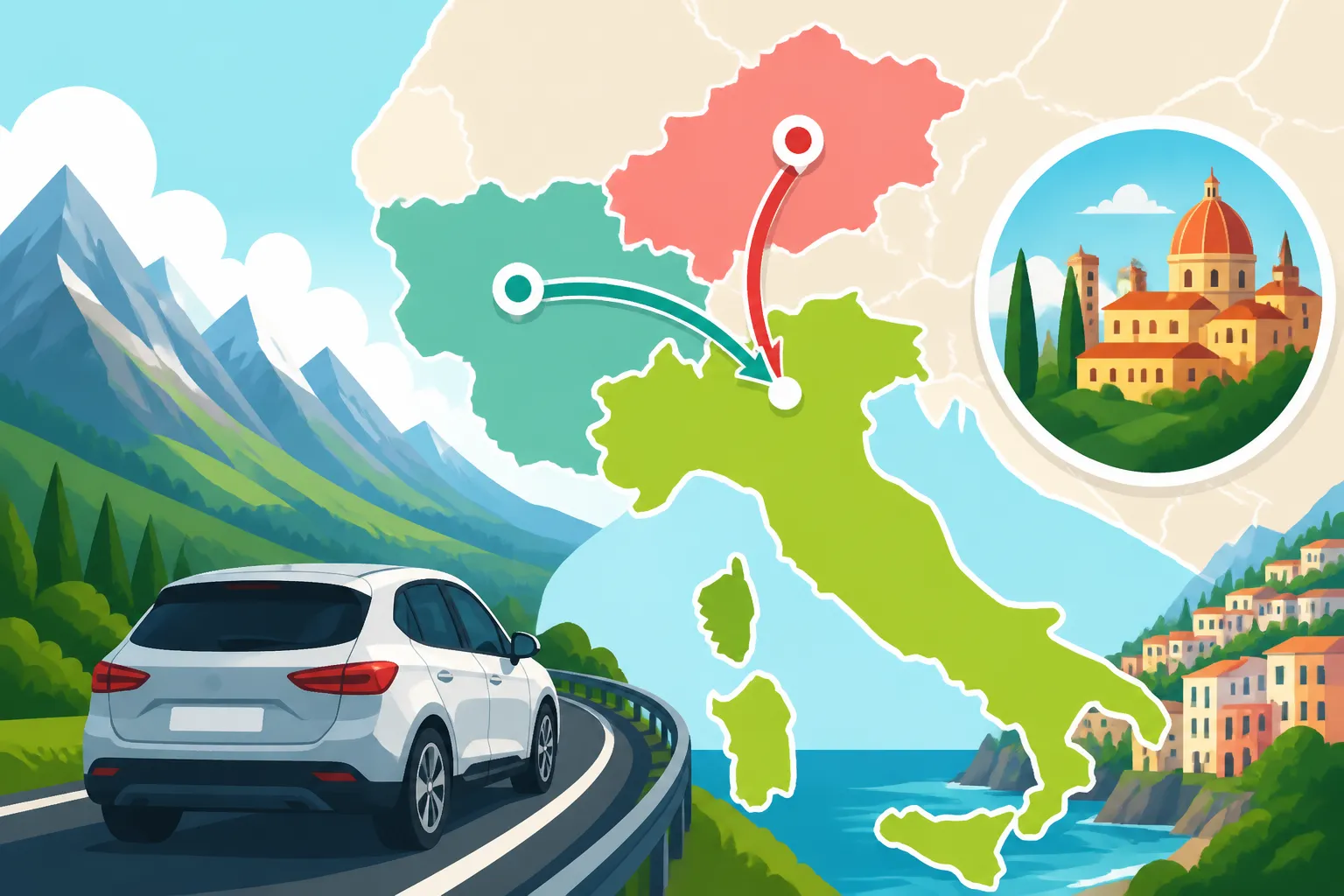
Moving to Italy from Austria and Slovenia: Short-Haul Road Routes
Even short-haul moves can feel like navigating an administrative labyrinth, especially when you're crossing borders. If you're dreaming of la dolce vita and planning to relocate from Austria or Slovenia to Italy, you might think the short distance makes it simple. But trust me, as an expat who's been through it, every move, no matter how near, has its own unique set of headaches. This guide is here to walk you through the key road routes and crucial logistics, helping you understand how to make your move as smooth as possible, and why a platform like Sirelo can be your ultimate sanity-saver.
Disclosure: This post may contain affiliate links. We may earn a commission at no extra cost to you if you make a purchase through these links. Read full disclosure.
The Allure of Italy from Austria and Slovenia: Why the Short Hop?
It's easy to see why so many from Austria and Slovenia choose Italy for their next chapter. The proximity isn't just about reducing travel time; it's about a fascinating blend of cultures, stunning landscapes that seamlessly transition from alpine peaks to Mediterranean coasts, and a shared history that makes the border feel less like a hard line and more like a gentle suggestion.
Geographical Proximity and Cultural Overlap
One of the biggest advantages of moving from Austria or Slovenia to Italy is undoubtedly the sheer closeness. You're not just moving to another country; in many ways, you're stepping into a parallel universe that often feels comfortingly familiar. Take for instance, the regions of Friuli-Venezia Giulia, bordering both Austria and Slovenia, or Trentino-Alto Adige (South Tyrol), directly adjacent to Austria. These areas aren't just geographically close; they share deep historical, linguistic, and cultural ties with their northern and eastern neighbors.
In South Tyrol, German is an official language alongside Italian, and the architecture, cuisine, and even the administrative efficiency often feel more Austrian than typically Italian. You might find yourself ordering a Knödel (dumpling) or a Strudel as easily as a plate of pasta. Similarly, in parts of Friuli-Venezia Giulia, particularly around Trieste and Gorizia, there's a strong Central European and Slavic influence, a legacy of centuries of shared history. This means the cultural shock, which can be a huge hurdle for expats from further afield, is often significantly softened for those arriving from Austria or Slovenia. You might already be familiar with the mountain customs, the love for good food, and perhaps even some shared dialect words that make settling in feel a little less daunting. This familiarity, coupled with Italy's undeniable charm, makes the short hop incredibly appealing.
The Initial Excitement Meets Practicalities
Ah, the initial excitement! You've made the decision, you're dreaming of morning espressos and evening aperitivi, and the short distance between your current home and your Italian dream seems like a breeze. "It's just a few hours' drive," you think, "how hard can it be?" And that, my friends, is where many an expat has had a rude awakening. Even for a short-haul move, the devil, as they say, is in the details.
While the emotional and cultural transition might be smoother, the practicalities of physically moving your life remain. You still have to pack everything, ensure it's transported safely, navigate unfamiliar roads, deal with bureaucratic procedures, and then unpack all over again. A car full of suitcases is one thing, but a whole household? That's a different beast entirely. You'll realize quickly that even the shortest international move involves a lot of lifting, planning, and paperwork. This is precisely the point where you need to shift from romanticizing the journey to realistically tackling the logistics. Don't let the short distance fool you into underestimating the task. It’s during this crucial planning stage that comprehensive support, like what you can find through Sirelo, becomes absolutely invaluable. Having a robust plan and reliable help means you can keep that excitement alive without getting bogged down by the nitty-gritty.
Navigating the Road Routes: Austria and Slovenia to Italy
Crossing the border by road from Austria or Slovenia into Italy is a fairly common undertaking, especially for commuters, tourists, and, of course, new residents. While the Schengen Agreement makes physical border checks largely a thing of the past for EU citizens, the administrative and logistical considerations for a household move are still very real.
Key Routes from Austria to Italy
Moving your entire life from Austria to Italy via road means choosing the right artery for your journey. Two primary routes stand out, each offering a distinct experience and leading to different parts of Italy.
The Tarvisio/Arnoldstein Route (A2/A23)
For those originating from Vienna, Graz, or the eastern parts of Austria, the most direct and heavily trafficked route leads through Carinthia, via Arnoldstein, and across the border into Italy at Tarvisio. This seamlessly connects Austria's A2 Süd Autobahn with Italy's A23 Autostrada Alpe-Adria. This route funnels you into the Friuli-Venezia Giulia region, with major cities like Udine and Trieste within easy reach. The landscape here is stunning, transitioning from the green Austrian Alps to the Italian Dolomites, offering dramatic views as you drive.
However, be prepared for this route. It's a major commercial corridor, meaning you'll likely share the road with a significant number of heavy goods vehicles. This can impact travel times and require extra vigilance, especially during peak seasons or holidays. Italian tolls apply on the A23, collected either via cash, credit card, or the convenient Telepass system at automated booths. Austrian and Slovenian vehicles also require a valid vignette for their respective motorways. Always check real-time traffic conditions, especially if you're pulling a trailer or driving a large moving van, as accidents or roadworks can cause substantial delays.
The Brennero/Brenner Pass Route (A13/A22)
If your starting point in Austria is closer to Innsbruck or the western states, the iconic Brenner Pass is your gateway to Italy. This route involves Austria's A13 Brenner Autobahn, which directly becomes Italy's A22 Autostrada del Brennero (also known as the Brennerautobahn in German, reflecting the bilingual nature of the region). The Brenner Pass is one of the lowest major alpine passes, making it a crucial and historically significant corridor. It drops you straight into the Trentino-Alto Adige region, characterized by its unique blend of Italian and Austrian cultures, picturesque valleys, and towering Dolomites.
While the pass itself is relatively gentle by alpine standards, it's still a mountain road, meaning weather conditions can change rapidly, particularly in winter. Snow chains might be mandatory, or at least recommended, during colder months. The A13 in Austria is a toll road requiring a specific Brenner toll fee in addition to a general Austrian vignette. Once you cross into Italy, the A22 is also a distance-based toll road. This route is often less congested with heavy commercial traffic than the Tarvisio route, making for a potentially more relaxed drive, though it's still popular with tourists. For those heading to destinations like Verona, Bolzano, or even Venice (by connecting to the A4), the Brenner route is the logical choice. Before setting out, it's wise to check the weather forecast for the pass itself, as well as road conditions reports.
Key Routes from Slovenia to Italy
Crossing from Slovenia into Italy is generally straightforward, particularly given the historical intertwining of the two nations. The primary routes quickly lead you into Italy's Friuli-Venezia Giulia region, with Trieste acting as a significant hub.
The Fernetti/Sežana Route (A3/A1)
For anyone moving from Ljubljana or central Slovenia, the Fernetti/Sežana border crossing is the most direct and busiest route into Italy. Slovenia's A1 motorway feeds directly into Italy's A3, which in turn leads quickly to Trieste and then connects to the A4, Italy's major east-west highway stretching across Northern Italy. This route is well-maintained and efficiently structured, making it a reliable choice for movers.
While formal border checks for persons are no longer routine due to the Schengen Agreement, if you're transporting significant household goods, especially those that might require customs declarations (e.g., highly valuable items, specific controlled goods), it's always prudent to have all your documentation ready. Even within the EU, there can be specific requirements for declaring certain types of property. The areas around Fernetti and Trieste have a slightly more industrial feel, reflecting their status as major port and transport hubs. Remember, Slovenia requires a vignette for its motorways, which you'll need to purchase before or upon entering the Slovenian highway system. Once in Italy, the A3 and A4 are toll roads, so be prepared for that.
The Vrtojba/Gorizia Route (A3/SS55)
Another significant crossing, especially if your destination is further west in Friuli-Venezia Giulia or you prefer a slightly less heavy-duty commercial route, is the Vrtojba/Gorizia border. This crossing leads directly into the Italian city of Gorizia, which historically was twinned with Nova Gorica on the Slovenian side, effectively forming one urban area separated by a border. The integration here is so seamless that you might not even realize you've crossed.
This route also connects to Slovenia's A3, eventually merging into Italian roads like the SS55. It offers a more local feel compared to the Fernetti hub, passing through towns that openly embrace their dual heritage. While still efficient, it might involve navigating smaller roads for a short stretch before joining major Italian arteries. Again, a Slovenian vignette is essential for the motorway, and Italian roads will have their own toll system depending on your onward journey. This crossing is perfect if your new home is in Gorizia, Udine, or the surrounding towns, offering a gentler introduction to Italian infrastructure.
Essential Road Trip Considerations for Movers
Moving your entire life by road, even a short distance, means you need to think beyond just the engine and the gas tank. There are critical practicalities that can make or break your journey, especially when crossing international lines.
Tolls and Vignettes: Don't Get Caught Out!
First things first: tolls. Both Austria and Slovenia operate a vignette system for their motorways. This isn't a pay-per-use at booths; it's a sticker or digital pass that signifies you've paid for a certain period of motorway use. You must have a valid vignette before entering their respective highways, or you risk hefty fines. You can usually buy these at border crossings, gas stations, or online before you travel. In Italy, however, it's a distance-based toll system on most autostrade. You'll typically take a ticket when you enter and pay at a booth (cash, card, or Telepass) when you exit. Driving a large moving truck can sometimes mean different vehicle classes and thus different toll rates, so be aware. Always keep some change or a credit card handy for Italian tolls.
Vehicle Requirements: Safety First
Beyond vignettes and tolls, your vehicle itself needs to be compliant with local regulations. In Austria and Slovenia, reflective vests for all occupants, a warning triangle, and a first-aid kit are often mandatory. Winter tires are generally required in both countries during specific colder months (typically November to April), and sometimes snow chains must be carried, especially if you're tackling mountain passes like the Brenner, even if they're not in use. Italy also has requirements like reflective vests and warning triangles. Double-check your vehicle's insurance coverage for international travel, ensuring it extends to Italy. Make sure your headlights are correctly aligned for driving on the right-hand side of the road if your vehicle comes from a left-hand drive country. These seemingly small details can save you from a roadside headache or a substantial fine.
Fuel Costs, Stations, and Driving Hours
Fuel prices can vary significantly between Austria, Slovenia, and Italy. It's often worth checking current prices before you travel to strategize your refuelling stops. Gas stations are plentiful along the main motorways in all three countries, but in Italy, some might close for a siesta in the middle of the day or be entirely self-service with only card options, especially in more rural areas. Always ensure your tank is sufficiently full, particularly before embarking on longer stretches or mountain routes where stations might be sparse.
For movers, especially those driving large vans or trucks, adhering to driving hours regulations is crucial. Even if you're not a professional driver, fatigue is a real risk when piloting a heavily laden vehicle. Plan for regular breaks. It's not just about safety; it's about protecting your belongings. A short nap or a coffee stop can make all the difference. This is where the wisdom of professional movers, found through a platform like Sirelo, truly shines. They understand these routes intimately, manage driving regulations, and have protocols for safe transit, taking a huge burden off your shoulders. Their experience ensures your move is not only efficient but also compliant and safe.
Logistics Beyond the Drive: What to Plan For
The actual act of driving your belongings across the border is just one piece of the relocation puzzle. Even for a short move from Austria or Slovenia to Italy, a significant amount of logistical planning is required before, during, and after the drive itself. Getting it right can save you immense stress and prevent costly mistakes.
Self-Move vs. Professional Movers
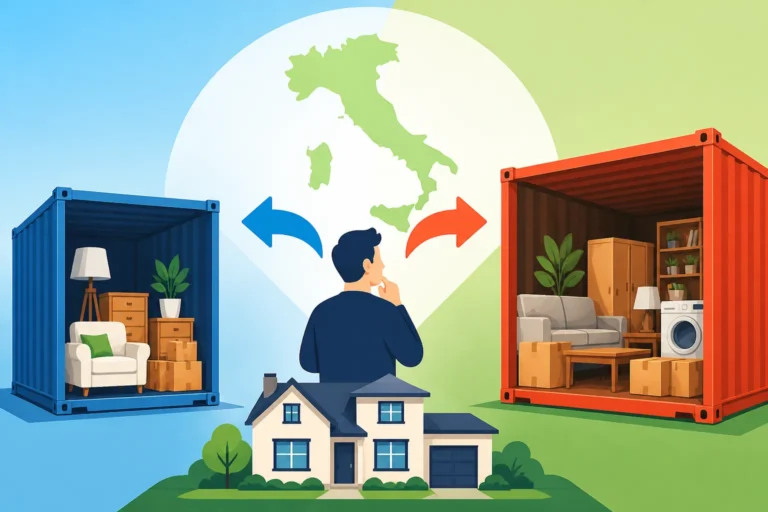
When considering a short-haul move to Italy, one of the first big decisions you'll face is whether to tackle it yourself or hire the professionals. Both have their merits and drawbacks, but for anything more than a carload of personal items, the choice becomes clearer.
The Lure and Limits of a Self-Move
The idea of a self-move often sounds appealing, primarily because of perceived cost savings and the illusion of complete control. You imagine renting a small van, packing up your life, and driving off into the Italian sunset. And for a very minimalist move – say, a student with a few boxes or someone relocating just a studio apartment – it can be viable. You get to control your schedule, choose your route, and avoid the fees associated with professional services.
However, the "cost savings" are often deceptive. You need to factor in the rental cost of a suitable vehicle (which can be surprisingly high for international one-way rentals), fuel for a larger, less efficient vehicle, tolls, vignettes, potential insurance for the rental van and its contents, and the sheer physical toll of loading and unloading. "You think a small van will do, but then you realize how much stuff you actually have – every book, every kitchen gadget, that beloved armchair…" suddenly the van is too small, or too heavy, or you're simply exhausted. Then there's the headache of navigating unfamiliar roads with a bulky vehicle, parking challenges in Italian cities, and the risk of damage to your belongings due to improper packing or handling. Many expats have tales of self-move disasters, from items breaking to unexpected border hassles.
The Prudence of Professional Movers
For most household moves, especially those involving furniture and fragile items, engaging professional movers is almost always the more prudent choice. Yes, there's an upfront cost, but consider what you're getting: expertise, insurance, and invaluable peace of mind. Professional movers specialize in international relocations, meaning they're intimately familiar with the routes from Austria and Slovenia to Italy, the various border requirements (even for EU moves, paperwork matters), and how to properly pack, load, and secure your belongings for transit. They have the right equipment, the trained personnel, and the necessary insurance coverage to protect your possessions.
This is precisely where platforms like Sirelo shine. Instead of you spending hours researching individual moving companies, checking their international capabilities, and then haggling for quotes, Sirelo does the legwork. You submit your moving details, and Sirelo connects you with a network of vetted, reputable moving companies that have proven experience with cross-border moves into Italy. These companies can offer comprehensive services, from full packing and unpacking to specialized transport for delicate items, and crucial assistance with any necessary documentation. By comparing multiple quotes through Sirelo, you get competitive pricing without sacrificing quality or expertise, effectively transforming a potential nightmare into a well-orchestrated relocation.
Packing, Documentation, and Customs (Yes, Even Within EU)
Even when moving within the European Union, the transition to Italy requires meticulous attention to packing, having the correct documents ready, and understanding that some "customs" procedures can still apply.
Packing for the Journey
Effective packing is paramount, especially for a road move where items can shift and jostle. Invest in sturdy boxes, quality packing tape, and plenty of bubble wrap and packing paper for fragile items. Label every box clearly with its contents and the room it belongs in at your new Italian home. This will save you endless frustration during unpacking. Create an "essentials" box with items you'll need immediately upon arrival – toiletries, a change of clothes, important documents, and maybe even a Moka pot for that first Italian coffee! Don't forget an inventory list; it's vital for your own records and for insurance purposes.
Key Documents for Your Italian Life
Your personal documents are gold. Keep passports/ID cards, driver's licenses, and vehicle registration papers readily accessible. For your move to Italy, your Codice Fiscale (Italian tax code) is non-negotiable; you'll need it for everything from renting property to getting a phone contract. It's often advisable to secure this before you even arrive if possible, or very soon after. If you're a non-EU citizen, your Permesso di Soggiorno (residence permit) will be your key to legal residency and is crucial for many administrative tasks. Make several copies of all important documents, both physical and digital, and store them separately. For details on how to get started, check out our guide on Obtaining a Codice Fiscale (Italian Tax Code) Step-by-Step or learn more about the Permesso di Soggiorno (Italian Residence Permit) Explained.
Understanding "Customs" for EU Moves
While full-blown customs checks are rare for personal household goods moving from Austria or Slovenia to Italy (due to the free movement of goods within the EU), it's not entirely a free-for-all. If you're transporting unusually valuable items, large quantities of alcohol or tobacco, firearms, or certain protected plants or animals, specific declarations or permits might still be required. The principle is generally that personal effects are exempt from duties and VAT if they've been owned and used for at least six months and are genuinely for your personal use in Italy. However, ignorance is no excuse, and having proper documentation of ownership and intent can prevent complications.
For those moving with pets, the "Pet Passport" (valid within the EU) is essential, ensuring your furry friend has up-to-date vaccinations and microchip information. If you're considering bringing in prescription medications, ensure you have a doctor's note and the original packaging. For a smoother process overall, especially with specific or complex items, the expertise of moving companies found through Sirelo can be invaluable as they often provide guidance on these nuances. Once you're settled, you'll also need to consider crucial steps like Registering Residency in Italy (Residenza and Anagrafe) and How to Register for Italian Healthcare (SSN) as a Foreigner, so having a clear head from a well-managed move makes these tasks much easier.
Post-Arrival Essentials
You’ve successfully navigated the roads, your belongings have arrived, and you’re standing in your new Italian home. Congratulations! But the journey isn’t quite over. The initial days and weeks are crucial for establishing your new life.
Temporary Accommodation and Unpacking Strategy
Unless your new home is immediately ready, having temporary accommodation booked for the first few days is a lifesaver. This could be a hotel, an Airbnb, or staying with friends. It gives you a base from which to manage deliveries, deal with any last-minute administrative tasks, and simply recover from the travel. When it comes to unpacking, resist the urge to do it all at once. Start with the essentials: kitchen, bathroom, and bedroom. Unpack systematically, perhaps one room at a time, to avoid feeling overwhelmed. This is where those clearly labelled boxes prove their worth!
Navigating Your New Neighborhood
Once the boxes are (mostly) tackled, take time to explore your immediate surroundings. Locate the nearest supermarket, pharmacy (farmacia), and local market. Understand the waste sorting system (raccolta differenziata) – Italy is very strict about this, and it varies by comune. Learn how to use local public transport. These initial explorations help you feel connected and start building a sense of belonging in your new Italian town or city.
Diving into Italian Bureaucracy (Again)
While your moving company handled the logistics of getting your goods here, you’ll now face the inevitable Italian bureaucracy for yourself. This means formally registering your residency at the Anagrafe office of your local Comune, which is a foundational step for almost everything else. You'll need to sort out your utilities, including electricity, gas, water, and internet. Setting up these essential services can often be a frustrating experience, requiring patience and a willingness to embrace the local way of doing things. Our guide on Setting Up Utilities (Electricity, Gas, Water) in Italy can offer some sanity-saving tips. Remember that getting your affairs in order, from healthcare to understanding local taxes, is a continuous process. Having chosen a stress-free move by using a service like Sirelo means you’ll have more energy to tackle these often bewildering but vital post-arrival tasks, ensuring a smoother transition to your vibrant new life in Italy.
Why a Platform Like Sirelo is Your Best Ally for a Short-Haul Move to Italy
Underestimating the complexity of an international move, even one as seemingly "short" as from Austria or Slovenia to Italy, is a common pitfall. This is precisely why a dedicated platform like Sirelo can transform your relocation from a daunting ordeal into a well-managed, much less stressful experience.
Sirelo isn't just another moving directory; it's a specialized resource designed to connect you with movers who truly understand the nuances of cross-border relocations. When you're moving your entire life, you need more than just someone with a truck; you need an expert who knows the routes, the regulations, and the best practices for safe and efficient transit.
One of Sirelo's standout benefits is its ability to streamline the process of finding experienced movers. Instead of you sifting through countless companies, vetting their international credentials, and hoping they have specific experience with your particular route (e.g., from Graz to Udine, or Ljubljana to Trieste), Sirelo does the heavy lifting. They partner with reputable moving companies that specialize in these kinds of moves, ensuring that the professionals handling your precious belongings are familiar with Austrian, Slovenian, and Italian road systems, potential customs considerations, and even the best times to travel to avoid traffic bottlenecks. This means less research for you and a higher likelihood of a smooth, incident-free journey for your possessions.
Furthermore, Sirelo empowers you by enabling you to compare multiple, competitive quotes. You simply input the details of your move – the volume of your belongings, any special items, desired services like packing, and your origin/destination – and Sirelo will present you with offers from several qualified movers. This isn't just about getting the cheapest price; it's about getting the best value. By comparing transparent quotes, you can choose a company that fits your budget and specific needs without compromising on quality or experience. This comparison also gives you leverage and assurance that you're not overpaying for specialized international services.
The intangible benefit of stress reduction cannot be overstated. Moving is consistently ranked as one of life's most stressful events. By entrusting the logistics to professionals found through Sirelo, you free up immense mental and emotional bandwidth. Instead of worrying about truck rental, insurance, route planning, and the physical demands of moving, you can focus on other critical aspects of your relocation, like sorting out your visa, finding schools for your children, or simply saying goodbye to friends and family. This time-saving aspect alone can be worth its weight in gold, allowing you to concentrate on the myriad of other tasks that come with starting a new life in Italy.
Finally, Sirelo offers an element of trust and reliability through customer reviews and support. You can often see reviews and ratings from other expats who have used these moving companies, giving you an honest perspective on their service quality. This community-driven feedback helps you make an informed decision, providing peace of mind that you're choosing a trusted partner for your move.
Don't underestimate the complexity, even for a "short" international move. Give yourself the gift of a smoother transition. Head over to Sirelo today and get your free, no-obligation quotes from movers who are ready to make your journey from Austria or Slovenia to Italy as seamless as possible.
Common Pitfalls and How to Avoid Them
Even with the best intentions and a short distance, moving to Italy can sometimes feel like a comedic opera of bureaucratic mishaps and unexpected challenges. From my experience and talking to countless other expats, certain pitfalls crop up time and again. Knowing them in advance is half the battle.
Underestimating Bureaucracy (Even Short Distance)
This is perhaps the biggest lesson every expat in Italy learns, regardless of where they move from: mai sottovalutare la burocrazia italiana. Never underestimate Italian bureaucracy. You might think that because Austria, Slovenia, and Italy are all in the EU, administrative hurdles will be minimal. Think again. While you might avoid some heavy customs forms, the sheer volume of paperwork and the often circular logic of Italian offices can be maddening.
For example, getting your Codice Fiscale (tax code) is a foundational step, and without it, you'll hit brick walls for everything from signing a rental contract to setting up a phone. Even once you have it, you'll discover that different offices might ask for the same document multiple times, or require obscure certificates you didn't know existed. The key to avoiding this pitfall is patience and proactive preparation. Start researching and gathering documents well in advance. Make multiple copies of everything. And remember that even a minor administrative task can take longer than you anticipate. Embrace the fact that things move at their own pace, and a friendly smile often goes further than frustrated indignation.
Vehicle and Driving Missteps
Driving in Italy is an experience in itself – often exhilarating, sometimes terrifying, and frequently confusing. Several missteps can turn a straightforward road trip into a costly ordeal.
Forgetting Vignettes, Toll Evasion, and Documentation
As mentioned earlier, forgetting your Austrian or Slovenian vignette is a guaranteed fine. Italy's toll roads are more straightforward, but accidental "toll evasion" (e.g., passing through a Telepass lane without an active account) can result in fines sent to your new Italian address, potentially months later. Always ensure you have the correct payment method ready at Italian toll booths. Beyond tolls, make sure your driver's license is valid for use in Italy. If you're from a non-EU country, you might need an International Driving Permit (IDP) in conjunction with your home license. Check our detailed guide on Do You Need an International Driving Permit to Drive in Italy? for all the specifics. Ensure your vehicle registration and insurance are also in order for Italian roads.
The Dreaded ZTLs (Limited Traffic Zones)
Italian cities, particularly historic centers, operate Zone a Traffico Limitato (ZTLs). These are areas where vehicle access is restricted to residents and authorized vehicles during certain hours. Entering a ZTL without a permit means a hefty fine, captured by ubiquitous cameras, which can accumulate for every day you unknowingly drive through one. It's a classic expat headache! Always research ZTLs for any Italian city you plan to drive through or live in. If you're staying in a hotel within a ZTL, ask them to register your license plate with the authorities. When you eventually register your residency in Italy and if you own a car, you may be eligible for a ZTL permit for your local zone. Forewarned is forearmed when it comes to Italian driving.
Overpacking or Underpacking
The perennial expat dilemma: what to bring and what to leave behind?
The Overpacking Syndrome
It's tempting to bring everything you own, especially when the distance seems short. However, moving more means paying more, whether in larger vehicle rental costs, increased fuel consumption, or higher professional moving fees. Overpacking also means more to unpack, more clutter in a potentially smaller Italian home, and more stress. Before you pack, declutter ruthlessly. Ask yourself: Do I really need this? Can I buy it new or secondhand in Italy for less than it costs to move it? Is it compatible with Italian electrical systems (220V, different plugs)? Remember, you're moving to a new chapter; a fresh start can also mean a lighter load.
The Underpacking Regret
Conversely, underpacking can lead to regret. While Italy has excellent shopping, some items might be more expensive, harder to find, or of a different quality than what you're used to. For instance, specific brands of clothing, specialty kitchen gadgets, or beloved personal items with sentimental value might be worth bringing. The key is strategic packing. Prioritize items that are either irreplaceable, significantly cheaper to keep than replace, or essential for your immediate comfort and well-being. By utilizing the expert services found through Sirelo, you can accurately assess the volume of your belongings and get appropriate quotes, ensuring you neither overpay for moving junk nor regret leaving behind cherished necessities.
Language Barrier Challenges
While many Italians in tourist areas or larger cities might speak English, relying solely on it can be a significant pitfall, especially when dealing with officialdom, local services, or more rural areas. Even a "short" move into Italy plunges you into a new linguistic landscape.
Official Business and Local Interactions
Imagine trying to explain a vehicle breakdown, a missing document at the Questura, or a problem with your utility bill without a decent grasp of Italian. It quickly turns frustrating, and misunderstandings are common. While many officials might try to help, their primary language is Italian, and complicated administrative terms are even more so. Similarly, interacting with local shopkeepers, neighbors, or tradespeople (e.g., if you need help with home repairs) becomes much easier and more enriching with some basic Italian.
The Solution: Embrace the Language
The best way to avoid this pitfall is to start learning Italian immediately. Even basic phrases like buongiorno, grazie, per favore, parla inglese?, and non capisco can make a huge difference. Use language apps, online courses, or find local classes once you arrive. Italians genuinely appreciate it when you make an effort, and it often smooths over interactions significantly. The ability to communicate, even imperfectly, will unlock doors, reduce frustration, and deepen your experience of Italian life far beyond what English alone could offer.
Disclaimer
The information provided in this article is intended for general guidance and informational purposes only. While we strive to ensure the content is accurate and up-to-date, immigration, legal, and administrative regulations in Italy can change frequently. It is strongly recommended to consult with official government sources, legal professionals, or specialized immigration consultants for advice tailored to your specific situation before making any decisions related to your move to Italy. We do not accept responsibility for any loss or inconvenience arising from reliance on the information in this guide.