Italy, Switzerland, and the Vatican: Which eSIM Actually Covers All Three
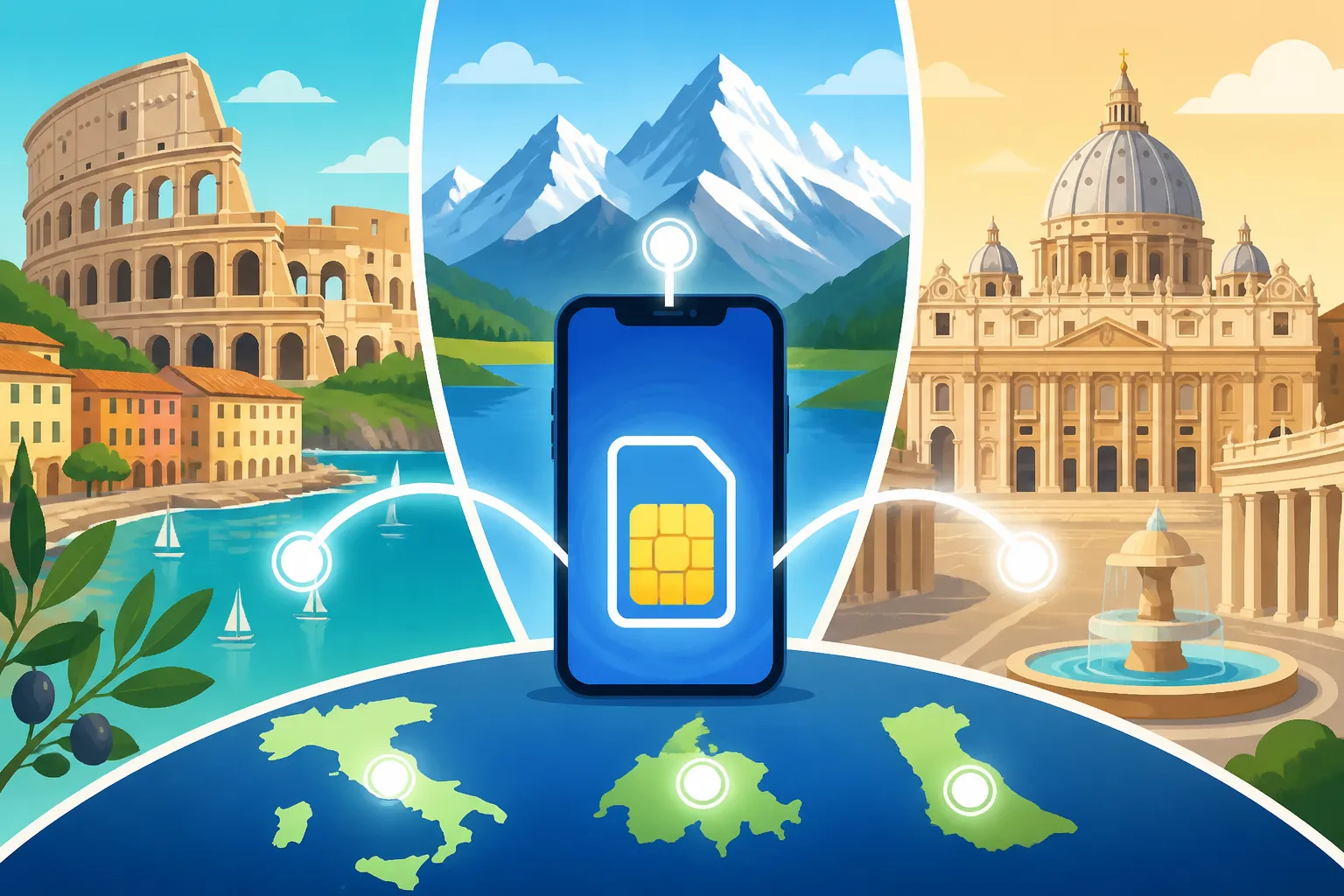
Ah, the classic European adventure! Italy, Switzerland, and a little detour through the Vatican City. It sounds absolutely dreamy on paper, doesn't it? Winding through Roman ruins, zipping up to the Swiss Alps, and taking in the breathtaking sights of the smallest state in the world. But then reality hits: how on earth do you stay connected across three distinct territories, each with its own network quirks, without racking up a fortune in roaming charges or constantly swapping out tiny little SIM cards? It's a logistical nightmare that can turn your dream trip into a connectivity headache faster than you can say "prego." This guide is here to unravel that tangled mess, specifically focusing on how an eSIM, and particularly a service like Airalo, can be your ultimate travel companion for seamless internet access from the Colosseum to the Matterhorn and beyond.
Disclosure: This post may contain affiliate links. We may earn a commission at no extra cost to you if you make a purchase through these links. Read full disclosure.
The Connectivity Conundrum: Why a Single eSIM for Italy, Switzerland, and the Vatican is a Game-Changer
When you're planning a trip that hops across national borders, especially within Europe where countries are often just a short train ride away, connectivity quickly becomes a real headache. I’ve seen countless travelers, myself included in the early days, juggle multiple local SIM cards, deal with exorbitant roaming fees, or desperately hunt for unreliable public Wi-Fi. It takes away from the magic of the journey. Imagine trying to navigate a bustling Italian train station, only for your data to suddenly cut out as you cross into Switzerland, leaving you scrambling for directions or a ticket update. Or, worse, trying to share that incredible photo of St. Peter's Basilica, only to find you've burned through your data allowance because your phone didn't switch networks gracefully.
The Pain Points of Traditional Roaming and Swapping SIMs
Let’s be honest, traditional roaming is a financial black hole. Your home provider might offer some "international package," but often, it's either incredibly expensive, comes with pitiful data caps, or throttles your speed to a crawl after a tiny allowance. It’s like being nickel-and-dimed for every single megabyte, and who needs that stress when you're trying to enjoy a gelato? Then there's the physical SIM card dance. Buying local SIMs in each country sounds economical, right? You arrive in Rome, spend precious time at a phone shop, present your passport, register, and finally get connected. Great. Then you hop on a train to Lugano, Switzerland, and the whole process starts again. Different shops, different languages, different registration requirements. It's not just a time sink; it's a real barrier to just enjoying the flow of travel. Plus, you have to keep track of those tiny SIM cards, and trust me, they disappear into the ether of travel bags faster than you can imagine.
The Unrivaled Convenience of a Single Solution
This is where a single, multi-country eSIM comes into its own. The beauty of it lies in its sheer simplicity. Instead of fumbling with physical cards or dreading your next phone bill, an eSIM provides continuous data coverage as you seamlessly transition from one country to the next. You purchase it once, install it digitally on your phone, and voilà! Your phone automatically connects to local networks in Italy, then Switzerland, and yes, even within the tiny confines of the Vatican City, without you having to lift a finger or break out a credit card for unexpected fees. Think of it: one QR code, one setup, and then uninterrupted access to maps, translation apps, restaurant reviews, and the ability to share every breathtaking moment with friends and family back home. It truly transforms the travel experience from a series of logistical hurdles into a smooth, connected adventure.
Addressing the Unique Challenges of the Vatican
The Vatican City is a special case, isn't it? It’s its own sovereign state, nestled right within Rome. While your phone might sometimes pick up Italian networks within its walls, reliable, consistent coverage can be a bit patchy, especially in crowded areas. This can be particularly frustrating if you're trying to use a specific app for Vatican tours or to coordinate with your group inside St. Peter's Square. A good multi-country eSIM that specifically lists Italy (which typically encompasses the immediate Roman area) and ideally broader European coverage is your best bet to ensure that even in this tiny, unique microstate, you remain fully connected. It’s not just about having some signal; it’s about having reliable signal when you need it most.
Understanding eSIM Technology: A Quick Primer for Travelers
If you're still using a physical SIM card, the world of eSIMs might sound a bit futuristic, but believe me, it’s the present and the future of mobile connectivity, especially for us nomadic types. It's essentially a digital SIM card embedded directly into your phone, tablet, or smartwatch. No more fiddly trays, no more tiny pins, no more wondering where you put your home SIM while traveling.
What Exactly is an eSIM?
An eSIM, or "embedded SIM," is a small chip built into compatible devices that performs the same function as a traditional SIM card. Instead of physically inserting a card to connect to a mobile network, you simply download a profile from your chosen provider. This profile contains all the necessary information to authenticate your device on the network. It's incredibly convenient because it means you can switch carriers or plans without having to get a new physical card. For travellers, this is revolutionary. Imagine landing in a new country and activating a data plan with a few taps on your phone, instead of hunting for a local store. It truly simplifies the process of staying connected abroad.
Why is an eSIM Better Than Physical SIM Cards for Multi-Country Travel?
The advantages of eSIMs for multi-country travel are profound. Firstly, convenience. As I mentioned, you avoid the hassle of sourcing local physical SIMs, often in a foreign language environment. You can purchase and activate your eSIM plan before you even leave home, so you're connected the moment your plane touches down. Secondly, flexibility. With an eSIM, you can often have multiple plans stored on your device and switch between them as needed. This means you can keep your primary physical SIM active for calls and texts (perhaps for banking authentications or urgent contacts from home) while using your eSIM solely for data in the countries you're visiting. This dual-SIM functionality is a lifesaver. Thirdly, no more lost or damaged physical SIMs. It's all digital, secure within your device. For anyone traveling between distinct regions like Italy, Switzerland, and the Vatican, this seamless transition is an absolute godsend.
Compatibility Check: Ensuring Your Device Supports eSIMs
Before you get too excited about this glorious technology, you need to do a quick compatibility check. Not all phones support eSIMs. Generally, most newer smartphones released in the past few years, especially flagship models, are eSIM-compatible. This includes iPhone models XR and later, many Samsung Galaxy S and Note series, Google Pixel 3 and later, and a growing number of other Android devices. However, it's always best to check your specific device's settings or the manufacturer's website. You can usually find "Add eSIM" or "Add Cellular Plan" options in your phone's cellular settings if it's compatible. Don't worry if your device is a bit older; physical SIMs are still an option, but the eSIM experience truly streamlines international travel.
The Quest for Cross-Border Coverage: What to Look For in an eSIM Provider
Choosing the right eSIM provider for your Italy, Switzerland, and Vatican adventure isn't just about finding the cheapest data. It's about reliability, ease of use, and ensuring you have coverage exactly where you need it. I've heard too many stories of travelers buying a "Europe" plan only to find it doesn't quite cover the specific micro-states or mountainous regions they're visiting.
Data Allowances and Validity Periods
This is probably the first thing most people look at, and rightly so. How much data do you need? Are you a light user who just needs maps and occasional messaging, or a heavy streamer and social media updater? eSIM plans come in various data packages, from 1GB to 20GB or more, and validity periods typically range from 7 to 30 days. For a multi-country trip, consider how long you'll be away and your average data consumption. It's often better to slightly overestimate than to run out of data in the middle of navigating a foreign city. Many providers, like our hero Airalo, also offer options to top up your data if you find yourself needing more, which is incredibly useful and prevents that dreaded "data anxiety."
Network Coverage in Each Specific Country
This is the make-or-break factor for a multi-country eSIM. You absolutely need to verify that the eSIM plan you choose specifically lists Italy and Switzerland as covered countries. For the Vatican, as it's within Rome, Italy's coverage usually extends there, but it's always good practice to confirm or check user reviews from travelers who have used the specific eSIM in Rome. Some providers offer broad "European" plans, which might seem perfect, but always dig into the fine print to ensure your specific destinations are included. Switzerland, being outside the EU, can sometimes be excluded from standard "EU roaming" packages, making a dedicated multi-country or global eSIM plan even more crucial. Look for providers that partner with strong local networks in each country to ensure the best possible signal and speed.
Ease of Installation and Management
A good eSIM experience should be straightforward from start to finish. The process should involve a simple purchase, ideally online, followed by a clear activation process, usually via a QR code scan. Once installed, managing your eSIM – checking data usage, topping up, or switching plans – should be intuitive through an app or web portal. This ease of use reduces stress and allows you to focus on your travel adventures rather than tech troubleshooting. The best providers offer clear, step-by-step instructions in English, which, believe me, is not a given with all international services.
Customer Support
Let's face it, things can go wrong. Maybe your eSIM doesn't activate immediately, or you have a question about data usage. Responsive and helpful customer support is invaluable. Look for providers that offer 24/7 support, ideally through multiple channels like chat, email, or a dedicated support line. Being able to get assistance quickly, especially when you're in a foreign country, can save you a lot of grief. It’s another reason why a reputable provider is worth its weight in gold.
Pricing and Value for Money
Of course, cost matters. Compare different plans from various providers, but remember to look beyond just the price tag. Factor in the data allowance, validity, countries covered, and the ease of use. Sometimes, paying a tiny bit more for a reliable, hassle-free service with excellent coverage across Italy, Switzerland, and the Vatican is a much better value than saving a few euros on a plan that leaves you stranded without connectivity. Always consider the total cost of ownership, including potential top-ups.
Airalo: Your Go-To Solution for Seamless Connectivity Across Italy, Switzerland, and the Vatican
When it comes to dependable, cost-effective, and incredibly user-friendly eSIMs for multi-country travel, especially within Europe, Airalo consistently emerges as a top contender. I’ve personally used their services across various trips, and they've always delivered a smooth experience, validating the trust countless expats and tourists place in them. It's not just hype; it's genuinely a well-executed solution to a common traveler's pain point.
Specific Plans Offered by Airalo for Europe/Multi-Country Bundles
Airalo offers a fantastic array of regional and global plans, making them an ideal choice for a journey spanning Italy, Switzerland, and the Vatican. Instead of buying individual country eSIMs, you can opt for their "Eurolink" regional eSIMs, which cover numerous countries, including both Italy and Switzerland. For example, you might find a Eurolink plan offering 5GB of data valid for 30 days across 39 countries, including both Italy and Switzerland, and by extension, the Vatican due to its location within Italy. This means you activate one plan, and you're good to go from the moment you land in Italy, through your Swiss adventures, and back. They also offer specific country plans for Italy (Modena) and Switzerland (Alpenweg) if your travel is more focused, but for your specific multi-country itinerary, a regional Eurolink plan is often the most sensible and cost-effective choice. The beauty of Airalo is the transparency of their offerings; you can see exactly what you’re getting, for how long, and in which countries.
How Airalo Addresses the Unique Requirements for Italy, Switzerland, and the Vatican
Airalo excels because it partners with robust local networks in each covered country. In Italy, this means you're often connecting to major carriers, ensuring wide coverage from Sicily all the way up to the Alps. For Switzerland, which can sometimes be a connectivity island outside of standard EU agreements, Airalo's regional plans ensure dedicated coverage, often through strong local providers like Sunrise or Swisscom. This is key because it means your data won't suddenly vanish as you cross the border, nor will you incur unexpected roaming fees. For the Vatican City, as part of Rome's metropolitan area, Airalo's Italian network coverage will naturally extend there, providing reliable connectivity for those crucial Google Map checks or sharing those stunning basilica selfies. This thoughtful regional coverage ensures peace of mind, allowing you to immerse yourself in your travels without worrying about your digital lifeline.
Step-by-Step Guide to Purchasing and Activating an Airalo eSIM
Getting started with Airalo is incredibly straightforward, even for those not super tech-savvy.
- Download the Airalo App: Head to your smartphone's app store and download the free Airalo app.
- Choose Your Destination/Region: In the app, search for "Europe" or specifically "Italy" and "Switzerland." You'll likely see the "Eurolink" regional eSIM option, which covers both (and many more!). Select the data package and validity period that best suits your trip, perhaps a 5GB plan for 30 days.
- Purchase Your eSIM: Follow the prompts to purchase the eSIM. The prices are clearly listed, and payment is simple.
- Install the eSIM: This is the clever bit. You'll receive clear instructions, often involving scanning a QR code or manually entering details into your phone's cellular settings. Make sure you're connected to Wi-Fi during installation. The app guides you through every step. For iPhones, it typically involves going to Settings > Cellular > Add eSIM, then choosing "Use QR Code" or "Enter Details Manually." For Androids, the path is similar, usually within Network & Internet settings.
- Activate When Ready: Most Airalo eSIMs activate upon connecting to a supported network in a covered country. So, once you land in Italy (or Switzerland), your phone should automatically detect the network and your data plan will kick in. Just ensure your eSIM line is toggled "on" in your phone's settings and data roaming is enabled for that specific eSIM line (not your home SIM, if you're keeping it active).
And just like that, you're connected! It's genuinely that simple and removes a huge layer of travel stress.
Real-World Scenarios and Benefits of Using Airalo
Let’s talk real-world benefits. Imagine you're on a high-speed train, zipping from Florence to Milan, then onwards to the Gotthard Base Tunnel into Switzerland. With Airalo, your phone seamlessly transitions between networks. There’s no sudden data cut-off, no frantic fumbling for Wi-Fi passwords. You can check train schedules on Trenitalia, look up restaurant recommendations for your next stop in Zurich, or stream a bit of music as the stunning alpine scenery rushes by, all without a hitch.
- Navigation: Trying to find your way through the winding streets of Venice or locate that tiny trattoria in a Roman alley? Google Maps becomes your reliable guide. Airalo ensures you have the data to pinpoint your location precisely.
- Translation: My Italian is passable, but Swiss German? Not so much. Translation apps are invaluable. Whether you need to ask for directions in a remote village or understand a menu, consistent data is critical.
- Emergency Access: God forbid, but if you need to access emergency services or quickly look up a local hospital, having reliable data for a quick search or call is paramount. Even for minor issues, like a delayed flight, having data to rebook or check updates is a blessing. For vital information like how to register for Italian healthcare (SSN) as a foreigner or understanding Emergency Medical Numbers in Italy (112, 118, 1500), consistent connectivity becomes indispensable.
- Staying Connected with Loved Ones: Whether it's a quick video call with family back home or sharing those envy-inducing Instagram stories, Airalo keeps you connected without fear of bill shock. This freedom to share your experiences instantly truly enhances the joy of travel.
With Airalo, you're not just buying data; you're buying peace of mind and the freedom to truly experience your multi-country European adventure without digital distractions.
Navigating the Nuances: Data Usage and Local Considerations
Even with the best eSIM, understanding how data works across different regions and being mindful of your usage can enhance your experience and avoid any unexpected slowdowns. Italy and Switzerland, while geographically close, have distinct network infrastructures and usage patterns.
Data Speed Expectations in Different Areas
While Airalo strives to offer the best available local network, data speeds can vary. In major Italian cities like Rome, Florence, or Milan, you can expect excellent 4G LTE speeds, sometimes even 5G in areas with advanced infrastructure, perfect for streaming and heavy browsing. The same generally applies to Swiss urban centers like Zurich or Geneva. However, as you venture into more rural areas, such as the remote valleys of the Italian Dolomites or the high Swiss Alps, speeds might drop to 3G or be less consistent. This is normal for any network, local or eSIM-based. It's not a flaw of the eSIM but rather a reflection of the physical network infrastructure. Be prepared for slightly slower speeds when you're off the beaten path, but generally, it will still be more than sufficient for navigation and essential communication.
Fair Usage Policies
Most mobile data plans, including eSIMs, come with a "Fair Usage Policy" (FUP). This is a standard industry practice designed to prevent a small number of users from consuming excessive amounts of data and potentially impacting network performance for everyone else. While Airalo's plans are generous, if you're planning on downloading huge files, constantly streaming in high definition, or using your phone as a hotspot for multiple devices for extended periods, you might hit an FUP limit. This typically results in your data speed being throttled rather than cut off entirely. For normal travel usage – maps, social media, messaging, occasional video calls – you're highly unlikely to encounter FUP restrictions. Always check the specific terms of your chosen Airalo plan to understand any potential limits, though their regional plans are designed with travelers in mind.
Staying Connected in Remote Swiss Alps vs. Bustling Rome
The contrast between bustling urban environments and serene natural landscapes really highlights the value of reliable connectivity. In Rome, with its dense population and numerous cell towers, you'll generally have strong signal everywhere, including within the Vatican City's immediate vicinity. You can seamlessly check bus schedules, look up local attractions, or find the best spot for an aperitivo. But then you travel to the majestic Swiss Alps. Here, the challenge shifts. While major ski resorts and towns will have good coverage, signal can become spotty in very remote mountain trails or deep valleys. An Airalo eSIM, by leveraging strong local partners, maximizes your chances of connectivity even in these challenging environments. However, always have a backup plan (like downloaded maps) if you're planning serious backcountry adventures, as no network can guarantee 100% coverage in every remote corner.
Using Local Wi-Fi to Conserve Data
Even with a generous Airalo plan, it’s smart to use local Wi-Fi whenever possible to conserve your data. Most hotels, B&Bs, cafes, and many restaurants in Italy and Switzerland offer free Wi-Fi for customers. Public transportation hubs, like major train stations, often have free Wi-Fi as well. Make it a habit to connect when it's available, especially for larger downloads or uploads. This not only extends your eSIM data but also gives you an extra layer of connectivity. When searching for Where to Find English-Speaking Doctors and Clinics or wanting to understand the Cost of Living vs Salary: Budget Tips for Italy Expats, connecting to reliable Wi-Fi can give you the bandwidth for more in-depth research. It's a simple trick that helps you manage your data budget effectively throughout your trip.
Beyond Connectivity: Other Essential Travel Tips for Your Italy, Switzerland, and Vatican Adventure
While sorting out your digital lifeline with an Airalo eSIM is a massive step towards a smooth trip, don't forget the other crucial elements of international travel. As an expat who's been through the mill, I can tell you that preparation is truly your best friend.
Money Matters: Currency, Payments, and Budgeting
Italy and the Vatican City both use the Euro (€), while Switzerland uses the Swiss Franc (CHF). This means you'll be dealing with two different currencies, so plan accordingly. While credit and debit cards are widely accepted in both countries, especially in tourist areas, having some local cash on hand is always a good idea, particularly for smaller purchases, markets, or in more rural Swiss villages. Always inform your bank about your travel plans to avoid card freezes. For a deeper dive into financial planning, check out Money Matters in Italy: Banking and Finance for Expats. Also, be mindful of using Credit Cards Abroad: Fees in Italy to minimize extra charges. Budgeting is key, as Switzerland, in particular, can be significantly more expensive than Italy.
Transportation: Navigating Trains, Buses, and Driving
Both Italy and Switzerland boast excellent public transportation networks, especially trains. High-speed trains connect major cities in Italy (Trenitalia and Italo), while Switzerland's train system is renowned for its efficiency and scenic routes. For details on getting around Italy, you might find Getting Around Italy: Trains, Buses, Flights, and Car Hire helpful. If you plan to drive, remember that Switzerland requires a vignette (road tax sticker) for highways, and both countries have strict rules about ZTLs (Limited Traffic Zones) in city centers that can result in hefty fines. An International Driving Permit (IDP) is also highly recommended if your license isn't from the EU. With your Airalo eSIM, checking train times or bus routes on the go will be effortless.
Cultural Etiquette and Language Basics
Italy and Switzerland each have rich, distinct cultures. In Italy, a few Italian phrases like "grazie" (thank you), "per favore" (please), and "buongiorno" (good day) go a long way. The Italian Language and Everyday Communication for Visitors guide can offer a great head start. In Switzerland, you'll encounter German, French, and Italian, depending on the canton. While English is common in tourist areas, an effort to speak a few local words is always appreciated. Be aware of local customs; for instance, punctuality is more valued in Switzerland than in Italy, and meal times differ. Learning about Italian Customs, Etiquette, and Social Life can help you blend in more smoothly. With your reliable Airalo data, translation apps will be your best friend when language barriers arise.
Safety and Health Considerations
Both Italy and Switzerland are generally safe countries for tourists. However, common sense precautions apply: be aware of pickpockets in crowded tourist areas (especially in Rome), secure your belongings, and avoid flashing expensive items. For more advice, Staying Safe in Italy: Common-Sense Tips for Travelers is a good resource. For health, ensure you have travel insurance that covers medical emergencies – you never know when you might need it, and it's far better to be prepared. For EU citizens, your EHIC card provides some coverage, but it's not a substitute for comprehensive travel insurance. Consult Travel Insurance for Trips to and Within Italy for detailed guidance. Remember, having your Airalo eSIM means you can quickly access emergency numbers or find nearby medical facilities should the need arise.
Disclaimer
The information provided in this guide is intended for general informational purposes only and may be subject to change. While efforts have been made to ensure accuracy, conditions such as visa requirements, specific brand offerings, and local regulations can evolve. Always verify the latest requirements and information from official government sources, service providers, and relevant authorities before making travel plans or purchases. The author and publisher are not responsible for any inaccuracies, omissions, or for the results obtained from the use of this information.