Why You Still Need an Italian Number: Banks, SPID, and Delivery Codes
You've arrived in Italy, phone in hand, confident your trusty home country number with international roaming will see you through. But let me tell you, as someone who’s been navigating la dolce vita for years, relying solely on that foreign number is a recipe for daily frustration and missed opportunities. This guide is here to shed light on why a dedicated Italian phone number isn't just a convenience, it's a critical tool for everything from managing your money to simply receiving a package, and how you can get one without the usual bureaucratic headache.
Disclosure: This post may contain affiliate links. We may earn a commission at no extra cost to you if you make a purchase through these links. Read full disclosure.
The Non-Negotiable Need for an Italian Phone Number
When you first arrive in Italy, it might seem like a small thing, but having a local phone number quickly moves from "nice to have" to "absolutely essential." It's not just about making calls; it's about being recognized, authenticated, and integrated into the daily fabric of life here. Without one, you'll find yourself locked out of crucial services and constantly battling a system designed for locals.
Financial Security: Banking and Two-Factor Authentication (2FA)
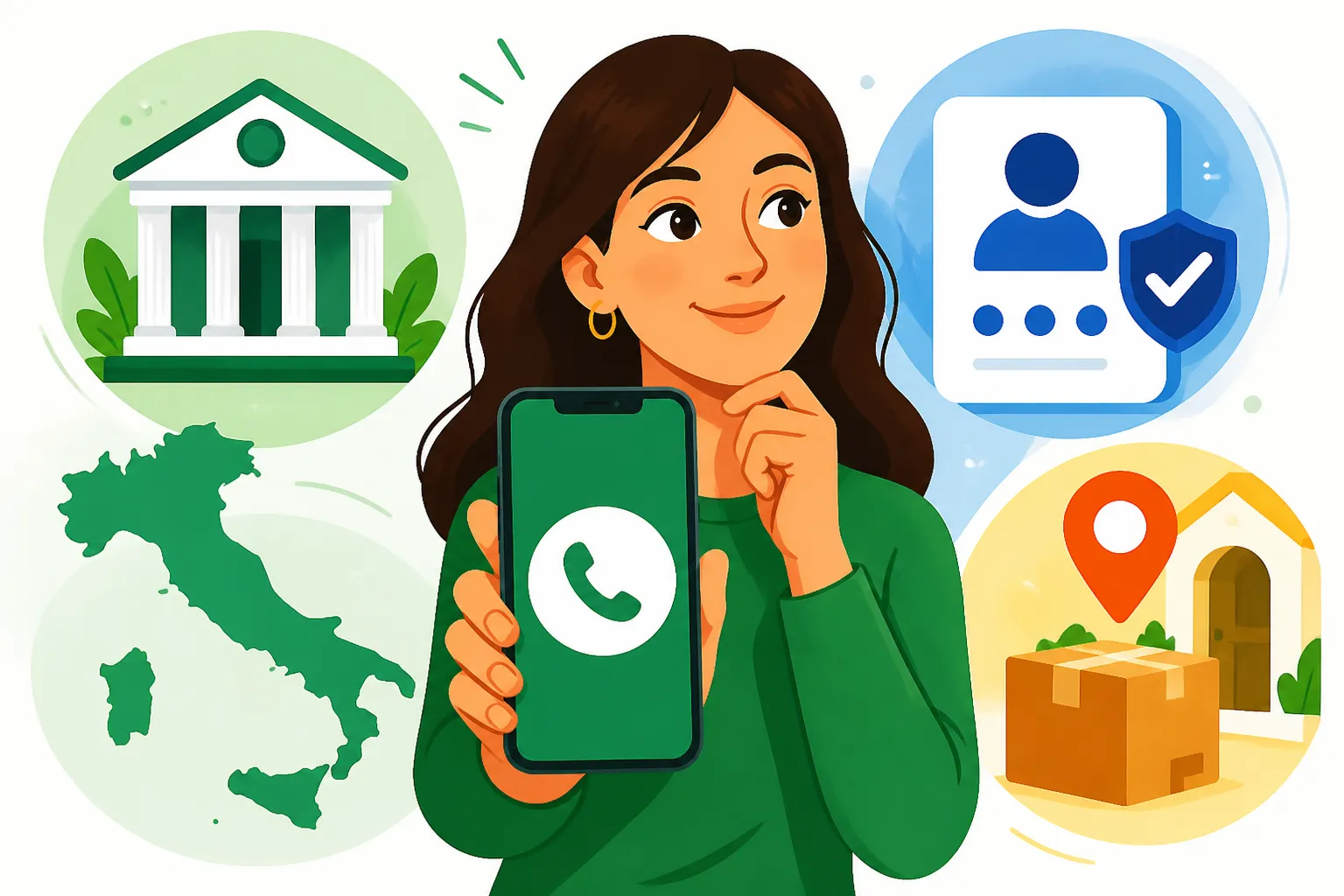
This is perhaps the biggest and most immediate pain point for newcomers. Italian banks, much like banks worldwide, have heavily invested in digital security. This means that almost every online transaction, every login attempt, and every significant change to your account will trigger a two-factor authentication (2FA) request. And guess what? That authentication code, that crucial SMS, is almost always sent to your registered Italian mobile number.
Imagine this scenario: You've finally managed to open an Italian bank account – a feat in itself, as documented in guides like How to Open a Bank Account in Italy. You need to pay your first utility bill or transfer money to your landlord, but your banking app asks for a code sent to your Italian number. If you don't have one, or if your foreign number is registered but constantly struggling with roaming issues, you're stuck. I've heard countless tales of expats unable to access their own money for days because their foreign SIM wasn't receiving SMS messages reliably from their Italian bank. This isn't just an inconvenience; it can lead to missed payments, late fees, and immense stress. Even services like Poste Italiane, where many expats start their banking journey by opening a Poste Italiane Savings Account as an Expat, will rely on SMS for secure transactions. Without that reliable local number, your financial life can grind to a halt.
Unlocking Bureaucracy: SPID and Public Services
Italy is, let's be honest, a country that loves its bureaucracy. But in recent years, there's been a significant push towards digitization, spearheaded by the Sistema Pubblico di Identità Digitale, or SPID. SPID is your digital key to accessing nearly all public services online – from applying for residence permits and accessing your Fascicolo Sanitario Elettronico to checking your tax situation with the Agenzia delle Entrate. It’s a game-changer, but its setup and ongoing use are inextricably linked to an Italian phone number.
When you register for SPID, you'll typically need to confirm your identity via a video call or in person, and then, crucially, you'll set up your 2FA, which again relies on your mobile phone. Each time you log in to a SPID-enabled service, you'll receive a notification or an SMS code to your registered number. Without a reliable Italian number, getting or using SPID becomes incredibly difficult, if not impossible. This means you'll be forced back into the traditional, often soul-crushing, in-person bureaucratic loops for everything, from understanding your healthcare benefits (which you can learn more about in How to Register for Italian Healthcare SSN as a Foreigner) to checking your INPS social security contributions. Trust me, you want to avoid those lines and paper forms wherever possible, and an Italian phone number is your golden ticket to doing so.
Everyday Logistics: Deliveries, Appointments, and More
Beyond the big stuff like banking and bureaucracy, an Italian number smooths out a thousand little everyday frictions that can quickly pile up and make life unnecessarily stressful. Think about online shopping: whether you're ordering from Amazon.it or a local Italian retailer, delivery drivers will call you. They call if they can't find your building, if the intercom isn't working, or if they just need to confirm you're home. If they call your foreign number, they might hesitate due to international calling costs, or you might miss the call due to poor signal or simply not recognizing the unknown Italian number. This often results in a missed delivery and the tedious process of rescheduling or, worse, having to go pick up your package from a distant depot.
The same goes for appointments. If you're Registering with an Italian Family Doctor Medico di Base or booking a specialist through the CUP system (which you'll find details on in Booking Medical Appointments in Italy Through the CUP System), doctors' offices, clinics, and even repair services for your home utilities (like setting up electricity in a new Italian apartment) will use your phone number to confirm, reschedule, or communicate important information. Relying on an email that might go to spam or a phone call that might not connect can lead to endless delays and frustration. Even finding a night pharmacy or emergency dentist often involves local calls that are much easier and cheaper with an Italian number.
The Frustration of Being "Unreachable" and the Traditional Hurdles
The modern world has made international travel and communication seem seamless, but Italy often operates on its own unique frequency. What works back home or in other European countries doesn't always translate smoothly here. The underlying assumption is always a local number.
The Pitfalls of International Roaming
While roaming agreements have improved dramatically over the years, they still come with significant drawbacks, especially for anything beyond short-term tourist use. For starters, the cost, even within the EU, can quickly add up if you're making or receiving numerous local calls, or if you exceed data limits. But beyond cost, there's reliability. International roaming can be notoriously flaky. I've had countless friends complain about missed calls, delayed SMS messages (especially those crucial 2FA codes), and spotty data coverage, even in major cities.
Imagine trying to confirm an urgent visa appointment with the Questura, only for the call to drop repeatedly. Or waiting for a text message confirmation for a vital online transaction, and it just never arrives. These aren't just minor annoyances; they're potential crises that can derail your plans and add immense stress to an already complex process of settling into a new country. Italian service providers are simply not optimized for foreign numbers, and relying on them for your daily essentials is like trying to fit a square peg in a round hole – it just doesn't quite work, and you'll always feel the friction.
The Hassle of a Physical SIM Card in Italy
Okay, so you realize you need an Italian number. Your next thought might be to just pick up a local SIM card. Sounds easy, right? Well, sometimes. But often, it's not as straightforward as you'd hope, especially if you've just arrived.
First, you need to find a store, usually an official carrier store like TIM, Vodafone, or WindTre. Then, you'll need your passport and, crucially, your Codice Fiscale (Italian tax code). Without a Codice Fiscale, getting a long-term, properly registered SIM can be tricky, if not impossible. While you can usually get a temporary one as a tourist, for anything longer, the Codice Fiscale is mandatory. And if you're a new arrival, getting your Codice Fiscale might be one of your first bureaucratic hurdles, as outlined in How to Get a Codice Fiscale in Italy (and Why You Need One). It's a bit of a chicken-and-egg situation: you need a number for bureaucracy, but you need bureaucracy for a reliable number.
Then there's the language barrier. Explaining what kind of plan you need, understanding the terms and conditions, and activating the SIM can be a challenge if your Italian isn't quite fluent yet. And let's not forget the physical aspect: if your phone is locked to your home country's carrier, or if it doesn't have a physical SIM slot (many newer phones are eSIM-only), then a traditional Italian SIM card is simply not an option. You're left trying to find a solution that works for your device and your situation, which often means more searching, more waiting, and more frustration.
Your Digital Lifeline: Why an eSIM is the Modern Solution for Italy
Given the essential nature of an Italian phone number and the inherent headaches of traditional options, what's a savvy expat or tourist to do? This is where modern technology steps in to offer a breath of fresh air, making one crucial part of your Italian transition surprisingly simple.
Introducing Airalo: Seamless Connectivity from Day One
Enter Airalo, the game-changer for digital-first travelers and expats in Italy. For those unfamiliar, Airalo is a pioneering eSIM marketplace that allows you to purchase and activate local or regional data plans directly onto your eSIM-compatible smartphone. This means no physical SIM cards, no hunting for stores, and no immediate need for a Codice Fiscale just to get connected.
The beauty of Airalo is its sheer convenience. You can purchase your Italian eSIM plan before you even leave your home country or while you're still at the airport after landing. With just a few taps on your phone, you can have an active Italian data plan, giving you immediate access to maps, translation apps, and critical communications the moment you arrive. It’s an ideal solution for those first crucial days and weeks when you're sorting out all the other administrative bits, like Registering Residency in Italy Residenza and Anagrafe. While Airalo primarily provides data, many plans now include an Italian phone number for receiving SMS, making it perfect for those 2FA codes from banks or government services. This truly is a digital lifeline that allows you to hit the ground running without the usual connectivity worries.
How Airalo Solves the Common Expat & Tourist Dilemmas
Airalo directly addresses the core challenges faced by foreigners in Italy.
Firstly, it bypasses the physical SIM card hurdle. No need to visit a shop, wait in line, or navigate a conversation in Italian about data plans. You activate it digitally, often within minutes. This is invaluable when you're jet-lagged and just trying to get from the airport to your accommodation.
Secondly, for that crucial 2FA: many Airalo packages for Italy now offer a local Italian number that can receive SMS messages. This feature is a lifesaver for banking, SPID, and any other service that relies on text message verification. You maintain your home country number for calls and texts with family and friends, but your Airalo eSIM provides the essential local number for Italian services, all on the same device. It’s a dual-SIM setup without needing a dual-SIM phone. It truly offers reliable communication for your Italian life without the stress of wondering if your bank's SMS will ever reach you.
Finally, the flexibility and cost-effectiveness are unmatched. You can choose from various data bundles and durations that suit your needs, whether you're here for a short holiday, a semester of study, or a longer-term relocation. This means you're not locked into a long contract or paying for more than you need, and you can easily top up or switch plans as your circumstances change. Airalo empowers you with control over your connectivity, allowing you to focus on the exciting aspects of living or traveling in Italy, rather than battling technical issues.
Here's a quick comparison of the traditional physical SIM vs. an eSIM like Airalo:
| Feature | Traditional Physical SIM Card | eSIM (e.g., Airalo) |
|---|---|---|
| Purchase & Activation | In-store visit, physical card, often requires Codice Fiscale | Online purchase, digital activation, no physical card |
| Time to Get Started | Varies (store hours, queues, stock) | Minutes (anytime, anywhere with internet) |
| Requires Codice Fiscale? | Mandatory for long-term/contract plans | Not always for data plans, sometimes for SMS-enabled plans |
| Dual Number Use | Requires a dual-SIM phone or carrying two phones | Seamlessly integrates with your existing number |
| Bureaucracy Involved | High | Low |
| Primary Use Case | Long-term residents, full contracts | Tourists, short/mid-term stays, immediate connectivity, 2FA |
| Language Barrier | Possible issue in store | Minimal, app-based |
| Reliability for 2FA SMS | Generally good once activated | Excellent for receiving SMS with appropriate plans |
Beyond the Essentials: Social Life and Integration
While the administrative and logistical benefits are clear, having an Italian phone number extends its utility into the crucial realm of social integration. Connecting with locals and fully immersing yourself in the culture often hinges on these seemingly small details.
Building Local Connections and Networking
Think about the ease of exchanging numbers with new Italian friends, colleagues, or even the friendly shopkeeper who gives you their WhatsApp for special orders. When you give them an Italian number, it immediately signals that you're here, you're accessible, and you're part of the local ecosystem. Handing out a foreign number can sometimes create an invisible barrier, as people might assume you're only temporary, or they might be reluctant to call due to perceived international charges.
For professional networking or job hunting in Italy, a local number is almost a prerequisite. Employers, recruiters, and contacts will expect to reach you on an Italian line. It looks more professional and makes the communication process smoother for them. If you’re considering opportunities, perhaps even after graduation as per How to Get an Italian Work Permit after Graduation, having a local number is a subtle but significant way to show your commitment and readiness to integrate. Similarly, if you're seeking to build a new life and connect with expat communities in Italy, a local number makes it easier to join WhatsApp groups, coordinate meetups, and generally participate in the vibrant social scene.
Staying Informed with Local Alerts and Promotions
An Italian phone number also keeps you in the loop for local happenings and crucial information. Many cities and local businesses use SMS alerts for things like public transport disruptions, emergency warnings, or special promotions. Your local pharmacy might text you when your prescription is ready, or a restaurant you frequent might send out a discount offer. These might seem trivial, but they add up to a richer, more informed local experience.
Furthermore, signing up for various Italian apps – from public transport apps to food delivery services – often requires an Italian number for verification or to receive order updates. While your Airalo eSIM might initially be just for data and receiving SMS, it opens doors to these hyper-local digital interactions, making your daily life significantly easier and more connected. It transforms you from an outsider trying to navigate a foreign system into someone who's part of the flow, smoothly receiving information and participating in everyday Italian life.
Disclaimer
The information provided in this guide is for general informational purposes only and does not constitute legal, financial, or immigration advice. While we strive to keep the information accurate and up-to-date, regulations and procedures in Italy can change frequently. Always consult with official sources, legal professionals, or relevant government agencies for the most current and specific advice tailored to your individual situation. Using services like Airalo is subject to their terms and conditions.