What is an Italy codice identificativo fiscale (tax code) and why needed
Arriving in Italy with a hefty bank account feels empowering until a landlord flat-out refuses your money because you lack a 16-digit alphanumeric code. I spent my first week utterly locked out of the housing and mobile network markets simply because I didn’t have this piece of paper. This guide explains what the Codice Fiscale is, why you desperately need it, and how to navigate the Italian bureaucracy to secure yours.
Disclosure: This post may contain affiliate links. We may earn a commission at no extra cost to you if you make a purchase through these links. Read full disclosure.
The Anatomy of the Italian Tax Code
When expats hear the term “tax code,” they often assume it is something exclusively reserved for paying annual income taxes or running a business. In Italy, this is a dangerous misconception. The Codice Identificativo Fiscale (commonly shortened to Codice Fiscale) is the absolute foundation of your civil identity in the country, functioning much like a Social Security Number in the United States or a National Insurance Number in the United Kingdom.
How the Sixteen Characters Are Generated
Unlike foreign tax numbers that are randomly assigned digits, the Italian Codice Fiscale is a highly specific alphanumeric formula directly tied to your vital statistics. The state uses an algorithm to generate 16 characters based on your legal name, your date of birth, your sex, and your place of birth.
The structure is fascinating once you decode it. The first three letters are derived from the consonants of your surname. The next three letters are pulled from the consonants of your first name. The following five characters represent your year, month, and day of birth, with a mathematical adjustment made for female applicants (adding 40 to the day of birth).
The most interesting part for expats is the geographic code. For anyone born outside of Italy, this section always begins with the letter “Z,” followed by a three-digit country code. For instance, if you were born in the United States, your geographic code is Z404; if you were born in the UK, it is Z114. The final 16th character is a control letter generated by a complex algorithm verifying the previous 15 characters. Because this code is mathematically generated, online calculators exist, but be warned: a self-generated code has absolutely no legal validity until it is officially registered with the Italian government.
The Paper Certificate vs The Plastic Card
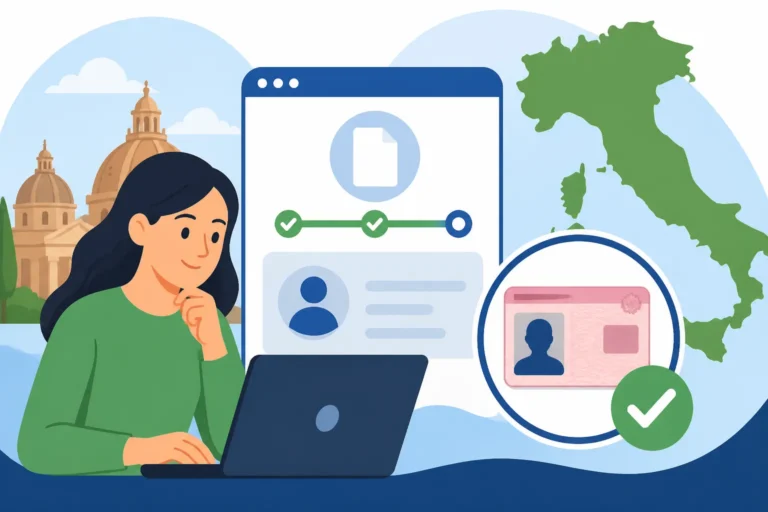
Historically, the Italian government issued a hard plastic, green-and-white card bearing your tax code. Today, if you apply for the code solely as a foreign citizen needing to execute a contract, you will likely only receive a stamped, barcoded A4 piece of paper from the Agenzia delle Entrate (Italian Revenue Agency). Do not lose this paper.
Once you actually move to Italy and officially register your residency at the local town hall, your tax code will eventually be merged into your Tessera Sanitaria (National Healthcare Card). This blue plastic card features a microchip and your Codice Fiscale printed on the front, serving as your primary piece of domestic identification for pharmacies, doctors, and tax filings.

Why You Literally Cannot Survive in Italy Without It
The sheer shock of the Codice Fiscale requirement is how deeply integrated it is into everyday, mundane transactions. You cannot rely on your passport and a foreign credit card to set up your life.
Housing, Utilities, and Connectivity
When you are checking off items on your Checklist: All You Need Before Moving to Italy, securing a place to sleep is obviously at the top. However, Italian property law dictates that every single residential lease extending beyond thirty days must be formally registered with the national tax agency. The digital registration portal absolutely requires the tenant’s Codice Fiscale. Without it, the landlord cannot legally rent to you, and offering to pay six months in cash will not change this legal barrier.
The friction continues the moment you try to turn the lights on. Utility companies require your tax code to put the electricity, gas, or home internet bill in your name. Even walking into a Vodafone or TIM store to buy a simple prepaid mobile SIM card requires the clerk to scan your tax code into their terminal. If you are exploring modern work pathways like Italy’s new digital residency pilot for expats, realizing you cannot even buy a local phone number without this tax code is a brutal wake-up call to the realities of the Italian administrative state.
Healthcare and Immigration Hurdles
The bureaucratic entanglement reaches its peak when dealing with health and immigration. To legally reside in the country, you must apply for a Permesso di Soggiorno (residence permit). Understanding How long after entry to apply for a residence permit in Italy is critical—you have exactly eight days—but the post office kit you must submit requires your tax code.
Furthermore, you cannot enroll in the public healthcare system without a registered tax code and an active residence permit. Since processing times can take months, you will face a terrifying period of being uninsured in a foreign country. Relying on Cigna Global is the smartest way to bridge this dangerous gap. Having a comprehensive policy with Cigna Global protects you from emergency out-of-pocket costs while you wait for the government to finalize your paperwork.
When you finally approach the local health authority to register, you might discover that the voluntary enrollment fees for expats have skyrocketed, making public care unexpectedly expensive. Reviewing the Cost of Healthcare in Italy: What Expats Need to Know often leads expats to simply maintain their Cigna Global coverage indefinitely, bypassing the bureaucratic nightmares and wait times of the public system entirely.
How to Obtain Your Italian Tax Code
Fortunately, the Italian government recognizes that foreigners need this code before they ever step foot on a plane. You have two primary pathways to secure your Codice Fiscale, and choosing the right one dictates how stressful your relocation will be.
Applying from Abroad via the Italian Consulate
The most strategic, stress-free method is to apply for your tax code while you are still in your home country. You can request this through the Italian embassy or consulate that holds jurisdiction over your permanent residence.
You must download and fill out the official “Modello AA4/8” application form. The process is entirely free. Many consulates process this via email or through the Fast It consular portal. However, consulates are notoriously pedantic about documentation. If you are applying for a joint code with your spouse, or relying on foreign civil records to prove your identity, the consulate will demand localized Italian documents. Handing them an English marriage certificate will halt your application. You can use RushTranslate to quickly localize your foreign documents before submission. Submitting certified translations via RushTranslate guarantees the consular officer can instantly verify your vital records, ensuring they generate your tax code without kicking your application back to the bottom of the pile.
| Application Pathway | Estimated Timeline | Best Used For | Friction Level |
| Italian Consulate (Abroad) | 2 to 6 weeks | Pre-arrival planning, remote workers, retirees | Low (If documents are perfect) |
| Agenzia delle Entrate (In Italy) | Same-day (With appointment) | Emergency arrivals, tourists switching to work visas | High (Requires navigating local offices) |
| Through a Legal Delegate | 1 to 3 days | Foreign property buyers, overseas investors | Very Low (But costs lawyer fees) |
Applying in Italy at the Agenzia delle Entrate
If you arrive in Italy without your code, you must obtain it physically from a local branch of the Agenzia delle Entrate. You cannot simply walk in; you must navigate their Italian-only website to book an appointment (prenotazione biglietto).
On the day of your appointment, you must bring your passport, a copy of your visa, and the completed Modello AA4/8 form. If you are a non-EU citizen, the clerk will want to see the entry stamp in your passport to verify you have not overstayed your welcome. The physical experience is chaotic, loud, and entirely in Italian. If you are asked to provide supplemental proof of your foreign address to match your application, handing the clerk a foreign utility bill rarely works. Utilizing RushTranslate to have your foreign bank statements or address proofs translated beforehand ensures you do not waste your hard-won appointment slot due to a simple language barrier.
Common Bureaucratic Nightmares (and How to Solve Them)
Getting the code is only half the battle. Because the algorithm is rigid, it frequently creates catastrophic mismatches for expats whose foreign passports do not align perfectly with Italian naming conventions.
Name Mismatches and Foreign Documentation
The Italian tax system cannot comprehend middle names, suffixes, or maiden names unless they are handled perfectly. If your US passport lists your name as “John Robert Smith,” but your birth certificate says “John Smith,” the Italian algorithm will panic. The Agenzia delle Entrate strictly uses the name exactly as it appears on your birth certificate, but immigration uses the name on your passport.
If your tax code name does not perfectly match your visa name, you will be blocked from signing a lease or opening a bank account. To fix this, you must prove the two names belong to the same person. This requires bringing your original birth certificate to the tax agency. Because the clerks do not speak English, you must use RushTranslate to provide a certified Italian version of your birth record. Handing the clerk a flawless translation from RushTranslate legally bridges the gap between your conflicting documents, allowing them to manually override the system and issue a matching code.
Visa Timelines and the Catch-22
The most frustrating aspect of the Codice Fiscale is how it interacts with the rest of your visa requirements. If you are gathering the documents for Acceptable financial proof for Italy self-employment visa, the consulate will demand to see your financial readiness alongside a signed lease, which requires a tax code, which you cannot easily get without a visa.
Breaking this cycle requires securing the tax code via the consulate before you apply for the visa itself. When you finally submit your overarching visa packet, you must also prove your medical solvency. Consulates will reject your visa if you do not have private health insurance active on day one. Purchasing a policy with Cigna Global entirely solves this consulate requirement. Attaching your Cigna Global certificate alongside your freshly minted Codice Fiscale proves to the immigration authorities that you are administratively and financially prepared to enter the country.
Once you arrive, keeping track of your paperwork is a matter of legal survival. Tracking the Timelines for picking up your permesso di soggiorno in Italy ensures your legal residency stays perfectly aligned with your tax filings. If your wallet is stolen, dealing with the Consequences of losing your permesso di soggiorno card and your tax code simultaneously is a nightmare; always keep digital backups. Finally, if you are bringing family, ensure you follow the exact Conditions for working while on Italy Family Reunification Visa, which dictate that your spouse must obtain their own Codice Fiscale before they can legally seek local employment. The Italian system is heavy and archaic, but once you possess that 16-character code, the doors to the country finally unlock.
References
Primary sources (official)
- Agenzia delle Entrate (Tax Identification Number for Foreign Citizens): https://www.agenziaentrate.gov.it/portale/web/english/nse/individuals/tax-identification-number-for-foreign-citizens
- Ministero degli Affari Esteri (Consular Services – Codice Fiscale): https://consmumbai.esteri.it/it/servizi-consolari-e-visti/servizi-per-il-cittadino-italiano/codice-fiscale/
Other helpful sources
- ESN Italy (Guide to the Codice Fiscale for International Students): https://bari.esn.it/en/codice-fiscale
- Wikipedia (Structure of the Italian Fiscal Code): https://en.wikipedia.org/wiki/Italian_fiscal_code
Disclaimer
The information provided in this article is for general informational purposes only and does not constitute official legal, tax, or immigration advice. The algorithms used to generate the Italian Codice Identificativo Fiscale, the administrative requirements of the Agenzia delle Entrate, and consular procedures are subject to frequent changes. Always verify current application procedures, required translation standards, and appointment protocols directly with your local Italian Consulate or a registered Italian tax accountant (commercialista) before submitting official documents.