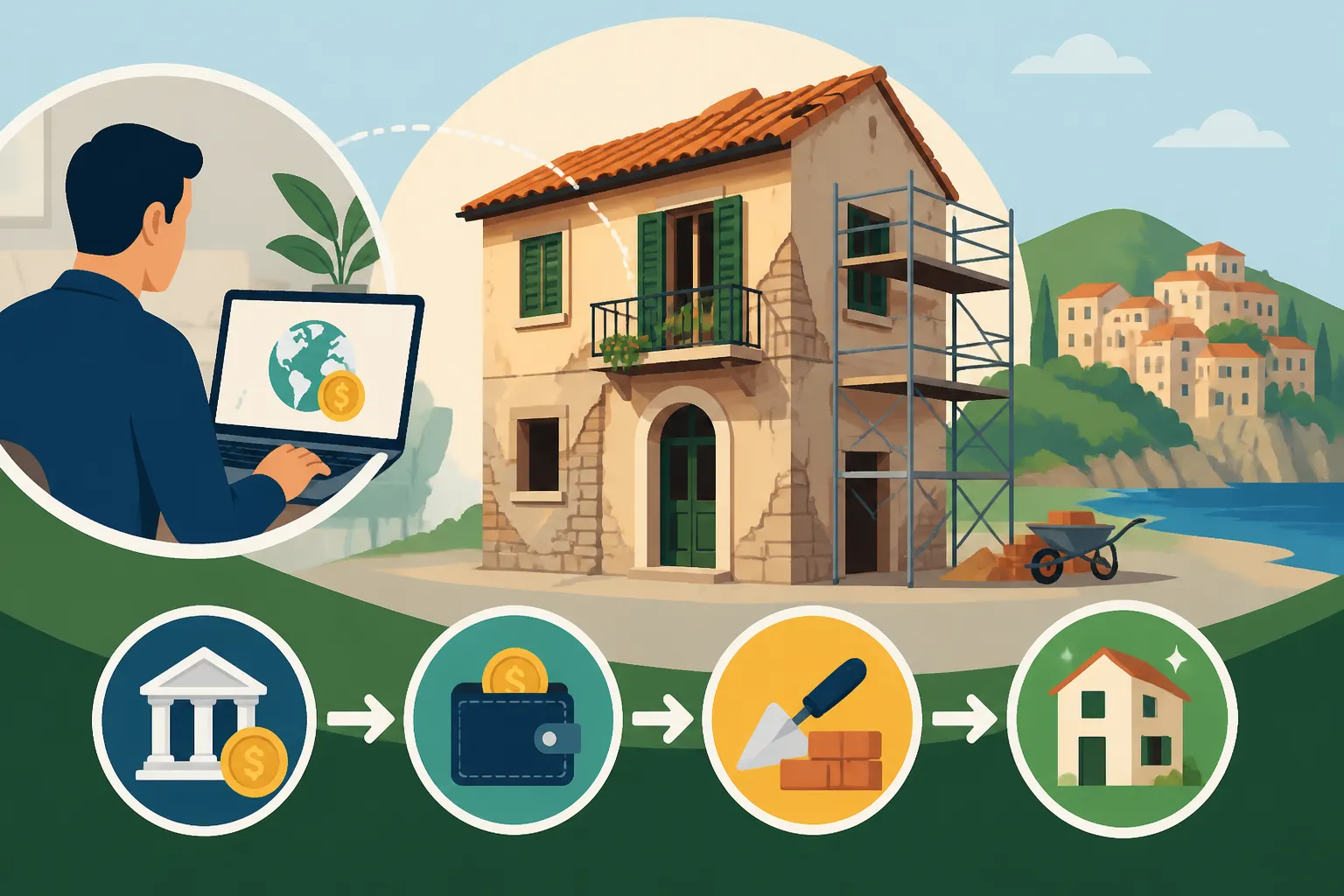
Funding a One-Euro House Renovation From Abroad: Staged Payment Setup
Oh, the allure of the one-euro house in Italy! It’s a dream that has captivated so many of us expats, promising a slice of la dolce vita for less than the price of a coffee. But once the initial excitement settles, the real headache begins: how do you actually fund a massive renovation project from thousands of miles away, ensuring your hard-earned money gets to the right people, at the right time, without being eaten alive by fees? This guide is here to walk you through the nitty-gritty of setting up a reliable, staged payment system for your Italian renovation, and why a service like Wise is truly your secret weapon in making this dream a reality without the financial nightmares.
Disclosure: This post may contain affiliate links. We may earn a commission at no extra cost to you if you make a purchase through these links. Read full disclosure.
The Dream vs. The Reality of One-Euro Houses in Italy
Let's be real, the idea of buying a house in a charming Italian village for a single euro is utterly irresistible. It conjures images of rustic charm, sun-drenched courtyards, and a life lived at a slower, more deliberate pace. And indeed, many towns across Italy, from Sicily to Tuscany, have launched these initiatives to breathe new life into their dwindling communities. Think places like Sambuca in Sicily, Castropignano in Molise, or even Maenza in Lazio. But as a seasoned expat, I've seen enough wide-eyed dreamers stumble upon the administrative and financial realities to know that "one euro" is just the tip of a very large, beautiful, but often crumbling, iceberg.
Understanding the True Cost Beyond One Euro
While the sticker price is just €1, it's absolutely crucial to understand that this is merely a symbolic gesture designed to attract buyers. The actual immediate costs kick in almost immediately, and they can add up faster than you can say permesso di costruire. First, you'll need to factor in notary fees, which are mandatory for any property transaction in Italy. These aren't cheap and can range from a few hundred to a couple of thousand euros, depending on the property's cadastral value (even if it's technically €1, it will have a base value) and the complexity of the sale.
Then there are administrative fees, which cover things like property registration, stamp duties, and sometimes a small municipal fee to the Comune (municipality) for handling the special sale. You'll also need an architectural survey (often called a rilievo), which is essential to assess the structural integrity of the property and understand the full scope of work required. This can cost anywhere from €1,000 to €5,000 or more, depending on the size and condition of the building. And let’s not forget the initial safety work: securing the property, perhaps shoring up a crumbling wall, or patching a leaky roof to prevent further decay. These are not part of the "renovation" yet but are often urgent prerequisites. It's a significant upfront investment before a single decorative tile is even considered.
The Renovation Obligation and Timelines
The core of the one-euro house scheme is the explicit, legally binding obligation to renovate the property. This isn't an optional suggestion; it's a contractual requirement. Most Comuni impose strict terms: you must submit a renovation plan ( progetto di ristrutturazione ) within a certain timeframe, typically 6 to 12 months after purchase, and complete the work within a defined period, often 3 to 5 years. There might even be a minimum investment amount stipulated, ensuring the renovation is substantial and not just a quick lick of paint.
Navigating the bureaucracy for these renovations is, without exaggeration, a monumental task, even for Italians. As a foreigner, it’s a whole new level of challenge. You'll need various permits, such as the Segnalazione Certificata di Inizio Attività (SCIA) or Comunicazione di Inizio Lavori Asseverata (CILA), depending on the extent of the work. These involve detailed plans, structural calculations, and approvals from the local planning office. Each step requires meticulous documentation, stamps ( marca da bollo ), and often, multiple visits to the Comune. Dealing with the local authorities, who may or may not speak English, while trying to coordinate architects and builders, can be incredibly stressful. This entire process highlights why having a solid financial plan, especially one that accommodates staged payments, is non-negotiable from the outset.
Navigating International Payments for Your Italian Renovation
So, you've bought your one-euro house, you've got your architectural plans in hand, and now it's time to pay the people who will transform your ruin into a dream home. This is where many expats encounter their next big hurdle: transferring substantial sums of money internationally. The renovation will likely be the largest financial outlay of your entire project, far overshadowing the initial €1, and sending these funds from your home country to Italy can be fraught with hidden costs and inefficiencies if you're not careful.
The Challenges of Traditional Banking for Cross-Border Transfers
The moment you think about sending thousands of euros across borders, your local bank probably springs to mind. And for many, it’s the default option. But let me tell you, as someone who’s been transferring money to Italy for years, traditional banks can be a real headache. Their fees for international wire transfers (SWIFT transfers) are often high and opaque. You might see an initial transfer fee, but what often catches people off guard are the hidden exchange rate markups. Banks rarely give you the real mid-market exchange rate – the one you see on Google. Instead, they add their own spread, which, on a large transfer for a renovation, can quietly skim off hundreds, if not thousands, of euros from your budget.
Beyond the cost, there’s the issue of speed and transparency. Traditional bank transfers can take days, sometimes even over a week, to arrive. This delay can be frustrating when you have contractors waiting on a payment to purchase materials or start a new phase of work. You send the money, cross your fingers, and hope it gets there, often with minimal tracking or updates. In a renovation project, where timing is often critical and relationships with your local team depend on trust and prompt payments, these inefficiencies can lead to significant stress and potential delays. The last thing you want is your builder calling you, asking where the money is, while you’re stuck waiting for your bank to confirm it actually left their system.
The Benefits of a Staged Payment Approach
For any significant renovation project, whether local or international, adopting a staged payment approach is not just a good idea; it's absolutely essential. This means breaking down the total cost of the renovation into several smaller payments, each tied to specific milestones or completion of certain phases of work. For instance, an initial deposit upon signing the contract, then a payment after the foundation is laid, another after the roof is completed, perhaps another after plumbing and electrical, and a final payment upon satisfactory completion of all work.
Why is this so crucial, especially when you're managing things from abroad? Firstly, it protects you as the homeowner. You're not handing over a lump sum upfront and hoping for the best. Instead, you retain leverage by only releasing funds once a predefined amount of work has been done to an acceptable standard. Secondly, it helps manage cash flow for both parties. Your contractor receives regular payments, which helps them fund materials and labor, while you don't have to front the entire cost at once. Thirdly, it builds trust and accountability. When payments are tied to tangible progress, it encourages your renovation team to stick to agreed-upon schedules and quality standards. This structured approach becomes even more vital when you're not physically present on site every day. It provides a framework for oversight and ensures your significant investment is being utilized effectively throughout the demanding process of restoring your Italian home.
Wise: Your Hero for Seamless Staged Renovation Payments
When it comes to executing a staged payment setup for your Italian renovation from abroad, you need a financial partner that is reliable, transparent, and cost-effective. This is precisely where Wise (formerly TransferWise) shines as the undeniable hero for expats. I can’t stress enough how much this service has simplified my own cross-border financial life, and it's perfectly suited for the complexities of a one-euro house renovation.
Why Wise Stands Out for Expats and Homeowners Abroad
Let's cut to the chase: Wise saves you money and eliminates stress. Their primary advantage lies in their commitment to low, transparent fees and the use of the real mid-market exchange rate. Unlike traditional banks that sneak in hidden markups on the exchange rate, Wise gives you the exact rate you see on independent financial platforms. They charge a small, upfront fee that is clearly displayed before you confirm any transfer. For a project as large as a house renovation, where you’ll be making multiple, substantial transfers, these savings can be monumental. Imagine consistently saving 2-3% on every €10,000 transfer – that quickly adds up to thousands of euros that can instead go towards a nicer kitchen or fixing that charming but leaky old window.
Beyond cost, Wise offers unparalleled speed and ease of use. Most transfers to Italy are completed within a day, and often within just a few hours. This means your architect or contractor isn't left waiting, which keeps the project moving smoothly and maintains good relationships. The platform itself is incredibly user-friendly, allowing you to initiate transfers from your computer or smartphone with just a few clicks. You can track your money every step of the way, providing a level of transparency that traditional banks rarely match. This real-time tracking gives you peace of mind, knowing exactly when your payment has been sent and when it's expected to arrive in Italy. Whether you're paying a geometra for permit applications, a builder for the next phase of work, or even an electrician, Wise makes each transaction efficient and straightforward.
Setting Up Staged Payments with Wise: A Practical Walkthrough
Using Wise for your staged renovation payments is surprisingly simple, and it directly addresses the challenges of sending money from your home currency (say, USD, GBP, or AUD) into euros. Here's a practical, step-by-step guide:
- Open a Wise Account: Head to the Wise website or download their app. The sign-up process is quick and usually requires identity verification, which is standard for financial services. You'll link your primary bank account in your home country to your Wise account.
- Get Your Team's Italian Bank Details: Before you send any money, you’ll need the full bank details of your Italian architect, geometra, or contractor. This includes their full name or company name, their Italian IBAN (International Bank Account Number), and the BIC/SWIFT code of their Italian bank.
- Initiate Your First Transfer (Stage Payment):
- Log into your Wise account.
- Click "Send money."
- Enter the amount you need to send in euros (e.g., €5,000 for the initial architectural plan approval).
- Select your sending currency (e.g., USD). Wise will immediately show you the exact exchange rate, the small fee, and the exact amount in your currency that will be debited from your account. This transparency is a game-changer.
- Choose who you're sending to (select "Someone else" and enter their Italian bank details). You can save these details for future payments, making subsequent transfers even faster.
- Review the transfer details, confirm, and pay for the transfer from your linked bank account.
- Track and Confirm: Wise will send you email notifications at each stage of the transfer, and you can monitor its progress directly in the app. Your recipient will also receive a notification when the money arrives. This means less chasing and more peace of mind.
- Set Up Rate Alerts (Optional but Smart): If you're planning future payments, Wise allows you to set up exchange rate alerts. This means you'll get a notification when the exchange rate between your currency and euros hits a favorable point, allowing you to time your transfers strategically and maximize your renovation budget.
Let’s consider a hypothetical scenario: You're based in the US, and your architect, Signor Rossi, in Puglia, needs his first installment of €10,000 to finalize the initial renovation project. You go onto your Wise app, input €10,000, and it instantly shows you that it will cost you, for example, $10,850 (including the small fee) at the current mid-market rate, rather than the $11,100 your traditional bank might charge with its hidden margin. You initiate the transfer, and within hours, or at most a day, Signor Rossi receives the full €10,000 in his Italian bank account. This seamless process allows you to maintain control over your finances while keeping your renovation on track. Wise truly acts as a bridge, ensuring your funds reach Italy efficiently and economically, allowing you to focus on the exciting aspects of your property development.
Essential Considerations Before Kicking Off Your Renovation
The financial side might seem daunting, but it's just one piece of the renovation puzzle. Before you even think about transferring that first euro to your contractor, there are other vital components you need to put in place to ensure your one-euro house project runs as smoothly as possible, especially from a distance.
Assembling Your A-Team: Architect, Geometra, and Contractor
In Italy, you can't just pick up a hammer and start knocking down walls. The process is highly regulated, and you need qualified professionals by your side. Your "A-Team" will typically consist of:
- Architect (Architetto): The creative and technical mastermind. They design the renovation, produce the detailed plans, and guide you through aesthetic choices. They're essential for major structural changes and for ensuring your project respects local building codes and historical preservation rules, which can be particularly stringent in older villages.
- Geometra: This role is unique to Italy and incredibly important. A geometra is a certified technical professional, often likened to a surveyor or building technician. They handle the practical, bureaucratic side of things: submitting permits to the Comune, liaising with local authorities, and ensuring your plans comply with cadastral records and local regulations. They're indispensable for obtaining the necessary permessi di costruire or submitting CILA/SCIA declarations. Often, they act as a bridge between your architect's grand vision and the contractor's execution.
- Contractor (Impresa Edile): The team that actually does the physical work. This is usually a company with various skilled laborers (masons, plumbers, electricians).
Finding trusted professionals can make or break your project. Seek recommendations from other expats, ask the Comune if they have a list of local registered professionals, and always ask for references. Critically, ensure they are fluent in communication (ideally English, if your Italian isn't up to scratch, or you have a reliable translator) and have experience with international clients. The contract you sign with them should be meticulously detailed, in Italian (with a sworn translation if needed), outlining all work, materials, timelines, and, crucially, the payment milestones tied to clear deliverables. This legal framework is what allows you to confidently use a service like Wise to release funds only when work is satisfactorily completed. For instance, after confirming the geometra has filed the necessary paperwork, you can initiate their payment securely. Similarly, once the contractor completes the initial demolition phase as agreed, their installment can be quickly sent via Wise.
Understanding Contracts and Payment Milestones
This section is vital for your financial protection. When engaging your Italian A-team, you'll enter into a contratto d'appalto (contract for services/works) with your contractor and potentially separate contracts with your architect and geometra. These documents are your safeguards. Insist on a comprehensive contract that specifies:
- Detailed Scope of Work: What exactly will be done, room by room, including finishes, materials, and any specific requirements.
- Timeline: Start and estimated completion dates, with penalties for unreasonable delays.
- Payment Schedule: This is where staged payments come in. Clearly define what percentage of the total cost is due at each specific, measurable milestone. Examples include:
- 10-20% upon contract signing (deposit).
- 20-30% after structural reinforcements are complete (e.g., new roof, seismic upgrades).
- 20-30% after major utility installations (plumbing, electrical rough-in).
- 10-20% after finishes (tiling, plastering, internal doors).
- 5-10% final payment upon complete, satisfactory handover of the property (often called saldo).
- Quality Standards: What level of finish is expected.
- Insurance: Confirmation that the contractor has appropriate liability insurance.
Each payment milestone should be objectively verifiable. For example, "upon completion of roof structure and waterproofing," not just "mid-project." Before each transfer, request photographic or video evidence, or even a local representative to confirm the milestone has been met. Only once you are satisfied should you log into your Wise account and initiate the payment. This disciplined approach minimizes risk and gives you control over your investment, especially when you can't be there physically to oversee every detail. The ability of Wise to execute these payments quickly and with transparent fees supports this crucial contractual structure perfectly.
Bureaucracy and Tax Benefits: The Italian Renovation Landscape
Beyond the immediate team and contracts, the Italian administrative landscape has specific rules and potential financial benefits you should be aware of. All major renovation works require permits from the Comune. This could range from a simple CILA (for non-structural works like changing internal layouts) to a more complex SCIA or Permesso di Costruire (for structural changes, extensions, or new constructions). Your geometra or architect will be indispensable here, navigating the local planning office (Ufficio Tecnico) and ensuring all paperwork is correct. The costs of these permits themselves must be factored into your budget.
Crucially, Italy offers various tax bonuses for home renovations (Bonus Ristrutturazione). These are substantial incentives, often allowing you to deduct a significant percentage (e.g., 50% up to a certain limit) of your renovation costs from your Italian income tax over several years. However, to benefit from these, you typically need to:
- Be an Italian tax resident or own the property in Italy.
- Have an Italian Codice Fiscale (tax code), which you'll need for almost everything anyway.
- Make payments via specific "parlante" bank transfers ( bonifico parlante ), which clearly state the reason for payment, the tax code of the payer, and the VAT number/tax code of the recipient.
While Wise facilitates seamless transfers to Italian bank accounts, enabling your contractor to receive funds, the bonifico parlante is a specific type of Italian bank transfer initiated from within an Italian bank. If you plan to claim these tax bonuses, you will need an Italian bank account to make those specific payments. However, you can still use Wise to transfer larger sums from your home country to your Italian bank account, and then make the bonifico parlante from there. This allows you to leverage Wise's excellent exchange rates and low fees for the major currency conversion, while still meeting Italian tax requirements. Understanding these nuances early on can save you a lot of money in the long run and is something your geometra or commercialista (accountant) can fully explain.
Managing Your Project from a Distance and Post-Renovation Steps
The dream of a renovated one-euro house is glorious, but the reality involves a significant amount of coordination, especially when you're managing it from another country. This isn't just about sending money; it's about active oversight and diligent record-keeping.
Communication Strategies and Oversight
This is perhaps the biggest challenge for anyone renovating a property in Italy from abroad. Language barriers, time differences, and the sheer distance can easily lead to misunderstandings, delays, and cost overruns. Here are some essential strategies:
- Establish Clear Communication Channels: Decide on preferred methods early. Will it be WhatsApp, email, or scheduled video calls? Ensure your entire team (architect, geometra, contractor) is on board with these channels.
- Regular Updates: Insist on frequent updates, including photos and videos, at every significant stage of the renovation. Tools like shared cloud folders can be excellent for this, allowing your team to upload progress pictures directly.
- Scheduled Calls: Set up regular video calls to discuss progress, address issues, and make decisions. Having a set time helps everyone prepare and ensures consistent communication.
- Local Representative (if possible): If you have a trusted friend, family member, or even a local expat who can act as your eyes and ears on the ground, even for occasional check-ins, it can be invaluable. Some larger projects might warrant hiring a dedicated local project manager to oversee daily operations.
- Site Visits: Plan periodic trips to Italy to personally inspect the work. These visits are not just about checking quality but also about building relationships with your team, which is hugely important in Italian culture.
The beauty of using a service like Wise is that once a payment is sent, you receive immediate confirmation, and your team receives it quickly. This removes a significant communication point of friction – "Has the money arrived yet?" – allowing you to focus on the actual renovation progress.
Financial Documentation and Record Keeping
When dealing with a renovation project of this scale, meticulous financial record-keeping is not just good practice; it's absolutely crucial for several reasons:
- Tax Purposes: As mentioned, if you're eligible for Italian renovation tax bonuses, you'll need robust documentation for tax deductions. This means keeping all invoices ( fatture ) from your architect, geometra, and contractor. Ensure these invoices clearly detail the services rendered and materials purchased.
- Budget Tracking: Keeping a detailed spreadsheet of all expenses against your budget helps you stay on track and anticipate future costs.
- Dispute Resolution: In the unfortunate event of a disagreement with a contractor or professional, having a clear paper trail of all payments and services rendered will be your strongest defense.
- Property Value: Good records of renovation work can also add value when you eventually decide to sell the property.
Wise significantly aids in this by providing a comprehensive, easily accessible transaction history. Every payment you make through Wise is recorded, showing the exact amount sent, the fees, the exchange rate used, and the recipient details. You can download statements easily, which complements your collection of invoices and contracts. This transparency means you'll have a complete financial picture of your renovation journey, which is invaluable for peace of mind and for any future administrative needs.
By carefully managing communication, establishing robust contracts with your Italian team, and diligently tracking all your financial transactions through efficient platforms like Wise, you can transform the daunting task of renovating a one-euro house from abroad into a rewarding adventure. It’s challenging, yes, but with the right tools and preparation, it's absolutely achievable.
Comparison of International Payment Methods for Italian Renovations
Choosing the right way to send money for your renovation is critical. Here's a quick comparison of common methods:
| Feature | Traditional Bank Wire (SWIFT) | Online Money Transfer Services (e.g., Wise) | International Bank Draft/Check |
|---|---|---|---|
| Exchange Rate | Often includes a hidden markup over the mid-market rate. | Uses the real mid-market exchange rate, no hidden markups. | Subject to bank's exchange rate at time of cashing, can be poor. |
| Fees | High fixed transfer fees, plus potential intermediary bank fees. | Low, transparent fees shown upfront. | Often high fees for issuing and cashing, plus collection fees. |
| Speed | Can take 3-7 business days, sometimes longer. | Often same-day or within 1-2 business days for EUR transfers. | Very slow, can take weeks or even months to clear. |
| Transparency | Limited tracking, hard to know exact arrival time or total cost. | Full tracking and clear breakdown of costs before sending. | Very little transparency once sent. |
| Convenience | Requires bank visit or complex online banking interface. | Easy to use via app or website, can send from anywhere. | Requires physical mailing, cumbersome for staged payments. |
| Best For | Very large, infrequent corporate transfers where speed isn't primary. | Frequent, large, or small personal and business transfers requiring speed & transparency. | Niche uses, generally not recommended for urgent or large sums. |
| Renovation Suitability | Less ideal due to costs, delays, and lack of transparency for staged payments. | Highly recommended for cost-effective, transparent, and timely staged renovation payments. | Not suitable for dynamic, multi-stage renovation payments. |
Disclaimer
The information provided in this guide is for general informational purposes only and does not constitute financial, legal, or architectural advice. While we strive to offer accurate and up-to-date information, regulations and circumstances in Italy can change rapidly. Always consult with qualified Italian professionals, such as an accountant (commercialista), lawyer (avvocato), architect (architetto), or geometra, before making any decisions related to property purchase, renovation, or financial transfers. We are not responsible for any actions taken based on the information presented herein.