Milan to Turin and Genoa: Northern Corridor Connections
Navigating the Italian transport system between major Northern cities can feel like deciphering an ancient scroll, especially when you're just trying to get from A to B without a headache. The confusion of different operators, station names, and ticket types is a common frustration for both new arrivals and seasoned expats. This guide is here to cut through the bureaucracy and show you exactly how to make your journeys between Milan, Turin, and Genoa not just manageable, but genuinely stress-free, with a special focus on making Omio your indispensable travel companion.
Disclosure: This post may contain affiliate links. We may earn a commission at no extra cost to you if you make a purchase through these links. Read full disclosure.
Why Connect Milan, Turin, and Genoa? More Than Just Tourist Spots
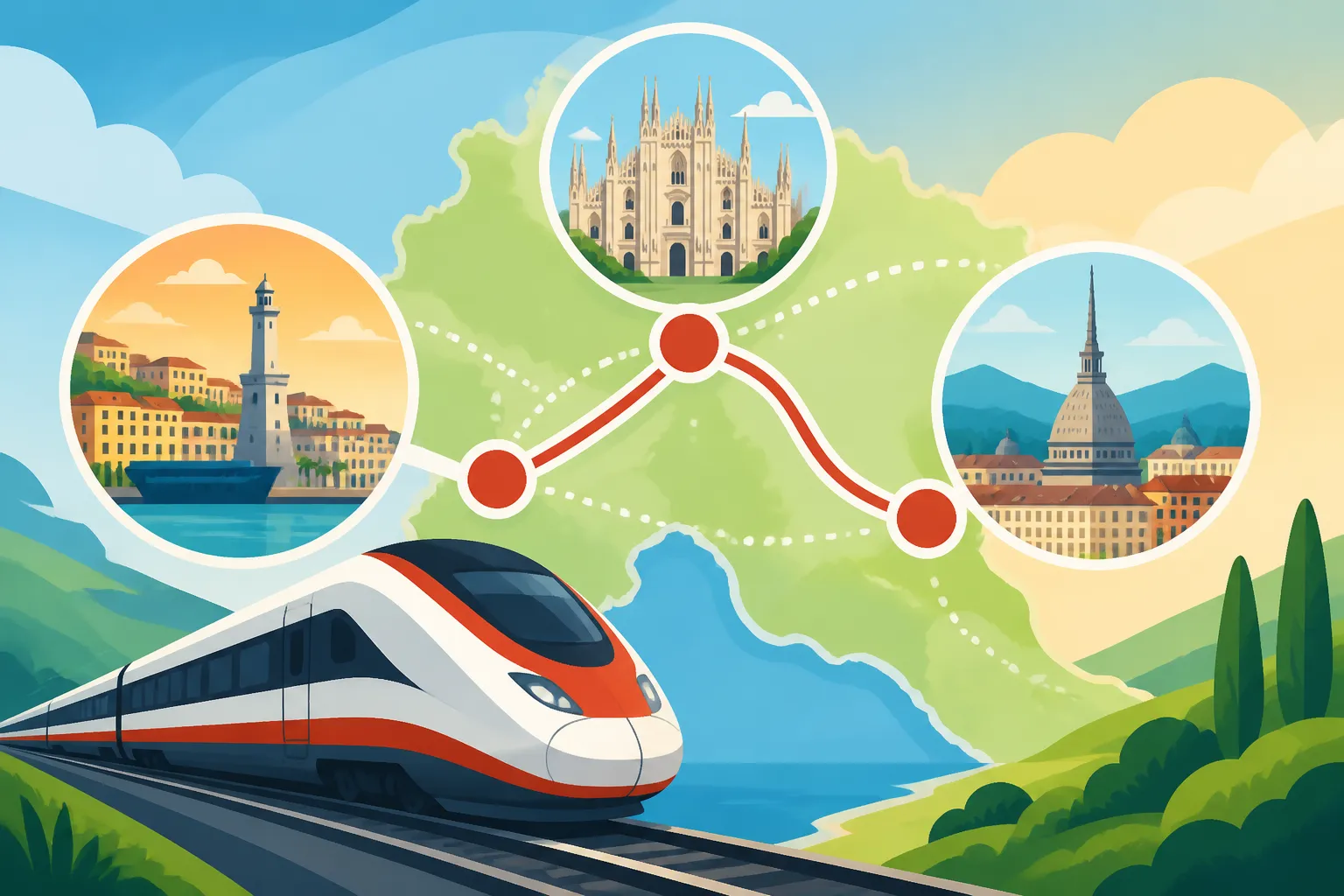
These three cities aren't just dots on a map; they form a crucial triangle in Northern Italy, each offering a distinct flavor of Italian life, history, and commerce. For anyone living in or visiting this vibrant region, knowing how to move efficiently between them is key to unlocking countless opportunities, from business meetings to weekend escapes.
The Strategic Importance of This Northern Corridor
Think of Milan, Turin, and Genoa as the cornerstones of Italy's industrial, cultural, and maritime power. Milan, of course, is the fashion and finance capital, a whirlwind of modern life and historical grandeur. It's a true international hub, but its energy can be overwhelming if you don't have a plan. Just an hour west, you have Turin, the elegant former capital, known for its refined Baroque architecture, rich automotive history (hello, Fiat!), and delectable chocolate. It’s a city that breathes history with a quiet sophistication, often overlooked by tourists rushing to Florence or Rome, but a gem for those in the know. And then there’s Genoa, the bustling port city on the Ligurian coast, a labyrinth of caruggi (narrow alleyways) leading to hidden piazzas and stunning sea views. It’s a place steeped in maritime history, with a gritty charm that’s authentically Italian.
For expats, these cities aren't just destinations; they're interconnected parts of a larger Northern Italian experience. Perhaps you live in Milan but have a job interview in Turin, or you’re craving a fresh seafood meal in Genoa. Maybe you’re exploring potential university towns and need to compare campuses in different regions. Being able to seamlessly travel between them means you're not just existing in Italy; you're truly engaging with its diverse offerings. This is where smart planning comes in, and having a reliable tool like Omio at your fingertips simplifies what could otherwise be a logistical nightmare.
Overcoming the Initial Travel Hurdles for Expats
Let’s be honest, Italy’s charm often comes hand-in-hand with its… unique approach to administration and public services. And public transport can be no exception. The first time you try to buy a train ticket in Italy, you might face a machine that only speaks Italian, a website that crashes, or a queue that seems to snake into next week. It’s enough to make you want to stay home! This isn't just about language; it's about understanding the nuances of the system. Which train operator is best for which route? Are there different types of tickets, and what do they mean? Will I need to validate my ticket?
Many expats initially grapple with these questions, often resorting to asking locals or getting lost in translation. I remember my own early days, fumbling with ticket machines and missing connections simply because I didn't understand the platform announcements. It's frustrating, and it shouldn't deter you from exploring. What you need is a single, intuitive platform that cuts through the noise and presents all your options clearly, in a language you understand, and allows you to book with confidence. This is precisely the kind of pain point that Omio was built to solve, streamlining the entire process so you can focus on enjoying the journey rather than dreading the logistics.
Your Best Bet for Seamless Travel: Why Omio is a Game-Changer
When you're trying to figure out the best way to get from Milan to Turin or Genoa, you quickly realize there are often multiple train companies, various bus operators, and sometimes even shared ride services. Trying to navigate all their individual websites, compare prices, and check schedules can be a monumental task. This is where Omio truly shines as the "hero" solution for simplifying your Italian travels.
All Your Options in One Place: Trains, Buses, and Beyond
Imagine a single platform where you can type in "Milan to Turin," and it instantly pulls up all available train and bus options. That's Omio in a nutshell. It aggregates results from major Italian transport providers like Trenitalia (both their high-speed Frecce and regional trains) and Italo (Italy's private high-speed train operator), alongside popular bus services such as FlixBus. This means you don't have to jump between a dozen tabs, checking each company's offerings individually.
For example, when planning your trip, you'll see clearly laid out the high-speed train options from Milano Centrale to Torino Porta Nuova, showing you the differences in speed, price, and even amenities. Then, right next to them, you'll find slower, more economical regional train services or direct bus routes. This comprehensive view allows you to make an informed decision based on your priorities – whether that's speed, cost, or a specific departure time. It's truly a one-stop-shop for planning your travel across the country.
Real-Time Information and Effortless Booking
One of the biggest anxieties of travel, especially when dealing with a foreign transport system, is the fear of unexpected changes or delays. Omio addresses this by often providing real-time updates and ensuring your booking experience is as smooth as possible. Once you've chosen your preferred route, booking through Omio is straightforward. You can select your seats, manage passenger details, and complete your purchase in just a few clicks. The payment process is secure, and you'll receive your e-tickets directly to your email or within the Omio app. This means no more fumbling with physical tickets or worrying about validating them at the station (though always double-check if a specific regional service still requires validation).
Having your tickets readily accessible on your phone, even if you lose your internet connection, is a godsend. It eliminates the stress of rushing to a ticket counter or dealing with potentially broken machines, allowing you to breeze through the station like a seasoned local. This kind of convenience is invaluable, especially during peak travel times or when you're making tight connections. Omio's multi-language support is another huge plus, ensuring you understand every detail of your journey without needing a phrasebook.
Cost-Effectiveness and Smart Travel Tips
Everyone loves a good deal, and Omio helps you find them. By comparing prices across different operators and travel times, Omio often highlights the most budget-friendly options, or conversely, the fastest routes if time is of the essence. You can easily see how booking in advance might save you a significant amount, especially on high-speed train services. The platform sometimes offers exclusive discounts or bundles that you wouldn't find on individual operator websites, making it a powerful tool for stretching your travel budget further.
Beyond just the direct cost, consider the value of your time and peace of mind. While a regional bus ticket might be slightly cheaper, if it adds two hours to your journey and requires multiple transfers, the savings might not be worth the hassle. Omio allows you to weigh these factors, showing you not just the price, but also the estimated duration and number of changes for each option. This holistic view helps you make truly smart travel choices tailored to your needs. Thinking about other ways to save? You might also want to look into things like how to get a health exemption by income in Italy or how to find discounted healthcare services for students.
A Deep Dive into Milan to Turin Journeys
The route between Milan and Turin is one of Northern Italy's most frequently traveled corridors, connecting two of its most significant cities. Whether you're commuting for work, visiting for pleasure, or just passing through, understanding your travel options here is crucial.
By High-Speed Train: The Fastest Connection
For sheer speed and comfort, the high-speed train is undoubtedly the champion between Milan and Turin. You have two main players: Trenitalia's Frecciarossa and Italo. Both offer a sleek, modern experience with comfortable seating, Wi-Fi, and often a café or snack service onboard. The journey typically takes around 45 minutes to an hour, making it incredibly convenient for day trips or business meetings.
Most high-speed trains depart from Milan's grand Milano Centrale station, a destination in itself, and arrive at either Torino Porta Nuova (the main central station) or Torino Porta Susa (closer to the business district and high-tech hub). When you're searching on Omio for "Milan to Turin," it will automatically show you options from both providers and to both Turin stations, allowing you to pick the one that best suits your final destination in Turin. Booking through Omio is simple, letting you compare prices for different classes of service – from standard to executive – and secure your spot well in advance, which is highly recommended for the best fares. This speed and efficiency make exploring Italy so much easier, whether you're heading to the mountains or exploring different regions of Italy.
By Regional Train and Bus: Budget-Friendly Alternatives
If time isn't as critical as cost, regional trains (Trenitalia Regionale or Regionale Veloce) and buses offer more economical alternatives. Regional trains from Milan to Turin take longer, usually between 1.5 to 2 hours, as they make more stops. They also typically depart from Milano Centrale or Porta Garibaldi and arrive at Torino Porta Nuova. While less luxurious than the high-speed options, they are perfectly comfortable for the journey and significantly cheaper. On Omio, you'll see these labeled clearly, so you know exactly what you're booking.
Bus services, primarily FlixBus, also connect Milan and Turin. These can be even more budget-friendly than regional trains, though journey times can vary, often taking around 2 to 2.5 hours, depending on traffic and specific routes. Buses usually depart from specific bus stations or stops in Milan (e.g., Lampugnano) and arrive at Turin's main bus terminal, often near Porta Susa. If you're on a tight budget, using Omio to compare these bus options against regional trains is an excellent strategy. While generally reliable, bus travel can be more susceptible to delays due to road conditions, so factor that into your planning, especially if you have a connecting flight or another appointment.
Practical Considerations for Milan-Turin Travel
Regardless of your chosen mode, there are a few things to keep in mind. Milanese and Turinese commuters often pack the trains during peak hours (early morning and late afternoon), so if you're traveling during these times, definitely book your tickets on Omio in advance to guarantee a seat. Luggage is generally not an issue on trains, with ample overhead racks and dedicated spaces between seats. Buses also have luggage compartments, but always confirm the allowance with the specific operator if you have oversized bags.
Arriving at the stations a little early is always a good idea. Milano Centrale is massive and can be confusing for first-timers, while Turin's stations are a bit more manageable. However, navigating the bustling crowds and finding your platform requires a bit of time. For an even smoother experience, consider using your Omio mobile ticket directly on your phone, saving you time at ticket barriers. This level of preparation will definitely make your journey more relaxed and enjoyable.
Connecting Milan to Genoa: The Ligurian Link
The journey from Milan down to the Ligurian coast, specifically Genoa, offers a change of scenery from the Lombardy plains to the rugged coastline. It's a popular route for those seeking sea air, fresh pesto, or perhaps a starting point for exploring the Cinque Terre.
The Train Experience: Speed and Scenery
The primary mode of transport connecting Milan to Genoa is the train, and again, Trenitalia offers a robust service. While there isn't a dedicated high-speed line as there is to Turin, there are direct Intercity and regional trains that make the journey comfortable and efficient. An Intercity train can get you from Milan to Genoa in about 1 hour and 40 minutes to 2 hours, making fewer stops. Regional trains take a bit longer, typically around 2 to 2.5 hours, as they stop at more towns along the way.
Trains depart from Milano Centrale and usually arrive at one of Genoa's two main stations: Genova Piazza Principe (closer to the historic center and the old port area) or Genova Brignole (east of the city center, convenient for newer districts). When booking through Omio, make sure to check which Genoa station is best for your final destination. The route can be quite scenic, especially as you approach the Ligurian coast, with glimpses of the sea and picturesque towns. This journey offers a great opportunity to relax and enjoy the Italian landscape, maybe even catch up on some reading about obtaining the Italian Health Card (Tessera Sanitaria).
Bus Travel to Genoa: The Economical Choice
Similar to the Turin route, bus services like FlixBus provide an alternative for travelers heading from Milan to Genoa. These can often be the most budget-friendly option, though they usually entail longer travel times. A bus journey from Milan to Genoa typically ranges from 2.5 to 3.5 hours, depending on the route and traffic conditions, particularly around the busy port city.
Buses usually depart from various points in Milan and arrive at Genoa's main bus station, often near Genova Piazza Principe. While the journey might take longer, buses can offer more direct routes to certain parts of the city or be more convenient if your starting point in Milan is closer to a bus stop than a train station. For a comprehensive comparison of all available routes and prices, Omio is your go-to. It will lay out the train and bus options side-by-side, allowing you to weigh the trade-offs between cost, comfort, and journey duration.
Navigating Genoa's Stations and City
Genoa's train stations, Piazza Principe and Brignole, are well-connected to the city's public transport network, including buses and the metro. If you're arriving at Piazza Principe, you're just a short walk or a quick metro ride from the stunning Porto Antico (Old Port) and the Aquarium, as well as the beginning of the caruggi that define Genoa's historic center. Brignole is also connected to the metro and offers easy access to the shopping streets and residential areas.
Once you arrive, remember that Genoa is a city built on hills, and getting around often involves a fair amount of walking, sometimes uphill. Comfortable shoes are a must! The city's public transport system is efficient, but for exploring the labyrinthine alleyways, your feet are your best friends. Having your travel from Milan sorted seamlessly with Omio means you can arrive in Genoa refreshed and ready to immerse yourself in its unique atmosphere, without the initial travel stress.
Beyond the Basics: Making Your Trips Even Smoother
While getting from point A to point B is the main goal, a truly smooth travel experience in Italy involves a bit more planning and knowing how to leverage the right tools.
Leveraging Omio Features for Multi-City Trips
One of the often-underestimated benefits of using Omio is its ability to simplify multi-leg journeys. Let's say you're planning a trip that starts in Milan, moves to Turin for a few days, and then heads down to Genoa. Instead of booking three separate one-way tickets on different platforms, you can often plan and book your entire itinerary within Omio. This not only saves time but also ensures consistency in your booking experience.
Omio's interface makes it easy to visualize your entire trip, providing a cohesive overview of your departures and arrivals. If you need to make changes, managing them through a single platform can be much simpler than dealing with multiple customer service departments. Plus, with mobile tickets stored directly in the app, you're always ready, even if your phone signal decides to take a vacanza. This kind of integrated planning is a real game-changer for those who want to truly explore all that Italy has to offer, from the bustling cities to the quiet beaches in Italy.
Insider Tips for Stress-Free Italian Travel
Even with Omio making things super easy, a few local tips can elevate your travel game.
First, ticket validation: While Omio's digital tickets for high-speed trains and most buses don't require validation, always be mindful of regional train tickets purchased directly at the station. These often need to be stamped in the green or yellow machines on the platform before you board. Forgetting to do so can result in a fine, and no one wants that!
Second, arrive early: Italian train stations, especially major hubs like Milano Centrale, can be incredibly busy. Give yourself at least 15-20 minutes before departure to find your platform (which might only be announced 10-15 minutes prior), locate your carriage, and settle in.
Third, mind your luggage: While trains generally accommodate luggage well, be realistic about how much you can comfortably carry. You’ll be responsible for lifting it onto racks and keeping an eye on it. For longer trips or heavier bags, opting for a taxi to and from the station rather than struggling with public transport can be a small splurge that pays off in peace of mind.
Fourth, be aware of strikes: While less frequent than they once were, transport strikes ( scioperi ) do happen in Italy. Keep an eye on local news or official transport websites for any announcements that might affect your travel dates. Omio usually provides alerts if your booked journey is impacted, but an ounce of prevention is worth a pound of cure.
By combining the powerful aggregation and booking features of Omio with these practical tips, you’ll transform your Northern Italian travels from a potential headache into a smooth, enjoyable part of your Italian adventure.
| Route | Mode of Transport | Approx. Duration | Approx. Cost Range (One-way) | Key Operators | Notes |
|---|---|---|---|---|---|
| Milan to Turin | High-Speed Train | 45-60 minutes | €15 – €40+ | Trenitalia, Italo | Fastest, most comfortable. Book via Omio for best deals. |
| Regional Train | 1.5 – 2 hours | €12 – €16 | Trenitalia | Slower, more stops, budget-friendly. | |
| Bus | 2 – 2.5 hours | €5 – €15 | FlixBus | Economical, can be affected by traffic. | |
| Milan to Genoa | Intercity Train | 1 hr 40 min – 2 hrs | €13 – €25 | Trenitalia | Direct, good balance of speed & cost. |
| Regional Train | 2 – 2.5 hours | €13 – €16 | Trenitalia | Slower, more stops, scenic coastal views. | |
| Bus | 2.5 – 3.5 hours | €5 – €15 | FlixBus | Longest journey, but often cheapest. |
Disclaimer
Please remember that travel information, including schedules and prices, can change. Always verify the most current details directly on Omio or the respective transport provider's website before making your final plans. While this guide aims to be comprehensive, personal experiences may vary, and unforeseen circumstances can always arise.