How to Find Local Sagre (Food Festivals) During Your Visit
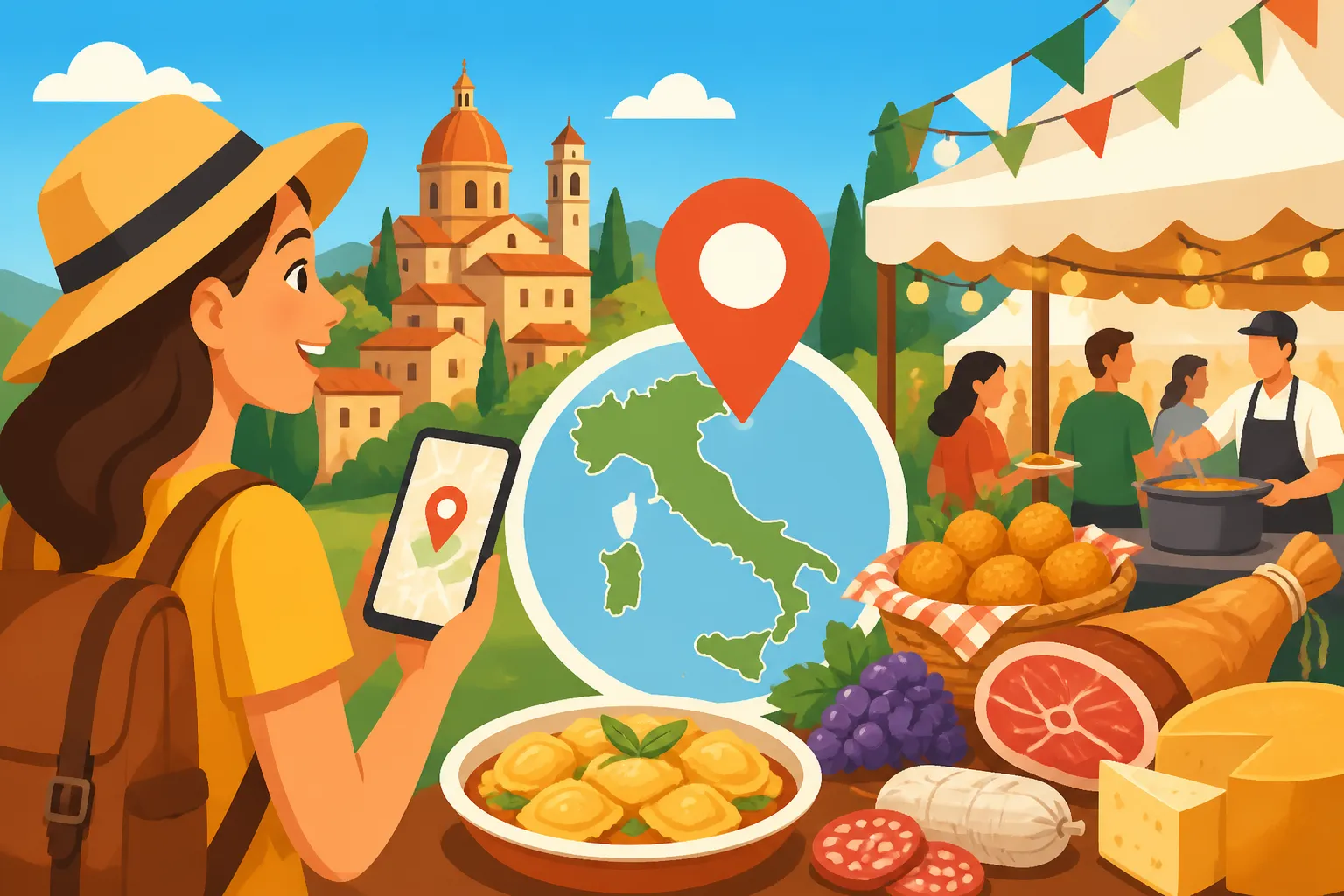
You are probably wandering through the picturesque streets of an Italian hilltop town, stomach growling, only to find every restaurant in the main piazza filled with tourists eating overpriced frozen lasagna. The real heart of Italian gastronomy isn't found in a Michelin-starred establishment or a tourist-trap bistro; it is hidden in the seasonal, chaotic, and joyous community festivals known as sagre. This guide will teach you exactly how to hunt down these elusive local food festivals and navigate them like a veteran resident.
Disclosure: This post may contain affiliate links. We may earn a commission at no extra cost to you if you make a purchase through these links. Read full disclosure.
What is a Sagra? Understanding the Heart of Italian Food Culture
To the uninitiated, a sagra might look like a simple town fair, but to an Italian, it is a sacred social pillar. These festivals are usually dedicated to a specific local ingredient—be it the prized white truffle of Umbria, the wild boar of Tuscany, or the humble chestnut of the northern forests. Unlike a commercial food festival you might find in London or New York, a sagra is a non-profit endeavor. It is organized by the local pro loco (the grassroots town promotion association) and staffed entirely by volunteers—usually the town’s grandmothers (nonne) in the kitchen and the local teenagers running the plates.
Understanding this community-driven nature is vital for your expectations. You won't find white tablecloths or attentive waitstaff. Instead, you will find long wooden communal tables, paper plates, and plastic cups filled with local wine that costs less than a bottle of water. The beauty of a sagra lies in its hyper-locality. If you are at a Sagra del Carciofo (Artichoke Festival), every single dish on the menu will feature artichokes, from the pasta to the dessert. This is the ultimate expression of Italian Food Culture: Eating Well as a Visitor.
Because these events are seasonal and deeply tied to the harvest, they represent a moment in time. You cannot find a porcini mushroom festival in the middle of a July heatwave. These festivals mark the changing of the seasons and are the only way to truly experience the "zero-kilometer" philosophy that Italians have practiced for centuries, long before it became a marketing buzzword. If you want to know How to Eat Like a Local in Italy: Meal Structure and Timing, a sagra is your masterclass.
The Strategic Hunt: How to Locate Sagre Like a Resident
Finding a sagra is often the biggest hurdle for travelers because these events are rarely advertised in English or on major international travel platforms. They are local events for local people. However, if you know where to look, the clues are everywhere. The most reliable method is the "Manifesti Hunt." Keep your eyes peeled as you drive or take the bus through the countryside. Look for large, brightly colored (often neon pink, yellow, or green) posters taped to stone walls, telephone poles, or bus stops. These posters will shout the name of the product—SAGRA DELLA ZUCCA—followed by the dates and the name of the town.
In the digital age, several Italian-language websites have become the "Bibles" for festival seekers. Sites like Sagre e Feste, Eventi e Sante, or regional-specific portals (e.g., Sagre in Toscana) are invaluable. While they are in Italian, the format is simple: look for the "Calendario" or "Provincia" (Province) to filter events by your location. You might find that the perfect chestnut festival is just a short trip away using Regional Trains in Italy: How to Use Them and Save. If you are staying in a major city like Florence or Milan, check these sites for events in the surrounding comuni; often, these small towns are reachable within 30 minutes.
Social media is your second digital weapon. Search Facebook Events using the keyword "Sagra" and your current region or province. Italians are incredibly active on Facebook for community organization. Following the local pro loco pages of nearby towns will give you a direct feed into their seasonal planning. If you are worried about the logistics of reaching a remote village for a festival, platforms like Omio can help you map out bus and train connections to the smaller hubs that don't always appear on the main Trenitalia English-site searches.
| Season | Popular Sagra Themes | Common Regions |
|---|---|---|
| Spring | Asparagus, Artichokes, Strawberries | Veneto, Lazio, Campania |
| Summer | Seafood, Watermelon, Orecchiette | Liguria, Puglia, Sicily |
| Autumn | Truffles, Chestnuts, Porcini, New Wine | Piedmont, Tuscany, Umbria |
| Winter | Polenta, Chocolate, Ciccioli (Pork) | Lombardy, Emilia-Romagna |
Navigating the Chaos: A Step-by-Step Tutorial for Your First Sagra
Once you arrive in a town hosting a sagra, follow the sound of the accordion or the smell of grilled meat. The logistical flow of a sagra is specific and can be intimidating if you don't speak the language. The first and most important rule is: Cassa first. Do not go and look for a table first. You must find the cassa (the cash desk), which is usually a small wooden hut or a table at the entrance of the food tent. There will be a large menu posted on the wall. You tell the person at the window what you want, you pay, and they give you a stack of paper tickets.
After you have your tickets, you need to find a seat. At most sagre, seating is communal. You will find long rows of benches. Don't be shy; if there are two empty spots next to a boisterous Italian family, ask "È occupato?" (Is this taken?). Once seated, you will often find a slip of paper on the table where you write your name or a number that corresponds to your tickets. In some more modern sagre, you take your tickets to a service counter where the volunteers will plate your food immediately. In more traditional ones, you sit and wait for a teenager to sprint past and grab your tickets, eventually returning with your wine and pasta.
The atmosphere at a sagra is a far cry from the quiet, romanticized version of Italy seen in movies. It is loud, it is sweaty, and it is joyous. There is almost always a "Ballo Liscio" (traditional ballroom dancing) area where the town's seniors show off their moves to a live band. Participating in this is one of the best ways of Making Friends in Italy as a Foreigner. Do not expect a quick meal. A sagra is a night-long commitment. You eat, you drink, you watch the local kids play, and you perhaps join the line for a pesca di beneficenza (a local charity raffle).
Practical Tips for the Expat and Tourist Experience
The most common mistake tourists make is showing up too early or too late. Most sagre serve dinner starting at 7:30 PM or 8:00 PM. If you show up at 6:00 PM, you will find the volunteers still chopping onions. Conversely, if you arrive at 9:30 PM, the "hero" dish of the festival—like the famous tortelli or the slow-roasted wild boar—might already be sold out. Aim for 7:45 PM to ensure you get a seat and the full menu selection. Also, remember that cash is still king at these events. While some larger festivals are starting to accept cards, many pro loco organizations are cash-only operations.
Transportation to these events requires some planning. Many of the best sagre are located in Italy's Most Beautiful Borghi (Small Villages) to Visit, which may not have frequent late-night train service. If you are relying on Public Transportation in Italian Cities: A Guide, always check the time of the last return bus or train. If you realize the festival is deep in the hills of the Val d'Orcia, it might be worth using Booking.com to find a local agriturismo for the night. This allows you to indulge in the local wine without worrying about the winding, dark Italian roads.
Finally, manage your expectations regarding the food service. These are not professional chefs; they are locals cooking family recipes in massive quantities. The pasta might be slightly overcooked, or the steak might be charred on a massive communal grill. But the ingredients are fresher than anything you will find in a city restaurant. If you find the DIY nature of a sagra too stressful but still want the culinary depth, you can always look on GetYourGuide for more structured market tours or cooking classes in the region, which can bridge the gap between a tourist experience and a local one.
Finding the "Big Ones": Iconic Sagre Worth a Detour
While every village has its own festival, some have grown to national fame. The Sagra del Pesce in Camogli (Liguria) is legendary, featuring a literal ton of fish fried in a giant skillet that is four meters in diameter. If you are in the north during May, this is a must-see. In the autumn, the Fiera Internazionale del Tartufo Bianco d'Alba in Piedmont is the world's premier truffle event. While it has become more commercialized, the surrounding smaller villages in the Langhe hills still host authentic, smaller sagre that are much more budget-friendly.
In Central Italy, Tuscany for Travelers: Cities, Hills, and Coast offers the Sagra del Tordo (Feast of the Thrush) in Montalcino, which combines a medieval archery tournament with incredible local food and Brunello wine. These larger events are easier to find information on, but they will be significantly more crowded. If you attend one of these "famous" festivals, expect long lines at the cassa. Patience is part of the experience. Just remember that Tipping in Italy: When, Where, and How Much doesn't really apply at a sagra; since it’s a volunteer-run community event, a simple "grazie" and a smile are the standard.
If you are struggling to find a specific festival during your dates, don't overlook the Sagra della Castagna (Chestnut Festivals) that blanket the country in October and November. These are often the most atmospheric, with giant braziers of roasting chestnuts filling the chilly mountain air with smoke. They are the perfect excuse to explore the interior of the country, away from the crowded coastlines. By following the tips in this guide, you will stop being a mere observer of Italian culture and start being a participant in its most delicious tradition. Finding these hidden gems is one of the best ways to discover How to Find Authentic Restaurants in Italy (Not Tourist Traps).
Disclaimer
The information provided in this guide is based on cultural norms and personal experiences in Italy. Festival dates, locations, and regulations can change without notice due to weather, local government decisions, or unforeseen circumstances. Always verify the latest event details through local town websites or the official pro loco social media channels before traveling. This guide is for informational purposes only.